Phison says its SSD with an integrated NPU can cut the amount of data that has to be transferred by 10 to 100 times, because the drive filters data itself and sends only the results the host needs.
- Phison demonstrated an enterprise SSD with its own NPU and 64 GB of onboard memory at SC26 in Chicago
- The drive supports PyTorch, vLLM, OpenVINO, and llama.cpp, and the company claims it can cut data transfers by 10 to 100 times for suitable workloads
- NPU performance is rated in DMIPS rather than TOPS, which makes it hard to compare with other NPUs
- The controller, interface, form factor, and memory type have not been disclosed, and the product is still at the prototype stage
Table of Contents
An SSD that runs AI frameworks itself
At Supercomputing 2026 (SC26) in Chicago, Phison showed an enterprise SSD design built around computational storage, meaning the drive does not just hold data but also handles part of the computation itself. Inside the drive sit a dedicated NPU and 64 GB of memory running at 130 GB/s of bandwidth, so AI frameworks can run directly on the drive without pulling data off it. The supported software includes PyTorch, vLLM, OpenVINO, and llama.cpp, all tools that AI developers already know.
The advantage Phison is aiming for lies in how much data has to move. In a conventional system, processing a dataset means the entire set must pass through the host server. In this design, the drive scans and processes the data in parallel internally, then sends back only the relevant results. As a result, the company claims data transfers can shrink by 10 to 100 times, though that figure applies only to suitable workloads, not to every case.
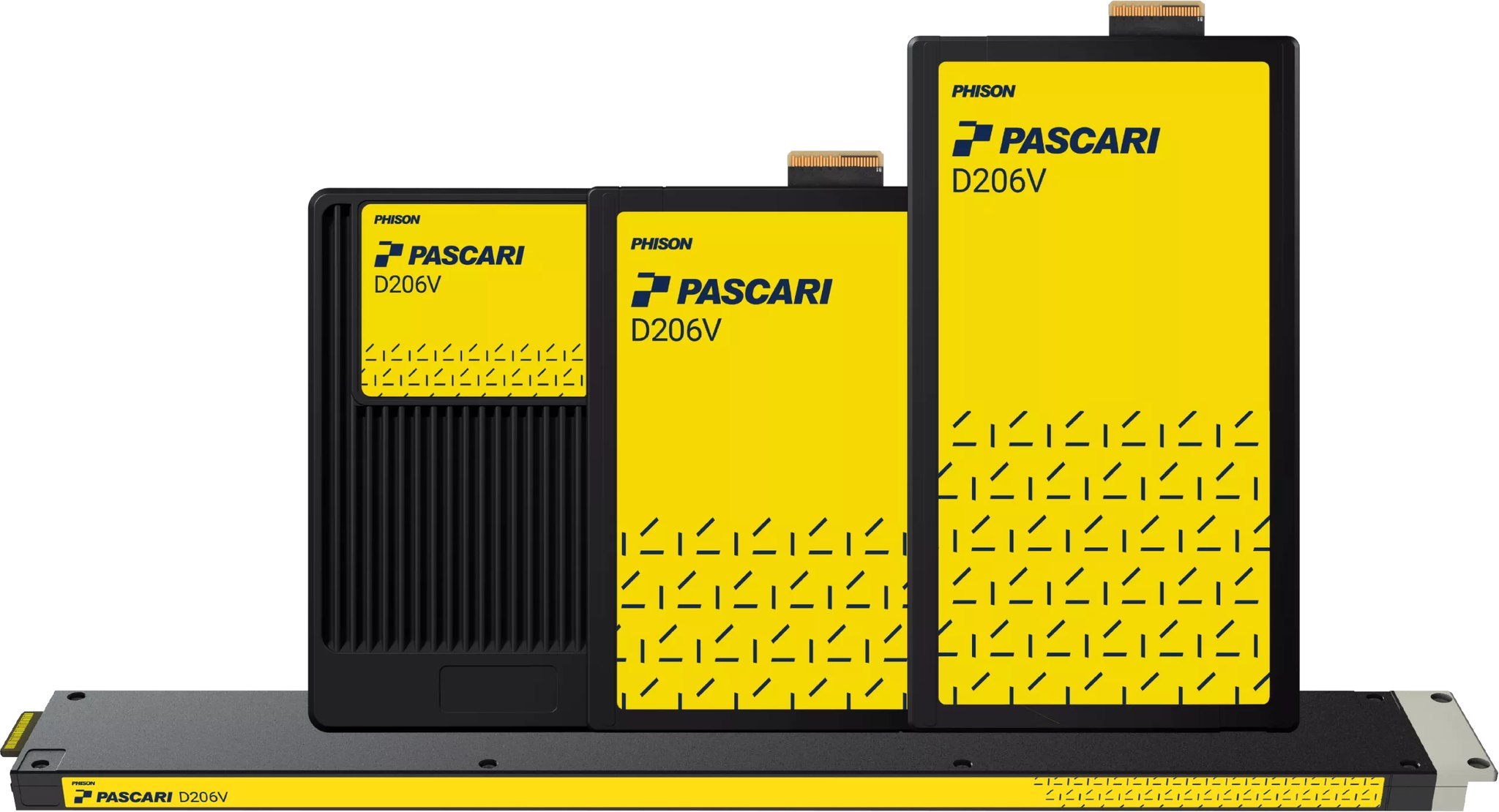
One odd detail is that Phison rates its NPU in DMIPS instead of TOPS, the unit most NPU makers use. Because the metric departs from convention, readers cannot yet place this NPU next to those in PC or phone chips to see which is faster.
Mixed media and the other prototypes
Also at SC26, Phison brought a mixed media design that eliminates dedicated cache drives by placing high-endurance pSLC flash and QLC flash behind a single 16-channel controller. This approach pays off when a drive fails: in a 24-drive server, losing one drive removes only about 4% of the cache capacity, versus up to 25% with a conventional layout. Phison's booth also featured the PCIe Gen 6 controller that first appeared at Computex.
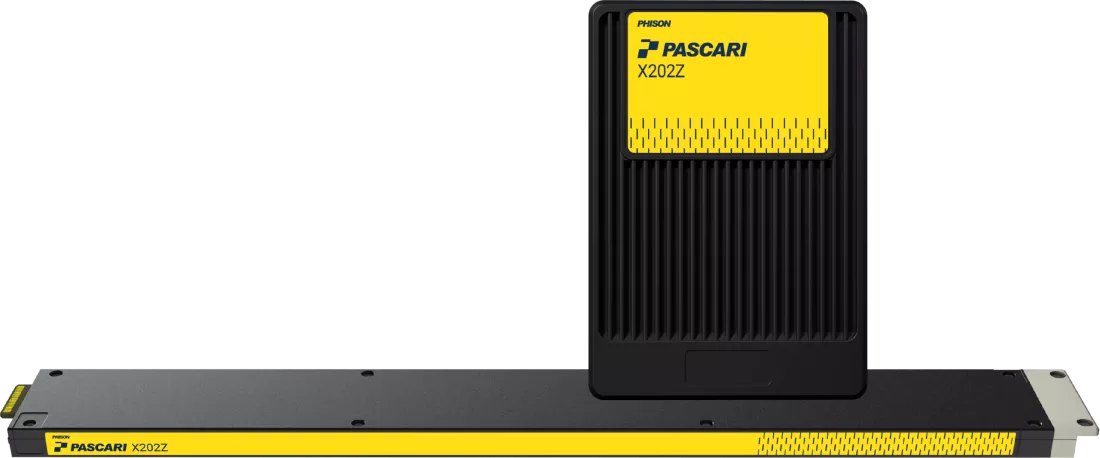
Details on the NPU-equipped SSD itself remain sparse. The company has not said which controller the drive uses, what interface it supports, what its form factor is, or which type of memory it relies on, and these specs may still be under consideration. Since all of these products are still in development, it is best to treat them as concept demos rather than something about to hit the market.
Phison's approach makes sense because the bottleneck in many AI systems is moving data, not just raw compute, so having the drive filter data before sending it out is an easy-to-grasp way to offload work. However, the 10 to 100 times reduction is the company's own figure for suitable workloads, and with NPU specs rated in DMIPS, independent verification will be difficult. For users in Vietnam, this product targets data centers and enterprises, so it is not relevant to personal computers for now and is worth watching only once Phison publishes full specs and real-world test results.
Source: TechPowerUp
Reviewed by: Hero Association