A Base64 string of just 64 "A" characters is enough to corrupt Java's memory, and the Java4Shell flaw has been used to demonstrate RCE attacks on many enterprise applications.
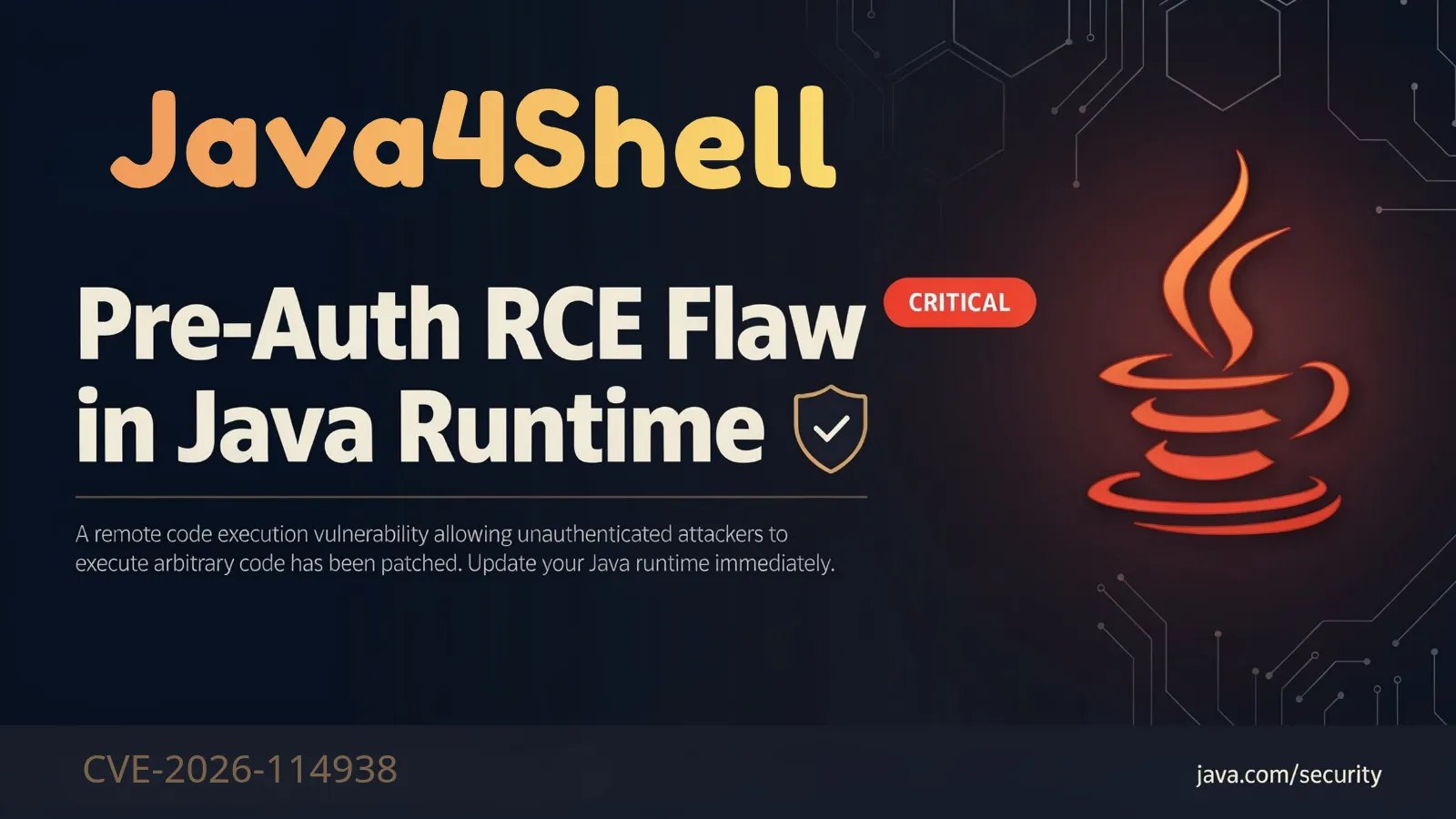
- Java4Shell (CVE-2026-114938) is a memory corruption bug in OpenJDK's hardware-accelerated Base64 decoder that can leak data or allow remote code execution
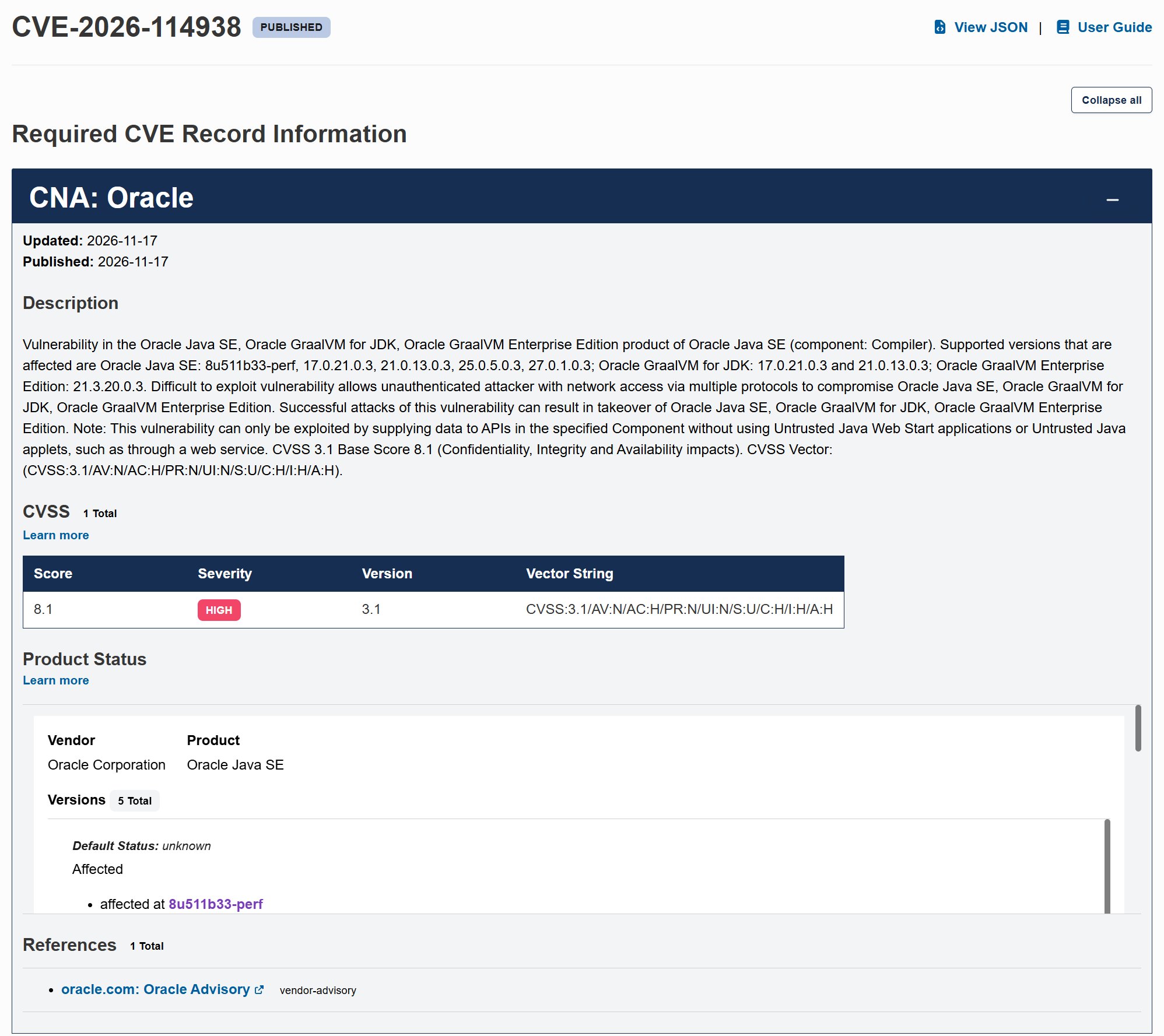
- Calif rated it 9.2 on CVSS 4.0, while Oracle scored it 8.1 on CVSS 3.1
- It affects only x86-64 machines with AVX-512 VBMI, OpenJDK 17.0.6 and later, and distributions built from that code
- Oracle has patched it as of November 17, and no complete exploit code has been published
Table of Contents
Where the bug lives and how serious it is
Java runs behind a huge number of enterprise applications, web services, and financial systems, so a flaw in one of its core components can hit a wide range of otherwise unrelated software. Java4Shell, tracked as CVE-2026-114938, is exactly that kind of bug. It is a memory corruption flaw in OpenJDK's hardware-accelerated Base64 decoding, and an attacker can exploit it to read sensitive data from memory or to execute code remotely (RCE).
Security research team Calif, which disclosed the vulnerability on Tuesday, rated its severity at 9.2 under CVSS 4.0. Oracle scored it lower, at 8.1 (High) under CVSS 3.1. The two numbers don't contradict each other: the gap mostly comes from the two versions of the scoring system.
The Base64 decoder handles very common data, such as authentication, file uploads, and network transmission. According to Calif, a specially crafted Base64 payload can make the decoder overwrite part of Java's memory, opening the way to information theft or malicious code execution.
What it takes to be affected
The notable part is how low the trigger threshold is: 64 "A" characters followed by an equals sign (=) are enough to corrupt memory, while older OpenJDK 17 builds need as many as 128. Even so, the bug appears only when the hardware-accelerated decoding routine runs, and that is used only on certain x86-64 processors that support the AVX-512 VBMI instruction set.
The affected scope includes OpenJDK 17.0.6 and later, plus Java builds compiled from that source, such as Oracle Java SE, Amazon Corretto, Eclipse Temurin, Microsoft Build of OpenJDK, Azul Zulu, and Red Hat OpenJDK. If your server has no CPU with AVX-512 support, the vulnerable routine is never used, so the exploitation risk drops considerably.
Applications exploited in testing
Calif says it successfully exploited a number of popular Java applications running default configurations. The unauthenticated RCE group includes Keycloak, Atlassian Jira, Atlassian Confluence, JFrog Artifactory, Jenkins, and PingFederate. The group requiring authentication includes Apache Kafka Broker, Apache Solr, Elasticsearch, Gerrit, and Spinnaker. Sample applications built with Apache Struts and Spring Boot were also exploitable.
That said, Java4Shell has no single exploit that works everywhere. Attackers must find their own way to deliver malicious Base64 data to the vulnerable decoder in each specific application. Calif has published proof-of-concept code that causes memory corruption, but it is withholding the full exploits targeting the enterprise applications listed above.
AI-assisted discovery and mitigation
According to Calif, researcher Quang Luong found the bug using Codex, OpenAI's AI coding assistant, while reviewing OpenJDK internals. It took him about an hour to find the flaw and two more hours to write the initial exploit, at a total AI cost of under 200 USD. AI agents also helped build additional exploit chains for individual applications.
Oracle released a fix on November 17 as part of its November Critical Security Patch Update, which addresses 655 vulnerabilities in total, and urged customers to install it immediately. For systems that can't be updated right away, Calif suggests disabling hardware-accelerated Base64 decoding with the -XX:-UseBASE64Intrinsics option when running OpenJDK, or using -XX:UseAVX=2 on x86-64 systems to disable AVX-512 instructions. Both are only temporary measures, and developers should still upgrade their Java runtime to the latest version.
What stands out to Migovi is not just the severity but the speed: a memory corruption bug in a core Java component was found in about an hour for under 200 USD, which shows that AI-driven code auditing has become cheap and fast enough for attackers to do the same. Because the affected scope is limited to machines with AVX-512 VBMI, and attackers still have to find their own route for delivering data into each application, the risk is uneven across systems. Still, tools like Jenkins, Jira, and Keycloak often sit right inside a company's internal network, so there is no room for complacency. If you administer Java servers in Vietnam, check which OpenJDK build you are running and install the patch from Oracle or your distributor. If you can't do that yet, temporarily apply the option that disables Base64 intrinsics in the meantime.
Source: BleepingComputer
Reviewed by: Hero Association