The clip is just a joke to promote Muse, but a Meta executive turning a rival into an AI character shows how far the line for deepfakes on Instagram has shifted.
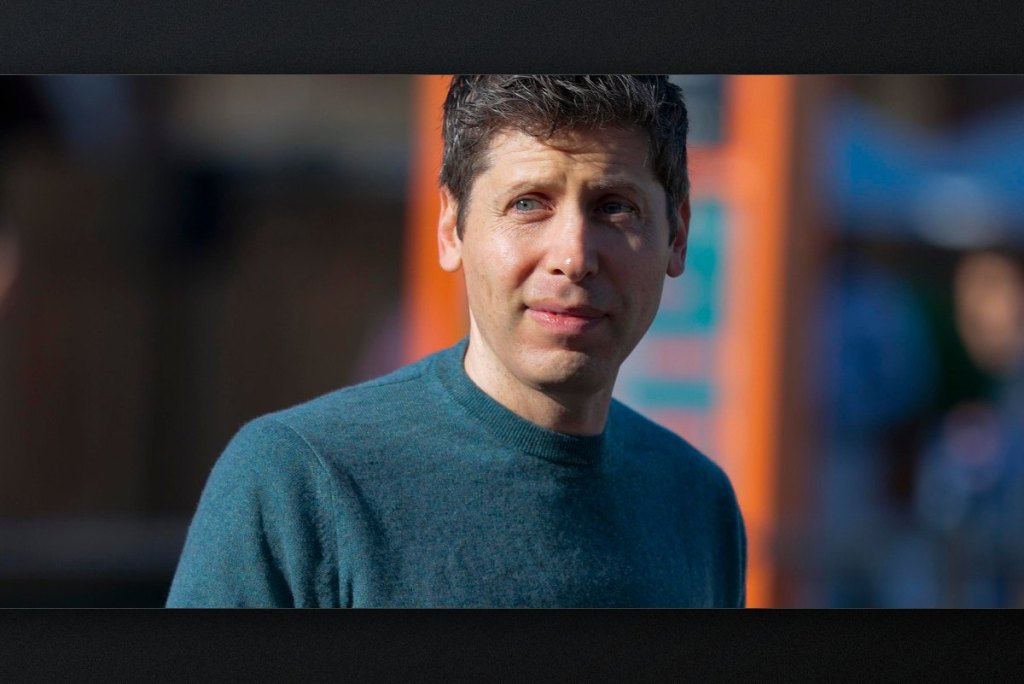
- Alexandr Wang, Meta's chief AI officer, posted an AI-generated clip showing Sam Altman dressed up as the mascot Jolly to promote Muse
- The clip carries an AI label, so it does not violate Meta's current rules
- Meta only requires labels on AI videos depicting real people, not on still images
- OpenAI has not responded to a request for comment
Table of Contents
Alexandr Wang's clip on Instagram
In early November, Alexandr Wang, Meta's chief AI officer, posted a short AI-generated clip on Instagram to promote Muse, the company's AI agent for mainstream users. In the clip, Wang, Meta CEO Mark Zuckerberg, OpenAI CEO Sam Altman, and Jolly, Muse's humanoid mascot, join a four-way video call. When Altman joins the call, he appears in a hooded fur suit and makeup that make him look exactly like Jolly. The caption, "When the homies meet about openai product strategy," is a joke about the AI agent race and Muse's recent popularity.
Wang has promoted Muse in what some call an "anti-PR" style: posting hundreds of times on social media and even calling traditional marketing "corposlops." Even so, it remains notable for a senior executive at a major tech company to post an AI video of a direct rival, especially on a platform that has recently been criticized for how it handles AI-generated content.
https://www.instagram.com/p/DffPoRdhozI/
Instagram and the controversy over AI content
A few years ago, AI content depicting real people drew fierce backlash, and at times even threats of lawsuits. Now it has become a familiar part of social media, so people are far less surprised. Still, Instagram continues to face criticism over it: in October, an AI image of actress Mia Goth went viral, and her representative told The Verge it was "incomprehensible" that Instagram let the image spread instead of working to "protect the image and integrity" of public figures. Scarlett Johansson is also frequently the subject of explicit AI images, while Meta has previously removed some accounts that impersonated others to use their likenesses.
The gap lies in Meta's own rules. AI videos featuring real people must carry an AI label, as Wang's post does, while still images are not required to, so Goth's image had no warning at all. It gets worse: the image was shared by a fan account that had a blue checkmark issued by Instagram itself, which makes it easy for viewers to assume the content is trustworthy.
Responses from Meta and OpenAI
When asked, Meta spokesperson Tracy Clayton said Wang's post was properly labeled as AI in line with the rules. Clayton also noted that Altman has previously allowed his likeness to be used to create AI content, such as when OpenAI launched the Sora app and quickly saw it flooded with fake Altman videos. OpenAI has not responded to a request for comment.
Migovi sees this case as showing how wide the gap still is between "compliant with the rules" and "safe for viewers" on Instagram: Wang's clip is legitimate because it has an AI label and Altman has previously allowed his likeness to be used, yet Mia Goth's still image spread without a label even though it was posted by a verified account. That means AI labels protect viewers in only some cases, and in the rest they have to stay alert themselves. For users in Vietnam, the most practical approach is not to treat a blue checkmark or viral reach as proof that an image is real, especially images of celebrities, and to check official sources before sharing.
Source: The Verge
Reviewed by: Hero Association