Tokens are nearly 60% cheaper, but surging compute demand is pushing up rental prices for Hopper and B300 GPUs, alongside NVIDIA's huge memory purchase commitments.
- NVIDIA's supply commitments rose to $309 billion from $279 billion, driven mainly by multiyear memory purchase contracts
- Token prices have fallen nearly 60% since May, yet rental prices for renewed Hopper contracts have risen by up to 2x and B300 by more than 60%
- Meta Muse passed 10 million setups in the US and Canada after six weeks, and Meta is expanding its Vera Rubin deployment
- NVIDIA no longer ships licensed data center Hopper products to China
Table of Contents
Supply commitments rise on memory
In its report for the third quarter of the fiscal year, NVIDIA said its supply commitments have grown to $309 billion, up from $279 billion in the previous period. The figure appears in the commentary from Collette Kress, who is serving as interim CEO after Jensen Huang's sudden resignation while remaining the company's chief financial officer. The board has also stated that it will not bring Huang back, so this earnings call was the market's chance to hear Kress lay out the company's direction.
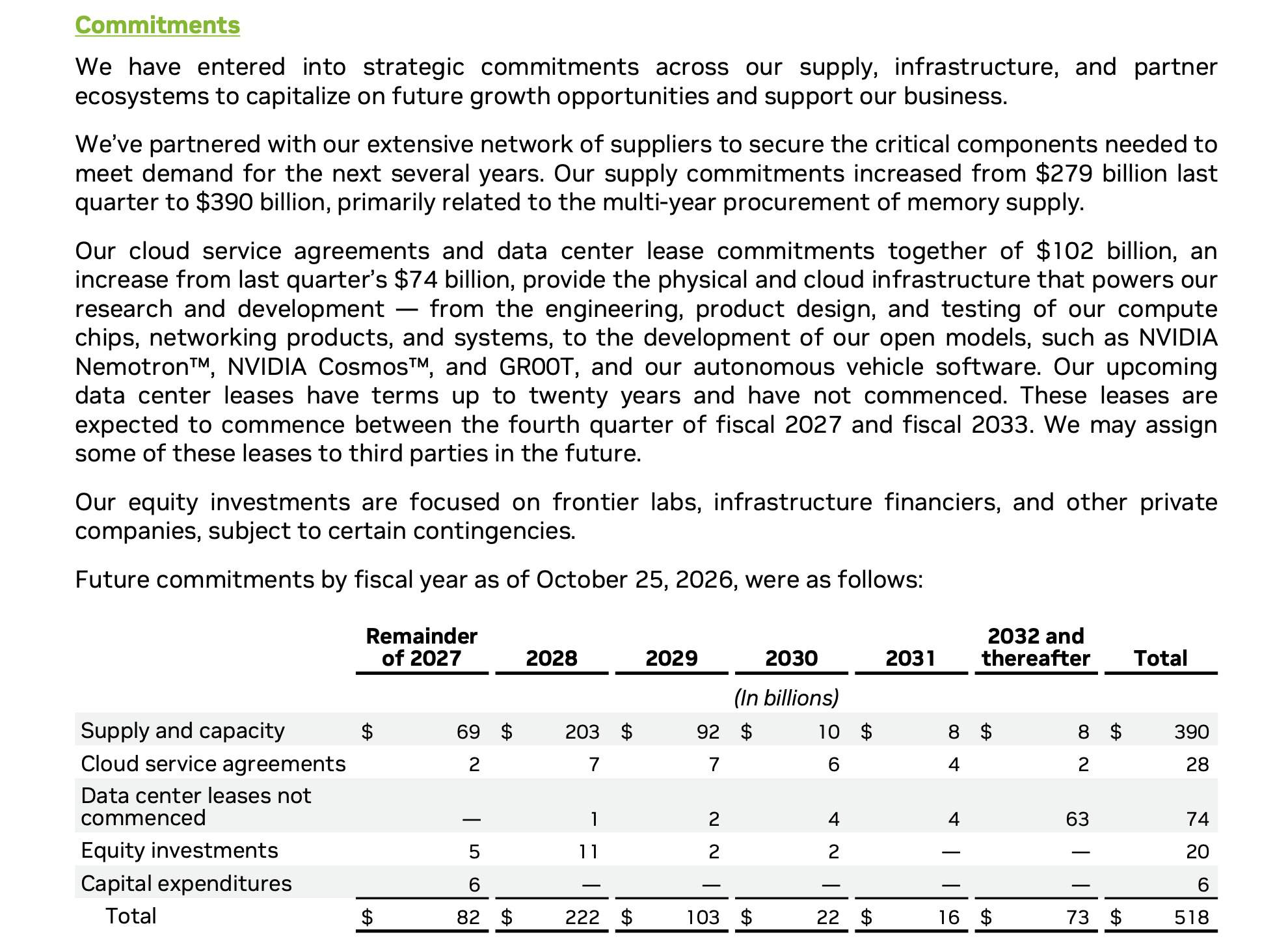
According to NVIDIA itself, the increase mainly comes from purchasing memory under multiyear contracts. That fits the current turbulence in the memory chip industry: when memory supply gets tight and expensive, a buyer as large as NVIDIA has good reason to lock in volume early rather than buy quarter by quarter. The figure also shows that memory costs are taking up an ever heavier share of NVIDIA's planning.
GPU rental prices move against token prices
On GPU rental pricing, Kress said token prices have fallen nearly 60% since May, but that very drop has pushed token usage and compute demand higher. As a result, rental prices are rising across multiple generations: Hopper GPUs are being re-signed to multiyear contracts at up to twice the original price, while B300 rental prices have climbed more than 60% since launch. For NVIDIA, high rental prices are a favorable signal, since they encourage customers to keep spending and ease concerns that older GPUs will sit idle and gradually lose value.
These claims don't stand alone. An August report found hourly H100 rental prices reaching $3, up noticeably from $2 in January, while B200 sat in the range of $5.50 - $5.80 versus $5 before. When two independent sources point the same way, Kress's argument gains some support, though it still comes from someone who sells the hardware directly.
Agentic AI and Meta

NVIDIA is best known for non-agentic AI workloads, but Kress stressed that the company is also making its presence felt in agentic AI. That segment in turn benefits traditional CPUs: Intel CEO Lip-Bu Tan has said the GPU-to-CPU ratio has dropped to 4:1 from 8:1 previously. To illustrate the growth of agentic AI, Kress cited Meta Muse, an agent running on NVIDIA infrastructure, which passed 10 million setups in the US and Canada in just its first six weeks. Meta is also expanding its deployment of Vera Rubin hardware for the next generation of AI agents.
Finally, Kress said NVIDIA's outlook does not include any licensed data center Hopper products sold to China, and the company is no longer shipping those products.
Looking at the numbers individually, most of the evidence for rising rental prices still comes from NVIDIA's side. Only the August report on H100 and B200 is an outside source, so Migovi considers the trend credible, but the "2x" figure should be read as the high end in some contracts rather than the general baseline. A more notable detail is that Hopper, an older generation, is still being rented at higher prices, which suggests compute demand is large enough that previous-generation GPUs aren't losing value as fast as many feared. For businesses or AI teams in Vietnam renting cloud GPUs, waiting for prices to fall may not be a safe plan, and locking in a long-term contract early could pay off. As for whether rising memory costs will push up prices of mainstream hardware, the available data isn't enough to draw a conclusion, so treat it as something to watch.
Source: Wccftech
Reviewed by: Hero Association