All five buffer overflow flaws in F5 BIG-IP can be exploited without authentication, and the company admits there is no mitigation other than installing the hotfix.
- F5 has released emergency hotfixes for five critical buffer overflow flaws in BIG-IP APM and iRules that unauthenticated attackers can exploit
- The impact is a halt of the TMM process or remote execution of arbitrary code, plus one high-severity APM SAML flaw that causes DoS
- F5 says there is no mitigation, only the hotfix
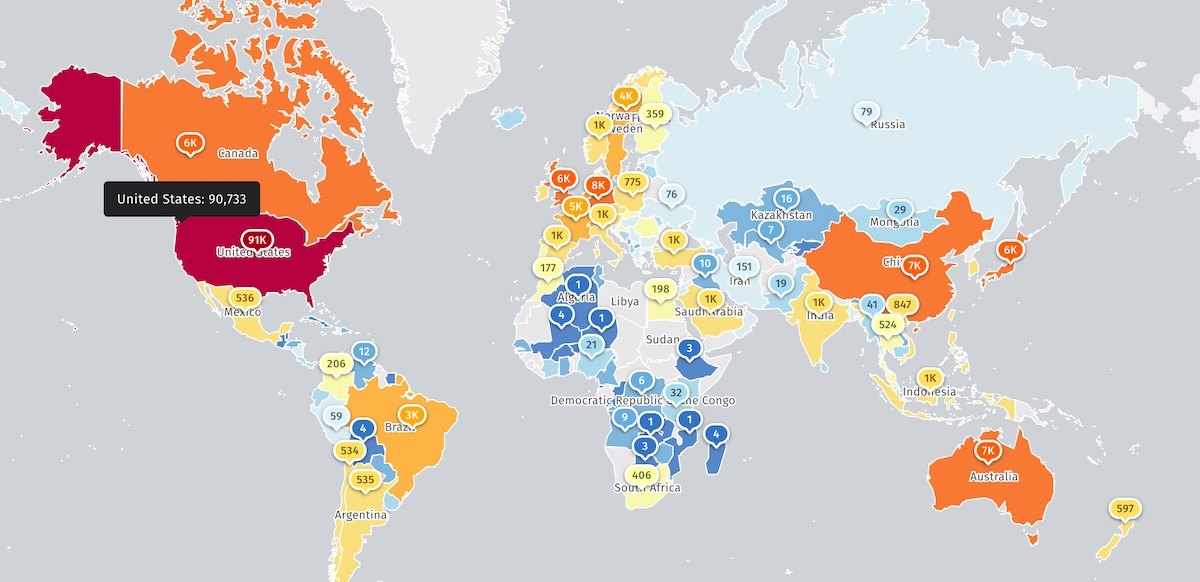
- Shadowserver has counted more than 177,000 BIG-IP devices exposed on the internet, and it is unclear how many are patched
- No real-world exploitation has been reported, but past F5 flaws have been abused many times
Table of Contents
Where the five flaws sit
F5 has urged customers to patch five vulnerabilities in BIG-IP: CVE-2026-121805, CVE-2026-120292, CVE-2026-120285, CVE-2026-116953, and CVE-2026-123637. All five are stack-based buffer overflows in BIG-IP Access Policy Manager (APM), a centralized access management proxy, as well as in the iRules scripting feature. The company rates all of them critical because an unauthenticated attacker can halt the Traffic Management Microkernel (TMM) process, or even execute arbitrary code remotely, on systems with a vulnerable configuration.
F5 has also shipped a hotfix for a high-severity APM SAML flaw, CVE-2026-126822, caused by an integer underflow (also known as wraparound). It lets an unauthenticated remote attacker trigger a denial-of-service (DoS) condition. F5 explains that traffic is disrupted while TMM restarts, and that the issue affects only the data plane, not the control plane.
No mitigation, only a hotfix
What makes life hard for administrators is that F5 confirms there is no mitigation for these flaws. The only fix is to install the out-of-cycle hotfixes the company released on Wednesday on affected devices. The exposure is not small: Shadowserver is currently tracking more than 177,000 BIG-IP devices and more than 14,600 IP addresses with BIG-IP APM fingerprints exposed to the internet, though it is unclear how many of them are honeypots or already patched.
F5 has not confirmed that any of these flaws is being exploited in the wild. Even so, the product line's history leaves no room for complacency: the US Cybersecurity and Infrastructure Security Agency (CISA) has flagged seven F5 vulnerabilities as actively exploited since November 2021, four of which were used by ransomware gangs. Most recently, in September, F5 patched another critical BIG-IP APM flaw (CVE-2026-94127) that was exploited as a zero-day for remote code execution.
Why you should patch early
Over the years, cybercriminal groups and state-backed threat actors have repeatedly targeted F5 flaws to breach corporate networks, probe internal servers, take over devices, deploy data-wiping malware, and steal sensitive files from victims worldwide. A year ago, F5 itself disclosed that state-backed hackers had breached its systems in August 2025 and stolen source code along with information about undisclosed BIG-IP vulnerabilities.
F5 is a Fortune 500 company serving more than 23,000 customers, including 80% of the Fortune Global 500 and 48 of the Fortune 50, and its appliances often sit in very sensitive positions in the infrastructure. For that reason, administrators are advised to upgrade to the latest version as soon as possible, even if there are no signs of exploitation.
The most worrying thing about this patch batch is not the number of flaws but that F5 has no mitigation to temporarily block the risk, so any organization slow to install the hotfix is leaving the door open until it is patched. History is not on the side of those who wait, either: F5 flaws have been exploited many times, and one APM flaw was even used as a zero-day in September. If your organization runs BIG-IP APM or uses iRules, put checking versions and installing the hotfix at the top of your list instead of waiting for the next scheduled maintenance window. End users have nothing to do, but this is a reminder that edge devices are always an attractive target.
Source: BleepingComputer
Reviewed by: Hero Association