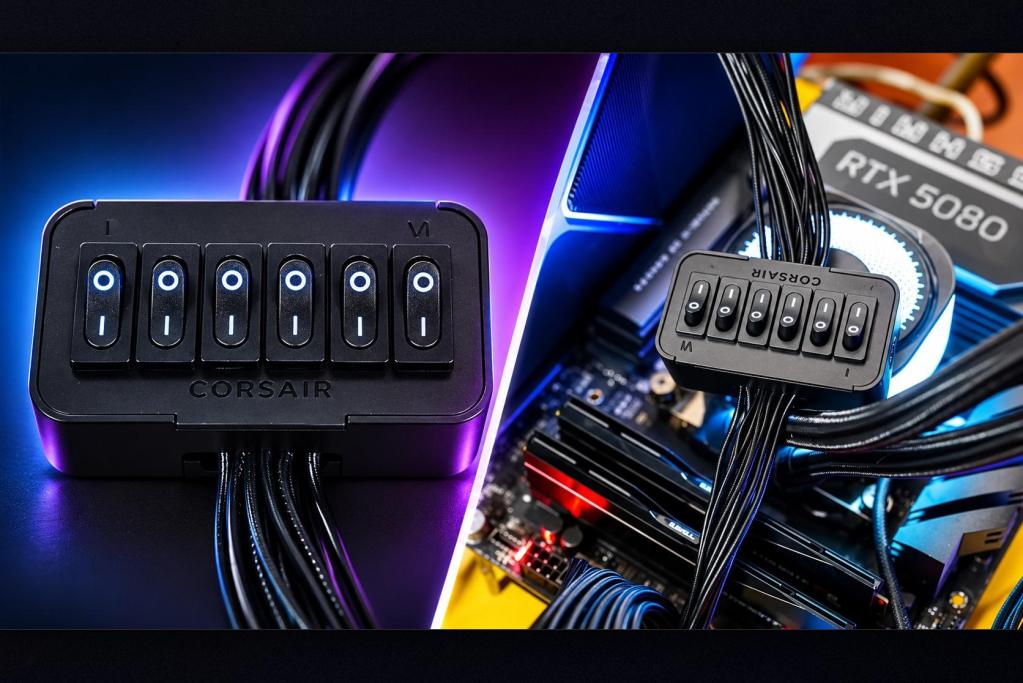
Corsair's PinProtect has been tested on an RTX 5080 using a special 12V-2x6 cable with six switches, showing the GPU shut down when current through a single pin exceeds the threshold.
- Corsair has a special 12V-2x6 cable with six switches, each controlling one power pin, used to test PinProtect.
- The cable is not sold at retail and has not been officially announced by Corsair.
- On an RTX 5080 running FurMark, the GPU drew about 250 W while the tester disconnected the pins one by one.
- PinProtect's threshold is around 9.5 A per pin, while the RTX 5080 reached about 10.5 A per pin with four pins disconnected.
Table of Contents
A test cable with six switches
Like several other vendors, Corsair is trying to curb melting 12V-2x6 connectors with its own solutions. PinProtect debuted alongside the RM1200e power supply. A PinProtect+ version appeared on the HX1000i SHIFT Crystal, adding iCUE integration, real-time per-pin current monitoring, and customizable thresholds.
The question is how these features perform in practice. The Professional Review channel recently tested a GeForce RTX 5080 with a special Corsair 12V-2x6 cable. Midway along the cable is a splitter with six switches, each tied to one power pin. Flipping a switch disconnects the matching pin while current continues through the remaining ones.
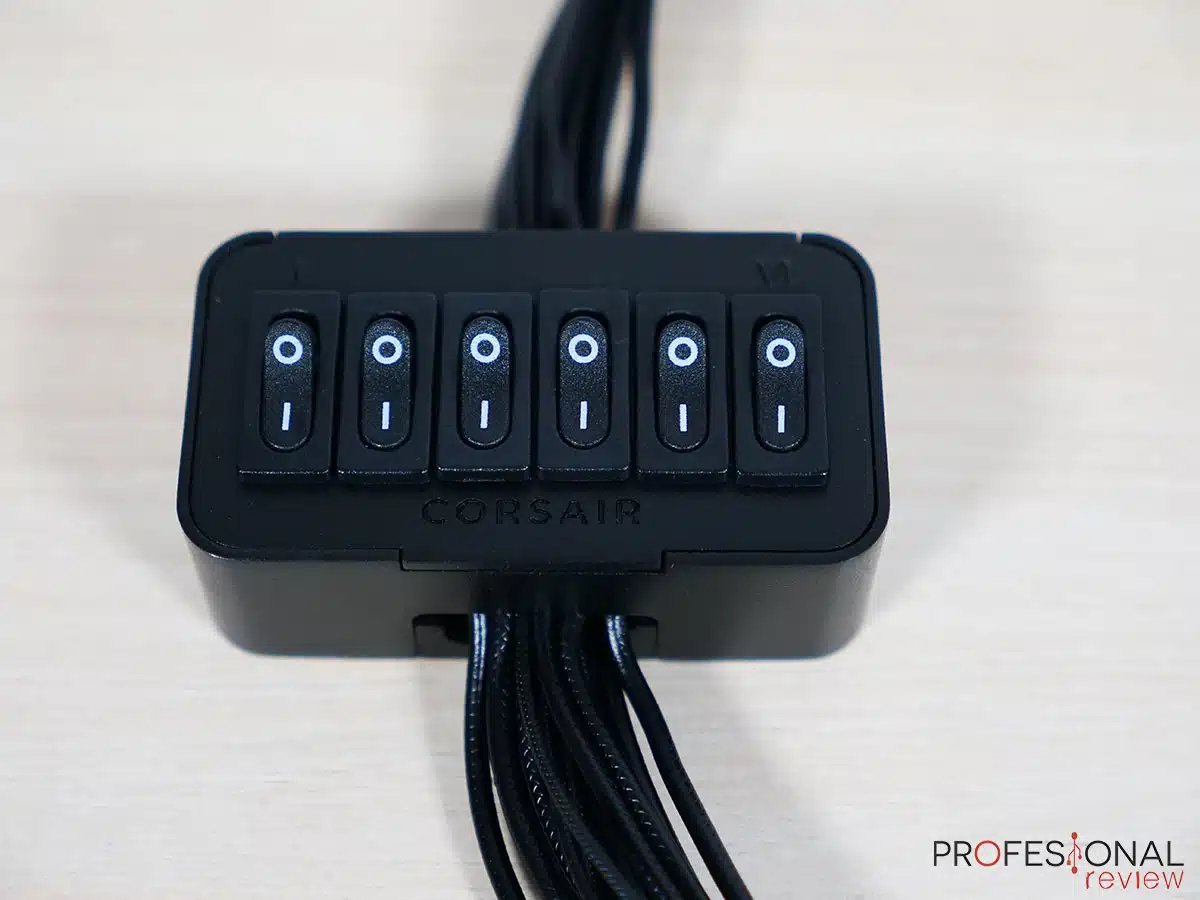
According to sources, the cable is not available from any retailer and does not appear on Corsair's official website. It is likely used only for internal testing, since Corsair has never announced such a product. In the video, the tester connects an RM1200e power supply to an RTX 5080 with this cable and disconnects the pins one at a time.
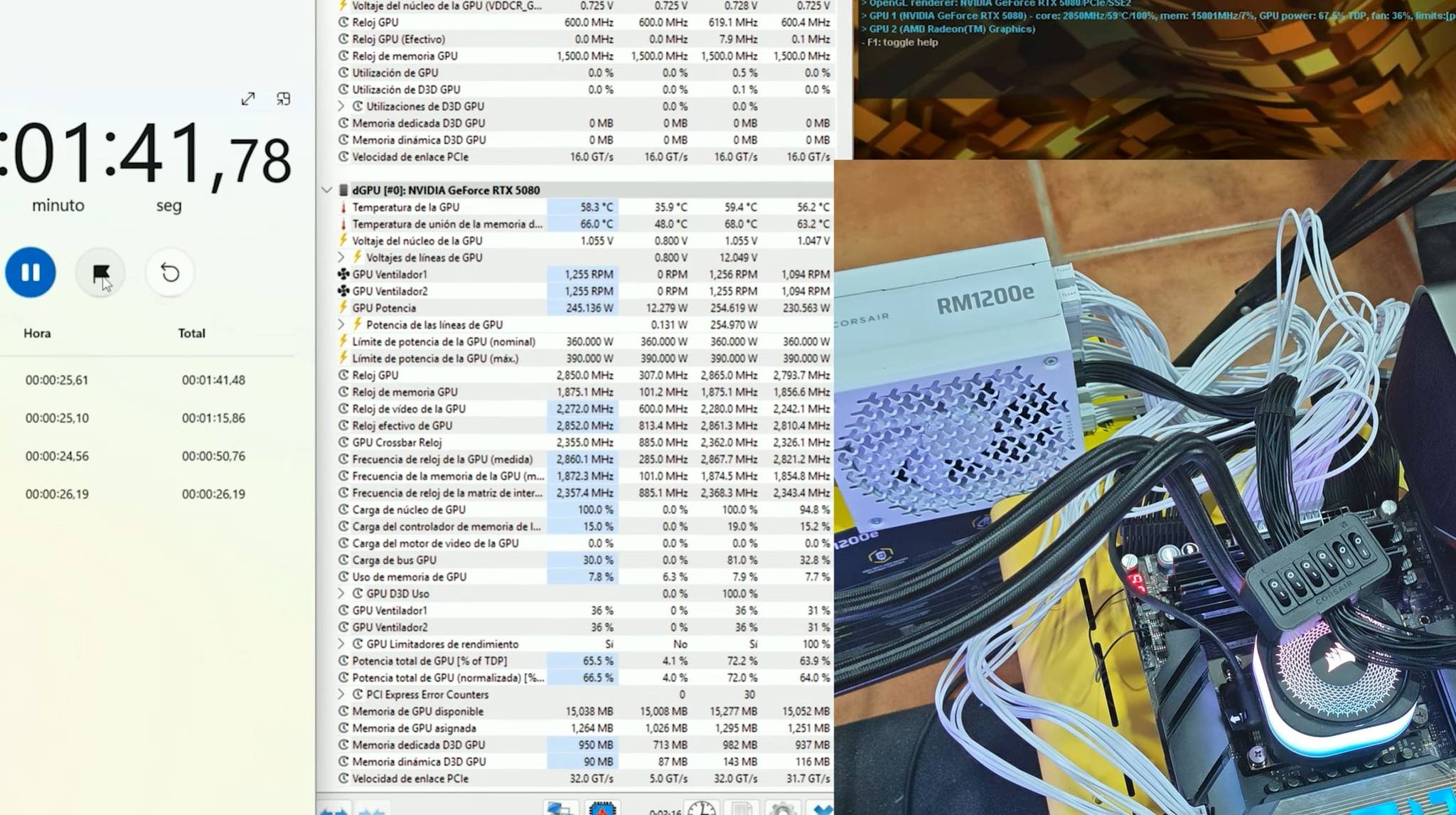
RTX 5080 measurements
After each disconnection, the GPU kept running a FurMark stress test for about 24 - 26 seconds. The card's power draw held at around 250 W, delivered through the pins that were still connected. At a certain point, PinProtect triggers a GPU shutdown because the current through one pin has exceeded the allowed level.
PinProtect's threshold is around 9.5 A per pin. On the RTX 5080, current through each pin reached about 10.5 A with four pins disconnected, which is above that threshold. This is the point where the protection mechanism needs to step in.
On the RTX 5090, the mechanism would likely trigger sooner because of its higher power draw. According to the original article, disconnecting just one or two pins could be enough for PinProtect to shut down the GPU. Overall, the feature worked as Corsair describes in this test.
This is only a single test with one card and one specific power supply, so it can't be treated as a conclusion for every configuration. Still, per-pin current monitoring looks like a more practical approach than relying on cable quality alone. Owners of high-power graphics cards should still seat the connector firmly and check it periodically, because PinProtect only shuts down the GPU after a fault has already occurred.
Source: Wccftech
Reviewed by: Hero Association