AMD's desktop CPU share fell to 29.9% in Q3, according to Mercury Research, while Intel climbed to 70.1%, likely due to supply factors.
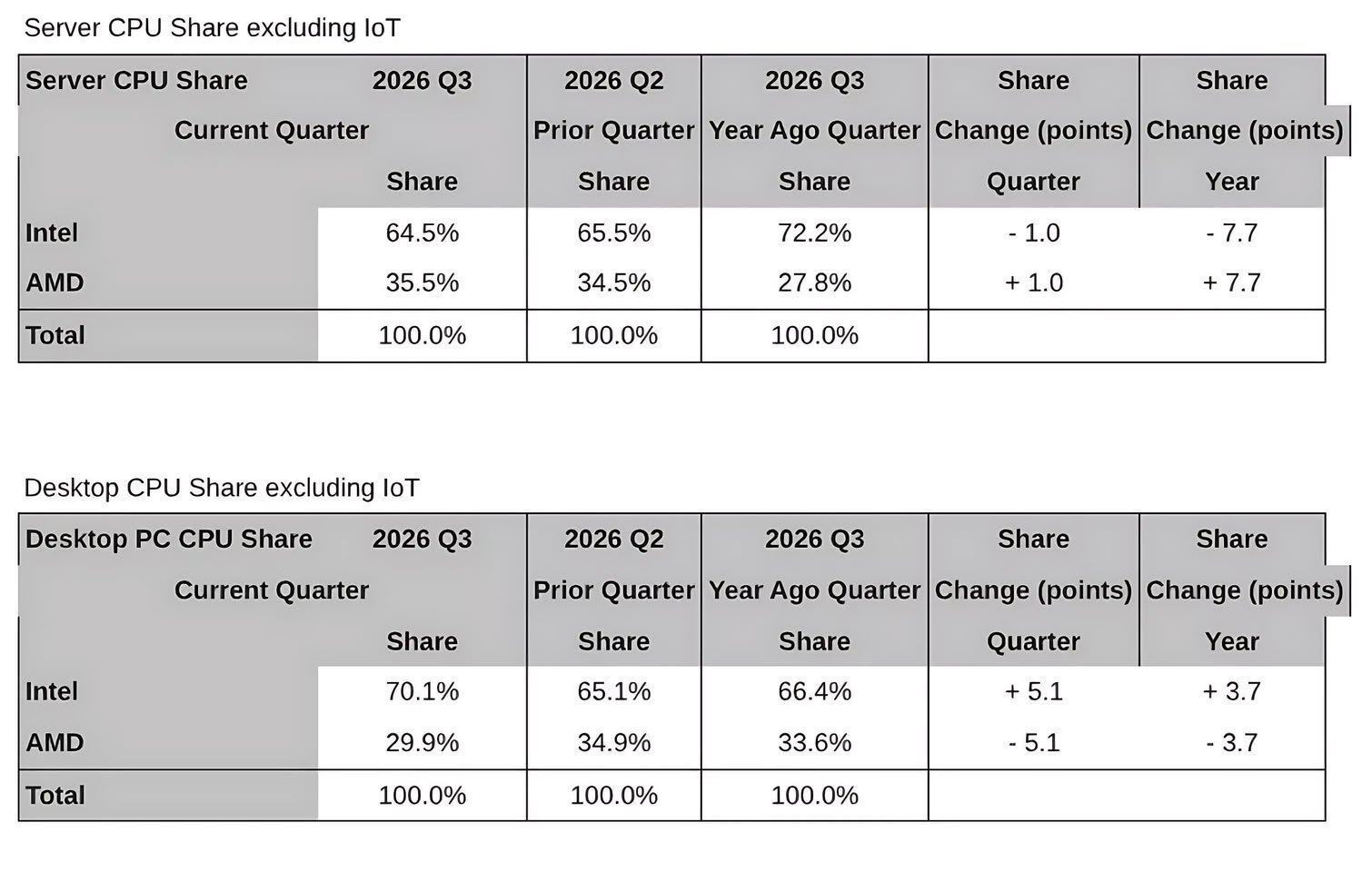
- AMD's desktop CPU share dropped to 29.9% in Q3 2026, down 5 percentage points from 34.9% in Q2.
- Intel rose to 70.1%, and AMD hit its lowest desktop level since early 2025.
- Mercury Research admits the cause is unclear but leans toward supply factors at both companies.
- In servers, AMD still edged up to 35.5% from 34.5% the previous quarter.
Table of Contents
AMD drops 5 percentage points in a single quarter
According to new data from Mercury Research, cited by PC Gamer, AMD's desktop CPU share came in at 29.9% in Q3 2026. In Q2 the figure was 34.9%, a drop of exactly 5 percentage points. Intel climbed to 70.1% as a result.
This is AMD's lowest desktop share since early 2025, when the company sat around 28%. Compared with the same period last year (33.6%), AMD is also down nearly 4 percentage points. According to the source, this is AMD's first decline in this segment in several months.
The cause is still unclear
Mercury itself admits it is not certain what drove the reversal. One theory is that weaker laptop demand left Intel with extra chips to shift to desktop. Q3 is typically a seasonal high point for desktops, and Intel's supply to this market had been fairly tight before then. AMD, meanwhile, appears not to have benefited from that seasonal lift.
Mercury also points out that AMD relies more heavily on PC gaming. According to the firm, that segment is being hit by a shortage of gaming GPUs. AMD has also publicly acknowledged that demand is outpacing its ability to deliver. Lisa Su recently even called AMD a "data center first" company.
Supply matters more than product appeal
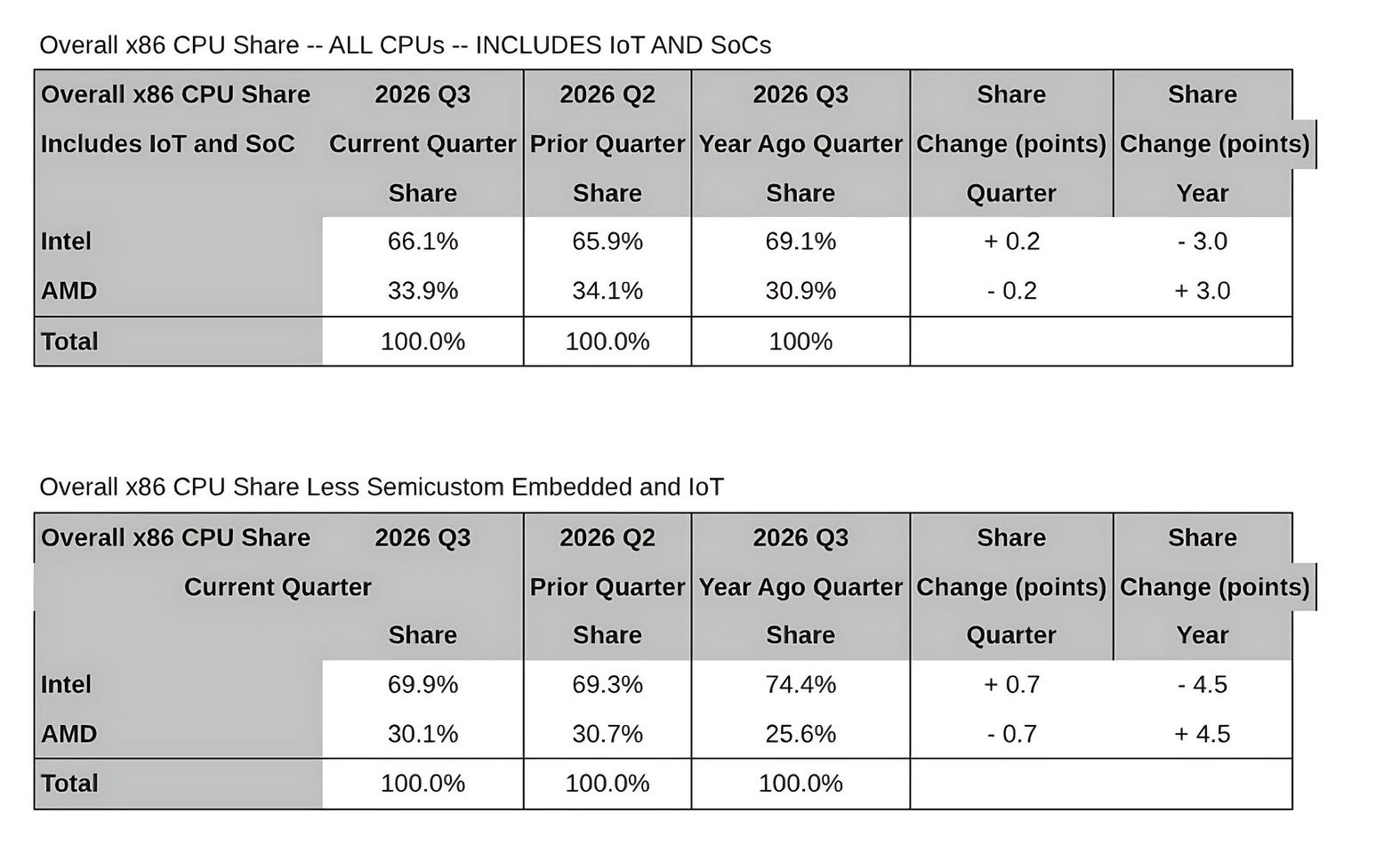
Intel's gain probably says more about supply than about desktop chips suddenly winning over gamers. Mercury recorded a sharp drop in desktop shipments in Q2. In Q3, laptop CPU shipments from both companies fell by more than 10%.
In servers, the trend went the other way. AMD rose to 35.5% from 34.5% the previous quarter. That fits the data center focus Lisa Su just mentioned.
One quarter's swing isn't enough to conclude that AMD is losing its competitive edge on desktop. According to Mercury itself, the picture has more to do with which company has stock to sell than which chip is more appealing. For users, the thing to watch is CPU and GPU supply in the coming quarters, since it will directly affect pricing and availability when upgrading a build.
Source: TechPowerUp
Reviewed by: Hero Association