Runway has open-sourced Praxis-1, an AI model that learns from video to control robots. It scored 46.2% on NVIDIA's RoboLab-120 in a test the company ran itself.
- Runway has released Praxis-1 with open weights and code under the Apache 2.0 license, which allows commercial use.
- The model takes camera images, text instructions, and position data, then computes suitable movements for a robot.
- On NVIDIA's RoboLab-120 leaderboard, Praxis-1 scored 46.2%, leading the World Action Model category. All results were produced by Runway itself and have not been independently verified.
- The model still confuses similar-looking objects and cannot plan complex action sequences on its own.
Table of Contents
What is Praxis-1
Runway, best known for generative video models such as Gen-4.5, has just released the full weights and code of Praxis-1 under the Apache 2.0 license. The model was introduced in late September but was initially limited to a select group of partners. Alongside the release, the company published a detailed research paper with new benchmark results.

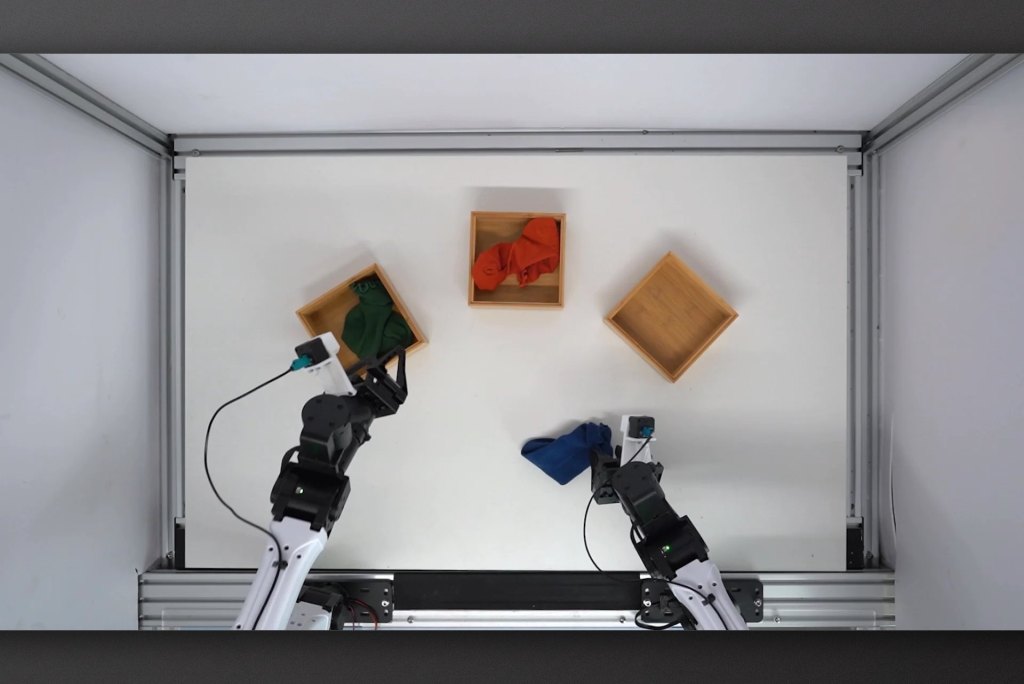
Praxis-1 takes images from a camera, text instructions, and information about the robot's position. From these, it predicts how the environment will change and then computes a suitable movement. As new frames arrive, the system continuously adjusts its control commands. Runway calls this a World Action Model.
Learning from video to reduce reliance on robot data
Praxis-1 is built on a video model that has already learned how objects move and interact from ordinary footage. Runway then fine-tuned it on video of human actions along with robot data. This approach could reduce the need for specialized robot datasets, which are very expensive to collect.
Still, the model needs a certain amount of robot data. To adapt it to a Franka arm, Runway used about 277 hours of footage from the public DROID research dataset. For a bimanual robot, the company used between 1,400 and 2,600 hours of training material. Whether this approach really needs less robot data than models without video pretraining remains an open question.
Test results
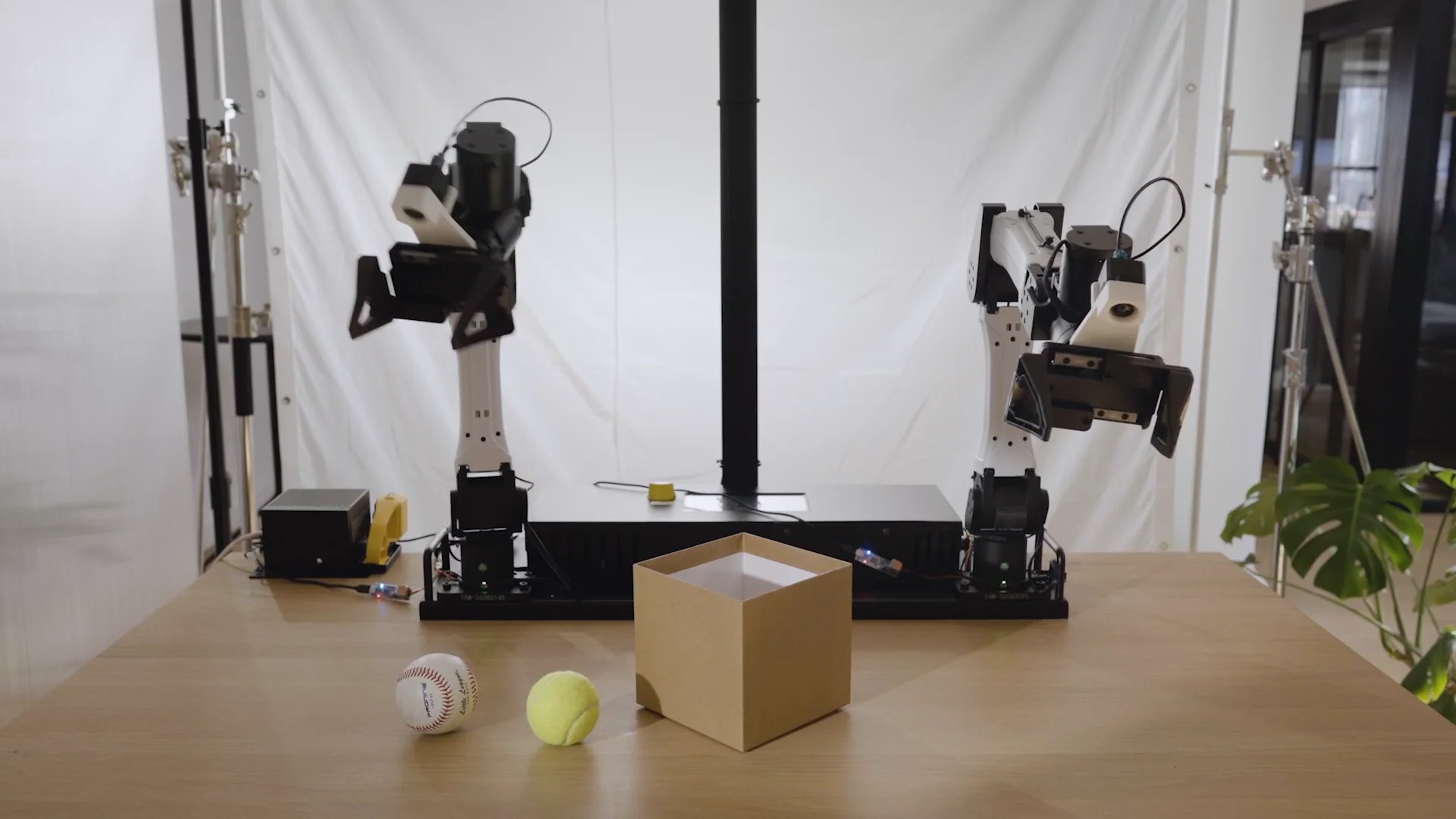
On NVIDIA's RoboLab-120 leaderboard, Praxis-1 reached a 46.2% success rate. The benchmark consists of 120 simulated tasks such as sorting, grasping, and stacking objects. FLUX 3 Action, also a World Action Model, scored 42.9% under the same conditions. That puts Praxis-1 at the top of the World Action Model category, though it ranks fifth overall, behind two AI agents and two robot models with different architectures.
After fine-tuning on DROID data, Runway tested the model on a real Franka arm with ten tasks, such as placing a banana on a plate or closing a drawer. With ten attempts per task, Praxis-1 succeeded 88 times, while FLUX 3 Action managed 80. The company also tested it on a mobile robot with a gripper arm that Google once used to develop RT-1, a type of robot that did not appear in the earlier training. After fine-tuning on about 95 hours of data, Praxis-1 averaged 80% in simulation, compared with 52.4% for the original RT-1 on the same test.

Hardware requirements and limitations
Developers can download Praxis-1 from Hugging Face after registering and agreeing to the access terms, while the code is on GitHub. Runway also provides ready-made versions tuned for several types of robots. The base model still needs additional training before it can run on a new robot system.
The standard version requires a GPU with 80 GB of memory. Runway estimates that a quantized version can run on an RTX 5090 with 32 GB of VRAM. However, the GitHub documentation says actual peak memory usage has not been measured.
According to the research paper, the model sometimes confuses objects that look alike and handles ambiguous instructions poorly. For long tasks, users must spell out each step, since Praxis-1 cannot yet reliably plan complex action sequences. Runway sees it mainly as a system for fast execution of robot movements, one that could later be paired with general-purpose AI models that break work into smaller steps.
What stands out about Praxis-1 is that it brings motion understanding learned from video into robotics, with an Apache 2.0 license that permits commercial use. That said, the figures come only from Runway's own internal testing, so readers should wait for independent verification before comparing it with other models. The claim that the quantized version runs on an RTX 5090 is also just an estimate, not a measured result.
Source: The Decoder (AI)
Reviewed by: Hero Association