
KAIST's GAZE makes ZNS SSDs up to 3x faster by fixing an OS bottleneck
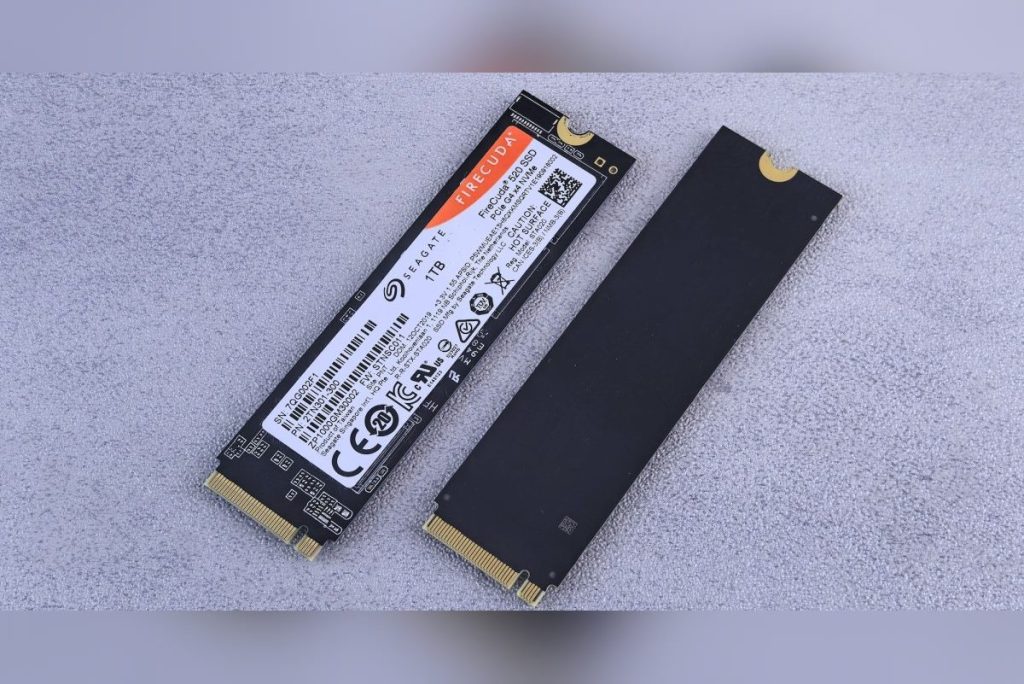
KAIST researchers have unveiled GAZE, a filesystem technology that handles garbage collection for ZNS drives, boosting SSD performance by up to 3x without any special hardware.
- GAZE is a filesystem technology from a KAIST research team that removes an operating system bottleneck for ZNS flash drives.
- Cleaning a 1 GB zone takes about 1.7 seconds, 283 times longer than cleaning a 2 MB section, and more than 70% of the latency comes from the CPU.
- GAZE splits garbage collection into 4 overlapping stages, preallocates memory, and stops write requests from waiting on cleanup.
- Performance rises by up to 3x, and cleanup time drops to roughly one-third, with no special hardware required.
- The biggest impact is on AI inference, where processors need data at exactly the right moment.
Why are ZNS drives slow?
A KAIST research team led by Professor Youjip Won has unveiled GAZE, a filesystem technology aimed at removing an operating system bottleneck that holds back a new generation of flash drives. According to EurekAlert, the work is being presented at ACM SOSP 2026 in Prague.
Flash drives cannot overwrite old data with new data. To reuse capacity, a drive has to copy the data that is still valuable to another location and then erase the rest. This cleanup process is called garbage collection.
The team focused on ZNS (Zoned Namespace), a storage model that divides a drive into large zones, each able to hold gigabytes of data. This keeps the drive simple but pushes cleanup onto the filesystem, which was designed to handle much smaller regions.
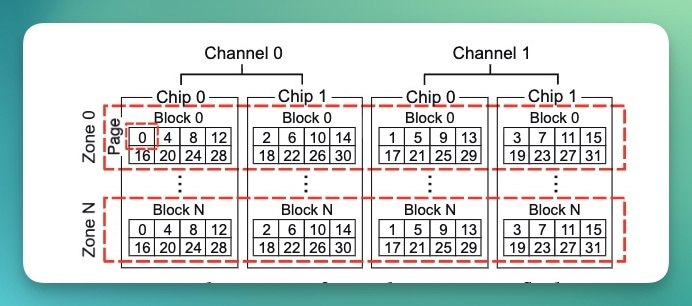
In the team's tests, cleaning one 1 GB zone took about 1.7 seconds, 283 times longer than cleaning a 2 MB section. Throughout that time, new write requests had to wait. Surprisingly, more than 70% of the latency came from CPU work, such as checking which data is still valid or handling memory, rather than from the drive itself.
How GAZE handles cleanup
GAZE splits garbage collection into 4 overlapping stages, so the system reads the next batch of data while still writing the previous one. It also reserves memory for cleanup in advance instead of requesting it bit by bit. In addition, write requests that can sit temporarily in memory no longer have to wait for cleanup to finish.
As a result, GAZE reaches up to 3x the performance of the baseline configuration and of earlier solutions such as ZNS+ and P-GC. Cleanup time drops to roughly one-third. The approach requires no special hardware and does not change how data is stored on the drive.
Professor Won said: "This research is significant because we have completely eliminated the operating system bottleneck that prevents high-speed flash devices from reaching their full potential."
The biggest impact is on AI inference, where processors need data at exactly the right moment and lose efficiency when left waiting. If GAZE reaches data centers, the high-speed storage they have already invested in could run at its full speed.
GAZE is still a research project, and the original article does not mention plans to bring it to operating systems or commercial products. The notable point is that most of the latency sits in the CPU rather than the SSD, which suggests that a hardware upgrade alone may not solve the speed problem. Readers following AI storage infrastructure should watch whether these results get independently verified on real-world systems.
Source: Digital Trends
Reviewed by: Hero Association