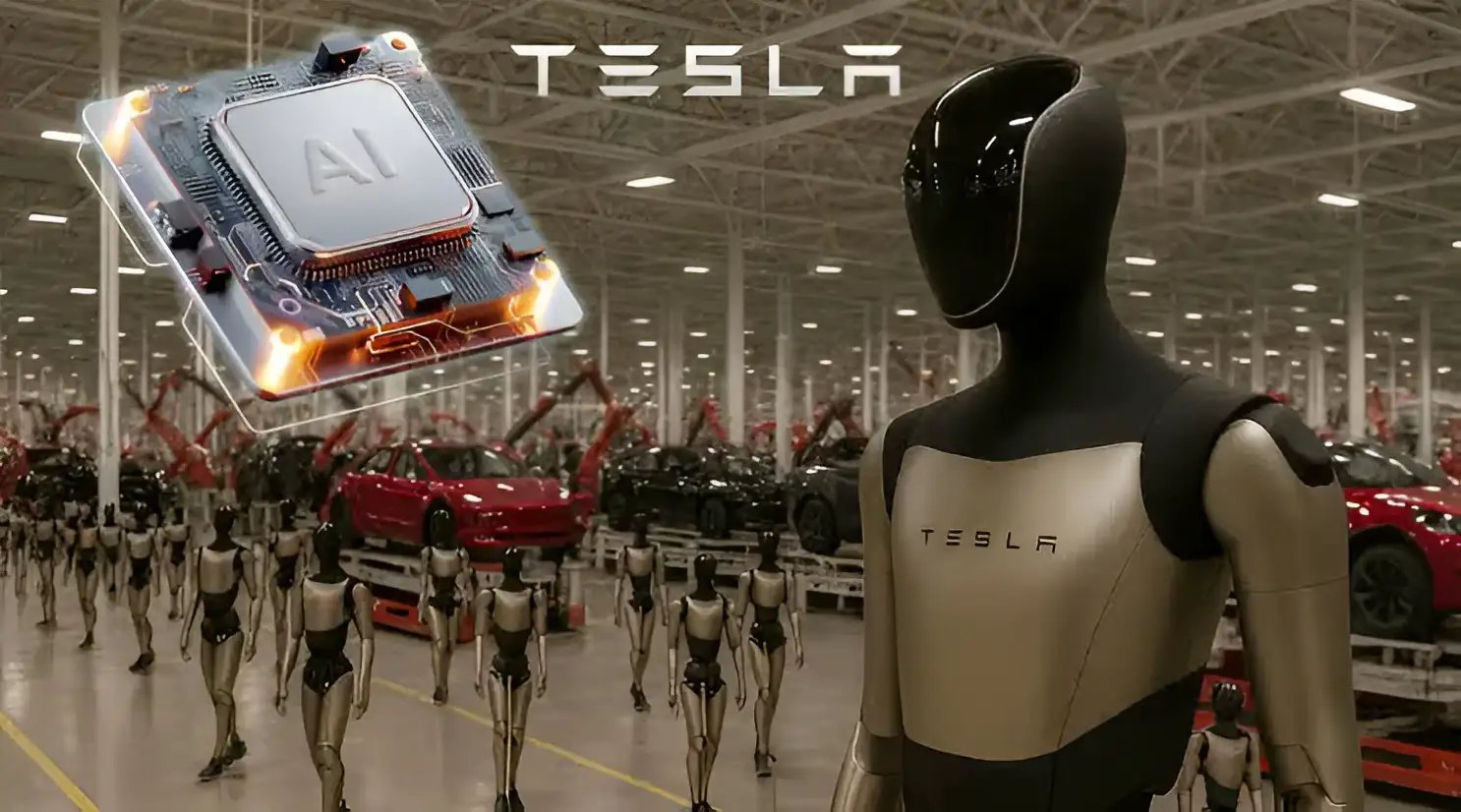
GUC is reportedly prioritizing TSMC production slots for Google and Microsoft chips because they are more profitable, so the first batch of Tesla AI5 chips will go to the Optimus robot.
- China Times (Taiwan) reports that Tesla's AI5 is unlikely to enter mass production in 2027
- GUC, the AI5 design partner, is giving its TSMC N3 production slots to Google and Microsoft chips because of better margins
- The first AI5 batch is expected to go into the Optimus robot, and Tesla vehicles may get enough chips from 2028
- In October, Musk cut AI5 memory from 144 GB to 96 GB because of market shortages
Table of Contents
Production slots are going to cloud chips
AI5 is Tesla's next-generation AI chip, and according to recent comments from Elon Musk, the company will use it mainly for the Optimus humanoid robot. A report from Taiwanese media now says the chip is unlikely to ship in volume in 2027, and the cause lies in manufacturing. Tesla's AI5 design partner, Global Unichip Corporation (GUC), is reportedly directing the limited production capacity it gets from TSMC to Microsoft and Google products, because those customers bring in higher profits.
According to China Times, the production quota GUC receives from TSMC for the N3 process family has increased, but it still isn't enough to meet demand from all of its customers. As a result, GUC will allocate slots to cloud providers' chips first, and Tesla will have to wait for whatever is left.
The two names getting priority are Google's Axion chip family and Microsoft's products. Axion is Google's custom chip built on Arm's design rules, while Microsoft currently offers its custom Maia AI chips. Both companies are pursuing in-house silicon to gain alternatives to NVIDIA's expensive products, so their orders are both large and steady.
Why Tesla is further back in line
According to China Times' sources, profit is the main reason for this allocation, since cloud providers place orders with predictable volumes and high gross margins. Because the quota set aside for AI5 is also not enough to cover demand from Tesla's electric vehicles, the report concludes that AI5 will not be mass-produced in 2027.
From this, the supply chain expects the first AI5 batch to be reserved for the Optimus robot. Only after production experience builds up could Tesla vehicles get enough AI5 chips, in 2028, a scenario that matches what Musk recently said about AI5 being reserved for Optimus.
Production capacity is not the chip's only difficulty. In early October, Musk said Tesla had cut AI5's memory from 144 GB to 96 GB, as a severe global memory shortage pushed prices up sharply and made chips scarce. AI5 is therefore being squeezed from two sides: expensive, hard-to-get memory on one, and production slots that must compete with bigger customers on the other.
This story shows that even Tesla has limited leverage when queuing for TSMC's advanced manufacturing capacity, because its order volume is far smaller than that of the cloud giants, and that is what decides who gets priority. Keep in mind that this is supply chain information relayed through a Taiwanese newspaper, not an announcement from Tesla, so the exact timeline could still change. If it holds true, Tesla putting its first batch toward Optimus is a practical choice, not necessarily a sign that Optimus is valued over the cars. For users in Vietnam, the immediate impact is close to zero, and if you are waiting for next-generation AI hardware in a Tesla vehicle, the date to watch is 2028, not next year.
Source: Wccftech
Reviewed by: Hero Association