Q.ANT's optical chip promises a 4 to 5x reduction in power consumption, but that figure comes from simulation only, and the company's CEO admits it has not been proven on real hardware.
- Germany's Q.ANT builds optical processors that run alongside GPUs rather than replace them
- The 4 to 5x power reduction exists only in simulation and has not been proven on real hardware
- The chips are being tested at IONOS facilities, and more than 30 engineering teams are optimizing AI models for them
- The chip uses a 90 nm process, so no new fab investment is needed, but the supply chain remains an open question
Table of Contents
AI's power problem
As AI becomes an unavoidable part of daily life and models grow more complex, the electricity bill for running them is ballooning. AI labs and cloud providers are trying to build data centers where renewable power is cheap and plentiful, such as in Northern Europe. But they are running into logistical hurdles, shortages of some key components, and a wave of opposition to data centers. So a group of hardware startups, including Germany's Q.ANT, has taken a different route: building a new kind of chip so the AI models themselves use less power.
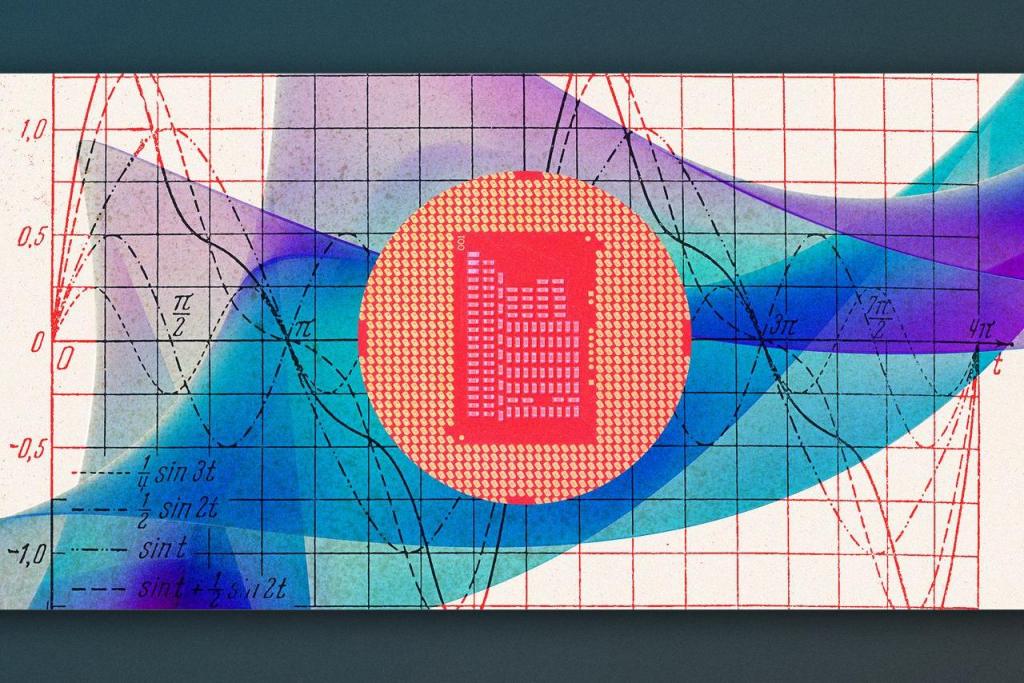
That chip is the optical processor. GPUs move and process data by shifting electrons, while optical processors use light waves. Light does not generate heat as it travels and allows more data to be processed at once. In theory, that means optical chips draw less power and need minimal cooling, which is one of the biggest expenses in a data center.
Running alongside GPUs
Q.ANT is not aiming to replace GPUs. It wants the two types of chips to work side by side. According to Michael Förtsch, the company's founder and CEO, GPUs such as the NVIDIA H200 are a technological masterpiece and very hard to compete with on their home turf. So linear operations stay with the GPU, while the nonlinear and more complex parts are handed off to the optical chip. He explains that light is inherently a wave, or a sine function, so describing a circle takes only two points. With linear functions alone, you would need countless points and line segments. The company expects its chip to be strongest at image and video tasks such as recognition, segmentation, and generation, followed by robotics and Physical AI.
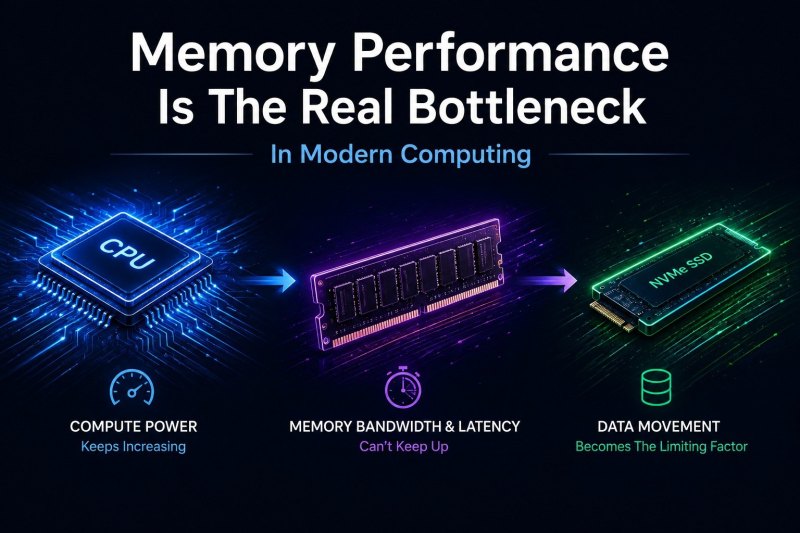
The savings come from the fact that the biggest cost today is memory access, and the less data needed to finish a job, the more efficient the system. According to Förtsch, an optical chip handles a complex operation in a single step, where a conventional chip needs thousands, which cuts the number of memory accesses significantly. In simulation, the estimated power reduction is around 4 to 5x, but he says plainly that the company has not yet proven this figure on real hardware.
For developers, he says there is no new language to learn: C++ and Python still work, and existing code already runs on the company's machines. However, a model optimized only for GPUs will not automatically run faster on an optical chip. It has to be adapted.
Obstacles before wider adoption
Few optical processors are running in data centers today. But Q.ANT has just placed its chips in the facilities of cloud company IONOS as part of a pilot program, and it says more than 30 engineering teams are developing AI models optimized for optical computing. It is a chicken-and-egg problem: without models written for the chip, it is hard to sell to cloud providers, and without chips to use, it is hard to persuade developers to design for them. Förtsch acknowledges this and says any processing technology needs time to build enough credibility before a company like Google will dare to build infrastructure around it. That is why the company is entering data centers through test systems, to prove the chip is durable enough for real-world conditions.
On manufacturing, Q.ANT's chip needs only a 90 nm process from the 2000s, the kind many foundries still use to make very cheap chips. That lets a foundry use the same production line to make high-performance chips at a much higher price without a large upfront investment. Even so, Förtsch says that if an order for 100,000 chips came in, Q.ANT would be ready, but he is less sure about its suppliers, because the optical hardware supply chain needs more time to become as solid as the semiconductor industry's.
The company's chip is not tied to NVIDIA or AMD, and he says Q.ANT wants the freedom to work with everyone. He also does not rule out targeting GPUs' territory within the next 5 years if the opportunity arises, though he admits he does not know what AI workloads will look like by then, since that depends on the architecture of future models.
Migovi believes this approach makes sense because it targets the real pain point, power consumption, and by standing next to GPUs instead of challenging them, Q.ANT avoids a fight it would struggle to win. Still, the 4 to 5x power reduction exists only in simulation, models must be adapted specifically for optical chips, and the supply chain is not yet solid, so this remains a technology in the testing stage. For users in Vietnam, nothing changes for now in the devices they use or in the price of AI services. What is worth waiting for is measurements on real hardware from pilot programs such as IONOS's. Only with that data will optical chips be worth considering a way to cut the cost of running AI rather than a promise.
Source: Wired
Reviewed by: Hero Association