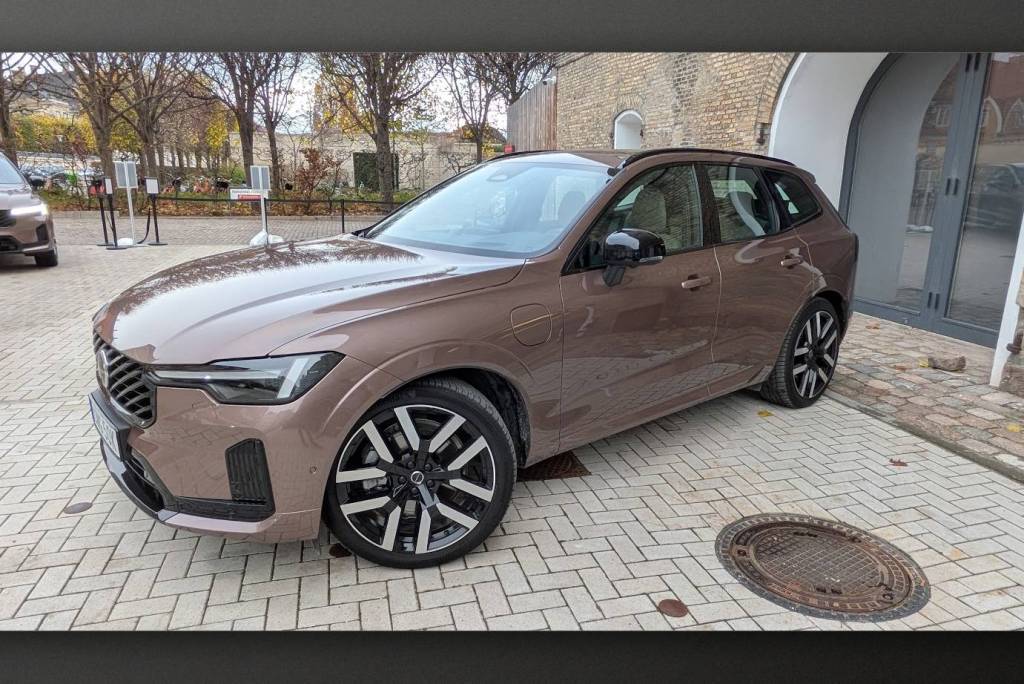
A 41.2 kWh underfloor battery gives the Volvo XC60 T8 and XC90 T8 double the electric range of the previous generation, but there are still moments when the gas engine has to wake up.
- The 2028 XC60 T8 and XC90 T8 go up to 78 miles and 73 miles on electric power alone, according to preliminary EPA estimates
- 41.2 kWh battery (37.9 kWh usable), 7.2 kW AC charging, no DC fast charging, so a full charge takes 5.7 hours
- If you want AWD or hard acceleration, the gas engine still has to start, especially in cold weather
- Deliveries begin in early 2027, and Volvo has not announced pricing
Table of Contents
A big battery changes the plug-in hybrid completely
Most plug-in hybrids (PHEVs) today have only enough battery for about 20 miles, and owners are often too lazy to plug in anyway, so the electric-only portion barely matters in daily life. Volvo is going against that trend with the 2028 XC60 T8 and XC90 T8 "Long-Range" models. The company fitted a 41.2 kWh underfloor battery (37.9 kWh usable) into the rather old SPA1 platform, more than doubling the electric range of its two best-selling SUVs. That capacity is even larger than the original Nissan Leaf, the Hyundai Ioniq, and many of the compliance EVs that followed. Volvo also raised charging speed from 3.6 kW to 7.2 kW, so despite the bigger battery, charging time is almost unchanged.
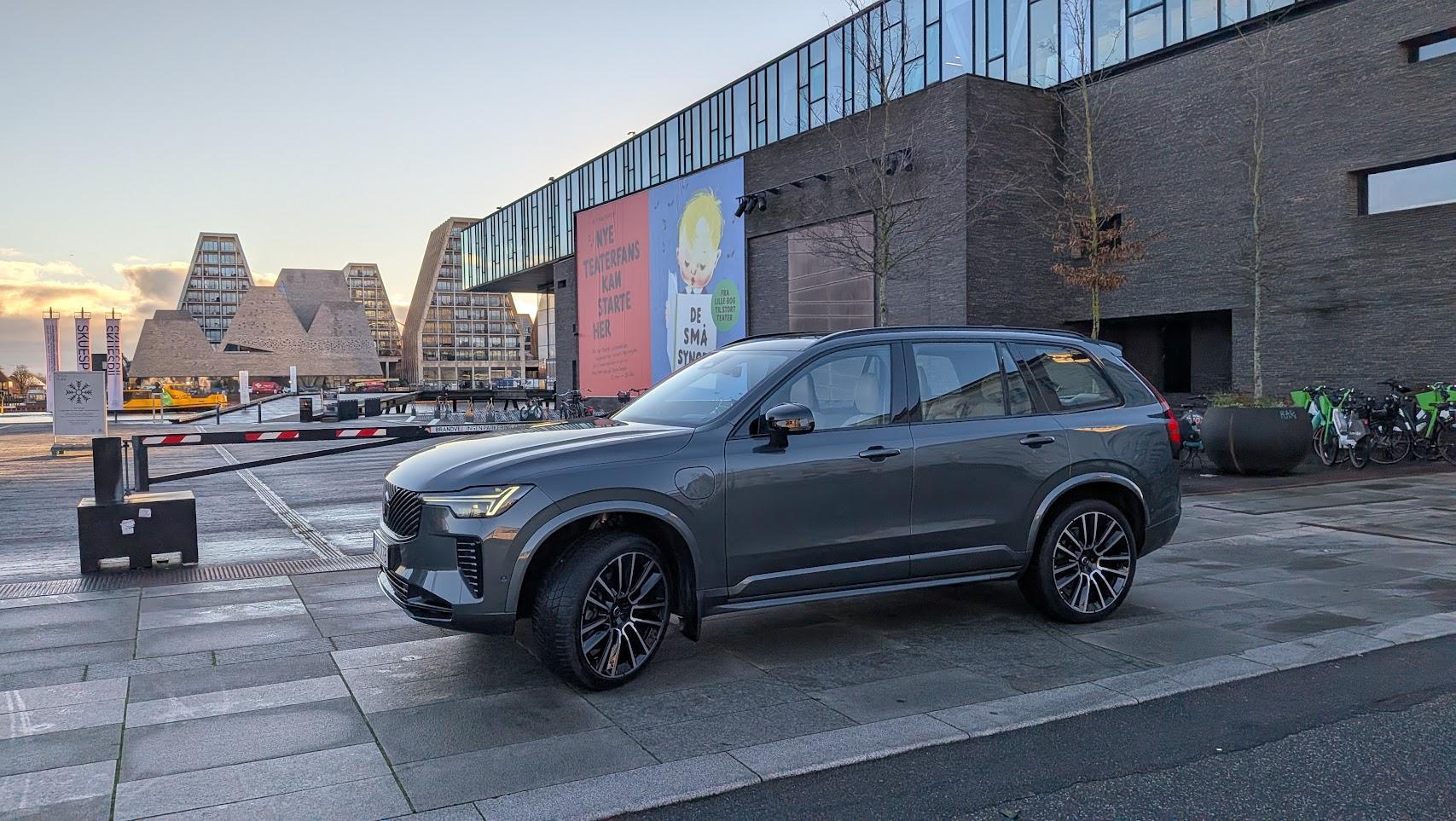
Both models share the T8 AWD powertrain: a turbocharged 2.0-liter four-cylinder making 247 hp up front, paired with a 70 hp electric motor, plus a 174 hp motor on the rear axle. Combined output is 455 hp and 560 lb-ft of torque. According to preliminary EPA estimates, the XC60 T8 goes up to 78 miles on electric power (590 miles total combined gas and electric range) at 67 MPGe, while the XC90 T8 manages 73 miles at 61 MPGe. Those figures put both Volvos at the top of the list of PHEVs with the longest electric range in the US market, since the Mercedes-Benz GLE 450e, Toyota RAV4 Prime, and the PHEV versions of the Range Rover top out around 50 miles. The average American drives about 30-40 miles a day, so on paper you could use the car like an EV from Monday to Friday without ever waking the gas engine.
XC60 and XC90: two kinds of buyers
If you don't need a third row, the XC60 is the better package. It weighs 4,855 lb yet still sprints from 0-60 mph in 4.5 seconds, and it uses 48 kWh per 100 miles in electric mode and returns 29 mpg once the battery is depleted, which is fairly efficient for a big crossover. Unlike the XC90, the 2028 XC60 also gets a refreshed exterior with a tidier front end, Matrix LED headlights, and a horizontal taillight bar, while the interior features Google Gemini running on an 11.2-inch touchscreen that is not especially large but is very easy to use. It is also easy to maneuver in tight spaces thanks to a 37.4-foot turning circle, and its front and rear legroom is slightly better than its bigger sibling's. The trade-off is limited practicality, with 21.1 cu. ft. of cargo space behind the second row and a 3,500 lb tow rating.
The XC90 T8 is for families that need a three-row electrified SUV but aren't ready to move to the EX90 or the Rivian R1S. Because Volvo redesigned the battery as a flat pack under the floor, the car keeps its practicality with six or seven seats, 34.5 cu. ft. of cargo space behind the second row (69.4 cu. ft. maximum), and a tow rating of up to 5,000 lb, while still running 0-60 mph in 4.9 seconds despite its extra weight. The downside is lower efficiency at 53 kWh per 100 miles (27 mpg on gas), and the 31.9 inches of third-row legroom still suits only children. Apart from the new battery and Google Gemini, the interior and exterior are largely unchanged, which the reviewer doesn't count as a flaw since he loves Volvo's interiors.
The downsides of electric-only driving
Even with a big battery, you can't hide the trade-offs of a plug-in hybrid. The car has no DC fast charging, so filling the 37.9 kWh usable battery takes 5.7 hours on a standard Level 2 home charger in the US, and a full 27-53 hours on a regular 120-volt wall outlet. The reviewer isn't too bothered, since on a long trip you can simply switch to gas, but DC fast charging would still be nicer to have. In pure EV mode, the car is effectively a rear-wheel-drive SUV, since the front wheels are driven by the gas engine and a supporting motor (which can't propel the car on its own) while the main motor drives the rear. So when you need AWD traction in bad weather, or when you stomp the throttle at a green light, the gas engine will start up and sometimes keep running for a while. Even so, in cold weather and on snow tires, the reviewer still got more than 145 km (90 miles) from a full charge in the XC60.
The car is also twice as complicated, since on top of a full electric battery pack you still have to maintain an 18-gallon gas tank, a turbocharged four-cylinder engine, and an 8-speed automatic transmission. That means hauling around more hardware, giving up more space, and having more parts that can fail. It also doesn't support wireless Apple CarPlay or Android Auto by default, so you have to plug in a USB-C cable or buy a third-party dongle. On the plus side, Volvo's Android-based system on the center display runs most of the same apps as your phone and responds faster than screen mirroring, which can sometimes lag.
Pricing and delivery timing
Electrek still prefers that buyers choose an all-electric model such as the upcoming EX60 or EX90. If Volvo prices the 2028 T8 models close to 70,000-80,000 USD when deliveries begin in early 2027, going fully electric remains the easier decision. Still, for people who aren't ready to go fully electric, these two models are well worth considering: with a Level 2 charger every night, you wake up to nearly 80 miles of electric range, double the average American's daily commute, while the 18-gallon tank and gas engine handle long trips and towing in cold weather. With real-world electric range of 73-78 miles, the gas engine is no longer something you use every day but an extension for longer trips.
Migovi believes Volvo's approach is notable because the company has turned the PHEV from a token solution into something usable every day, and the reason lies in the 73-78 miles of electric range, enough for most commutes without touching gas. However, that advantage is only fully realized if you can charge at home: charging from a regular outlet can take up to 53 hours, and without DC fast charging, every long trip still depends on the gas engine. For Vietnamese buyers considering a PHEV, the lesson is to look beyond power output and ask how far the car really goes on electricity and whether you can charge at home every day. As for these two models in particular, official pricing and distribution details will be the deciding factors, so it is best to wait for Volvo to announce them before drawing a conclusion.
Source: Electrek (electric vehicles)
Reviewed by: Hero Association