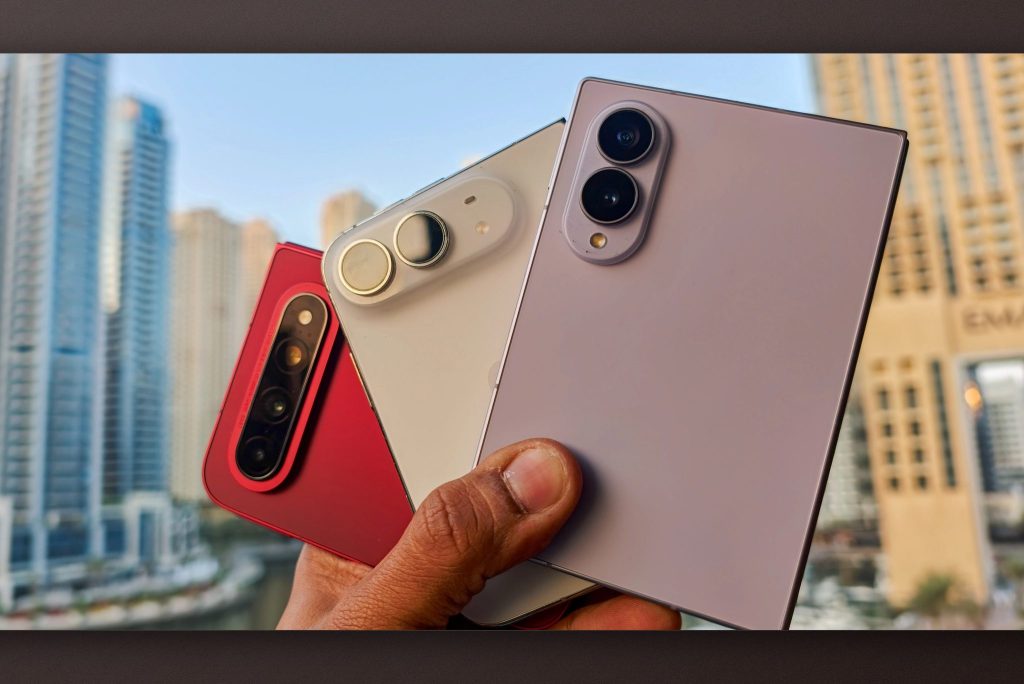
A camera comparison of the iPhone Duo, Galaxy Z Fold 8, and Xiaomi 18 Fold in Dubai reveals a big zoom gap, since the first two phones lack an optical telephoto lens.
- The iPhone Duo and Galaxy Z Fold 8 have only a main camera and an ultrawide, while the Xiaomi 18 Fold adds a 50 MP periscope telephoto with an 80 mm focal length (3.3x).
- From 3x up, the Xiaomi 18 Fold leaves both rivals far behind and still holds usable detail at 96x.
- The iPhone Duo is strong thanks to computational HDR and daytime 4x zoom, while the Galaxy Z Fold 8 has a slight edge in ultrawide and two-person selfies.
- In low light, the Galaxy Z Fold 8 picks exposures that add a lot of noise, while the Xiaomi 18 Fold produces the most accurate reds under LED lighting.
Table of Contents
Three hardware philosophies in one form factor
For the first time, Apple, Samsung, and Xiaomi are playing on the same field: book-style foldables with passport-style wide displays that feel comfortable in the hand both folded and unfolded. In terms of ergonomics, the three phones are nearly even. But open the camera app, and three very different hardware approaches become obvious.
The iPhone Duo and the standard Galaxy Z Fold 8 both use a dual-camera system with a main sensor and an ultrawide. Every zoom level past 1x relies on cropping the sensor and processing the result with algorithms. The Xiaomi 18 Fold goes the opposite way with a Leica-tuned triple-camera array: a 200 MP main camera plus a 50 MP periscope telephoto with an 80 mm focal length (3.3x). The tester carried all three phones around Dubai Marina, from harsh midday sun through sunset and into evenings full of neon.
Daytime shooting and HDR



With the main camera, all three phones produce sharp photos that are good enough for social media. The first difference is in framing: the Galaxy Z Fold 8 and Xiaomi 18 Fold shoot at a 23 mm focal length, while the iPhone Duo's 26 mm lens crops the scene tighter. In the photo of the yacht Ocean Empress, Xiaomi's Leica Vibrant profile gives the warmest, richest color without blowing out the silver buildings behind. Samsung leans toward cool tones and strong contrast, so the lettering on the hull goes completely dark. Apple prioritizes balanced exposure across the whole frame.
In an extreme contrast test, standing under a concrete bridge and looking out into midday sun, the iPhone Duo's computational HDR comes out on top. The underside of the bridge arch is rendered smoothly and the boat deck is still legible, though the sky ends up slightly less blue. Samsung keeps the bluest sky but crushes the shadows under the bridge into a flat blue-gray patch. Xiaomi lands in the middle: better sky color than Apple, and shadows that aren't squeezed as hard as Samsung's.
Ultrawide
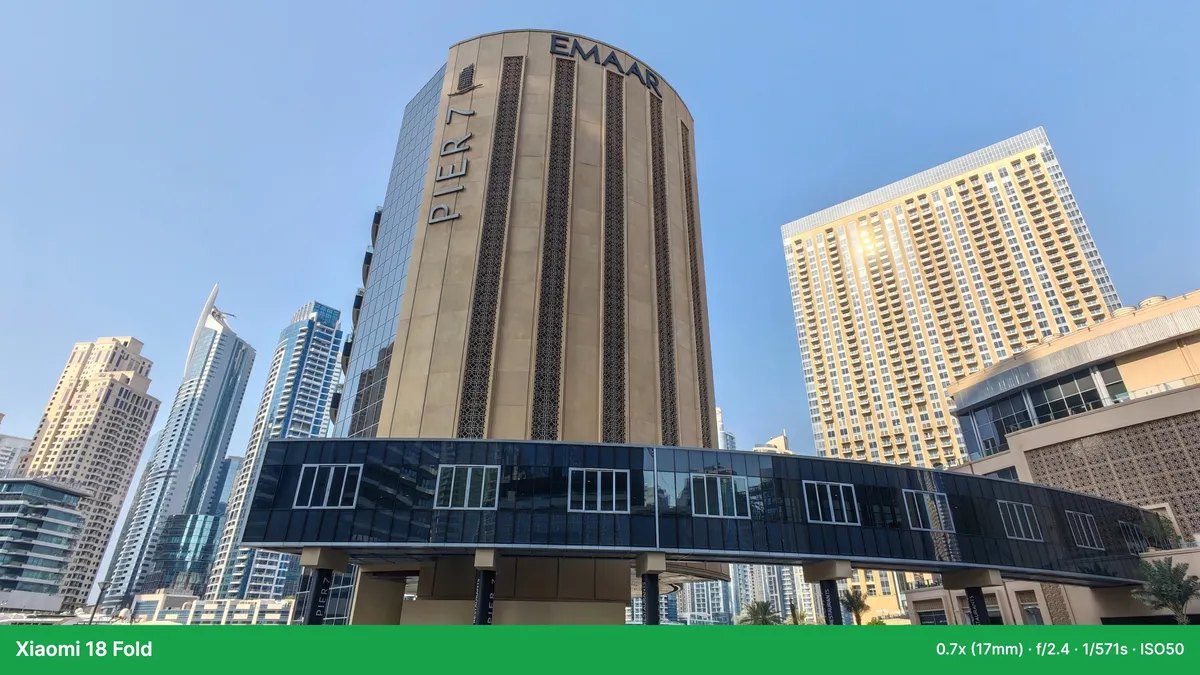
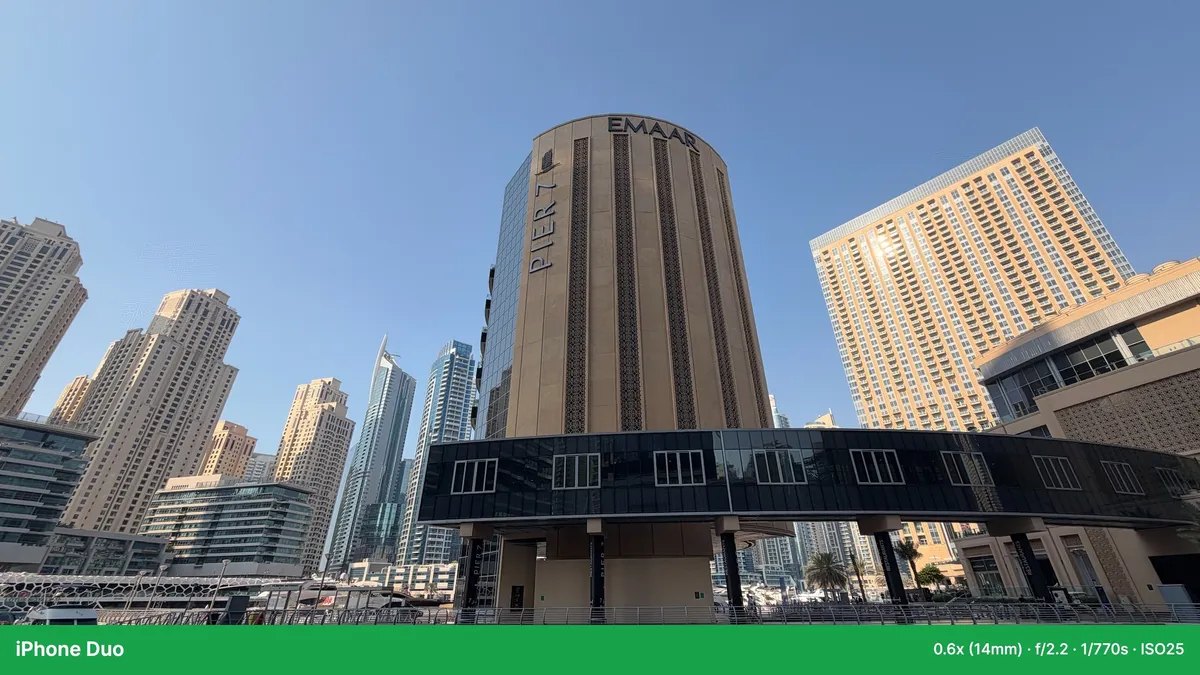
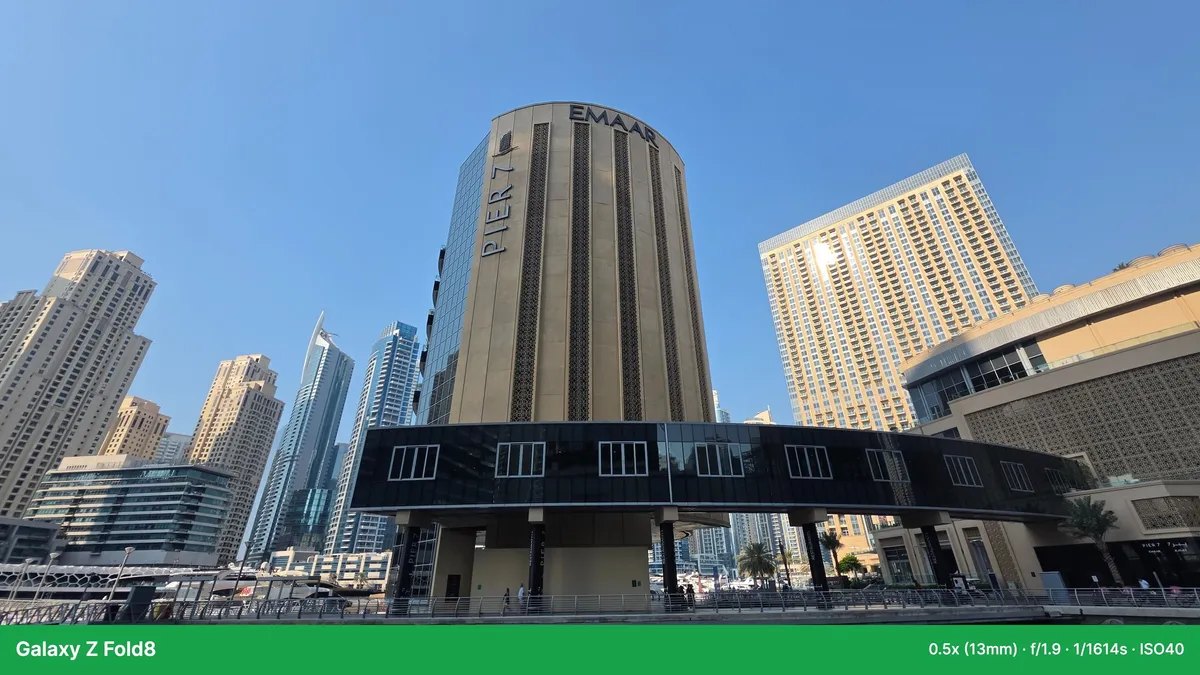
Samsung (13 mm, 0.5x) and Apple (14 mm, 0.6x) deliver a truly ultrawide field of view. Xiaomi's 17 mm (0.7x) ultrawide is visibly narrower, and it is also slower at f/2.4, so it gathers less light. In front of Pier 7, the 4 mm gap between Samsung and Xiaomi is significant: the Galaxy Z Fold 8 captures the whole building at the left edge of the frame, while the Xiaomi 18 Fold cuts it off entirely. Between the two wider phones, Samsung offers more space and a deeper blue sky, while the iPhone Duo handles the reflections on the sunlit tower and the shadows under the skybridge with better dynamic range.
Daytime zoom
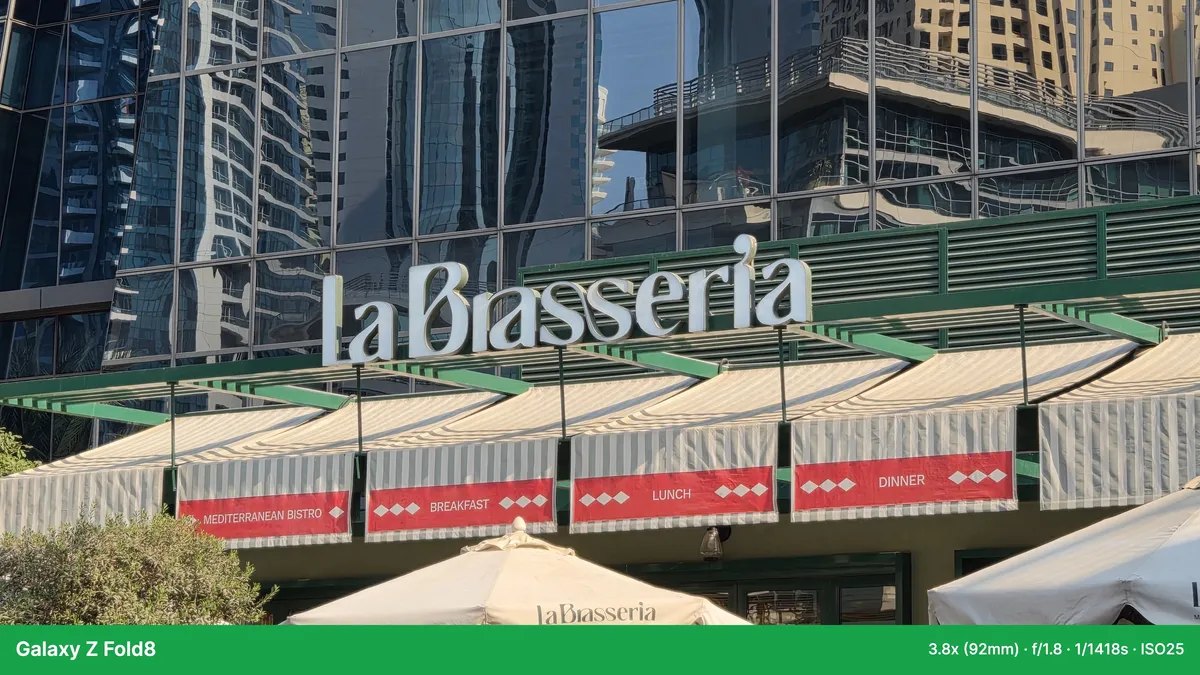
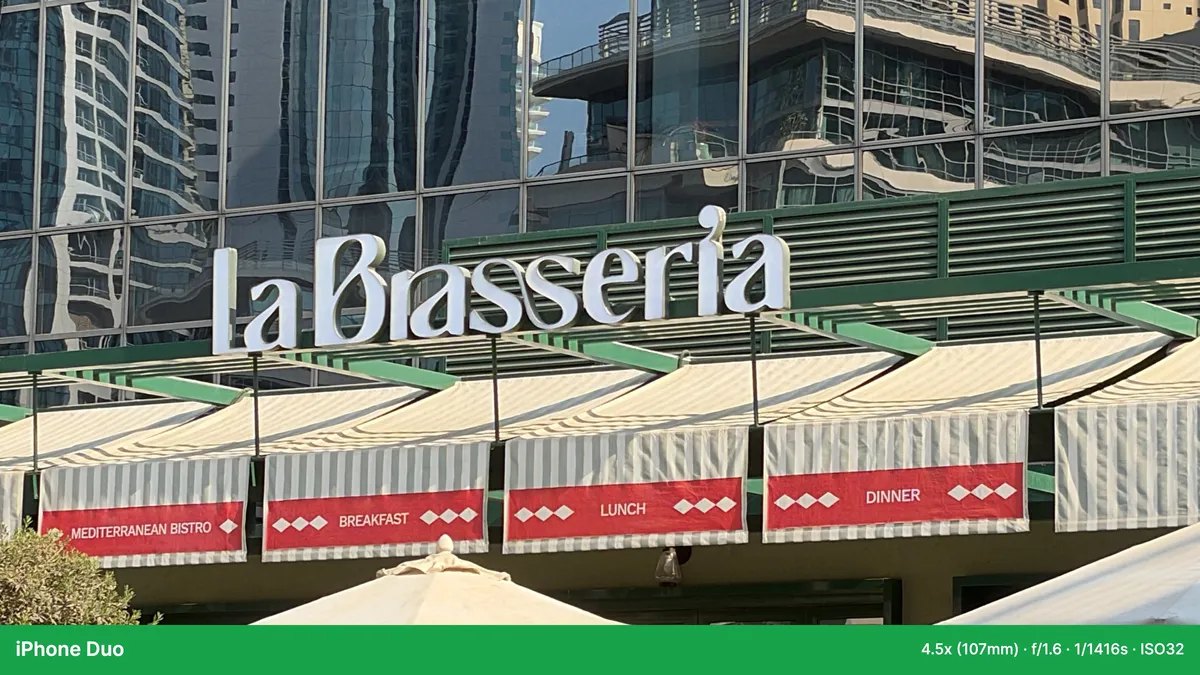

If you care about zoom on a foldable, this is the deciding section. Neither the iPhone Duo nor the Galaxy Z Fold 8 has an optical telephoto, so both can only crop the main sensor. At 2x (46 - 52 mm), all three phones are sharp enough for social media. Past 3x, the gap opens up immediately. In front of the La Brasseria restaurant, the iPhone Duo actually shoots better than the Galaxy Z Fold 8 at around 4x: even though Apple crops tighter (4.5x, 107 mm versus Samsung's 3.8x, 92 mm), the crop from its 48 MP sensor still resolves the text on the red menu banner and the horizontal bars behind the sign. Samsung's noise reduction, meanwhile, smears the striped awning like a watercolor painting.

Switch to the Xiaomi 18 Fold's 3.3x (80 mm) periscope telephoto, and no digital crop can keep up. The real lens resolves individual threads in the awning fabric, the white diamond pattern, and the clean metal edges of the sign. Sharpness holds up well when pushed to 6.7x (160 mm) and 9.6x (230 mm).



At maximum zoom on the Marina skyline, Apple and Samsung swap places at around 10x. Despite winning at 4x, the iPhone Duo's 11x (263 mm) shot is soft and smeared on the distant Grosvenor House tower. Samsung's AI reconstruction at 9.6x (230 mm) straightens out the architectural lines, keeping the GH lettering and the pyramid-shaped lattice pattern clear. Even so, Xiaomi's 9.6x periscope shot beats both with a natural clarity that looks like an optical photo. The phone keeps going to 29x (690 mm), 58x (1380 mm), and 96x (2300 mm), pulling reasonably usable detail out of a rooftop emblem that is only a tiny dot at 1x.
Night shooting and low-light zoom
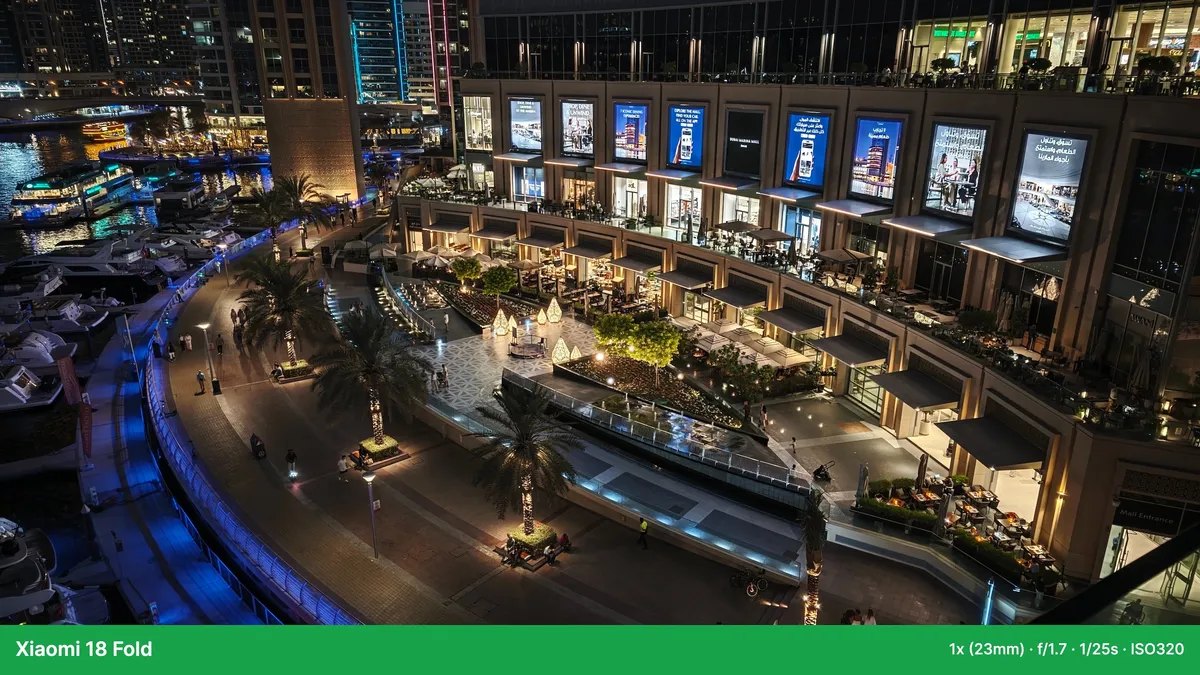
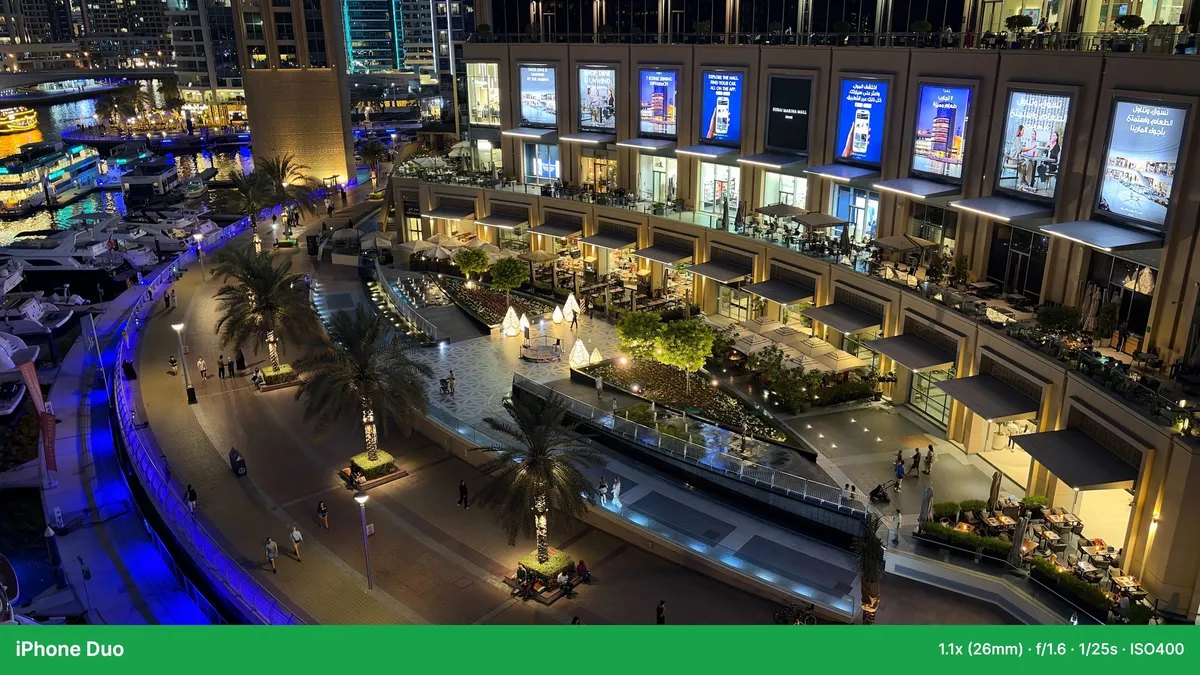
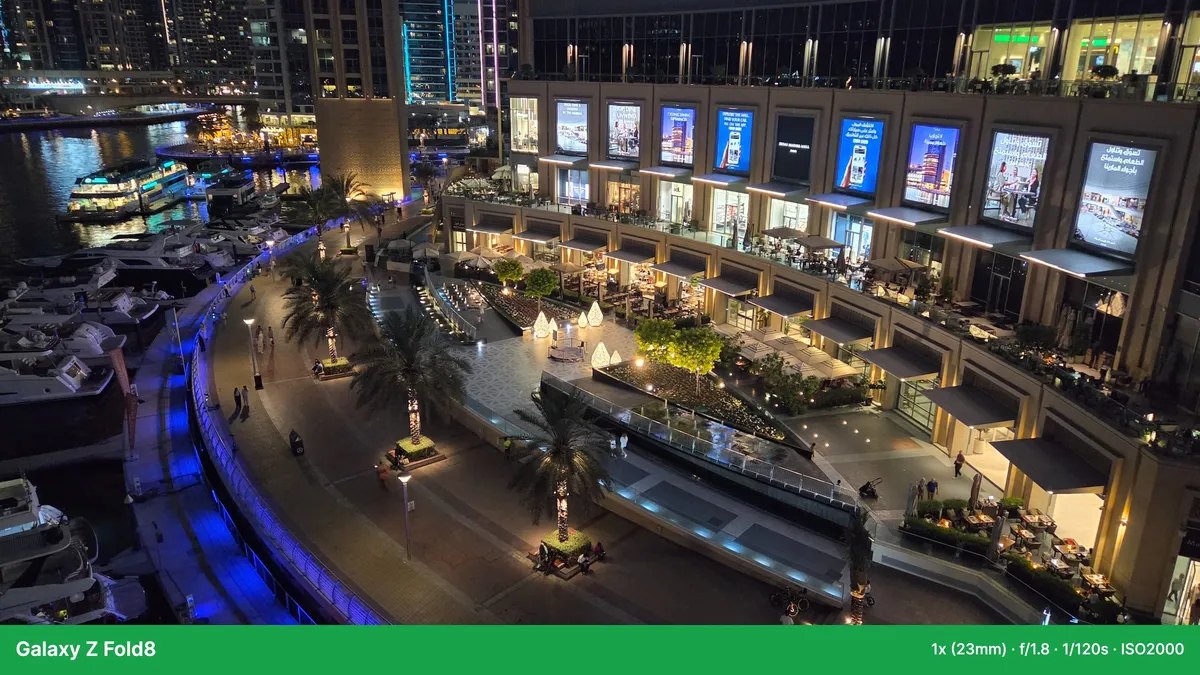
Once the sun drops behind Dubai Marina, the metering strategy matters as much as sensor size. On the main camera, Xiaomi and Apple are evenly matched, depending on personal taste. The Xiaomi 18 Fold slows the shutter to 1/20 s to hold ISO at 400, producing a wide 23 mm frame with strong contrast, deep water reflections, and well-controlled shop displays. The iPhone Duo (1/25 s, ISO 500) lifts shadows more aggressively on the sandstone buildings and walkway with almost no noise, but its narrower 26 mm lens loses the right edge. The Galaxy Z Fold 8 chooses 1/98 s at ISO 2500, leaving the shadows darker and visibly grainy on close inspection. The author says this is fairly common on Samsung phones and hopes it will be addressed in future generations.
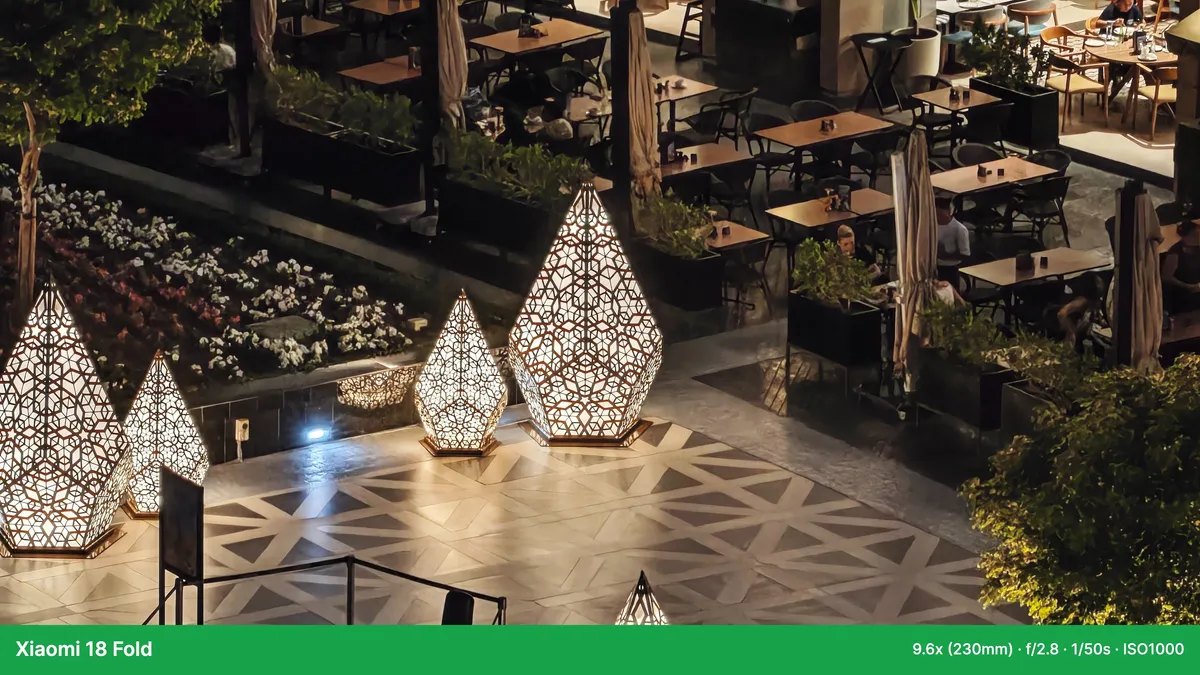

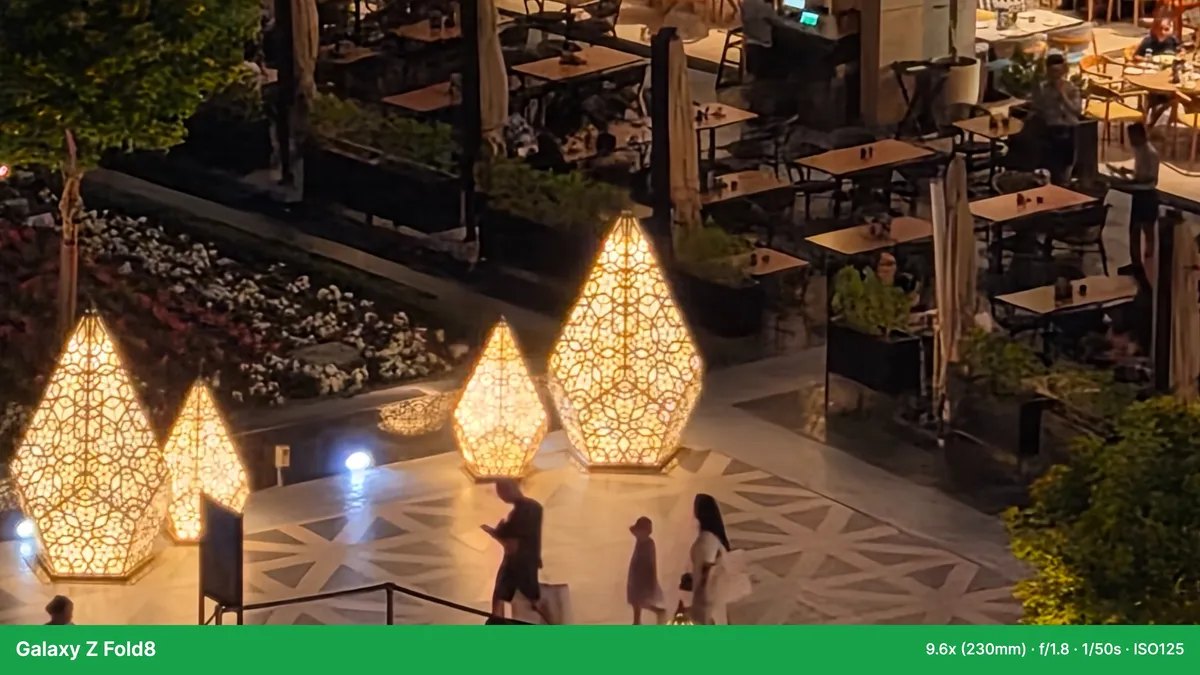
Night zoom reverses the Apple-Samsung pecking order from daytime. With the glowing teardrop-shaped lanterns in the plaza, the Galaxy Z Fold 8 blows the lights out into white patches at 1.9x and 3.8x. At 9.6x (230 mm), it finally tames the highlights, but heavy-handed noise reduction smears pedestrians and café tables into a painterly blur. In contrast, the iPhone Duo's multi-frame HDR preserves the geometric patterns inside each lantern at both 4.5x (107 mm) and 11x (263 mm). Still, the Xiaomi 18 Fold's 3.3x - 9.6x periscope wins easily, separating patterns, flower beds, and paving tiles far more cleanly than the digital crops.
Indoors, neon, and portraits
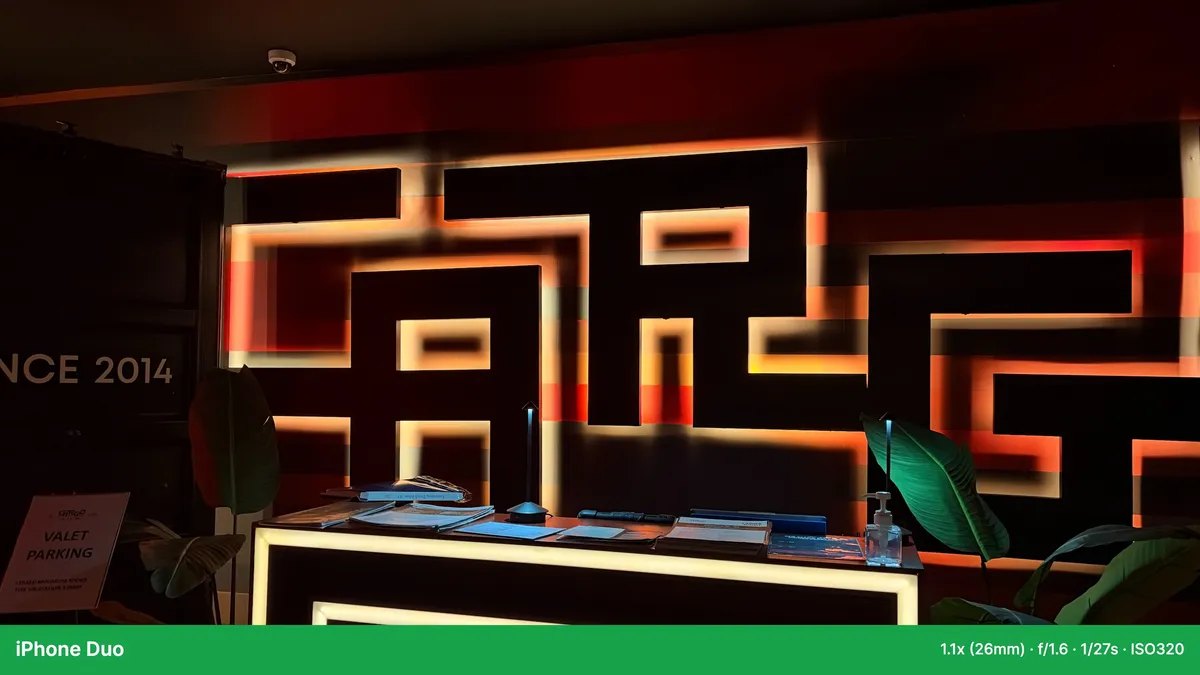
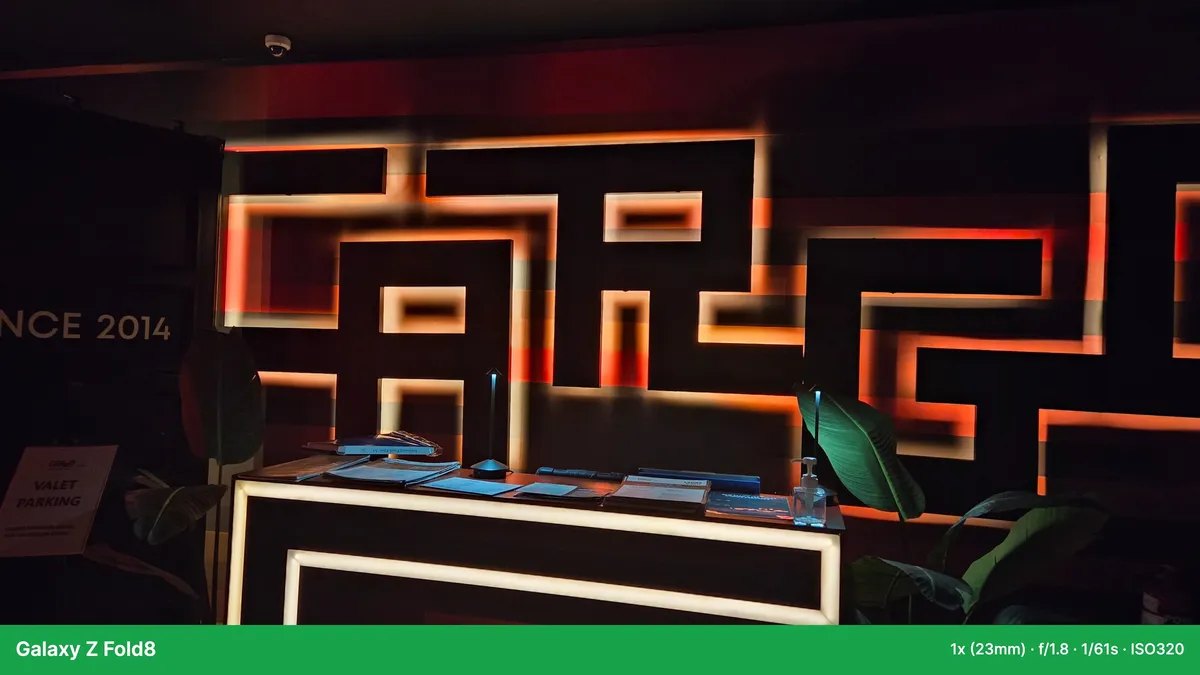
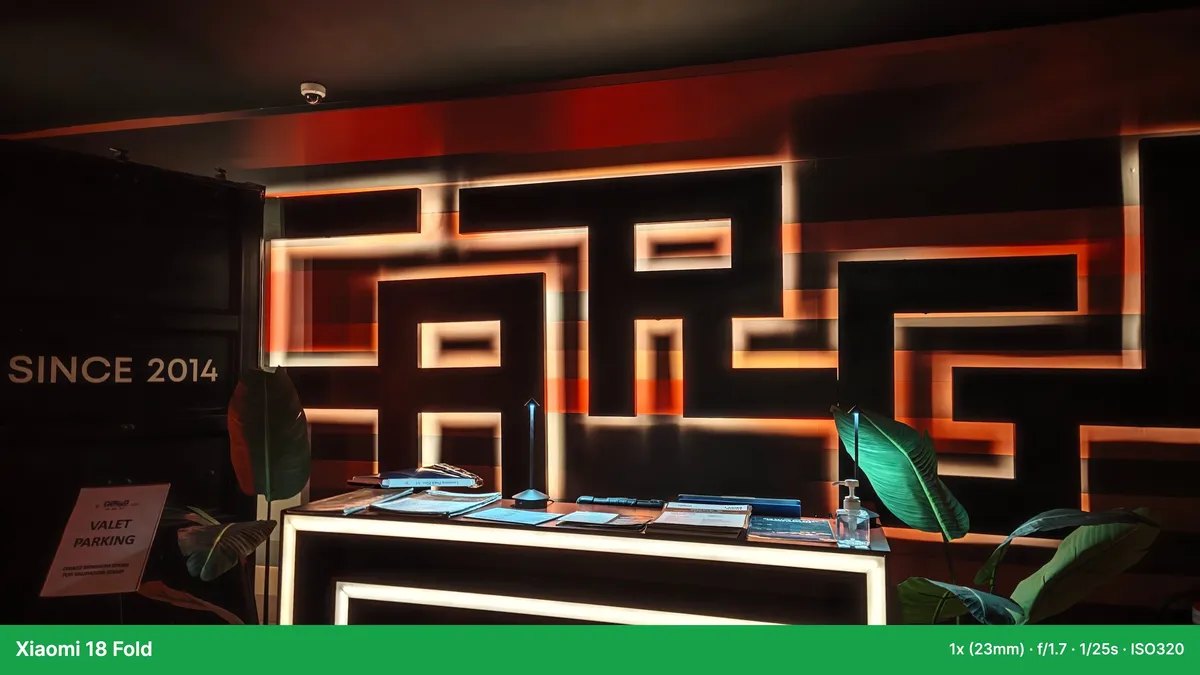
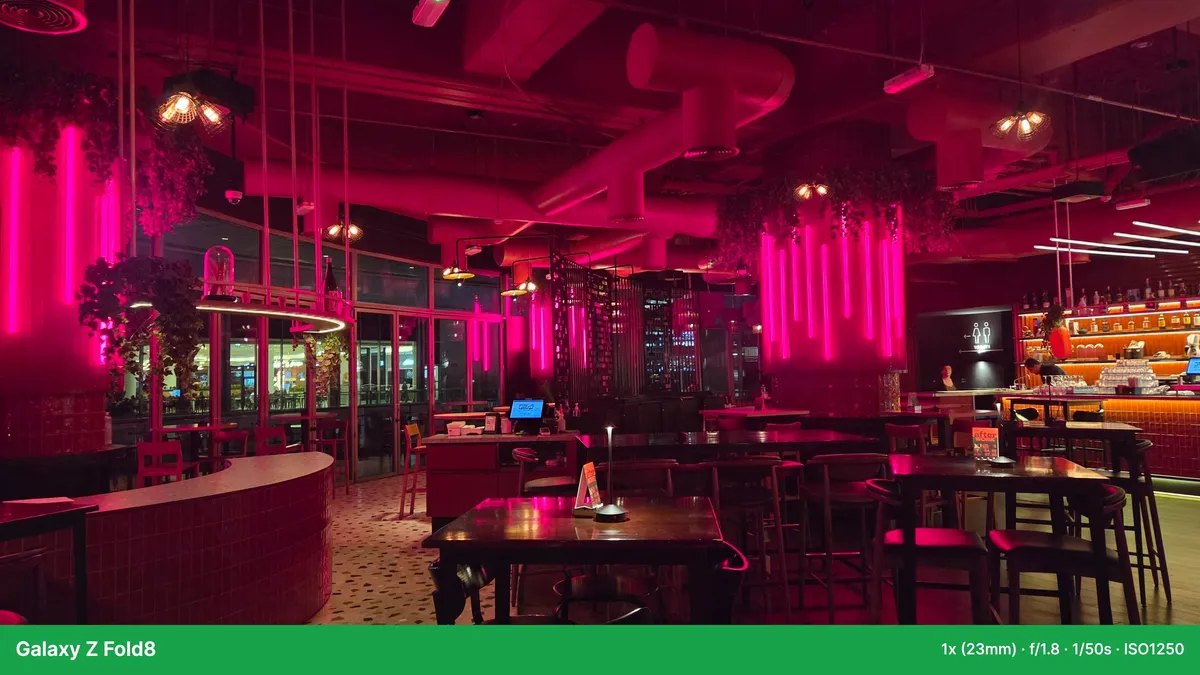


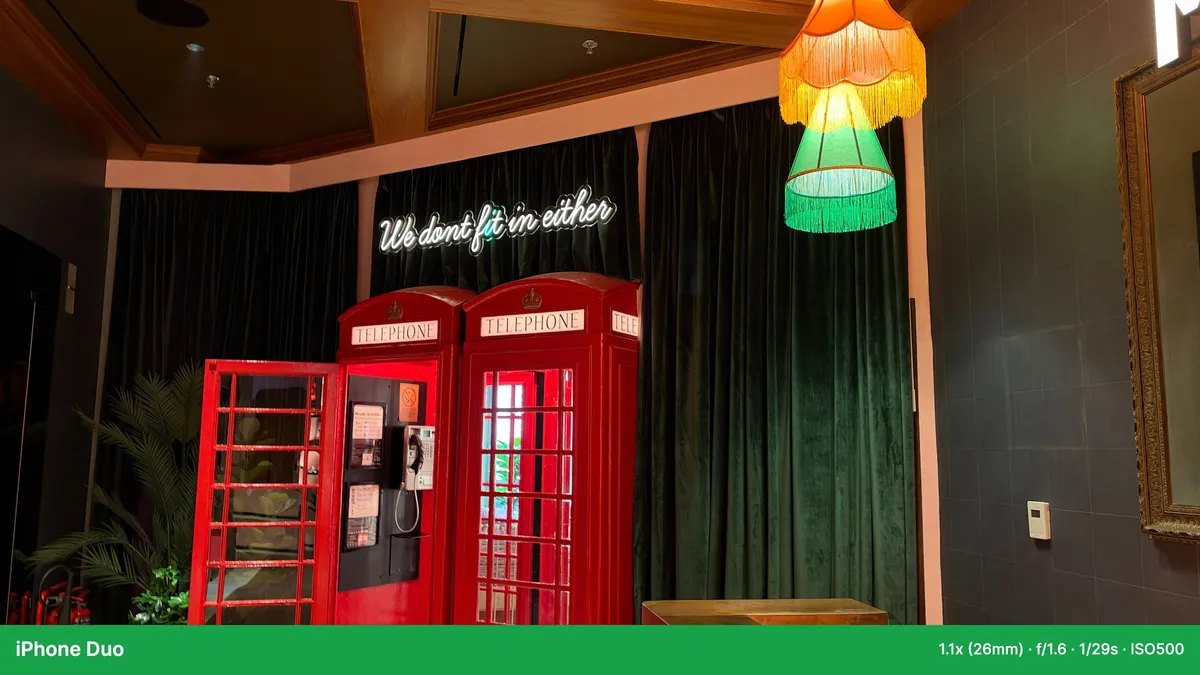

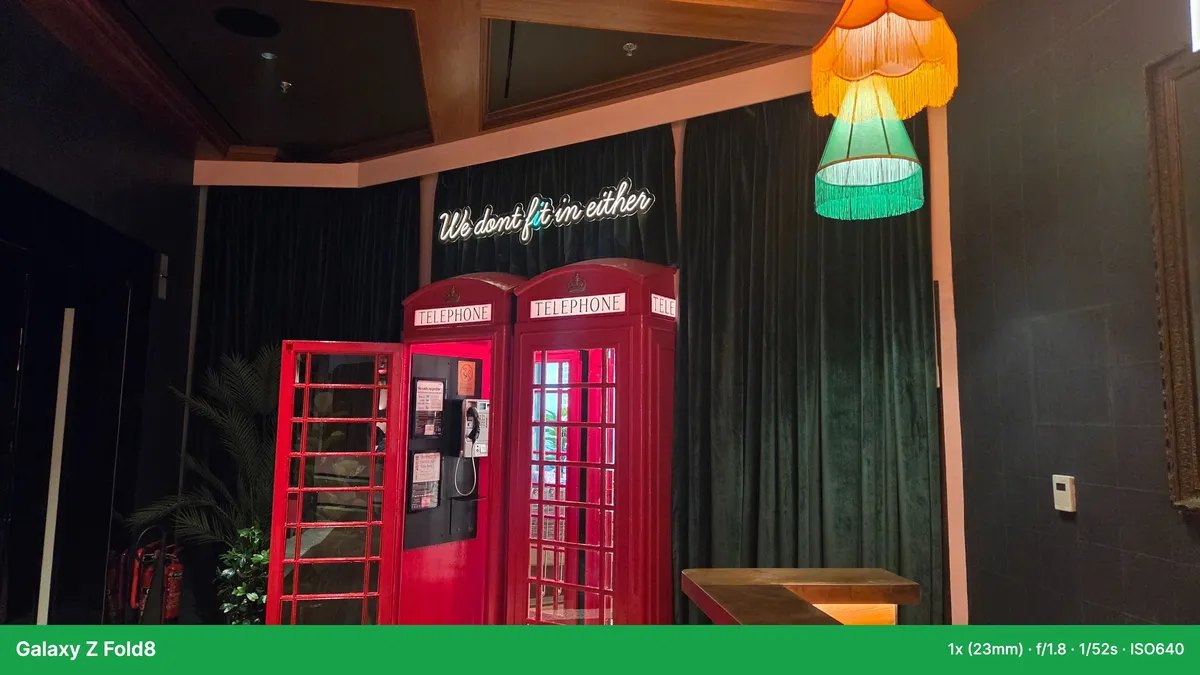
In a dimly lit lounge corner, Apple and Samsung prioritize protecting highlights, so the white neon text stays crisp and the color of the fringed lampshade is well preserved. Xiaomi does the opposite: it pushes to 1/25 s and ISO 1600 to lift the velvet curtains and a doorway that sink into darkness on the other two phones, but the neon tubes bloom more. When the whole room is flooded with monochrome red light, Xiaomi's color science shines. The phone (ISO 500) holds a deep, accurate red on the ceiling ducts and light columns, while the floor and booth seats stay clean. The iPhone Duo stays close in color accuracy, apart from motion blur on a guest walking past at 1/20 s. The Galaxy Z Fold 8 (ISO 1250) pushes the red LEDs clearly toward pink and magenta. In front of the CARGO reception wall with its harsh backlight, Xiaomi wins on both composition and dynamic range, keeping the full "SINCE 2014" text on the left (which Apple's 26 mm lens cuts off) and controlling the orange-white halo around the block letters with the cleanest shadow detail.
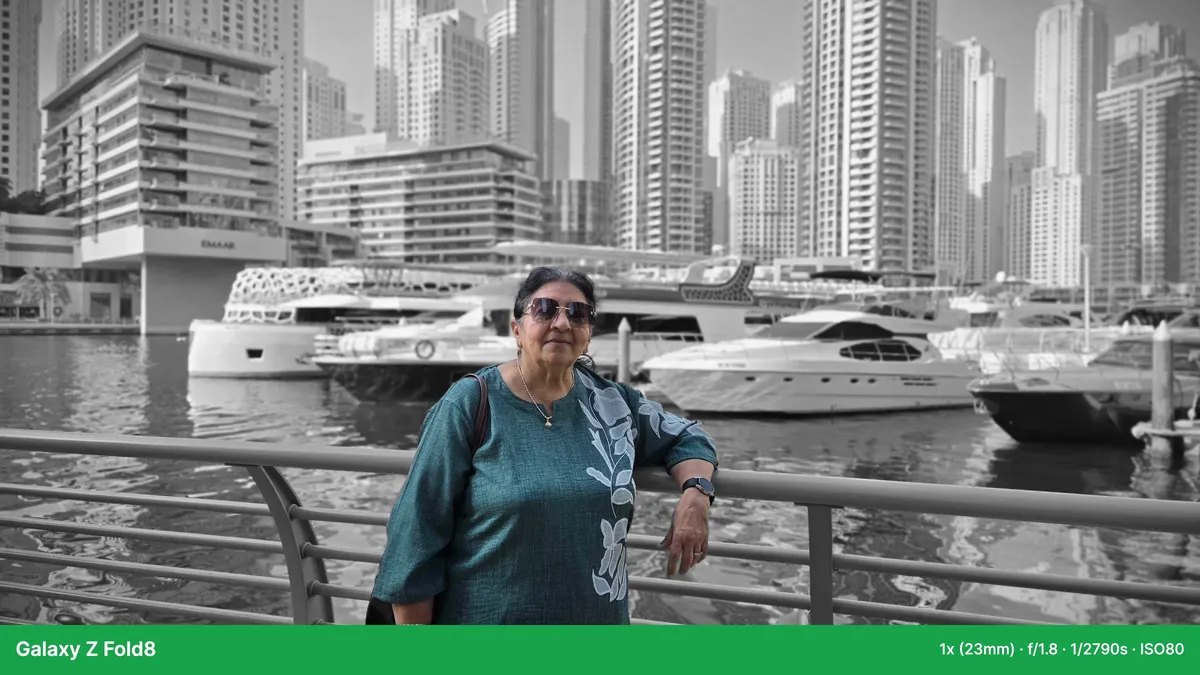

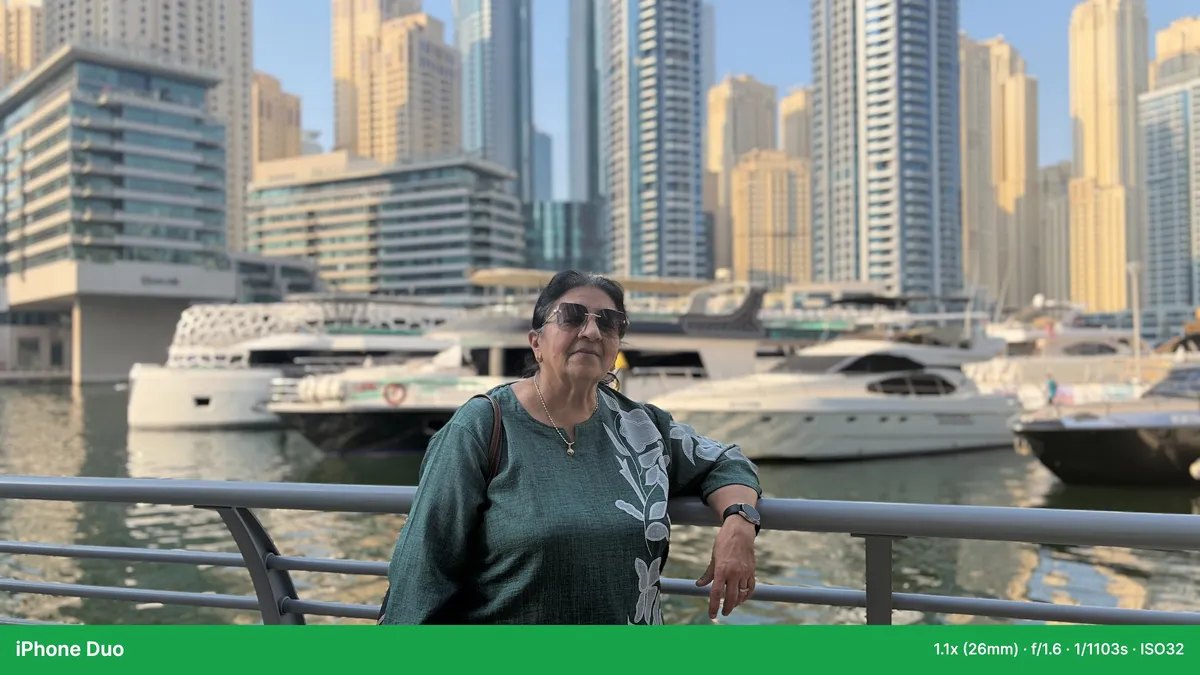

In portrait mode along the Marina walkway, all three phones cleanly separate the subject from the background in the triangular gap formed by the elbow resting on the railing, without wrongly blurring the metal bar. Xiaomi takes first place with Leica bokeh that looks as smooth as optical, plus warm skin tones that look pleasing against the sunlit buildings. The iPhone Duo comes second, lifting the face's highlights slightly with its tighter 26 mm crop. The Galaxy Z Fold 8 blurs the background more conservatively, but makes up for it with Samsung's signature Color Point monochrome background effect. The author calls Color Point their favorite portrait feature on any device, and it is available across Samsung's phone lineup.
Selfies and the iPhone Duo's sticking point


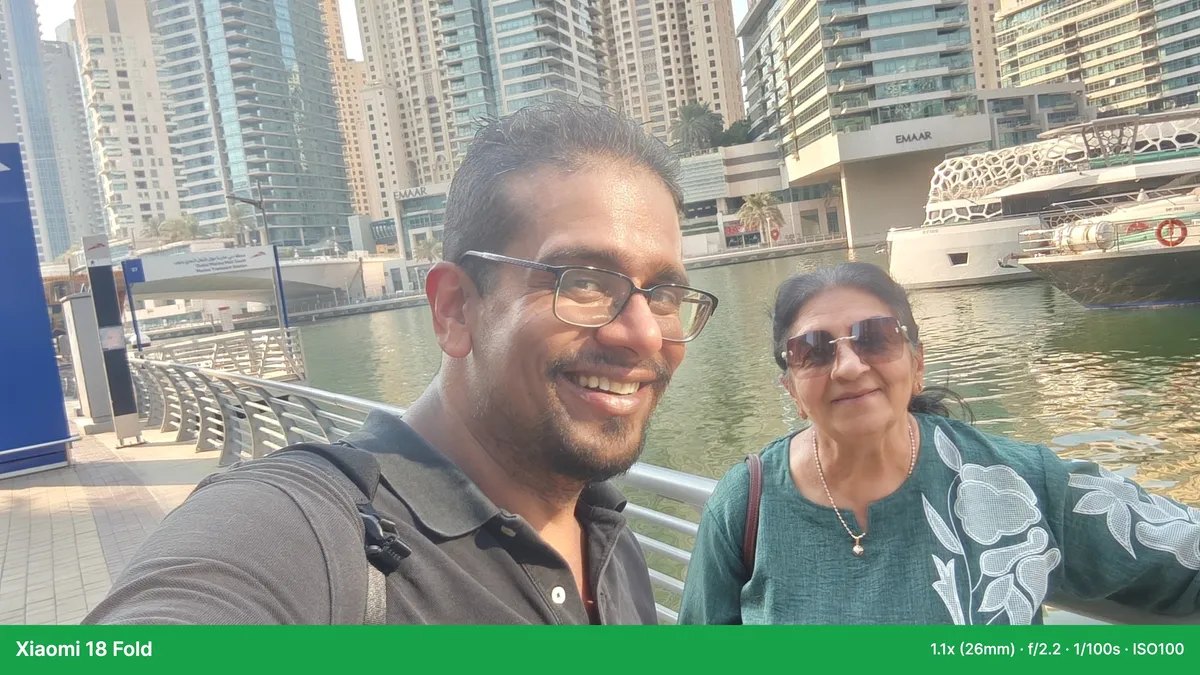
One of the advantages manufacturers often stress about foldables is the ability to use the rear cameras for selfies. That means the selfie camera hardware doesn't need to be great, and the iPhone Duo even uses an under-display camera. The author notes this is not an especially scientific comparison. With the cover-screen camera (f/2.2 aperture), the Galaxy Z Fold 8 wins the two-person selfie fairly easily: its wider 23 mm lens fits both people, handles the harsh overhead sun without flattening the colors, and keeps both faces sharp. The Xiaomi 18 Fold also focuses on both people but suffers heavy backlit flare when the sun sits behind a shoulder. The iPhone Duo is the worst: it crops tightly at 28 mm and then falls into Apple's single-subject portrait trap, keeping the author sharp while completely blurring the mother standing right behind.
If you want to skip the f/2.2 sensor and use the much better rear cameras, the experience on Apple's phone is awkward. Samsung and Xiaomi put full camera controls right on the cover screen and offer a timer triggered simply by raising your palm. The iPhone Duo has no cover-screen controls and no palm gesture. You have to hold the open phone in one hand while reaching a finger to the Camera Control button or volume key, which almost guarantees camera shake.
The results show that dropping the telephoto lens is a real trade-off on a foldable. Apple's and Samsung's software holds up at 2x, and the iPhone Duo even does well at around 4x. But from 10x up, the Xiaomi 18 Fold's optical telephoto creates a gap that algorithms struggle to close. Conversely, Xiaomi gives ground with a narrower ultrawide, while the iPhone Duo needs better controls for rear-camera selfies. Keep in mind that this is a real-world test by a single tester in Dubai, not a standardized benchmark. Try the phones in person before choosing, especially since the products are not yet widely available in Vietnam.
Source: Android Central
Reviewed by: Hero Association