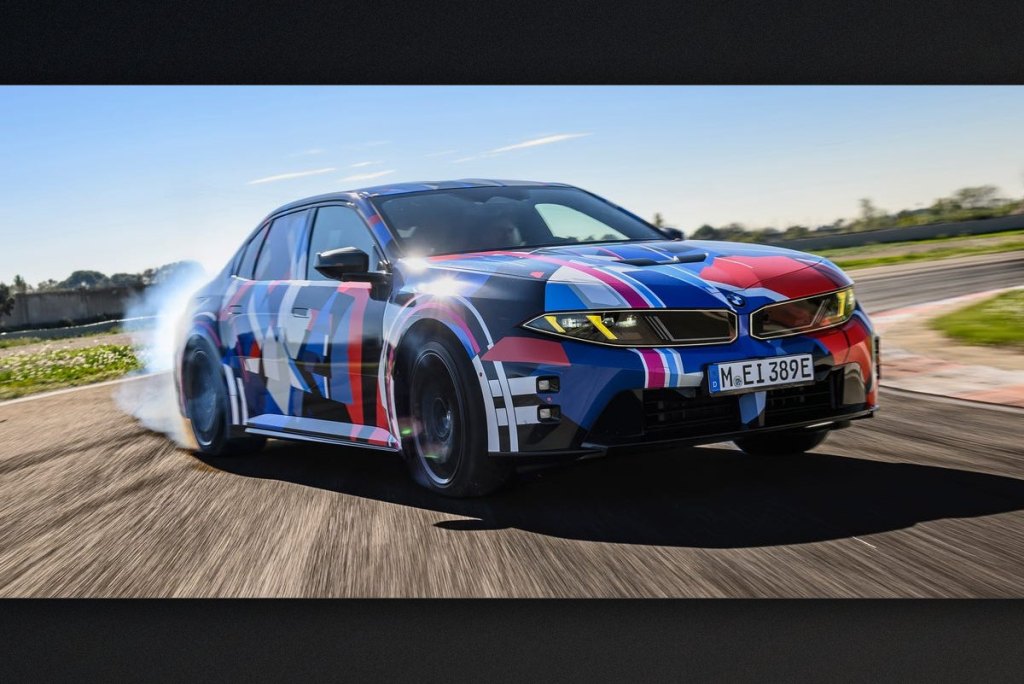
The 2027 BMW M3 is fully electric, with four motors, at least 838 hp, and 885 lb-ft of torque, according to a prototype drive at Miramas in France.
- The 2027 BMW M3 is 100% electric, officially named simply M3 with no EV suffix.
- It uses four electric motors, one per wheel, for a combined output of at least 838 hp and 885 lb-ft of torque.
- The battery is around 100 kWh, with an estimated EPA range of about 300 miles and charging of up to 420 kW.
- The M1 and M2 buttons let drivers save preset driving modes, while the eDrive sound simulates six gears.
- The car is expected to launch in summer 2027 at a tentative price of $90,000, with no word yet on a combustion-engine version.
Table of Contents
The first M3 without a gasoline engine
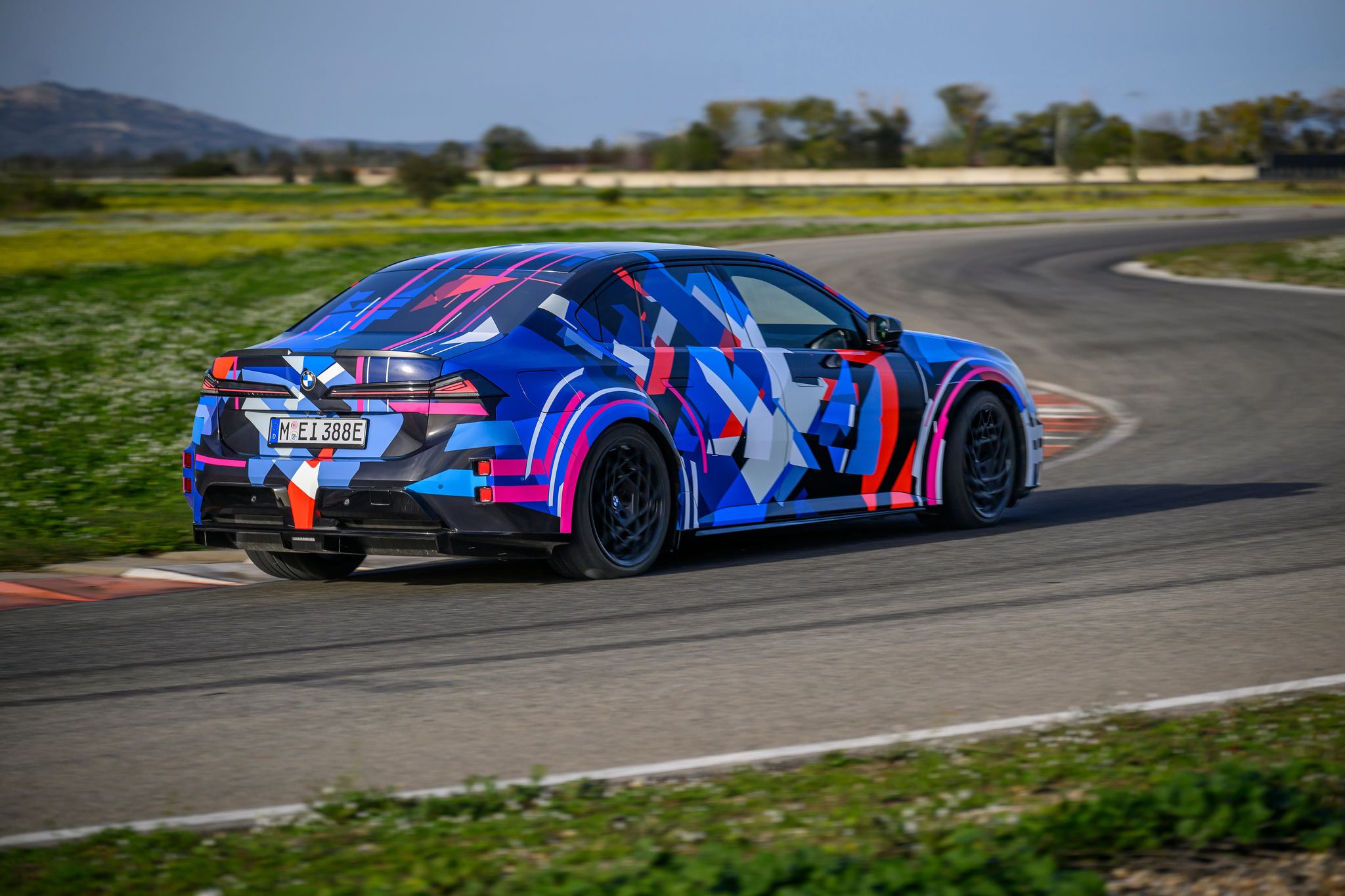
BMW fans are usually eager every time a new M3 appears, but this time they may pause. BMW calls this the fastest and most powerful M3 ever, and it is 100% electric. The company makes no mention of a gasoline version and does not add an EV badge to the name. After driving a camouflaged prototype at the Miramas test center in southern France, a Car and Driver reporter concluded that the driving experience is genuinely convincing.
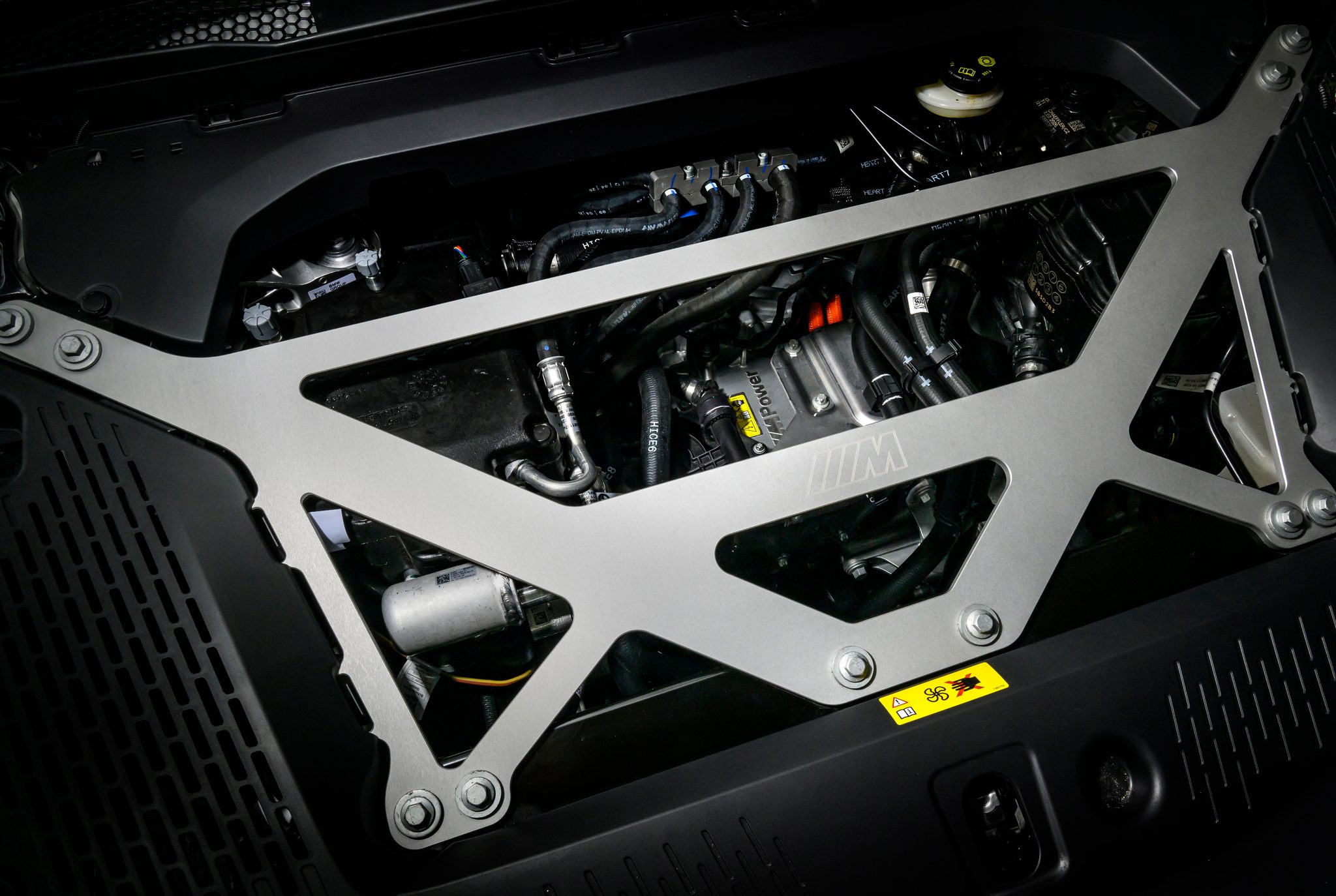
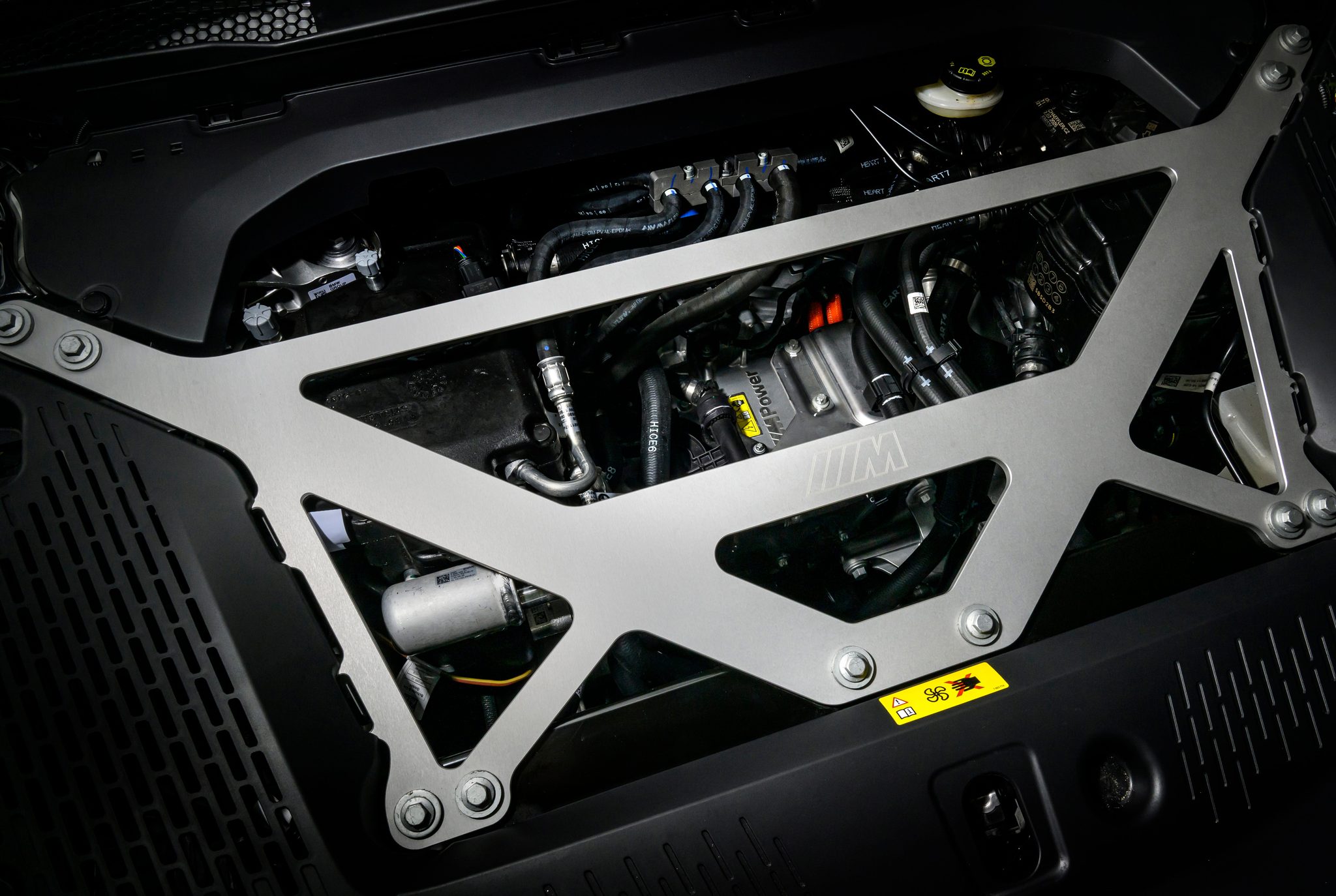
The car has four electrically excited synchronous motors, one at each wheel. On each axle, the two motors are offset from each other, and each has its own reduction gear on either side of a shared housing. The front pair delivers about 644 hp and 398 lb-ft, while the rear axle produces about 751 hp and 738 lb-ft. At this pre-production stage, total output is at least 838 hp and 885 lb-ft, and the final figures may still change. The gap versus the sum of the two axles is reserved for torque vectoring, both front to rear and left to right. In normal driving, the car is rear-wheel drive only. The front axle joins in during acceleration, when front-axle energy recovery is needed, or when you select Sport mode.
A central brain and a dedicated battery
Four motors need fast, precise control under acceleration, braking, and cornering. This approach is smoother and more immediate than any electronic differential or transfer case. The component in charge is Heart of Joy, another name for the M Dynamic Performance Control module. It is the single ECU that supervises the entire drivetrain and vehicle dynamics. It reads steering angle, throttle position, brake force, and the settings you have chosen to decide which motors should do the work.
The battery is dedicated to the M3, even though it sits in a housing similar in size to the i3's. It is designed to deliver higher peak and sustained power. Energy recovery reaches up to 540 kW and fast charging up to 420 kW, so the cooling system has also been upgraded. In return, capacity is slightly lower, currently around 100 kWh. Estimated EPA range is about 300 miles, but all figures remain subject to change. Unlike the i3, the M3's battery is bonded directly to the front and rear subframes to increase torsional rigidity, helping the car handle more precisely.
How it drives on the track
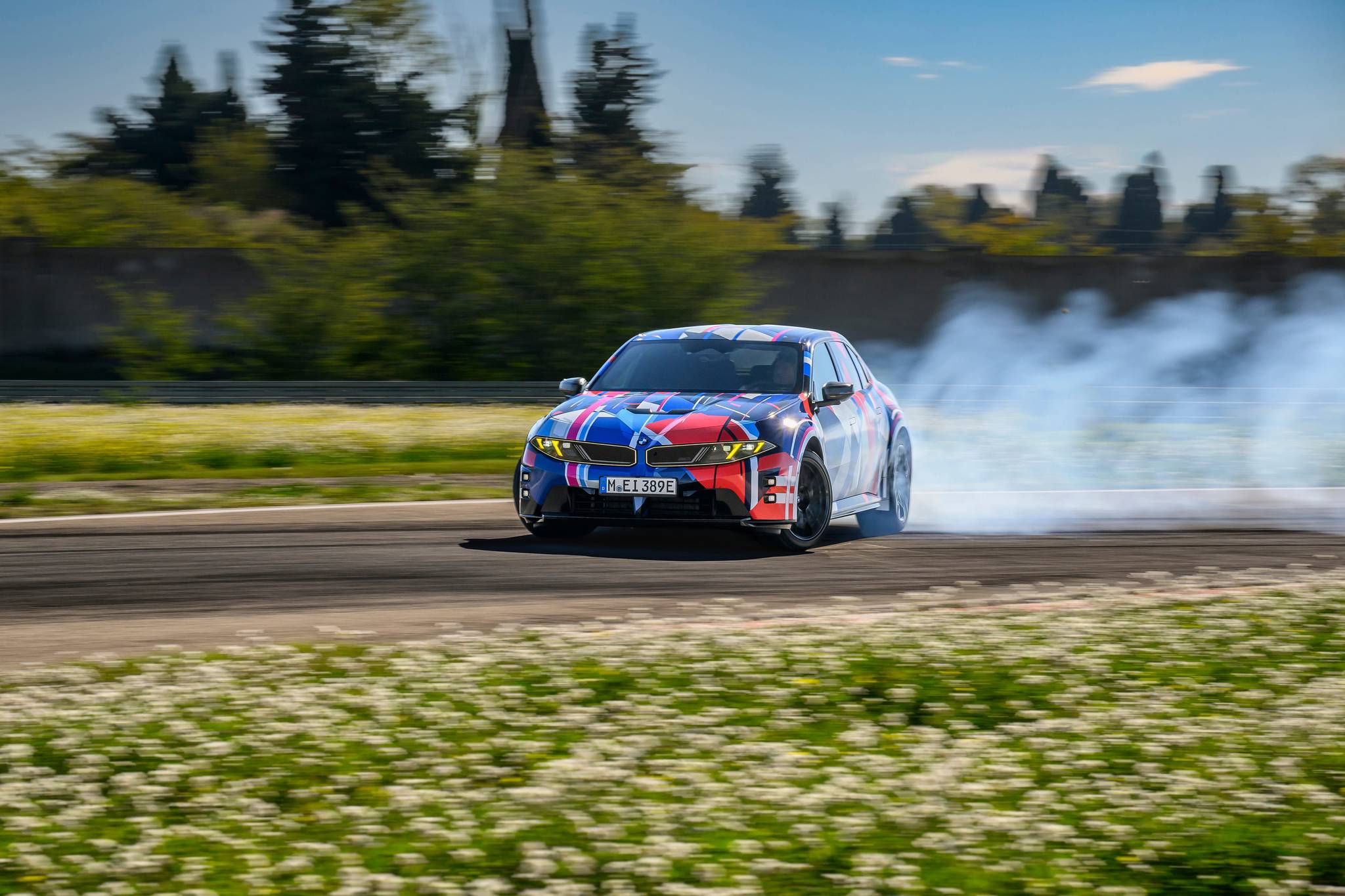
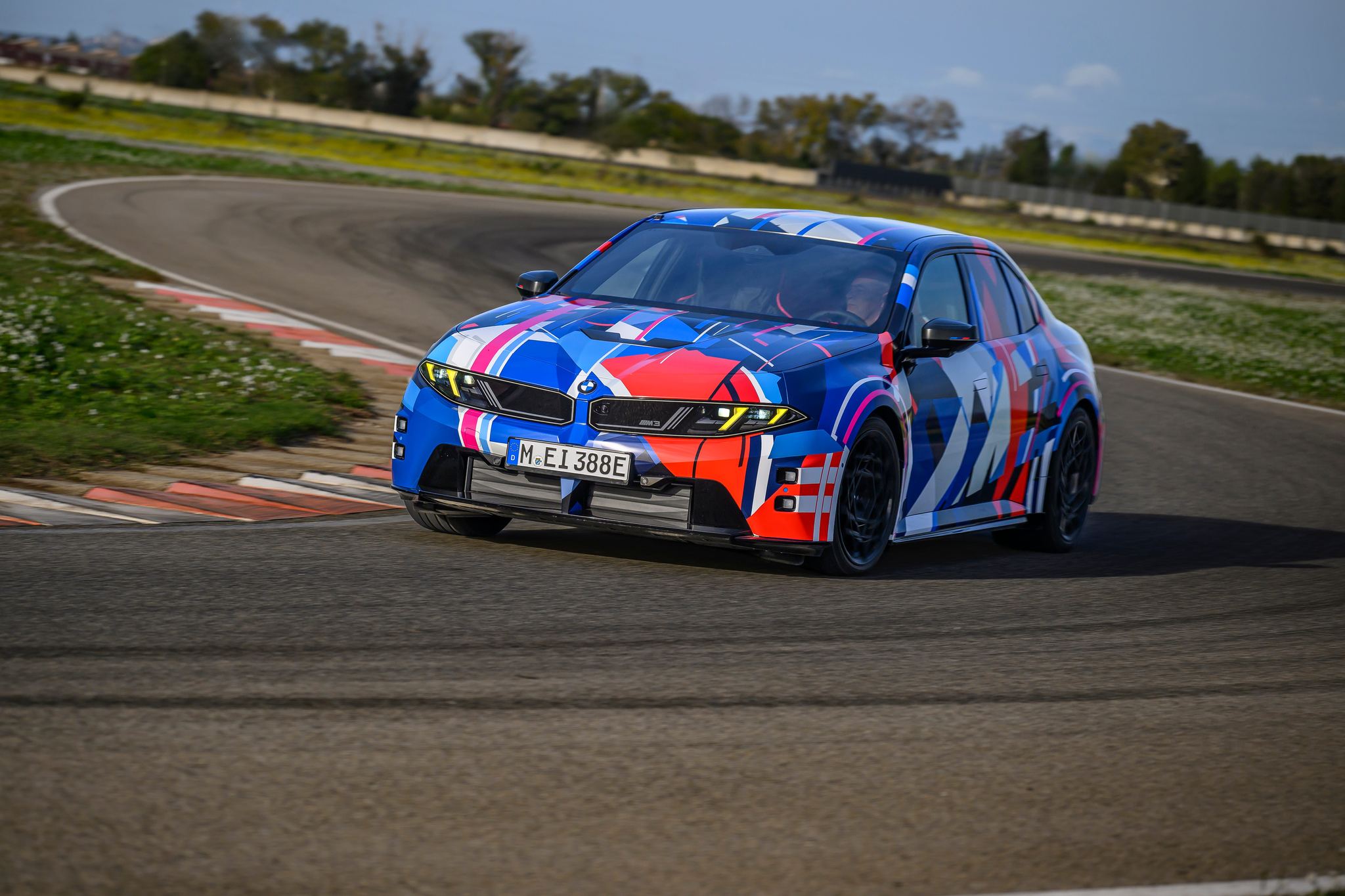
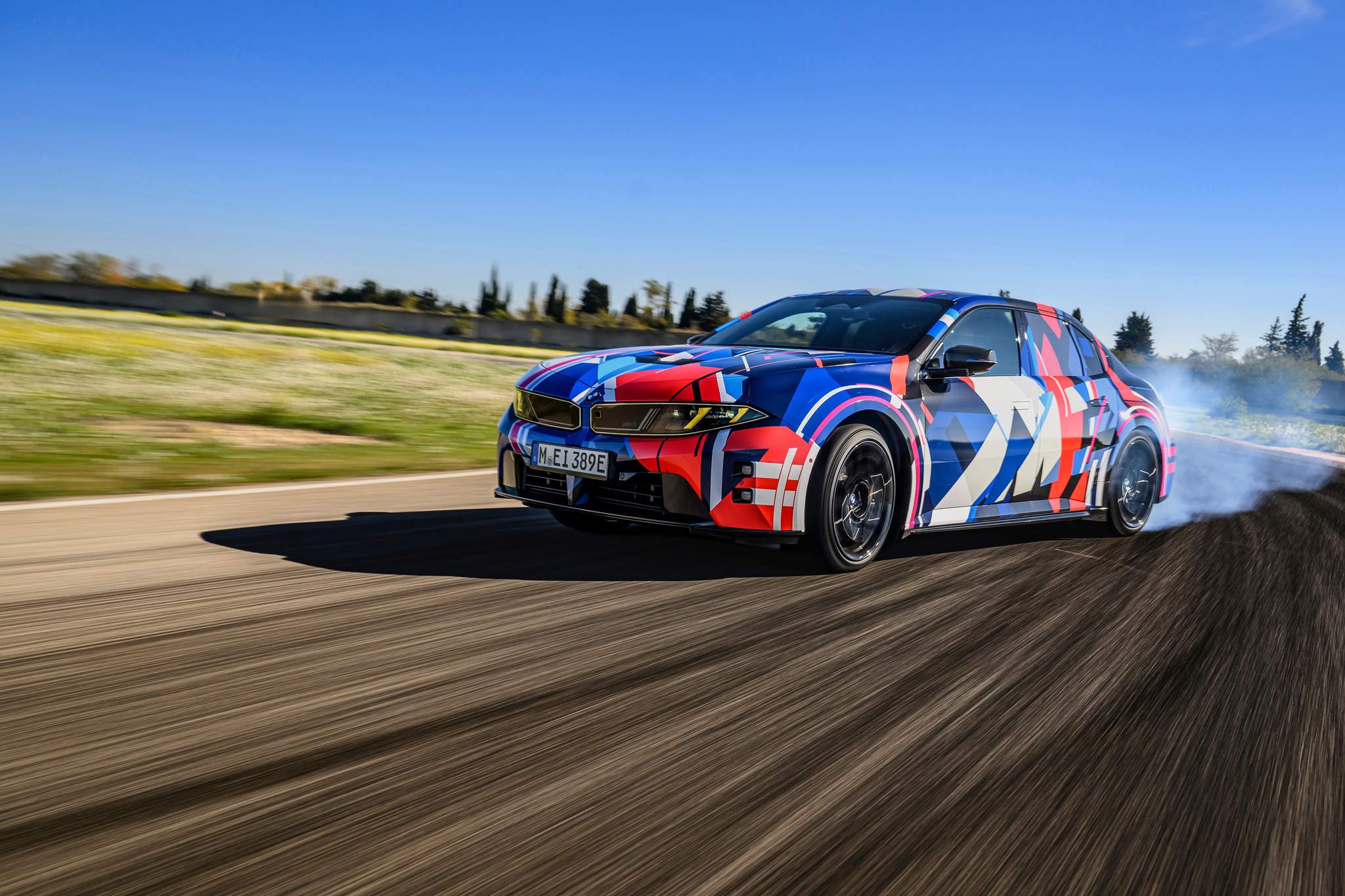
At first, the test team left the drivetrain, chassis, steering, and brakes in Comfort and set energy recovery to Mid to learn the track. Once they knew the circuit, they pressed the M1 button to switch to Sport, kept recovery at Mid, and left DSC stability control on. The car responded well, so speeds climbed quickly. At higher speeds, however, it showed noticeable understeer, leading to a brief run off the track. The car could continue, but this limit reduced the fun of driving.
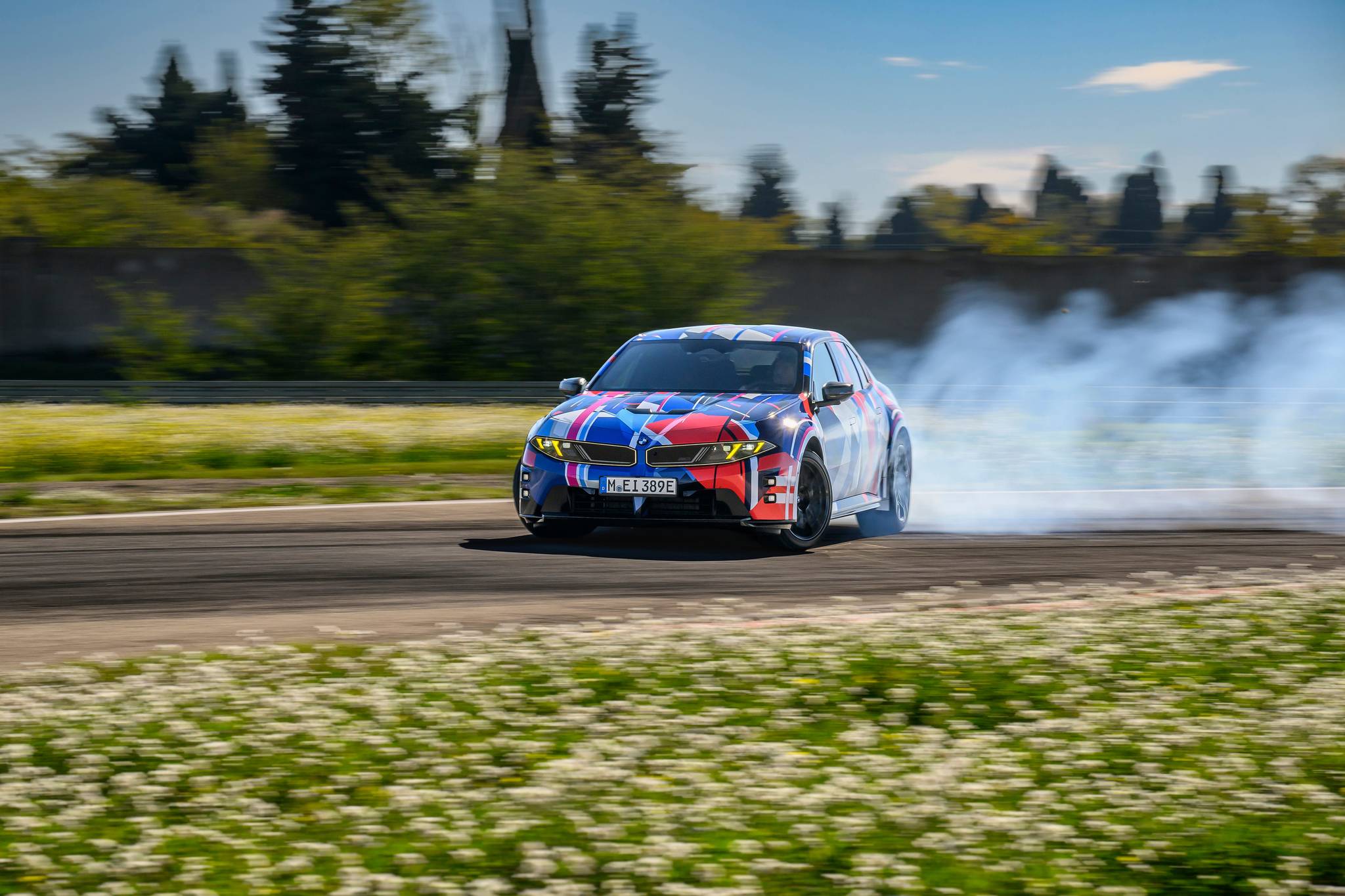
The driver then pressed the M2 button, a mode pre-programmed by BMW. Drivetrain and chassis moved to Sport+, energy recovery to Max, and DSC to a looser state called MDM. The result was better grip at the apex, a sharper front end, and a rear that was allowed to slide slightly on corner exit. Lap times dropped and the car felt livelier, true to the M3 character. Brake feel was very natural, likely thanks to the high baseline recovery plus a thin layer of friction braking for precision.
The car also has accompanying sound, although BMW says it does not imitate any specific model. With eDrive in Auto mode, the system generates the sound of six gears, called stages. The driver does not shift and power is not interrupted, but cabin volume rises and falls with each stage. When driven hard, the sound emphasizes load and drivetrain aggression, making up for what ordinary EVs lack. A manual-style mode has shift lights and even cuts power if you upshift late, but in the short test it was not especially engaging. Selecting Off makes the car run as quietly as other EVs.
Exterior, interior, and launch timing
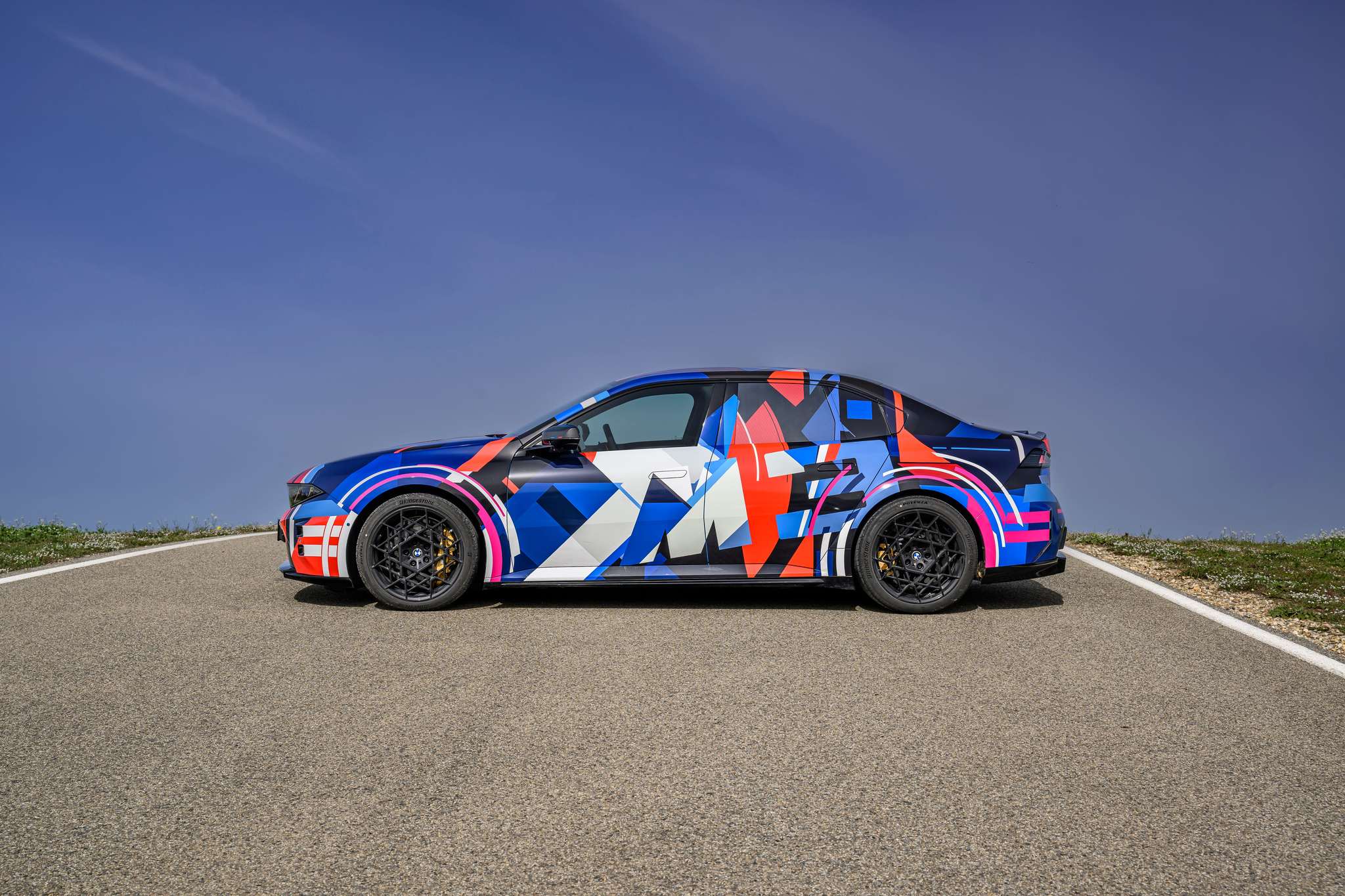
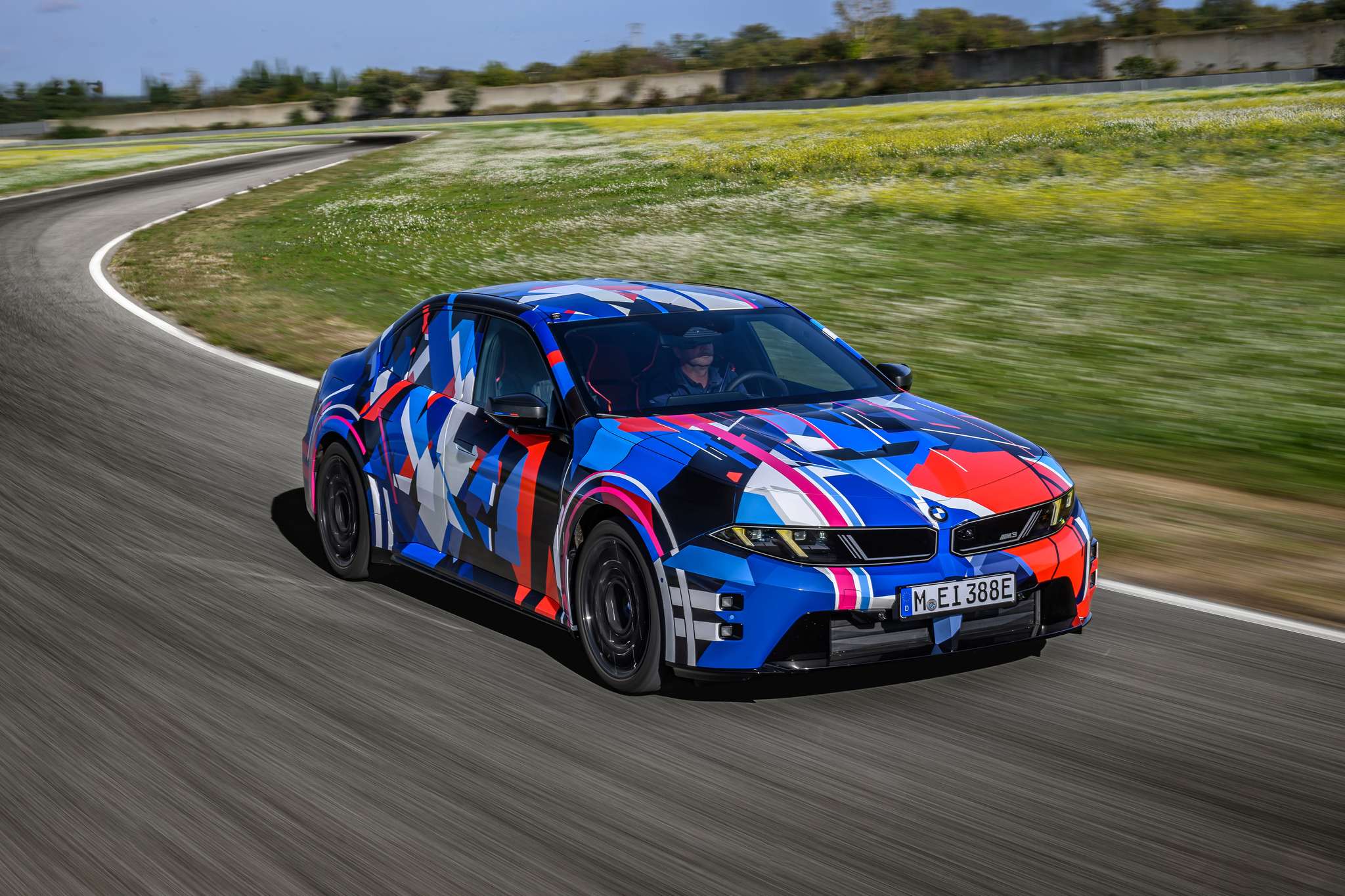
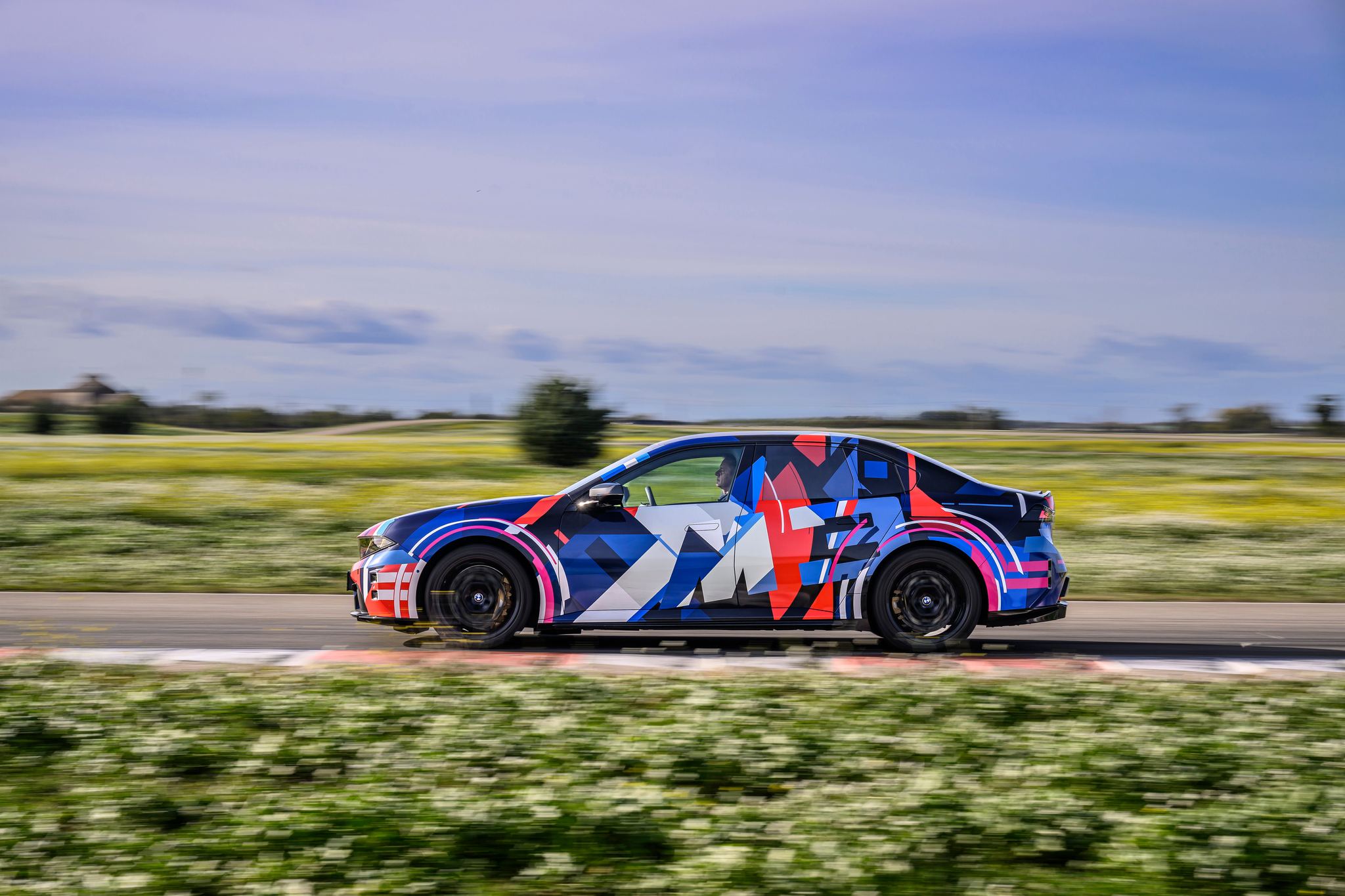
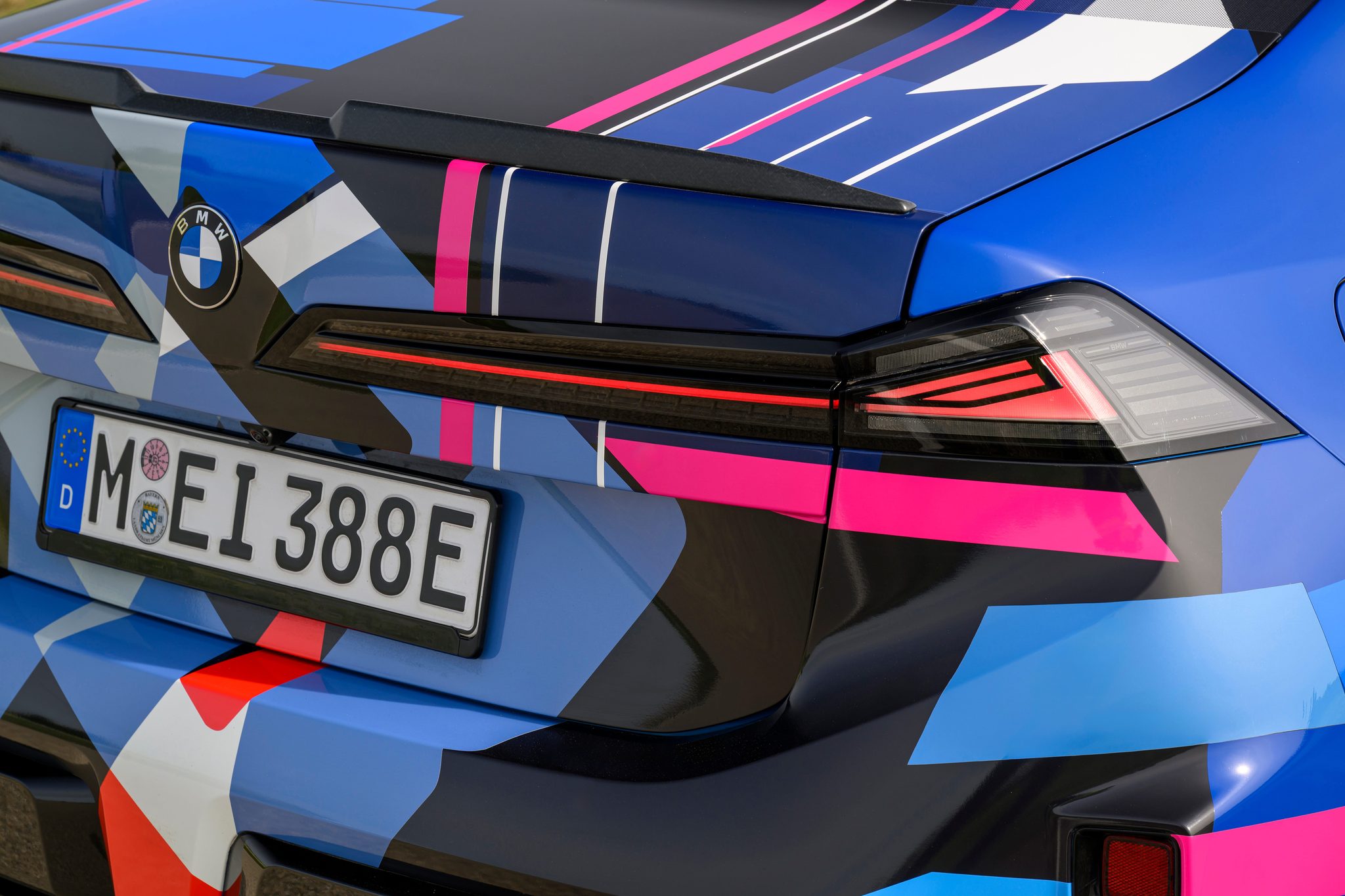
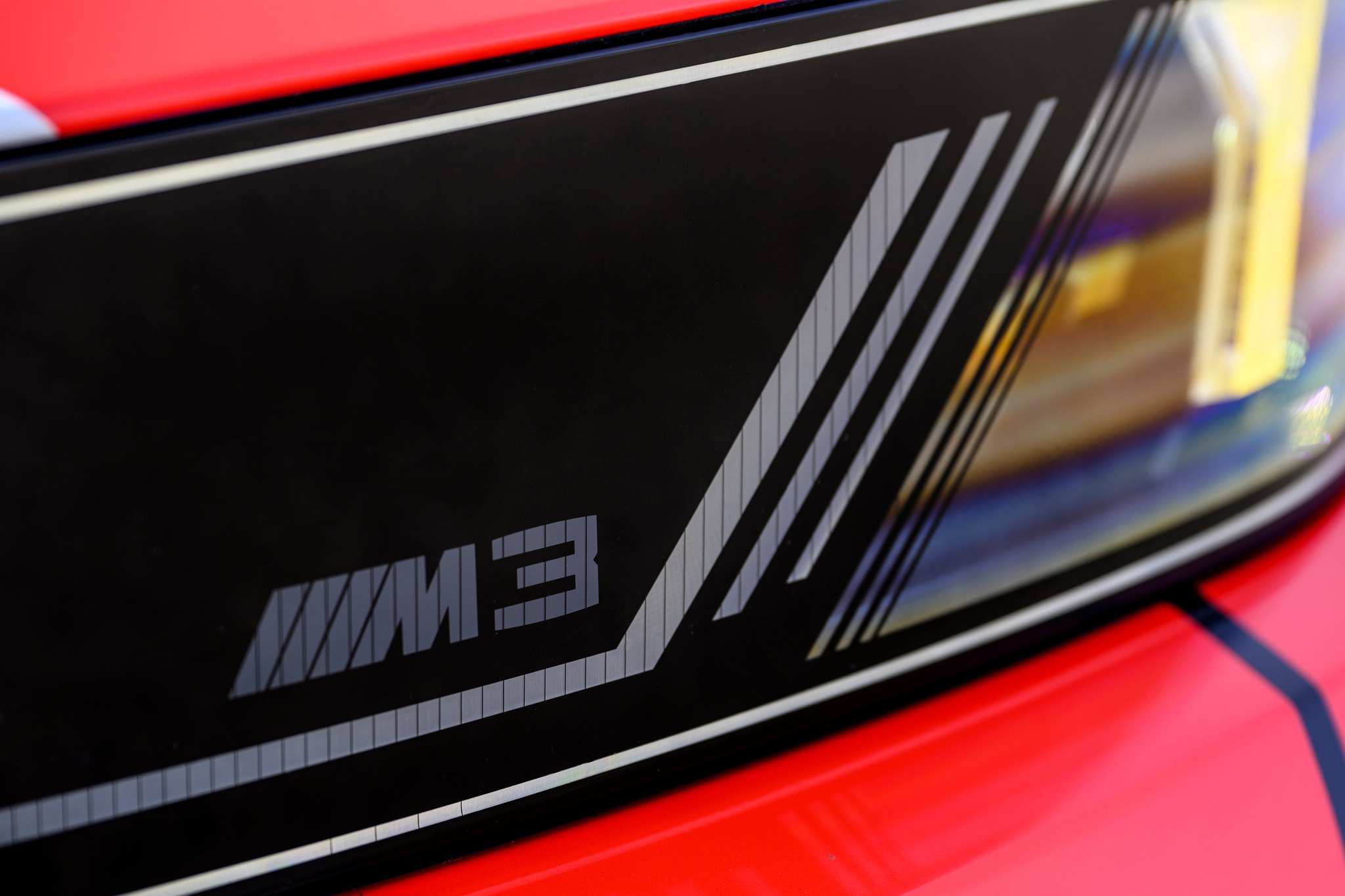
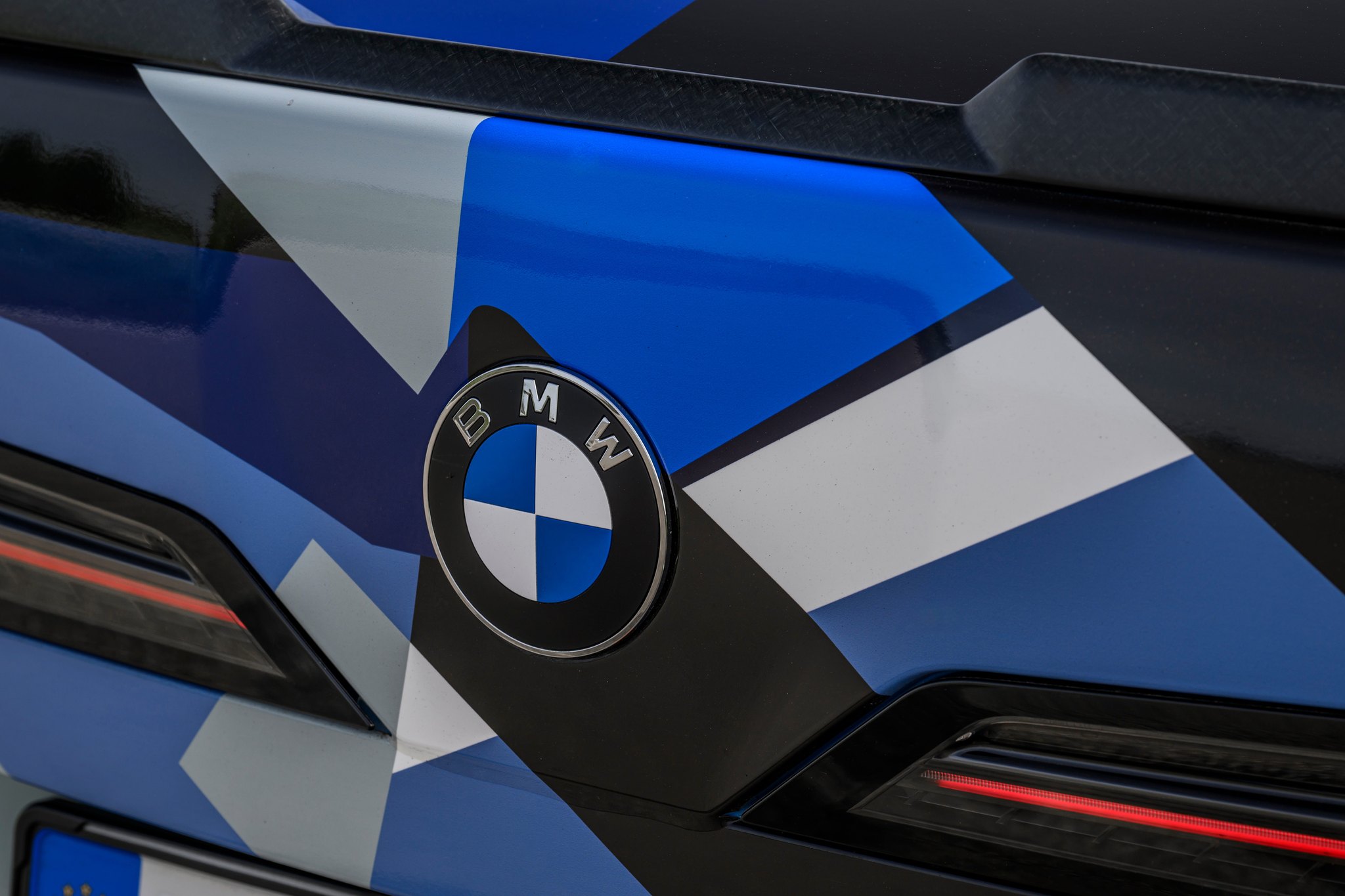
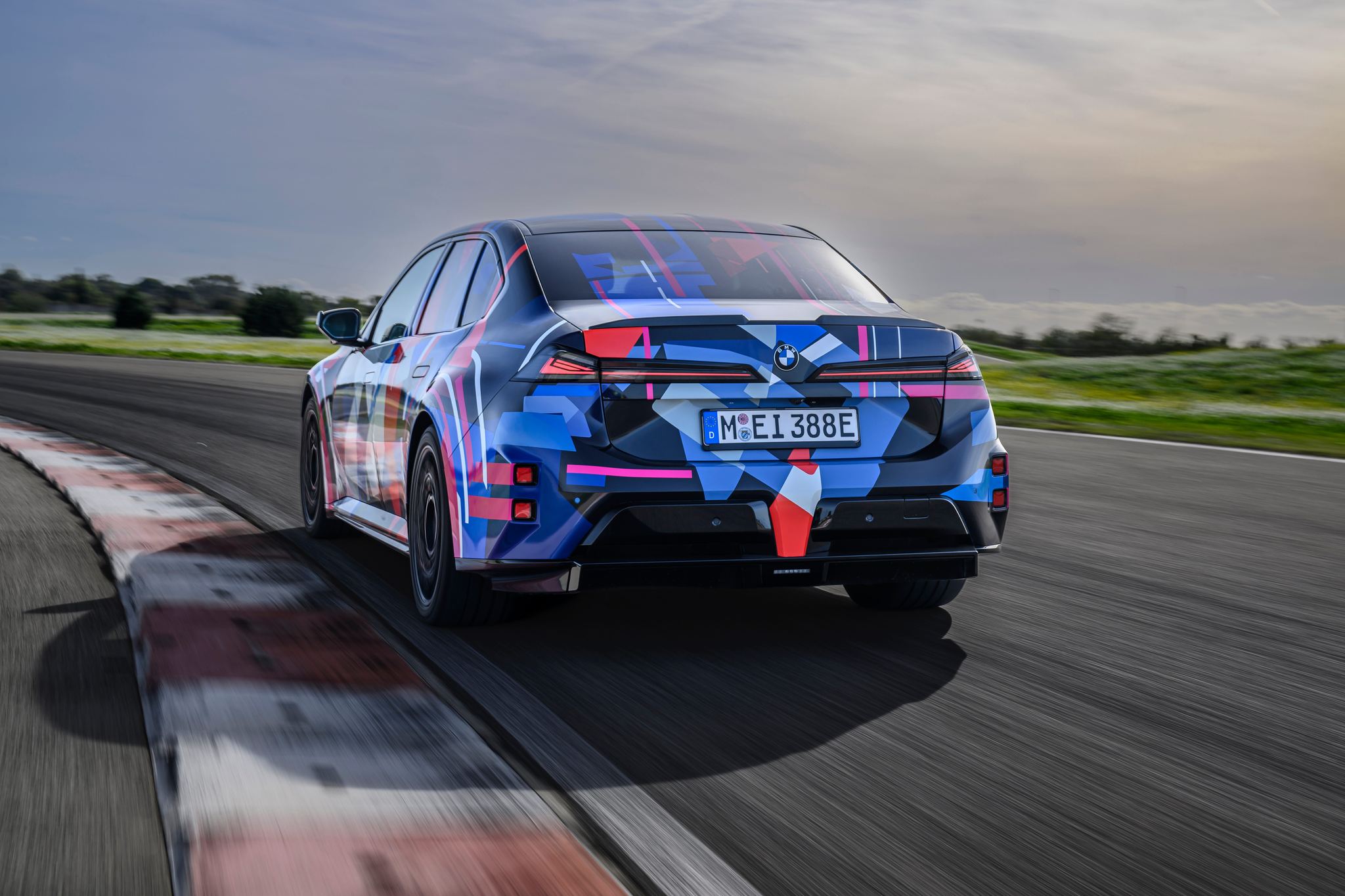
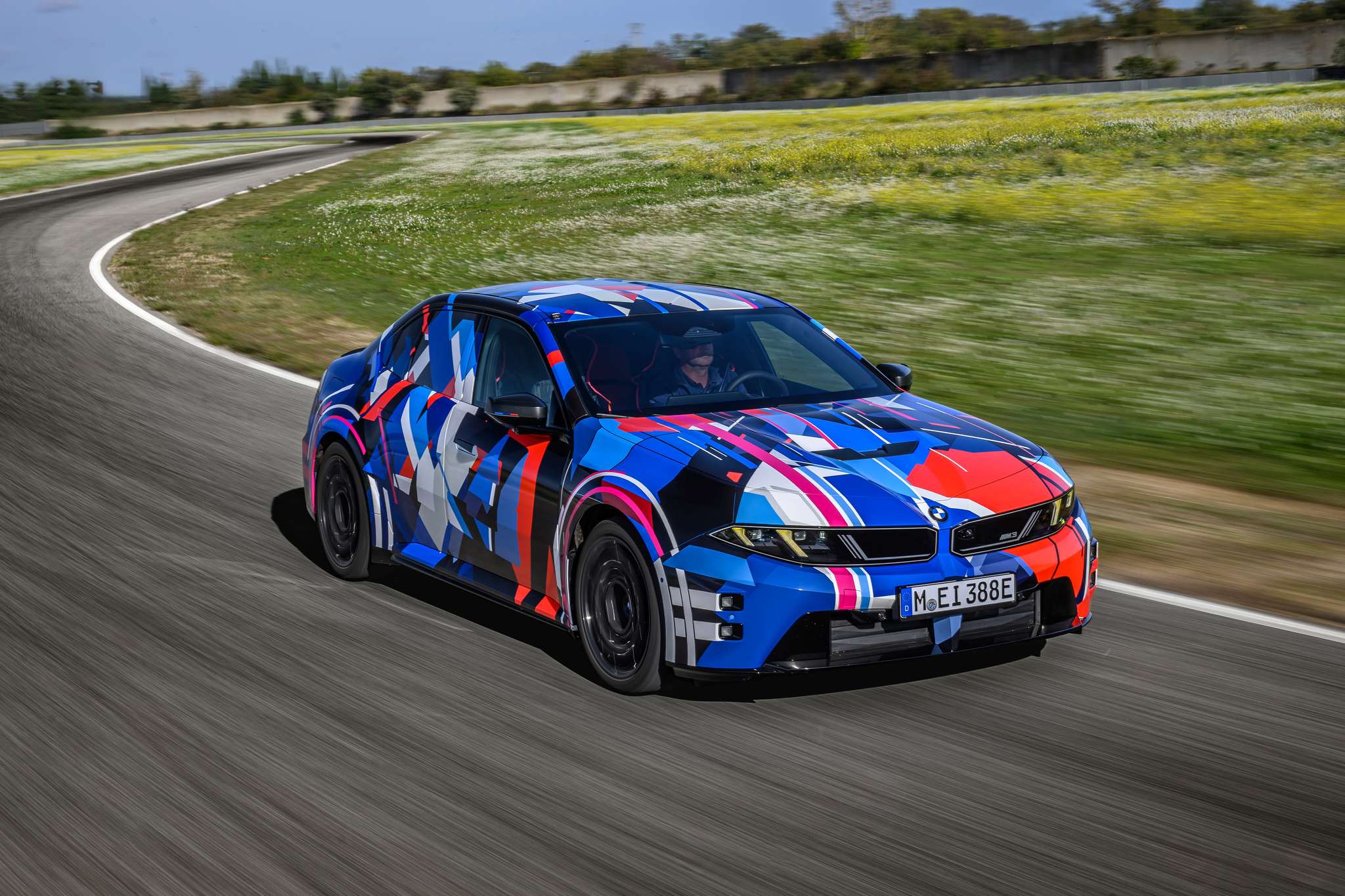
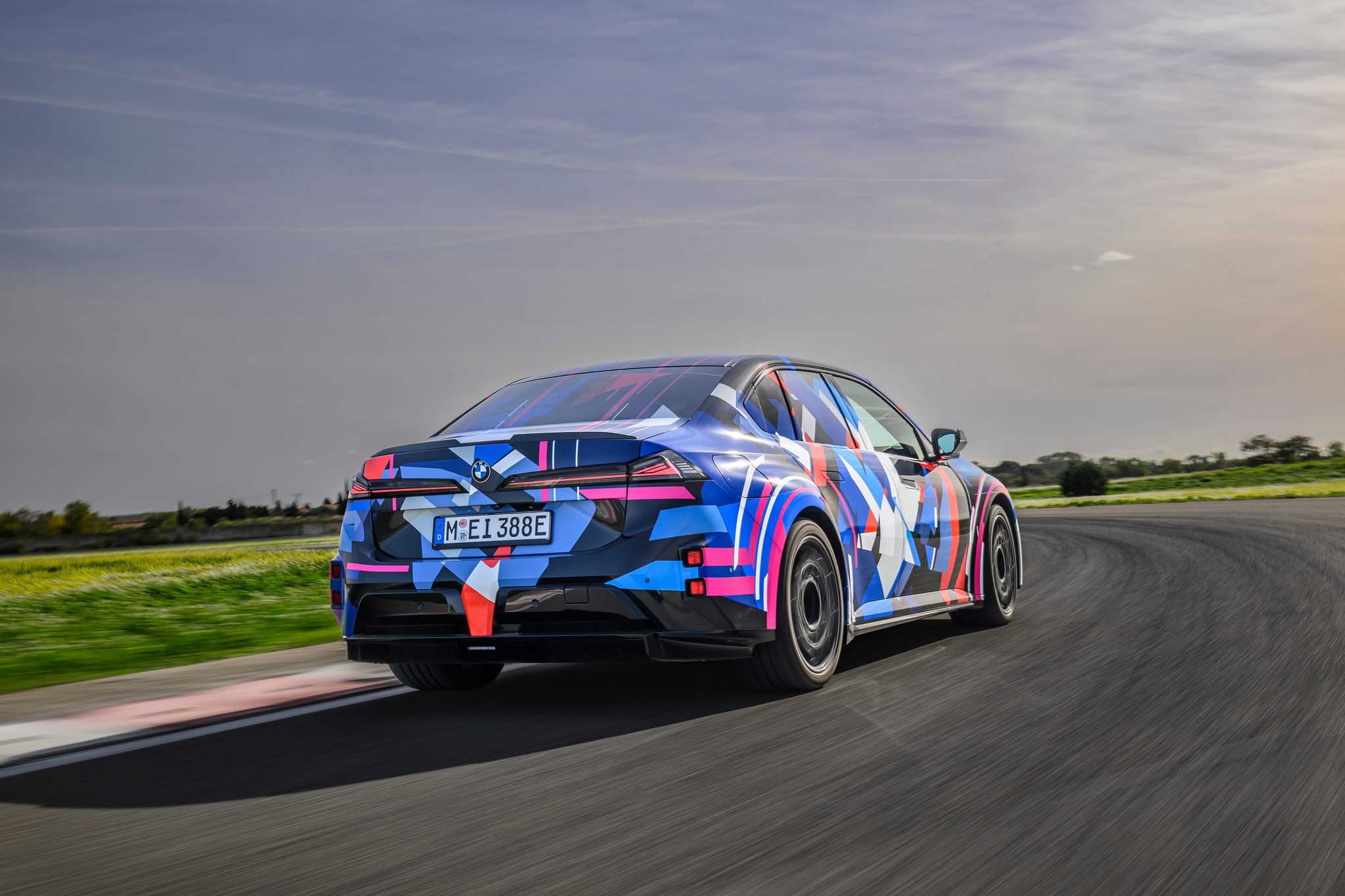
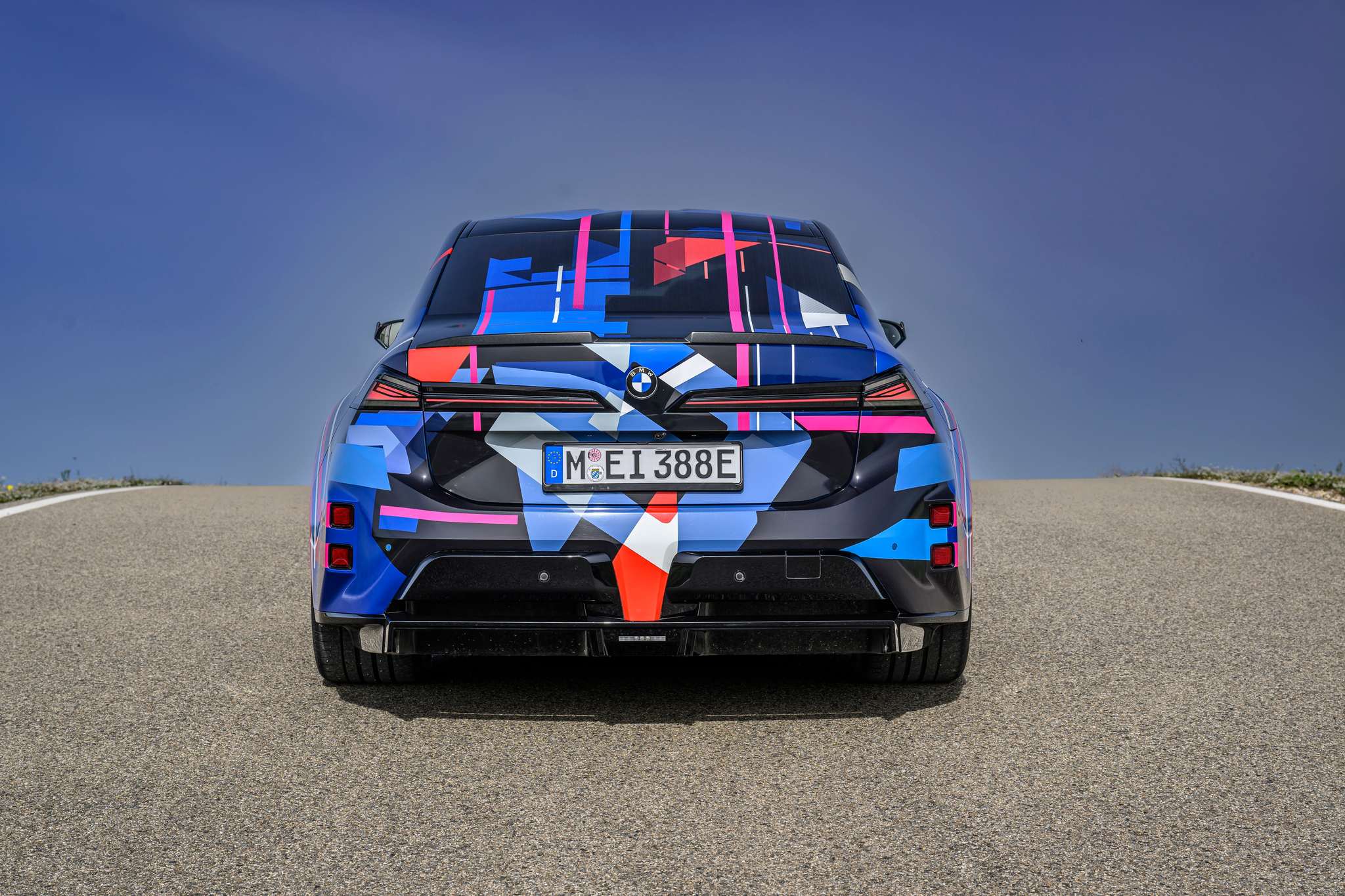
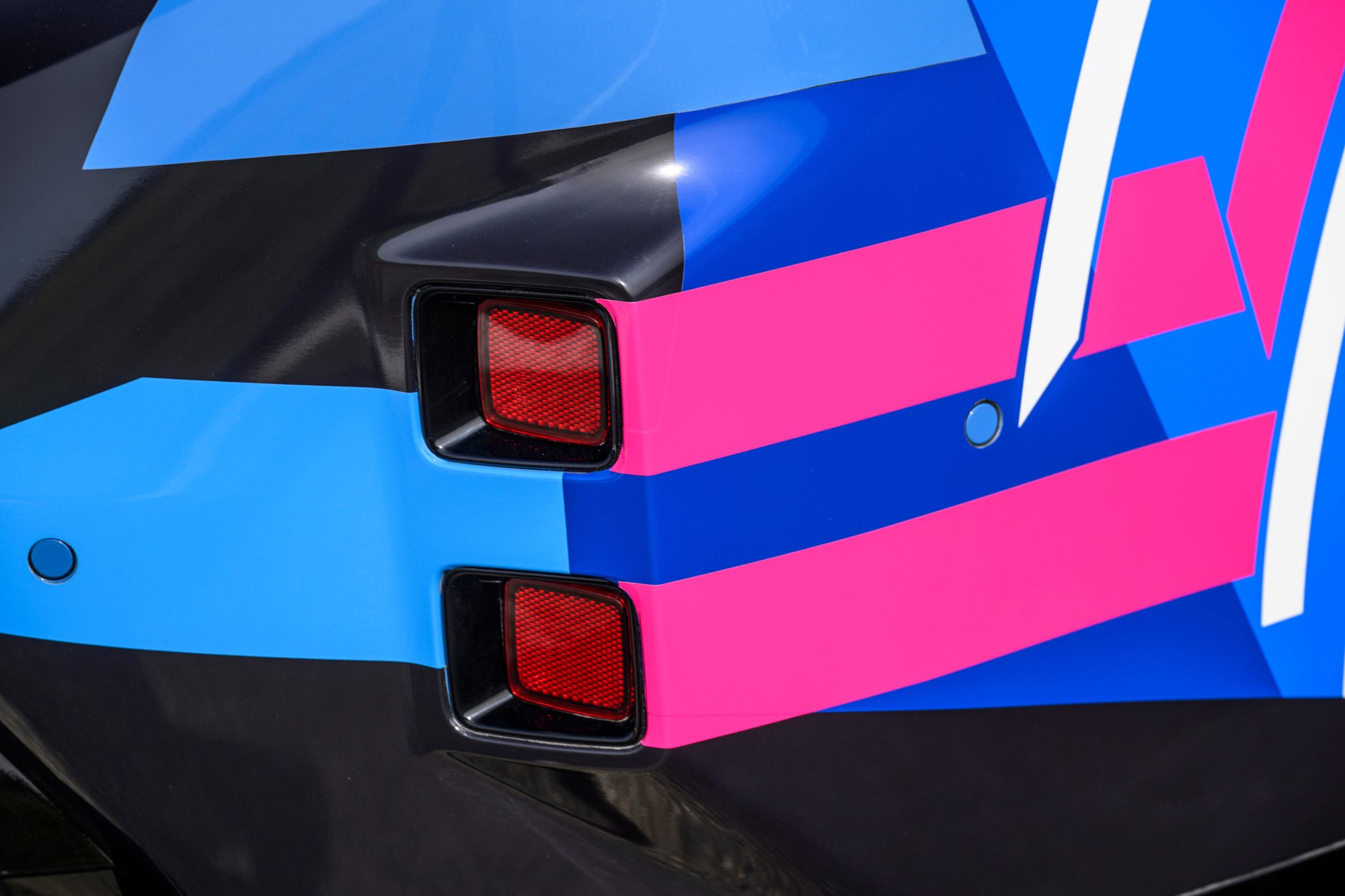
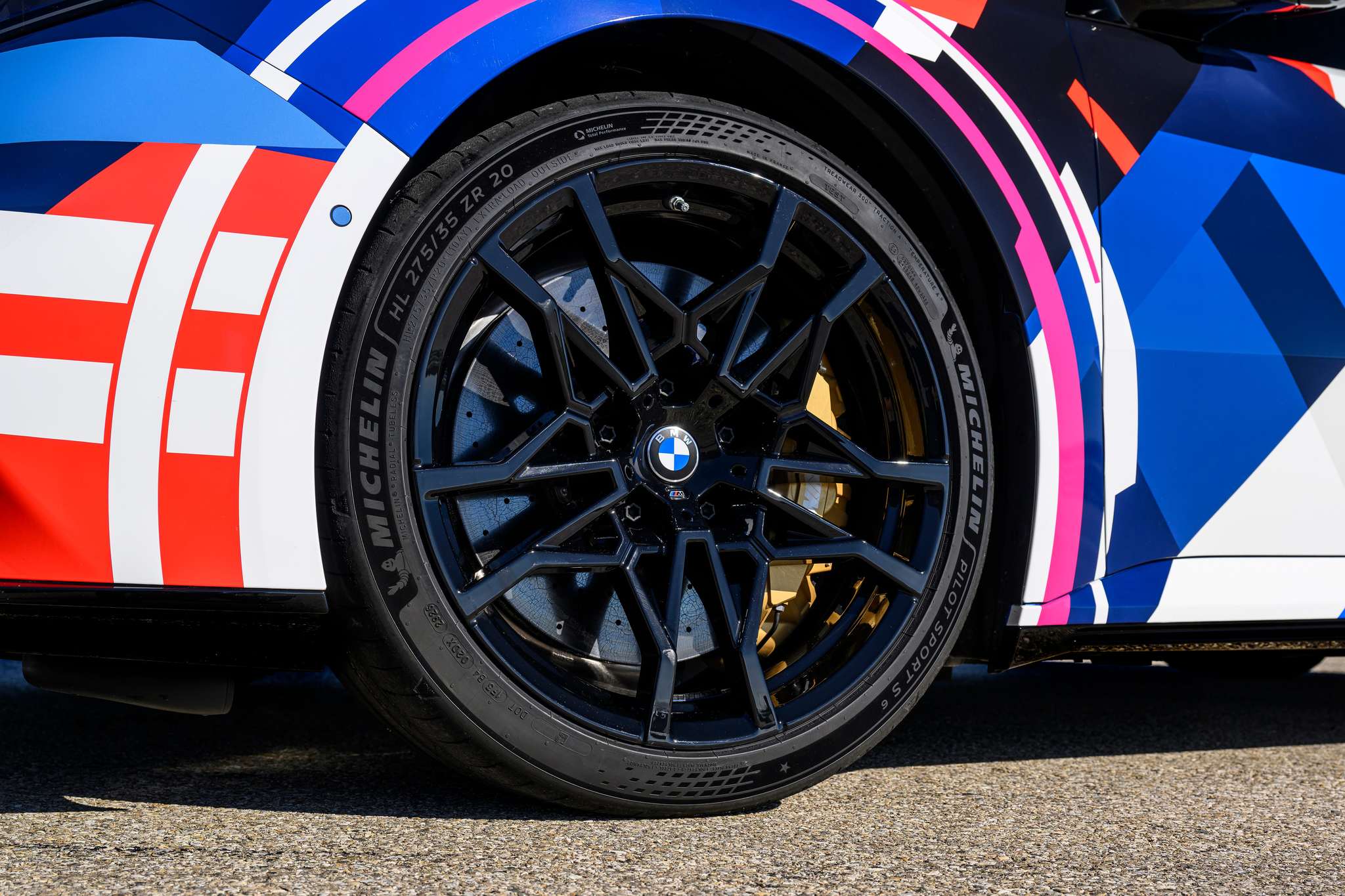
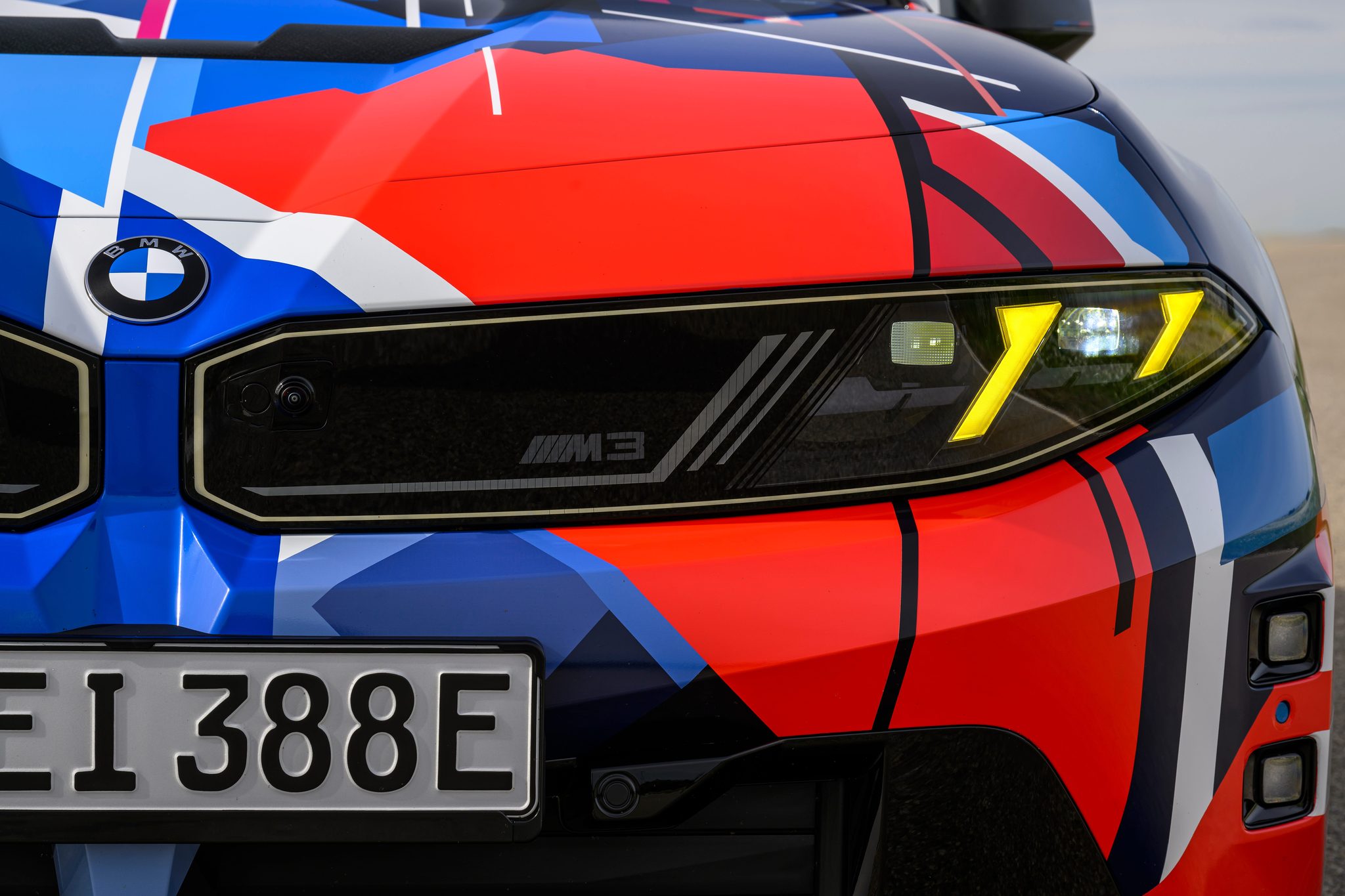
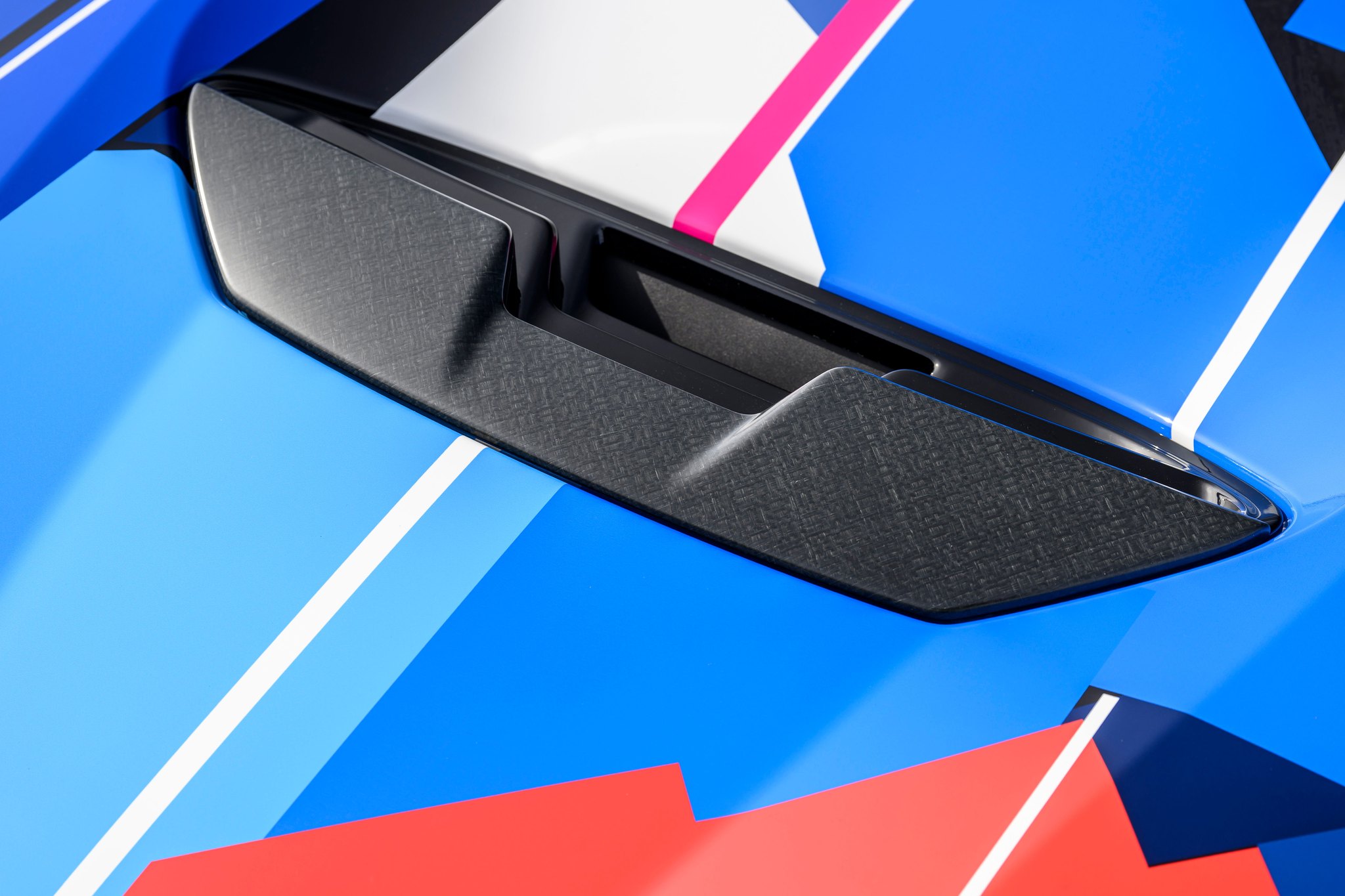
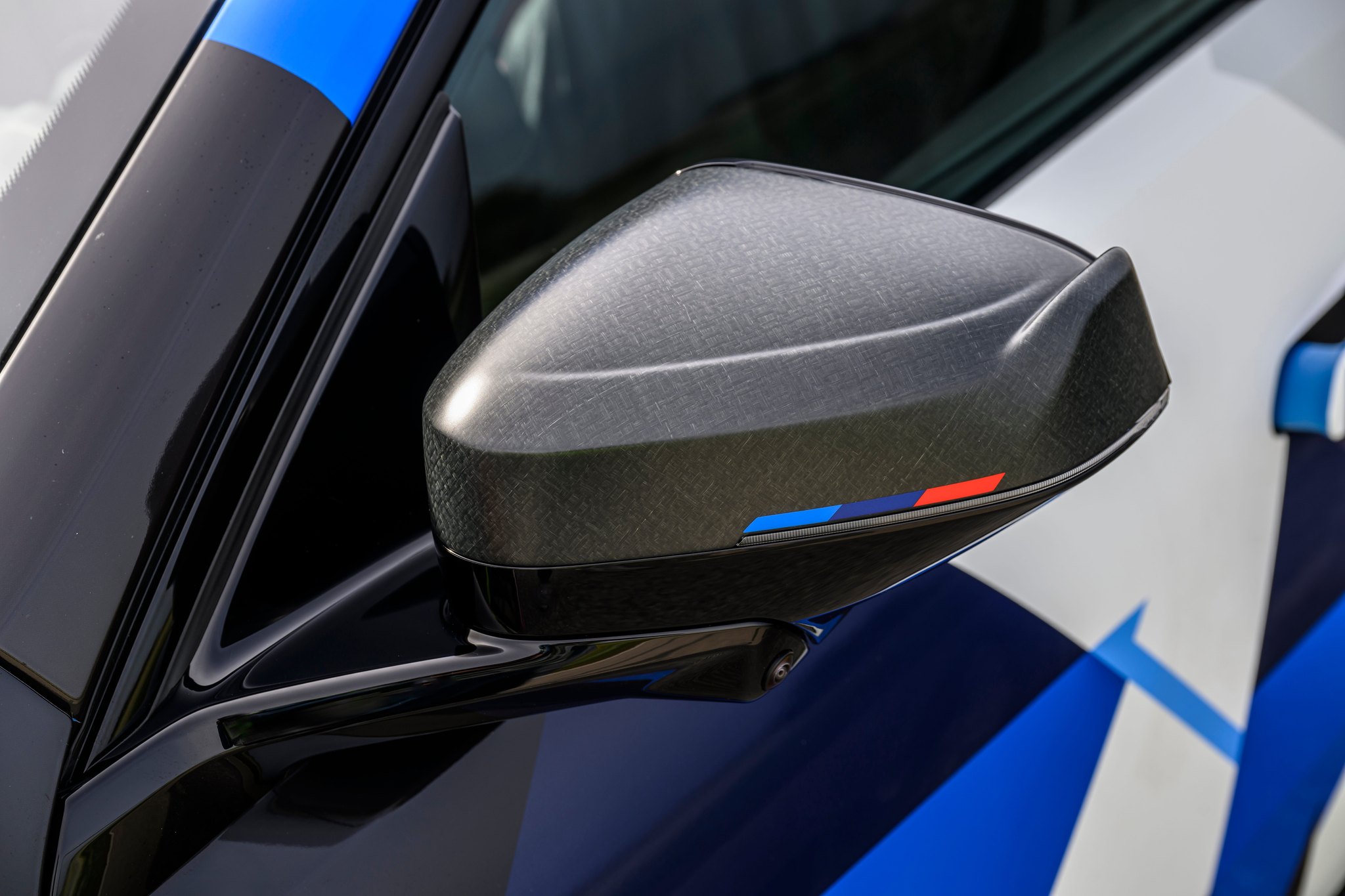
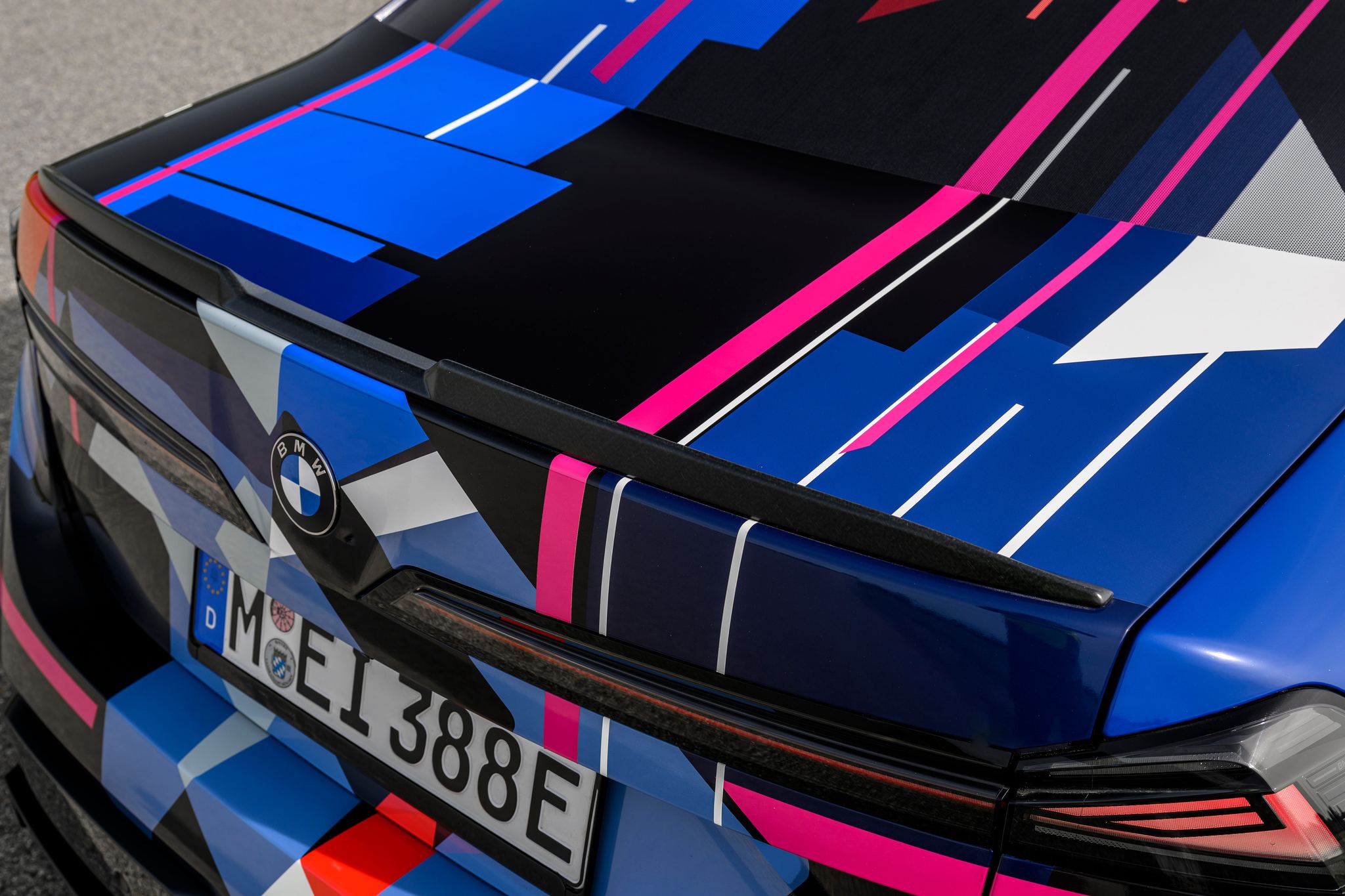
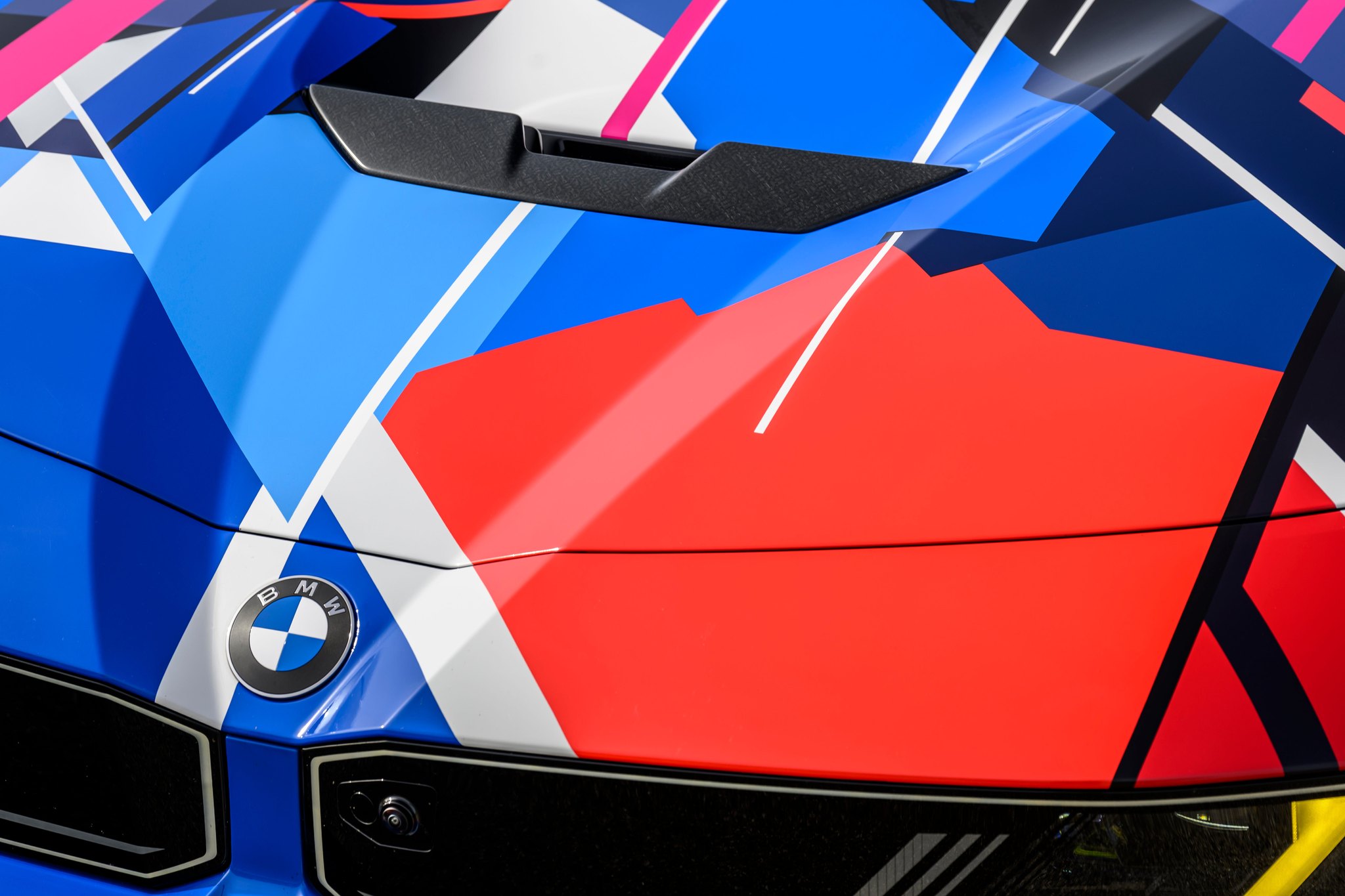
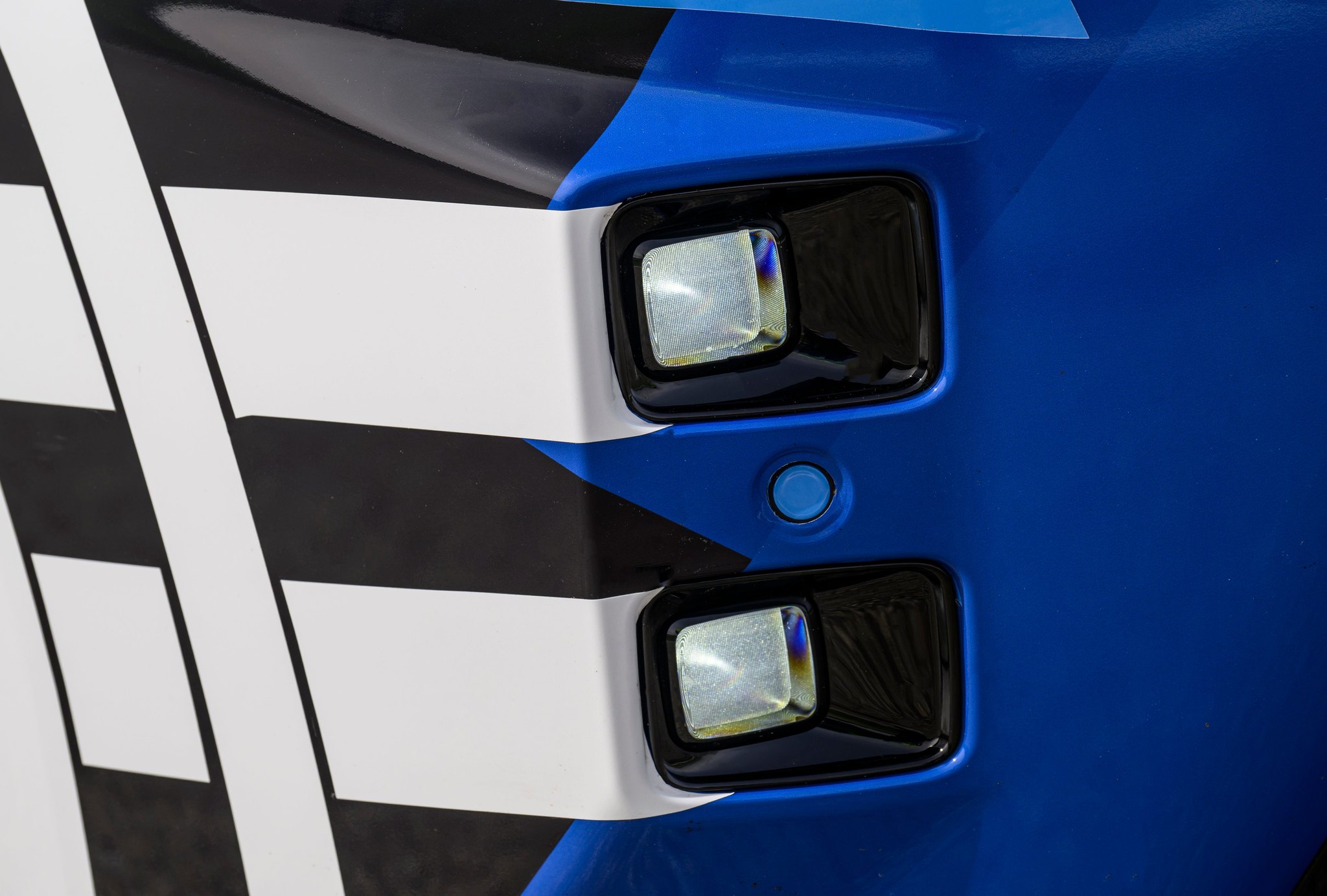
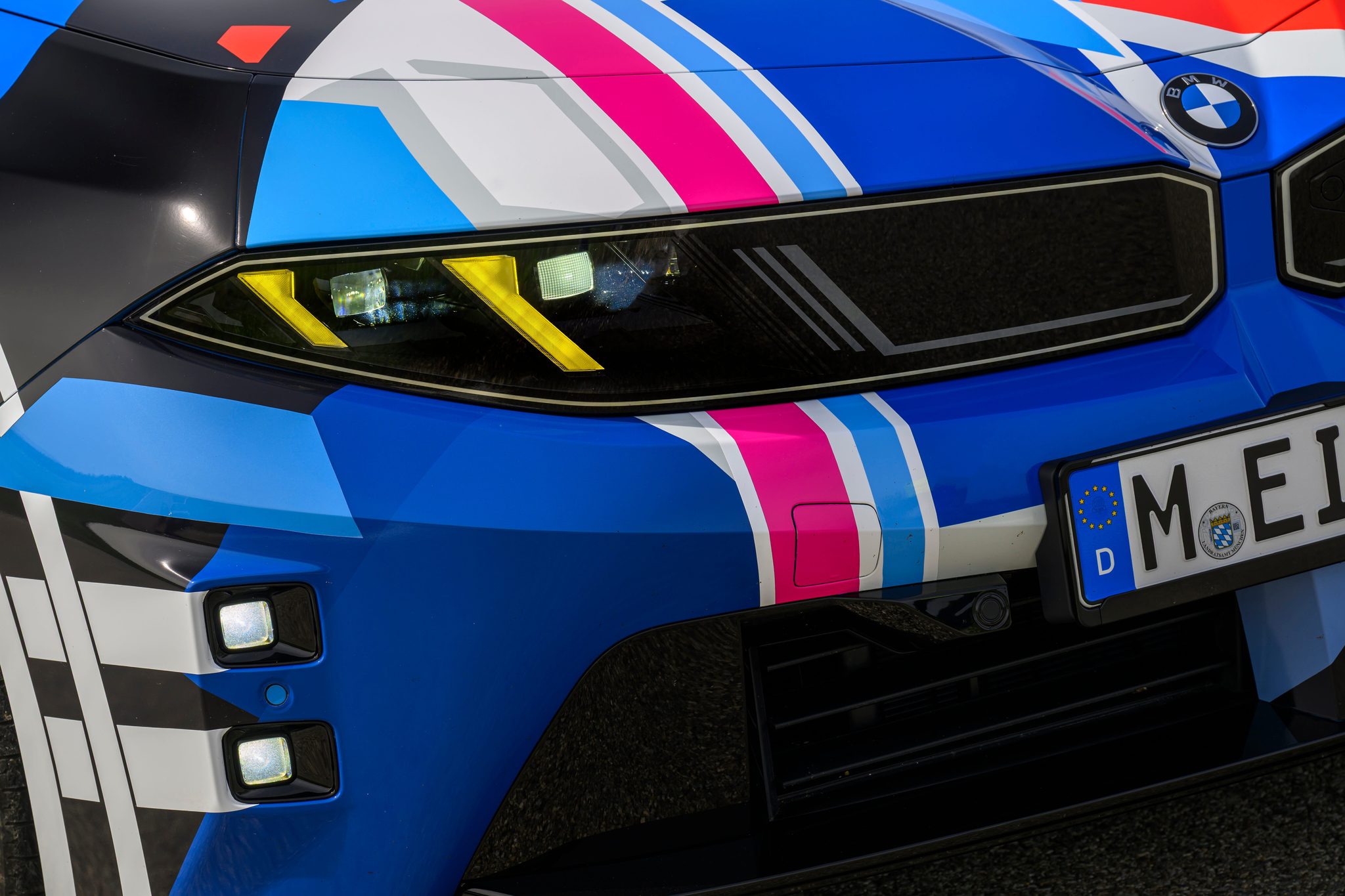
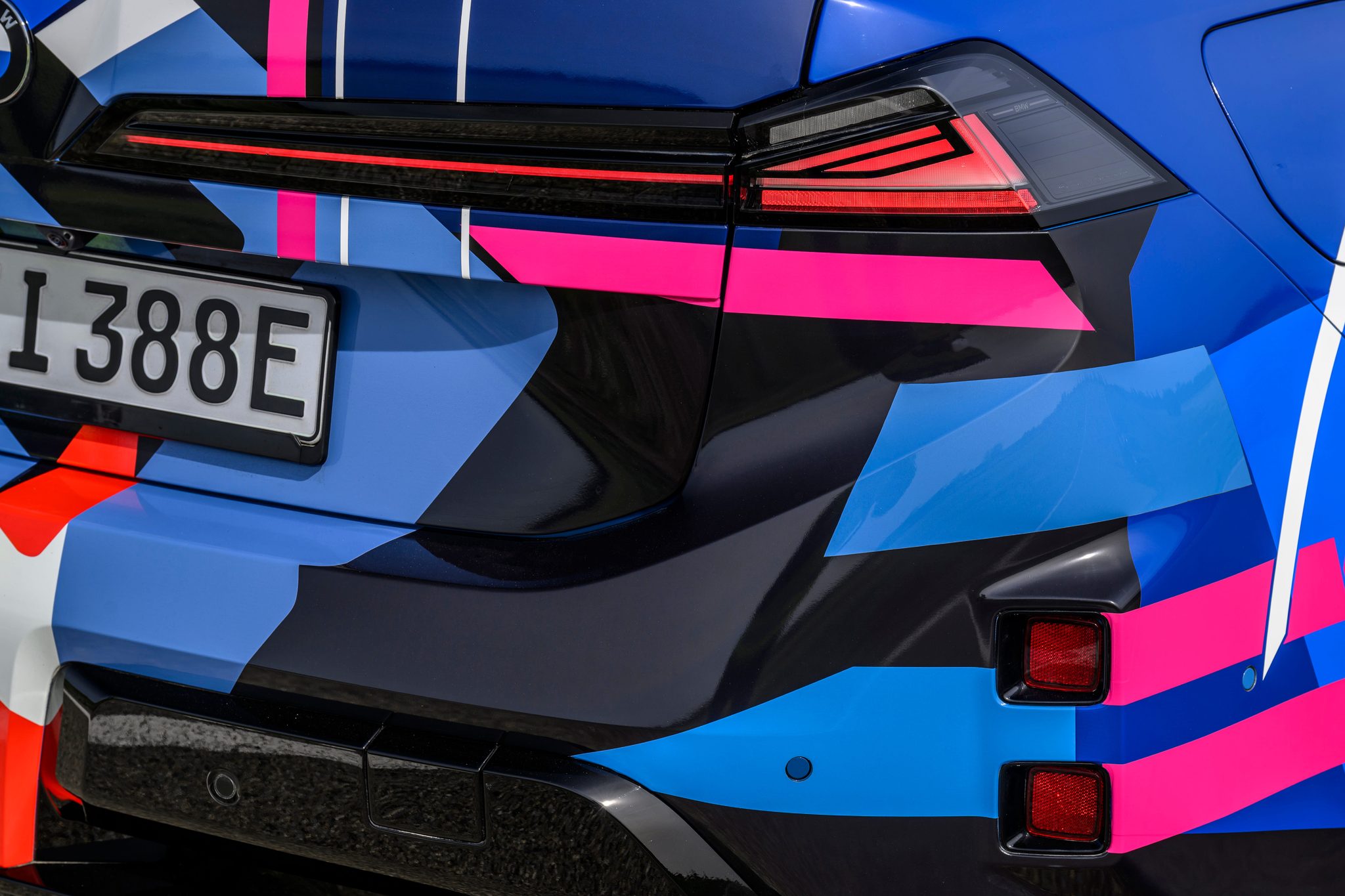
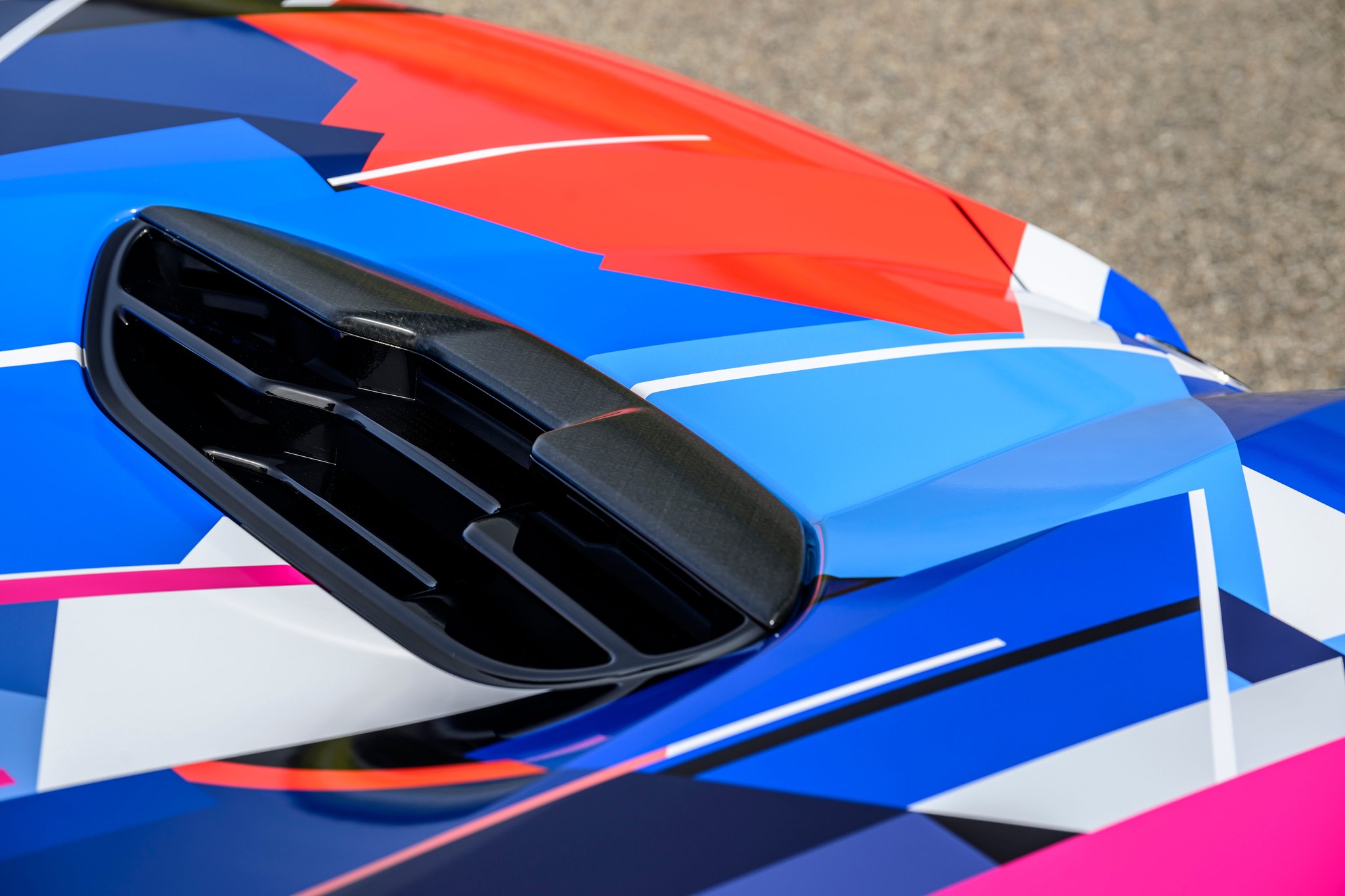
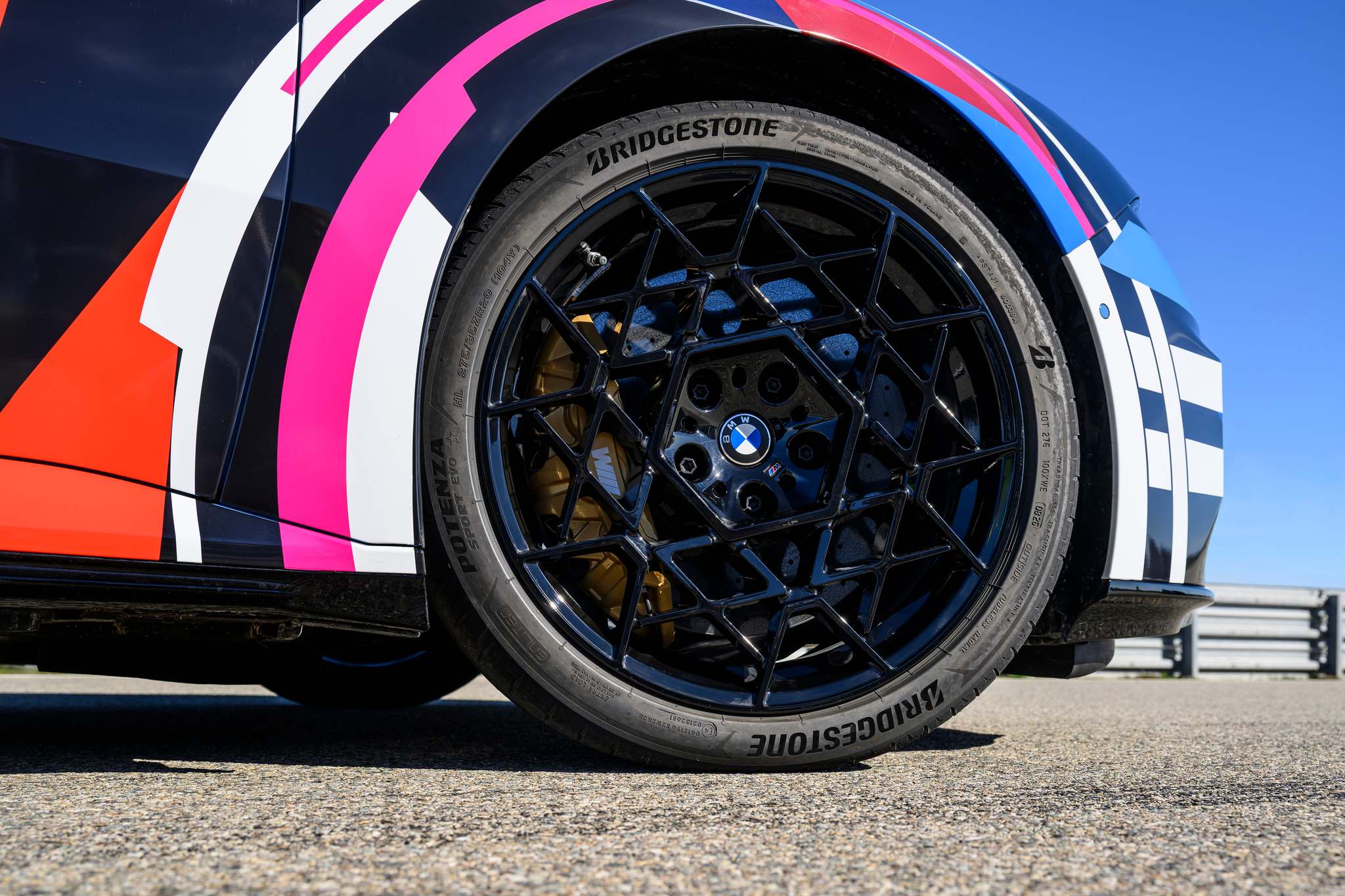
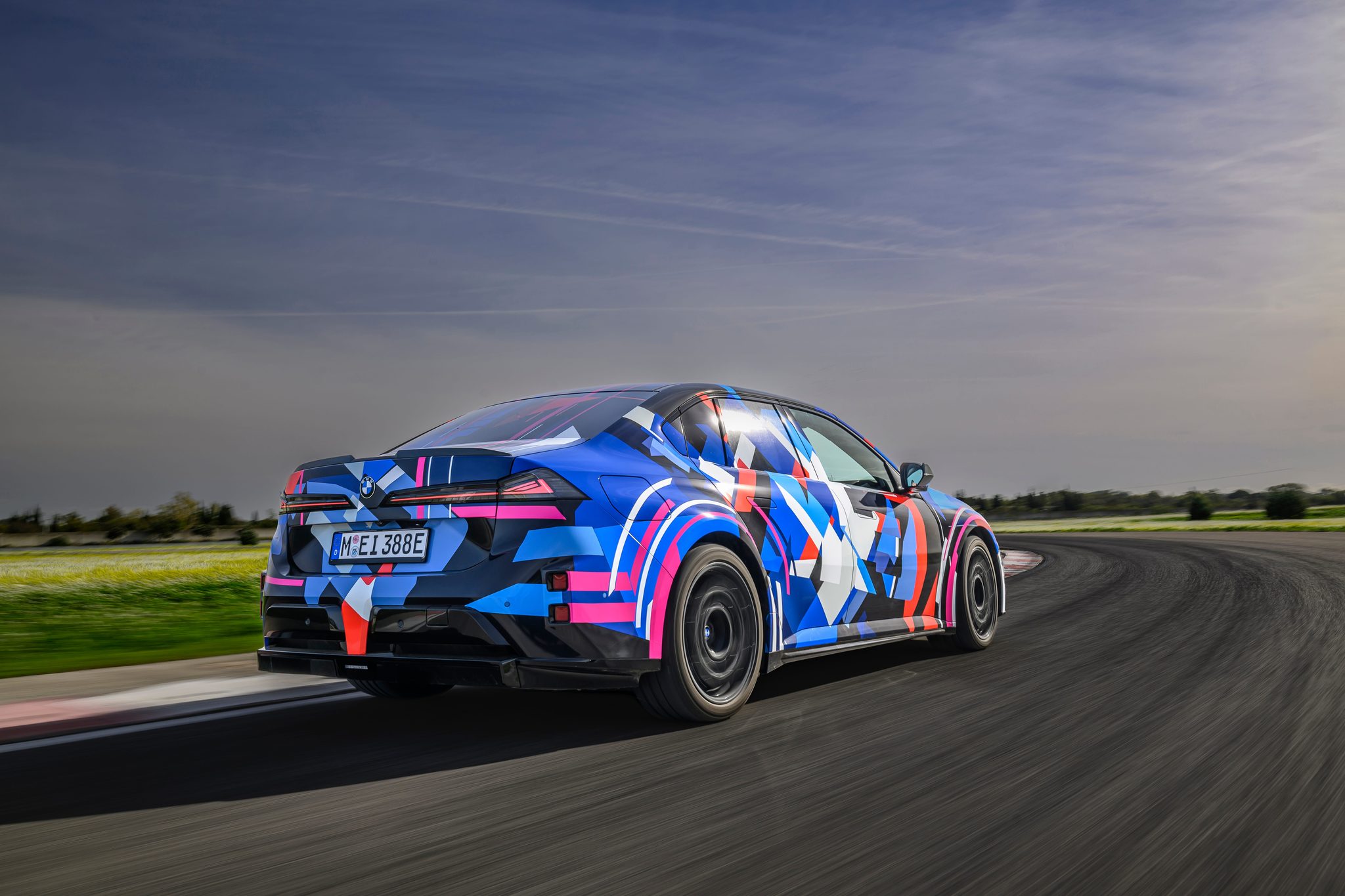
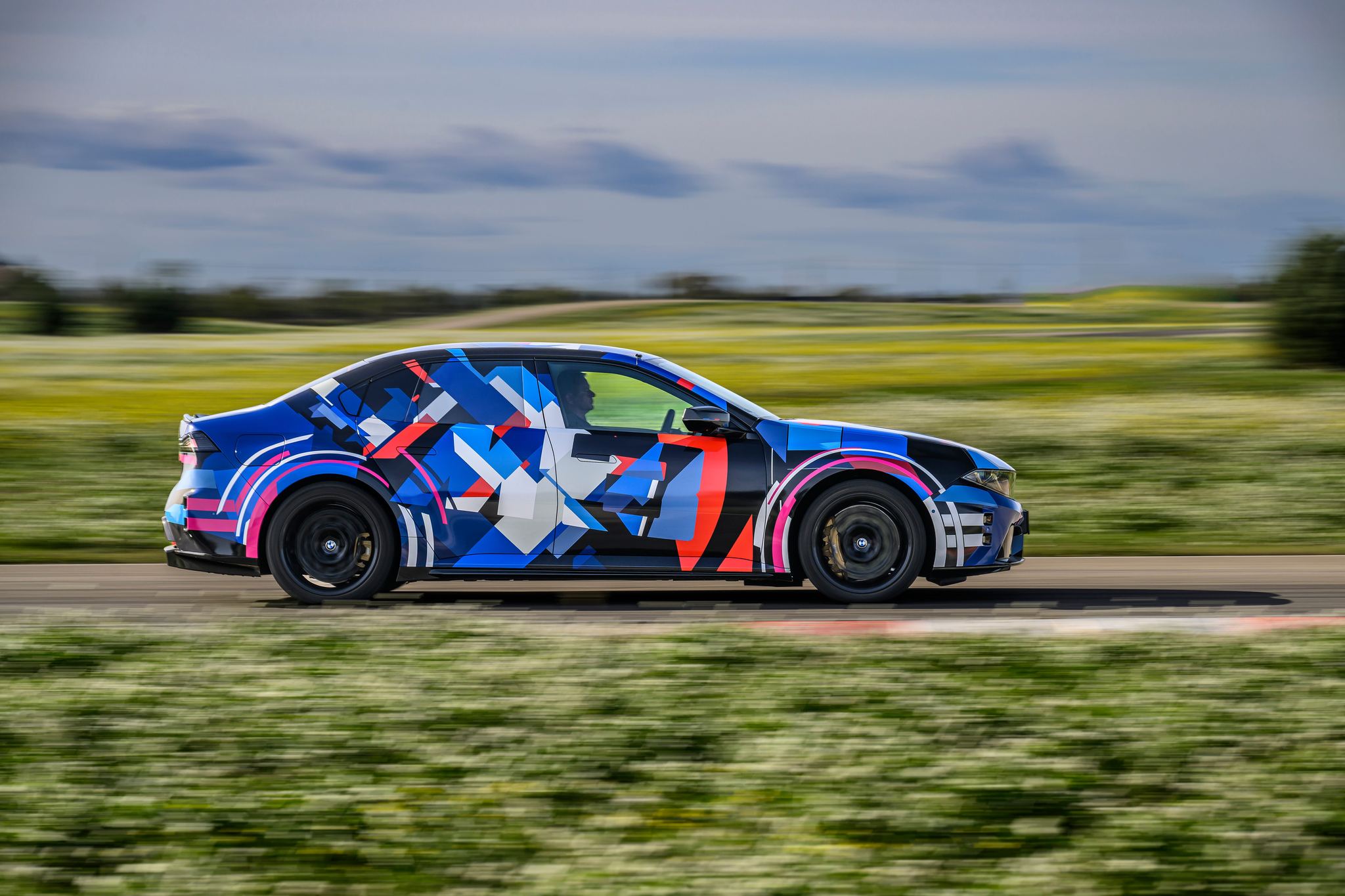
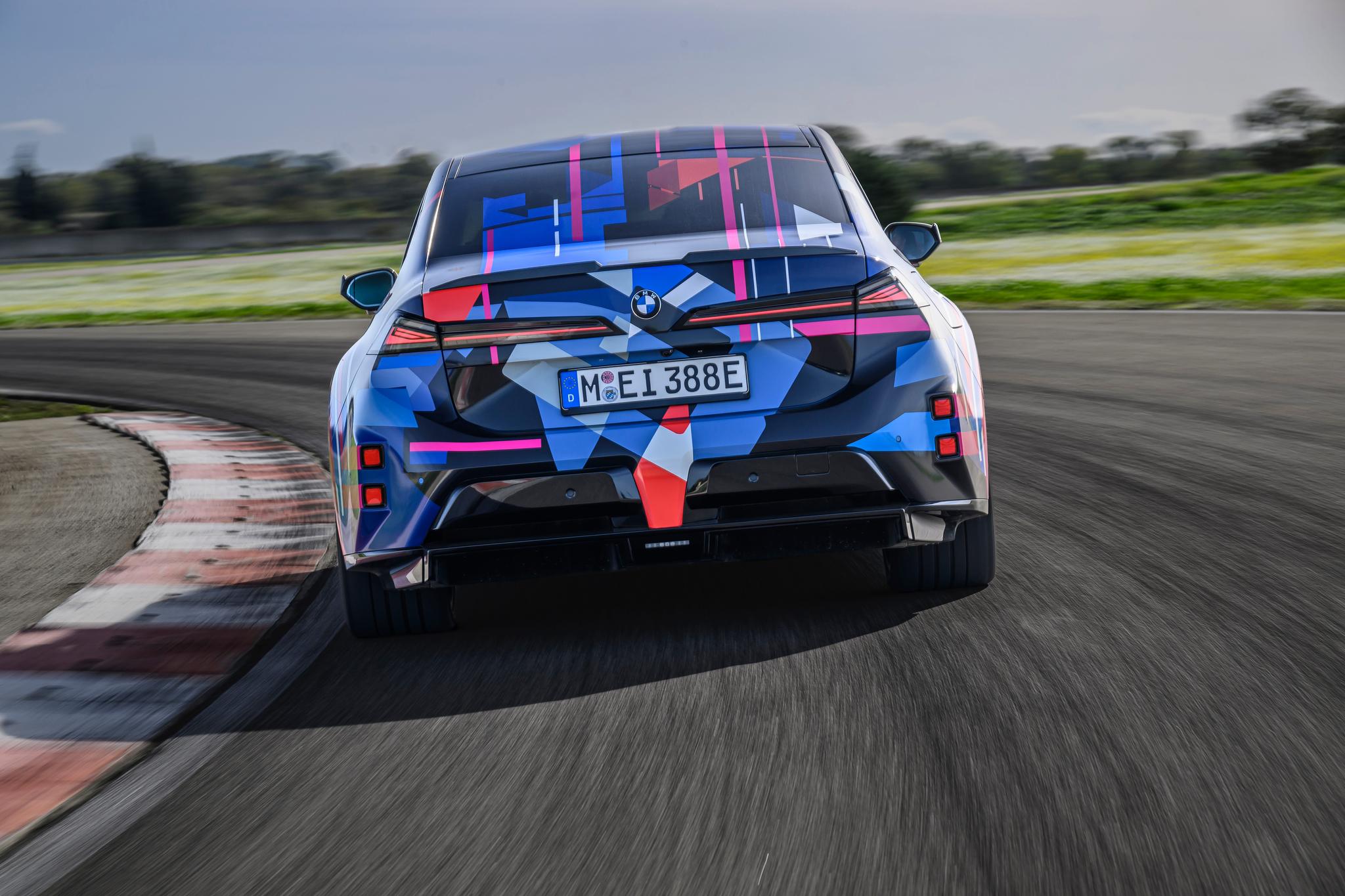
The camouflage hugs the body, making the overall look hard to judge. Even so, every body panel below the glass differs from the i3. The body is widened to fit larger Michelin Pilot Sport S 6 tires. The M Yellow LED daytime running lights, the track light cluster below, the hood vents, the carbon-fiber side trim, and the mirror caps are all fairly visible.
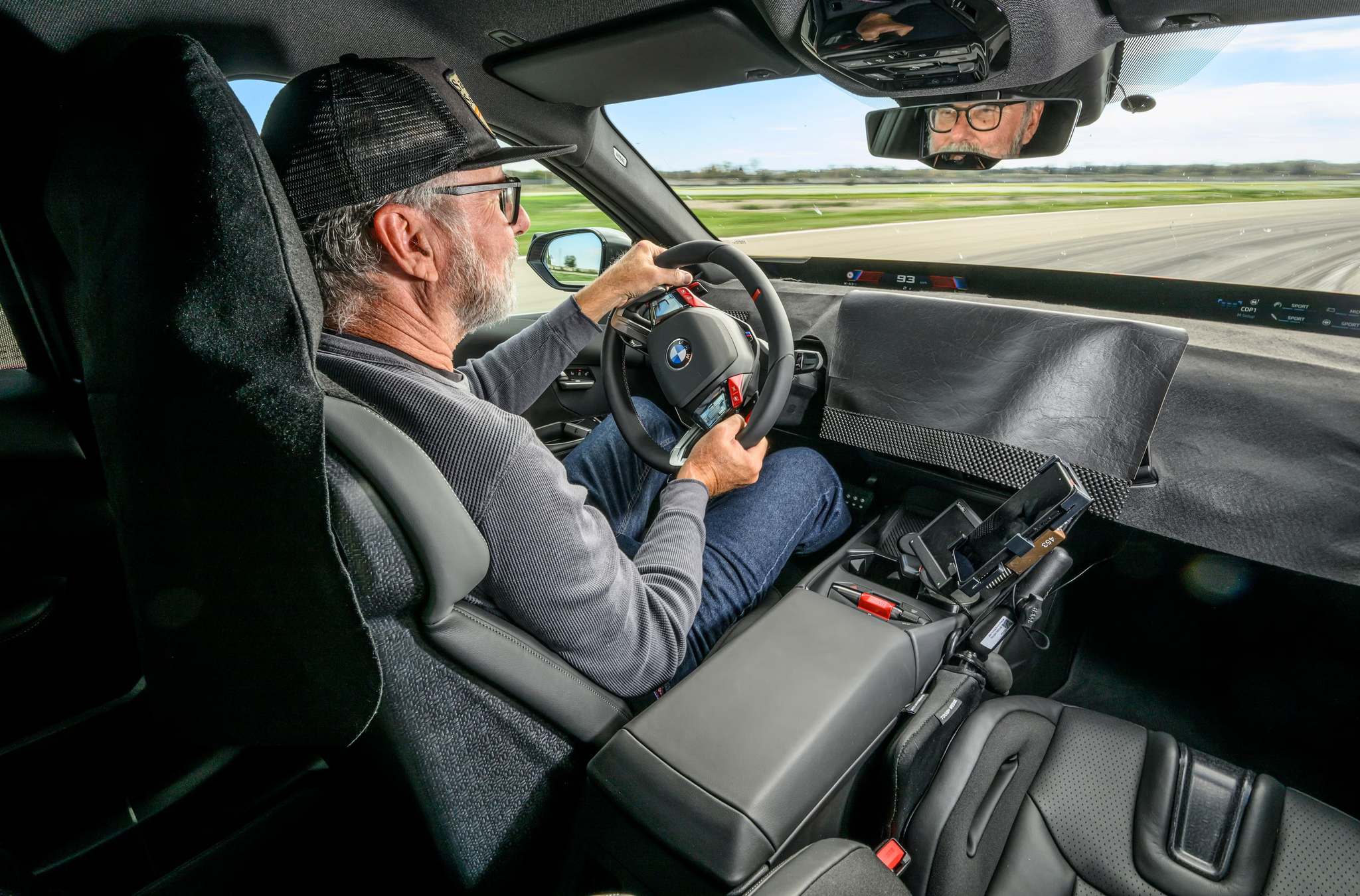
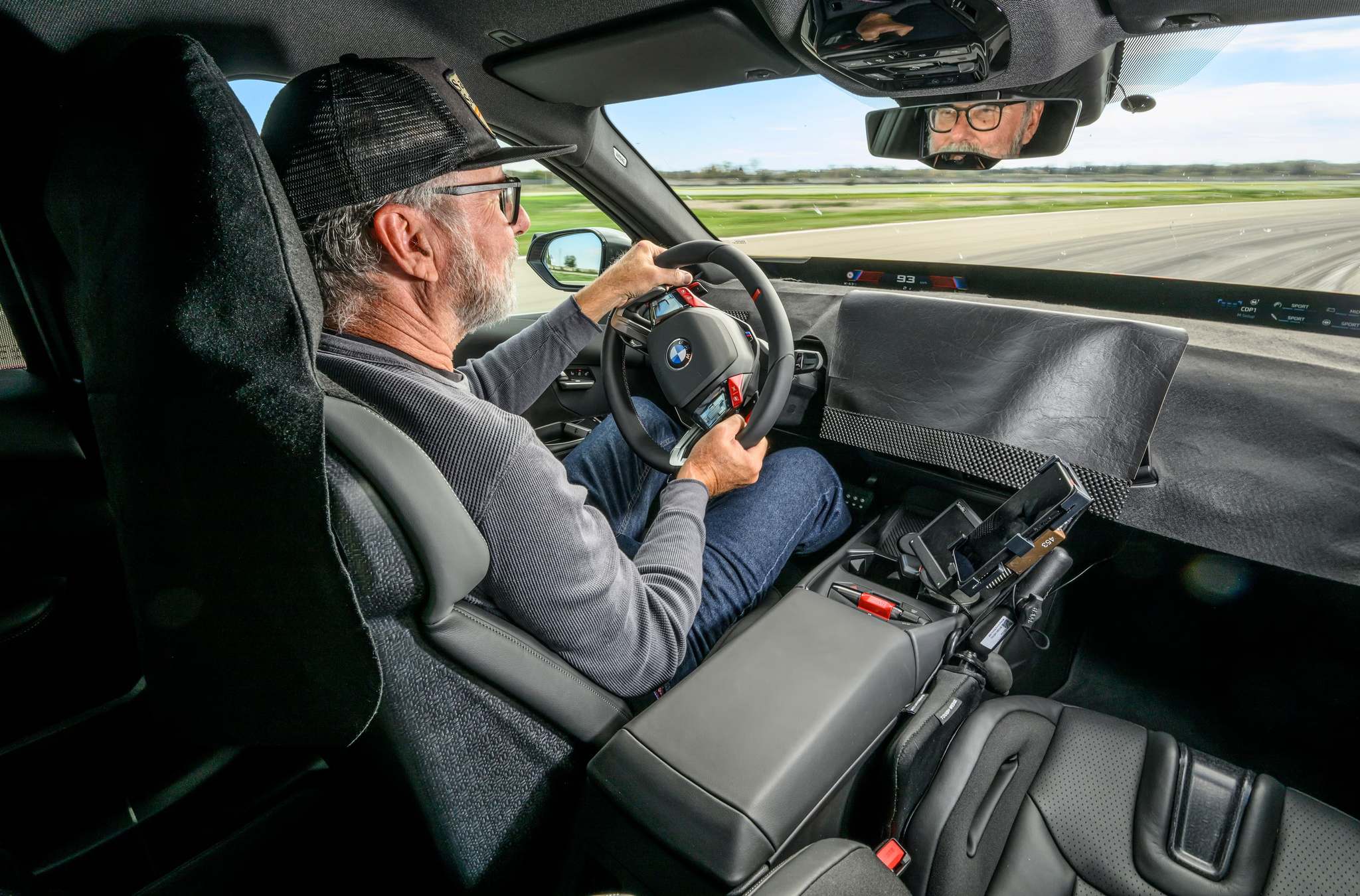
The interior is covered far more heavily. The steering wheel has extra buttons: each side of the "wing" has two red buttons, M1 and M2, along with an M Setup button used with the touchscreen to program each mode. A fourth button, pressed twice, turns off the active ADAS safety systems, handy on the track. The 17.9-inch central display is mostly covered, revealing only the M button setup interfaces. The Panoramic Vision display at the base of the windshield is largely unchanged apart from the font, with only the middle section blocked off.
The car's official name is simply BMW M3, with no EV or Electric tag. Its unofficial internal code is ZA0. BMW will release more information, including pricing, closer to the launch in summer 2027. The tentative price is currently $90,000 and may change. The company has not given official information on an internal-combustion version.
Giving the electric M3 the familiar name suggests BMW sees it as a true successor, not a side variant. The most notable question is driving feel: the M1 and M2 buttons and the eDrive sound show the company trying to preserve character in a high-performance EV. Power, battery, and price figures are still prototype numbers, so readers should wait for the production version before comparing it with rivals.
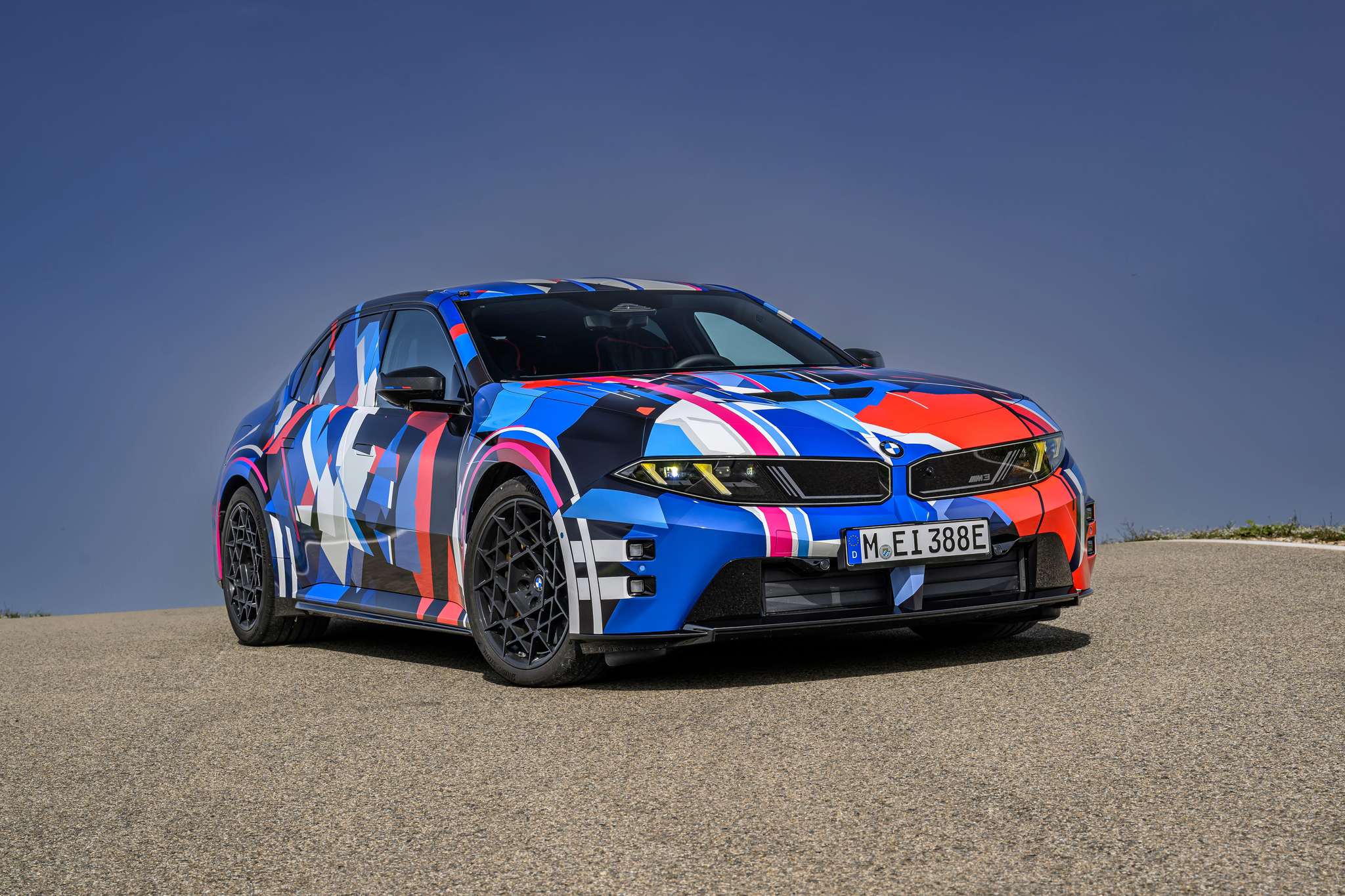
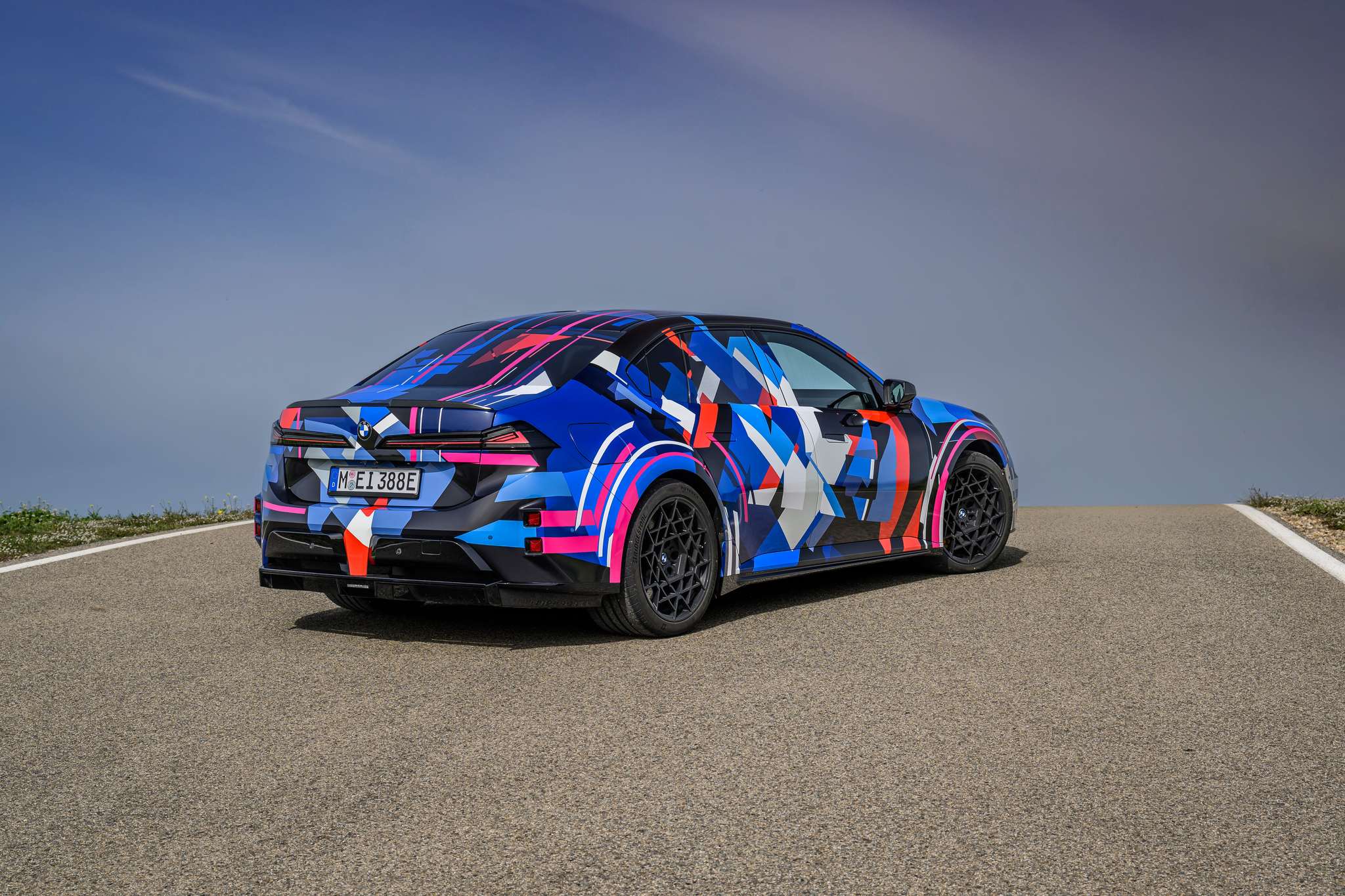
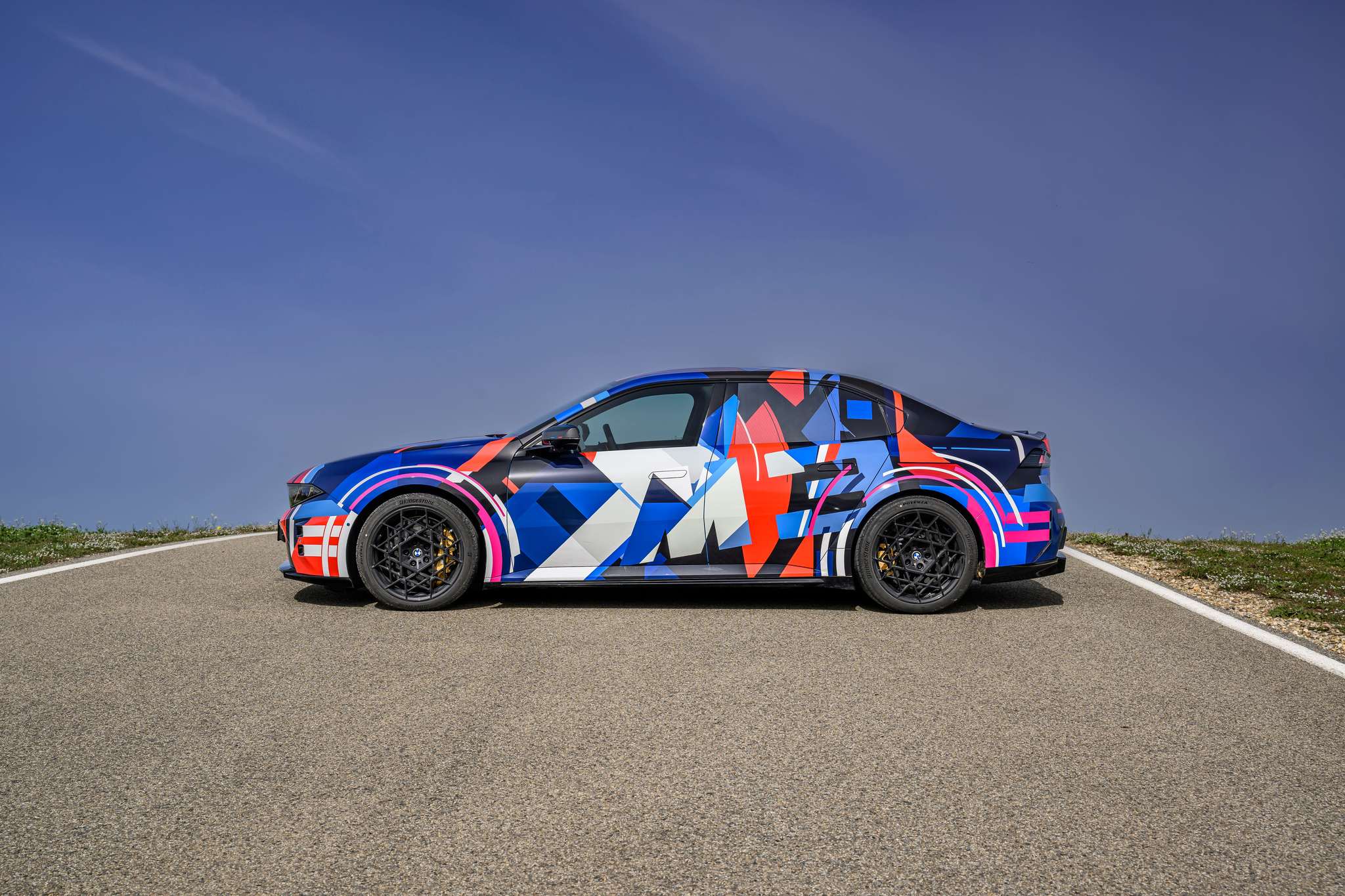
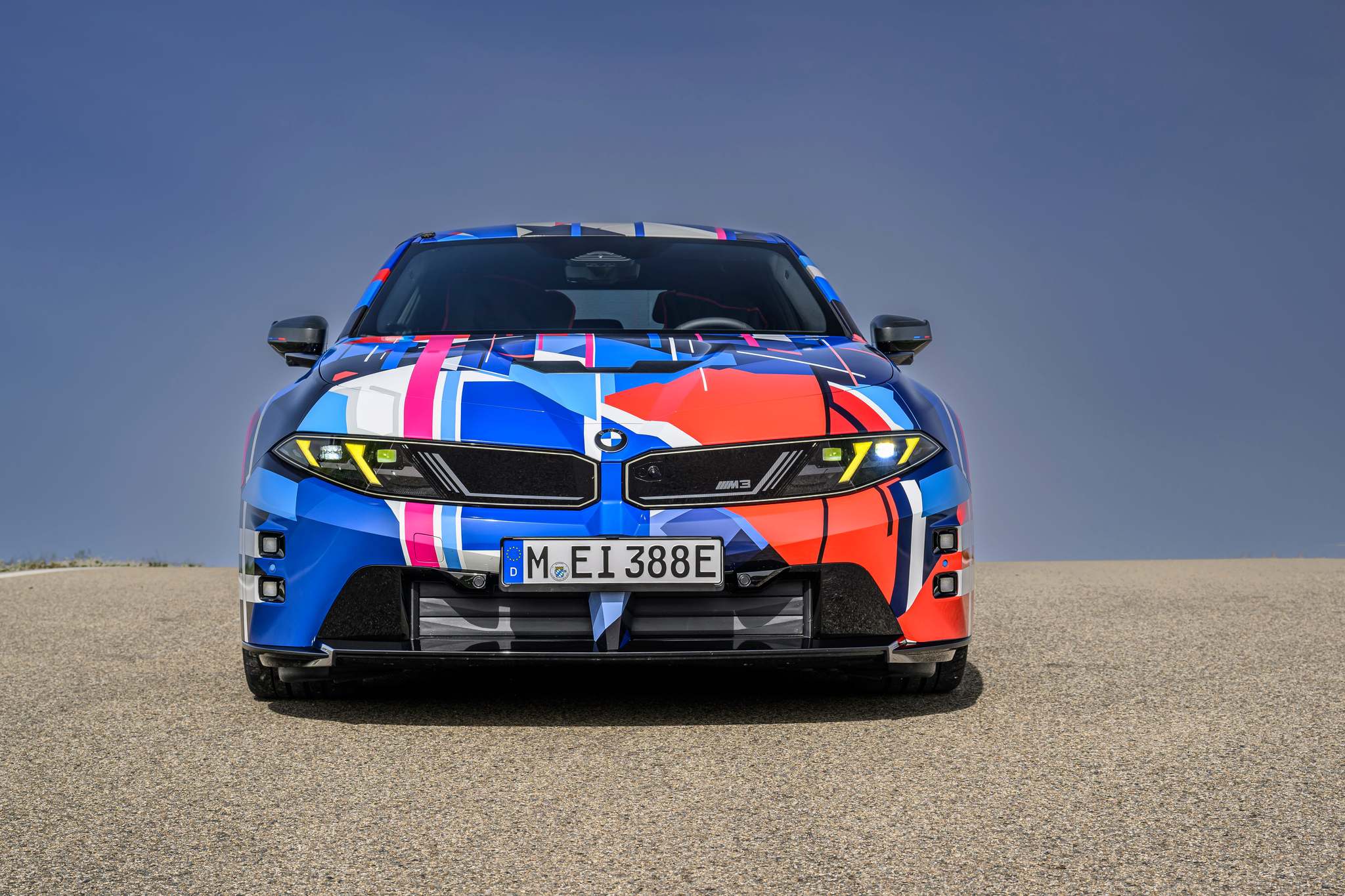
Source: Car and Driver
Reviewed by: Hero Association