

The Areni-1 leather shoe was excavated from a cave in Armenia in 2008. It dates to roughly 3600 - 3500 BCE and is now on display in Yerevan.
- The shoe was excavated in the Areni-1 cave (Armenia) in 2008.
- It is made from a single piece of cowhide and still has its leather laces.
- The size is roughly equivalent to a US 7, a European 37, and a UK 6.
- Radiocarbon dating puts it at around 3600 - 3500 BCE.
- The museum in Yerevan charges an admission fee, and the shoe is one of the oldest artifacts on display.
Table of Contents
The discovery in the Areni-1 cave
Anyone who has dug an old leather shoe out of the closet, cracked and with snapped laces, knows how hard it is for leather to last. Yet in the Areni-1 cave in Armenia, archaeologists found a leather shoe in remarkably good condition. The excavation took place in 2008.
The shoe was made from a single piece of cowhide, and its leather laces are still there. By its measurements, it is equivalent to a US size 7, a European 37, and a UK 6. The inside was stuffed with grass, possibly to hold the shoe's shape or to keep the wearer's foot warm. No one yet knows whether the owner was a man or a woman.
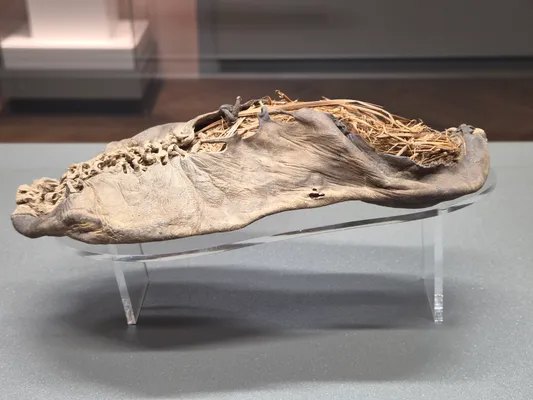
Its age and where it was found
Researchers used radiocarbon dating to determine its age, arriving at roughly 3600 - 3500 BCE. That means the shoe lay buried for more than 5,000 years.
When it was found, the shoe was sitting upside down at the bottom of a shallow, round, plastered pit. Above it was a broken ceramic bowl, also turned upside down, dating to the Chalcolithic period.
Why the shoe survived
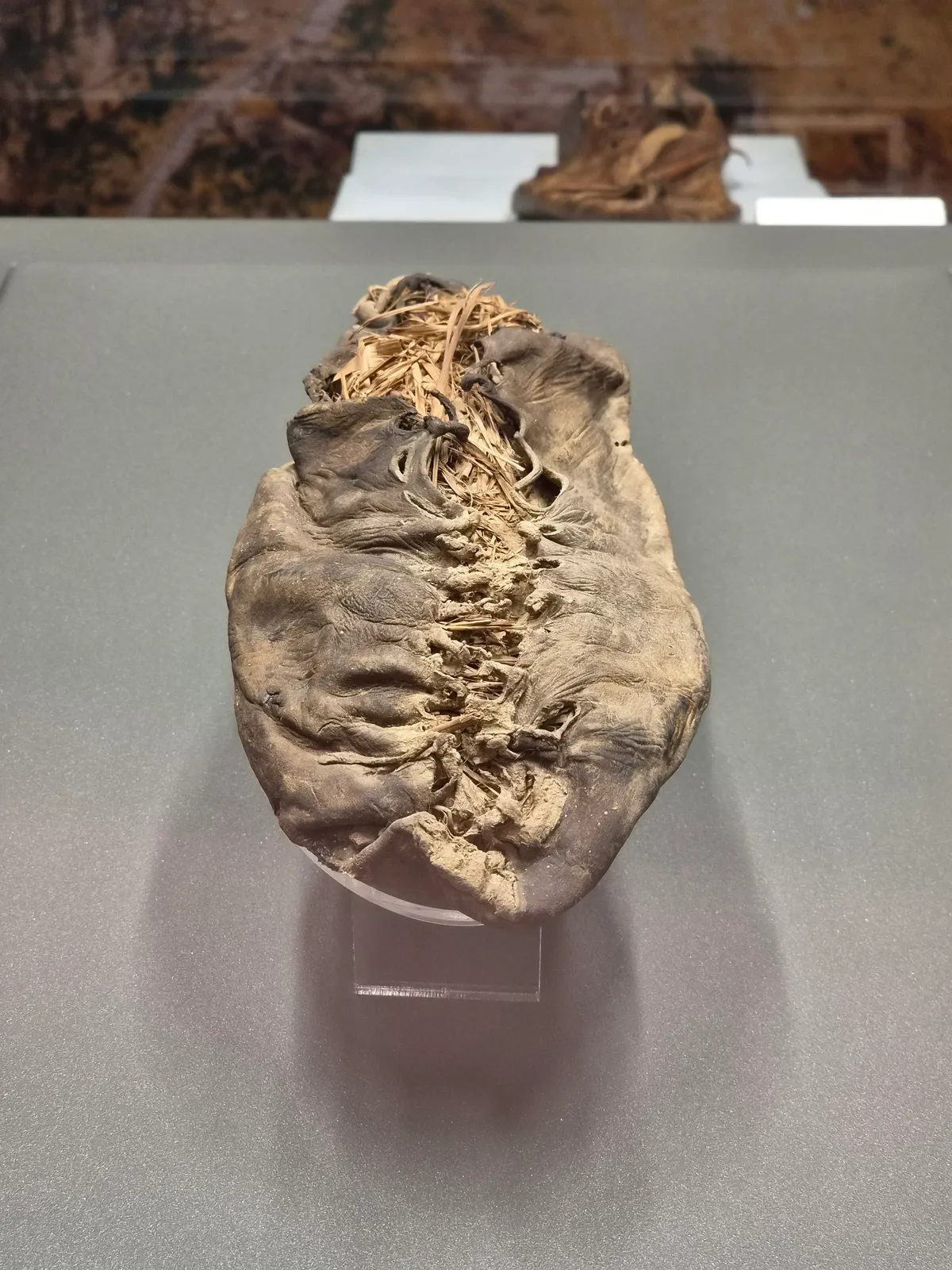
The secret lies in the cave itself. The environment inside is cool and dry, and the shoe was sealed under multiple layers of sheep dung. As a result, it survived in nearly perfect condition for thousands of years.
Seeing it in Yerevan
If you ever visit Yerevan, you can see the shoe in person at the museum. Admission is charged, and the shoe is one of the oldest artifacts on display.
Standing in front of that grass-stuffed shoe, it is easy to feel closer to people from the distant past. Keeping your feet dry and warm is a concern that never goes out of style.
In Vietnam, the hot and humid climate makes leather shoes prone to mold if you store them in a closed space. Here is the smallest thing you can try today: wipe dry the leather pair you wear most, stuff them with paper or put a moisture-absorbing packet inside, and store them somewhere with good airflow. And if you are planning a trip to Armenia, check the museum's opening hours and ticket prices on its official website before you go, since the original article only says that admission is charged.
Source: Atlas Obscura
Reviewed by: Hero Association