Despite a budget of $22.6 billion, TSMC's fab campus in Brazos County, Texas won't begin making 2 nm chips until 2031. That is six years behind Taiwan and at least one generation off the leading edge.
- TSMC has filed for a school property tax limitation for a second U.S. fab campus in Brazos County, Texas, with a projected total investment of $22.6 billion
- 2 nm chips would not appear here until 2031, while the N2 node in Taiwan has been in volume production since Q4 2025
- About $14.02 billion is earmarked for machinery and equipment systems, with 2030 alone accounting for nearly 65% of that
- The filing does not commit TSMC to buying land or building anything, and Arizona remains the fallback option
Table of Contents
TSMC's plan for a second U.S. fab campus
TSMC has filed an application for a new fab and campus near College Station in Brazos County, Texas, just one county over from Elon Musk's Terafab project. The filing, submitted under TSMC Arizona Corporation's name through Texas' JETI program, seeks a school property tax limitation worth about $354 million. It would be the company's "second campus" for advanced chip manufacturing in the U.S. and the first outside Arizona. CEO C.C. Wei said in October that the company wants to expand further in the U.S. because most of its large customers are based here.
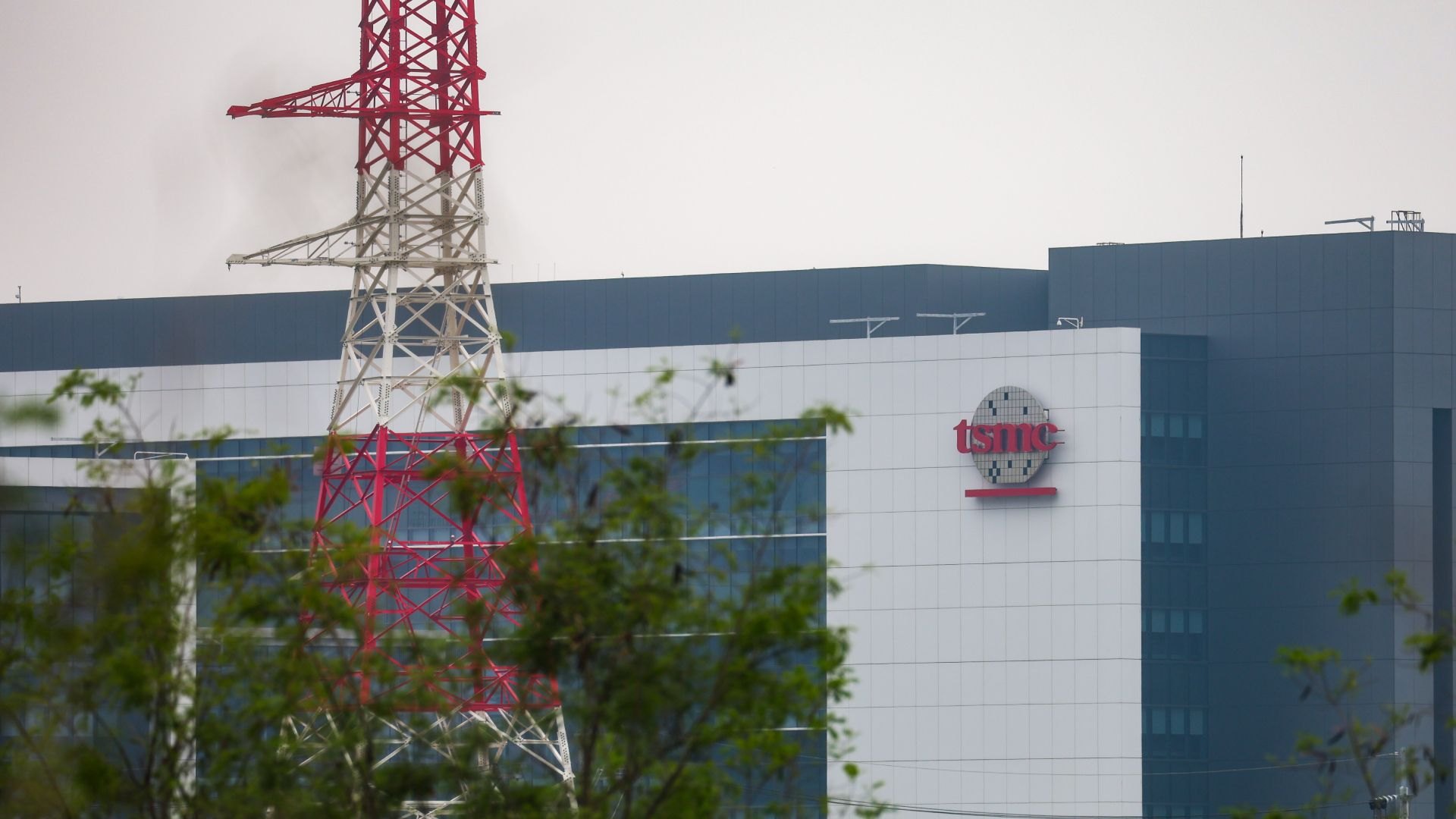
On timing, the Texas Comptroller has recommended approving the application, but the school district and the governor must still sign off. Construction is expected to begin in 2027, though the plan is still under consideration and nothing obliges TSMC to buy land or build. According to the attached economic model, the fab would begin commercial operation in 2031 and reach full capacity in 2032. Meanwhile, the second Arizona fab is expected to enter volume production on 3 nm in Q3 2027, while N2 in Taiwan has been in volume production since Q4 2025. TSMC also expects A14, the node after N2, to enter risk production in 2027 and volume production in 2028. By 2031, A14 will have been running for about three years, so a Texas fab starting at 2 nm would trail the company's leading edge by at least one generation.
Budget and equipment
Of the $22.6 billion total, buildings and real estate account for $8.60 billion. The remaining 62%, or $14.02 billion, goes to machinery and equipment, a category that the filing's itemization also stretches to cover electrical systems, HVAC, cleanrooms, water, and gas. Building costs come first, spread across 2027, 2028, and 2029. Equipment spending starts in 2029, peaks at $9.05 billion in 2030 (about 65% of the equipment budget), then falls to $963.9 million in 2032. By Tom's Hardware's estimate, a 2 nm module with roughly 20,000 wafers per month costs $25 billion to $35 billion, so $22.6 billion sits below the low end of that range.
The 2030 spending peak coincides with the timing Wei gave for TSMC's use of High-NA EUV tools, which have a larger numerical aperture and can print finer features in a single pass. That is a company-wide plan, however, and the Texas filing gives no delivery schedule and names no High-NA tool. The equipment list is broken down by category, including lithography, etch, deposition, ion implantation, CMP, diffusion, and cleaning, but it gives no suppliers, EUV tool counts, or wafer capacity. The filing also stresses an on-site mask shop. Masks are the patterned plates a lithography tool projects onto each chip layer, and every new design needs its own set, so making them in-house suggests the fab is meant to stand on its own. Wei also said TSMC is working with ASML on a 12-inch photomask through 2031, the same year the Texas site is expected to open.
Site size, power, and water
The proposed site spans 86 parcels and nearly 3,232 acres, roughly 1.6 times the Phoenix campus (about 1,078 acres on the county tax rolls, plus roughly 902 acres bought in January). TSMC would build and run the site itself, unlike Terafab, a plant for a TSMC customer that is planned for the neighboring county. Wei confirmed there have been talks about using Terafab's capacity, but said any such plant would still have to be operated by TSMC.

As with most fab campuses and data centers, nearby residents tend to worry about two things: power and water. On power, a local report says Bryan Texas Utilities serves the proposed area, but it is unclear which provider would serve the fab. For scale, an Arizona utility filing reportedly puts the Phoenix campus at about 1.9 GW at full buildout, a figure that covers the whole campus rather than a single fab. On water, Wellborn Special Utility District is reportedly the service provider, while the developer plans to buy water from a third party. For comparison, a $45 billion two-fab project by an unnamed company in Sherman, according to the Dallas Business Journal, lists demand of 8 to 10 million gallons per day initially and 20 to 25 million gallons at full buildout, though the two cases cannot be compared directly.
Tax incentives and next steps
The filing projects 2,099 direct jobs by 2030, while the agreement requires only a statutory minimum of 35 jobs, and the projected average wage is nearly double the required threshold. The tax reduction would accrue over 14 years, starting four years before the formal incentive period and cutting roughly in half the maintenance and operations tax the school district collects from the project. The total of $354.1 million equals just 1.6% of the investment, and in return TSMC must post a performance guarantee equal to 10% of the incentive's value. The Comptroller says TSMC would not invest in Texas without the incentive but has not audited the company's projections, while TSMC calls the tax limit a "determining" factor.
At the federal level there is a potentially much larger item: a 35-cent tax credit per dollar of eligible spending, provided construction begins before the end of this year. The rate is 25% under the 2022 CHIPS Act and rises to 35% for property placed in service after 2025. The Texas plan expects to break ground in 2027, after that cutoff, although on-site work under a binding contract or early spending this year could still count, and the Senate has a proposal to extend the deadline. Land and offices don't qualify, and if the full $22.6 billion were eligible, the refund would be about $7.9 billion, but not every dollar will be. If Texas falls through, TSMC is also weighing "a new parcel in Arizona" near its existing North Phoenix site, where it says workforce, logistics, and suppliers would be easier to line up.
The tax agreement needs approval from the College Station ISD board and the governor. The school district also owns one of the parcels on TSMC's list, nearly 91 acres with a 24,496-square-foot building constructed in 2024. The board has scheduled a public hearing for December 10 and could approve the project's reinvestment zone that same day, while the 30-day window from receipt of the application puts the deadline at the end of December. For Brazos County, public meetings could begin in the first week of December, though the county has only promised to hold one "in the near future."
Migovi believes the most notable thing about this filing is not the $22.6 billion figure but the delay: a 2 nm fab opening in 2031 would run at least one generation behind TSMC's leading edge, which makes it look more like local capacity expansion than a home for the latest technology. That view rests on the company's own timeline, with A14 in volume production for nearly three years by the time Texas starts, and on the fact that the filing commits to neither buying land nor building. For users in Vietnam, this plan has no effect on the chips in devices you buy over the next few years, since the flagship products still come out of Taiwan. The sensible move is to wait for the outcome of the December 10 hearing and the incentive approval decision, which will signal whether the project moves forward or TSMC falls back to Arizona.
Source: Tom's Hardware
Reviewed by: Hero Association