The open-source tool Shirudo relies on eBPF to build temporary shields inside the kernel, giving administrators more time to patch without restarting services.
- Shirudo is an open-source tool (BSD + GPL) released by OpenAI and Cisco that builds temporary "shields" to block vulnerability exploits while a patch is pending
- It runs on Linux's eBPF, needs no service restart, and requires no persistent daemon
- It has been tested blocking an exploit attempt against a live Elasticsearch service without interrupting it
- Researcher Marcus Hutchins is wary of letting AI write rules that affect the kernel, and the tool works only on Linux
- OpenAI will host a technical webinar on December 15
Table of Contents
What is Shirudo?
For system administrators, the most frustrating part is the gap between the disclosure of a vulnerability and the moment a patch has been tested and rolled out at scale, because servers remain exposed the whole time. OpenAI and Cisco have just released Shirudo, an open-source security tool for Linux that targets exactly this gap. It creates temporary runtime protections that block exploitation of a vulnerability, so administrators can prepare patches at a measured pace without restarting services.
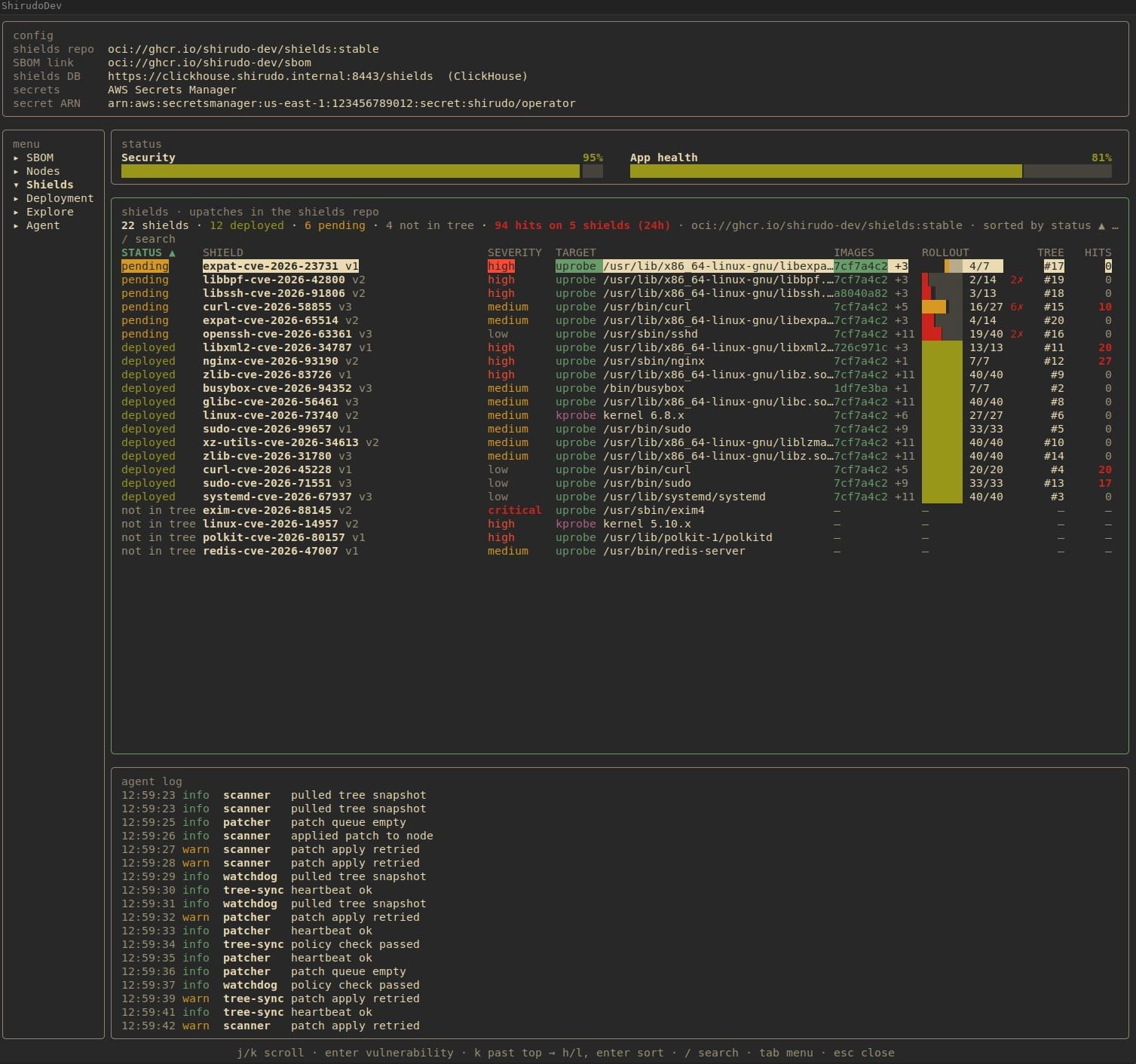
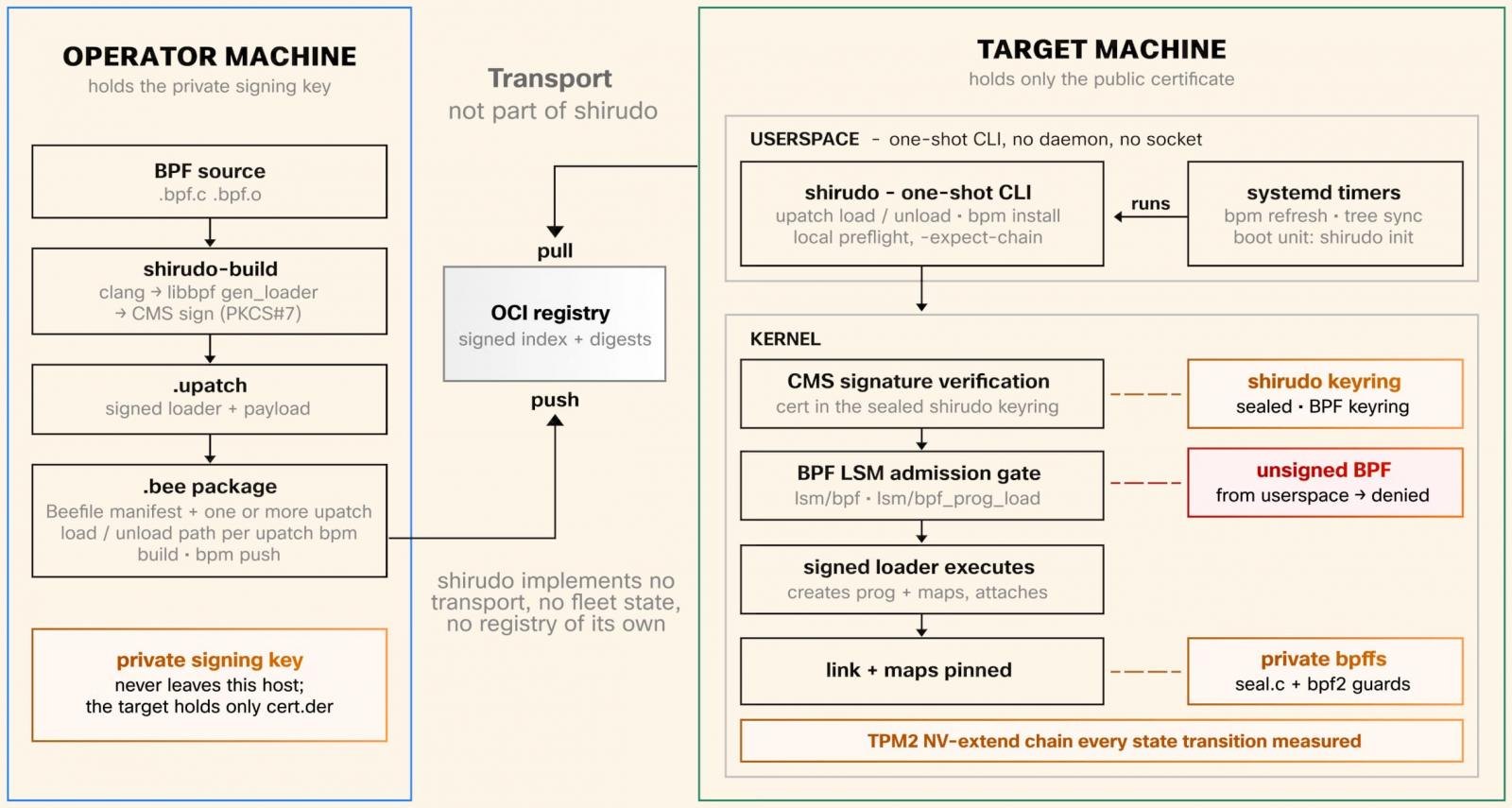
Shirudo is built on eBPF (extended Berkeley Packet Filter), a Linux mechanism that runs programs in a controlled environment inside the kernel, with no need to modify the operating system's source code or reboot the machine. Because eBPF can observe system and network activity in real time, Shirudo uses it to detect suspicious behavior and then deploys narrowly targeted barriers called "shields." Each shield blocks only the malicious behavior, while legitimate application operations continue as normal.
Four key capabilities
OpenAI highlights four strengths of the tool. The first is live protection: shields block vulnerable code paths without a restart, and operators can preview a shield's impact before switching to enforcement mode. The second is AI-assisted defense, in which AI agents investigate vulnerabilities, draft shields, and test their effectiveness, while humans still decide what gets deployed. The remaining two concern trustworthiness: cryptographic signatures, Linux's eBPF verifier, and kernel security mechanisms prevent unauthorized modification, and a Trusted Platform Module (TPM) chip stores verifiable evidence of which shields were loaded or removed.
As for real-world effectiveness, researchers at OpenAI and Cisco tested shields generated by the tool and blocked an exploit attempt against a running Elasticsearch service, which kept operating continuously. Once shields are deployed, the tool also tells operators how many times each shield was triggered, showing how many exploit attempts are underway and which parts of the system need further hardening.
Origins and distribution
According to researchers at Isovalent, the cloud networking and security company Cisco acquired in 2024, Shirudo is a rewrite of Tetragon, the eBPF-based runtime security platform the company introduced in 2022 and the foundation of Cisco's existing Live Protect technology. Shirudo is designed for an agent-driven model, with configurable levels of autonomy when deploying mitigations. It is also not limited to eBPF: when needed, it can modify the bytecode of an application or runtime in user space to extend the scope of protection.
The two companies plan to provide pre-tested shields, along with vulnerability disclosure information, so users have something ready to deploy until a patch is possible. These shields will be distributed as cryptographically signed '.bee' packages through an OCI registry. In use, Shirudo is activated through a command-line interface and needs no persistent daemon on the machine, so its footprint on the system is fairly light.
Reservations
Not everyone is fully convinced. Marcus Hutchins, a principal threat researcher at the detection and response firm Expel, acknowledges that eBPF holds a lot of potential for mitigating exploits at runtime, but argues that letting AI agents write rules that can affect the kernel may not be a good idea. He also notes that the tool works only on Linux, since macOS and Windows lack the components needed for it to be effective.
Isovalent, for its part, sees this as only the beginning. The company says that pairing AI agents with a machine interface, so they can do what they do best, which is writing code, has shown real promise, and it expects the tool to evolve and spawn other projects around it. Shirudo is open source under a BSD + GPL license, with a quick-start guide and documentation from Isovalent. On December 15, OpenAI will host an in-depth webinar on how the tool combines eBPF with AI to detect and respond to new attacks.
Shirudo's approach makes sense because it targets a gap every operations team faces: patching is always slower than attackers, especially for services that can't be shut down for a restart. The notable point is that AI only drafts and tests shields while humans keep the authority to enable them, but Marcus Hutchins's concern about letting AI write rules that touch the kernel is well founded, since a badly written shield could still break a live service. For Linux server administrators in Vietnam, a sensible approach is to try Shirudo in a test environment first, use the impact preview feature to evaluate shields, and only then consider moving it into production. Because the project is new, it shouldn't be treated as a replacement for timely patching.
Source: BleepingComputer
Reviewed by: Hero Association