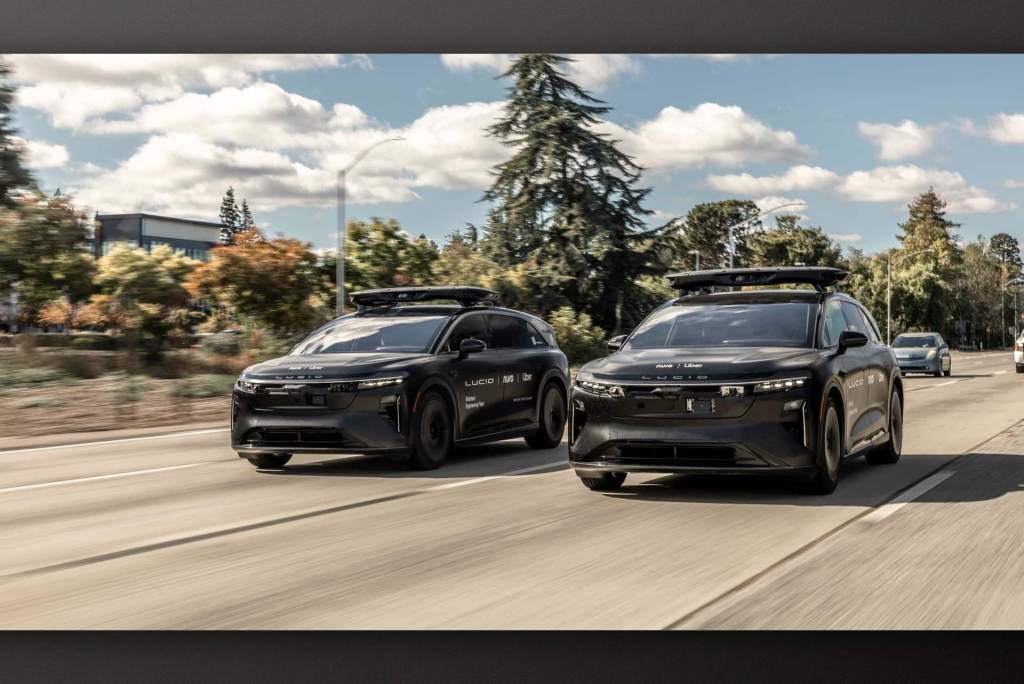
Uber is betting on a Lucid Gravity robotaxi running Nuro's software, but the commercial pickup date has slipped from late 2026 to early 2027.
- Nuro, Lucid, and Uber have started testing on public roads in the Bay Area with no safety driver on board
- Bay Area riders are expected to be picked up in Q1 2027, with Houston following later the same year
- The launch date is slightly later than the original late-2026 plan
- Uber has committed to buying at least 35,000 Lucid vehicles over the coming years
Table of Contents
Removing the safety driver on public roads
Nuro, Lucid, and Uber have begun fully driverless testing on public roads in the San Francisco Bay Area, with rides reserved for employees opening right after. This is the point at which the team pulled the backup driver out of its Lucid Gravity vehicles entirely, a step the companies see as a key hurdle before opening the service to the public. The gap between testing with a person on standby and testing with no one aboard is large, because from here on every unexpected situation on the road has to be handled by the software alone.
A three-way partnership and the 2027 target
The partnership was announced in July 2025, as Uber returned to autonomous vehicles after abandoning its own troubled in-house effort years earlier. The launch for riders is now early 2027, slightly behind the original target of late 2026. Once it goes live, the service will compete head-on with entrenched rivals such as Waymo and Zoox on their home turf.
In the first phase, vehicles will drive without a safety driver in four cities on the south side of the Bay: Palo Alto, Mountain View, Los Altos, and Sunnyvale, before expanding across the whole Bay Area next year. To support this, Lucid has delivered more than 100 upgraded Gravity vehicles, up from 75 engineering vehicles on the road earlier this year. The company began building pre-production vehicles in October to obtain safety approvals, and production of the actual commercial fleet is expected to start in the next few weeks.
The in-car technology and the testing process
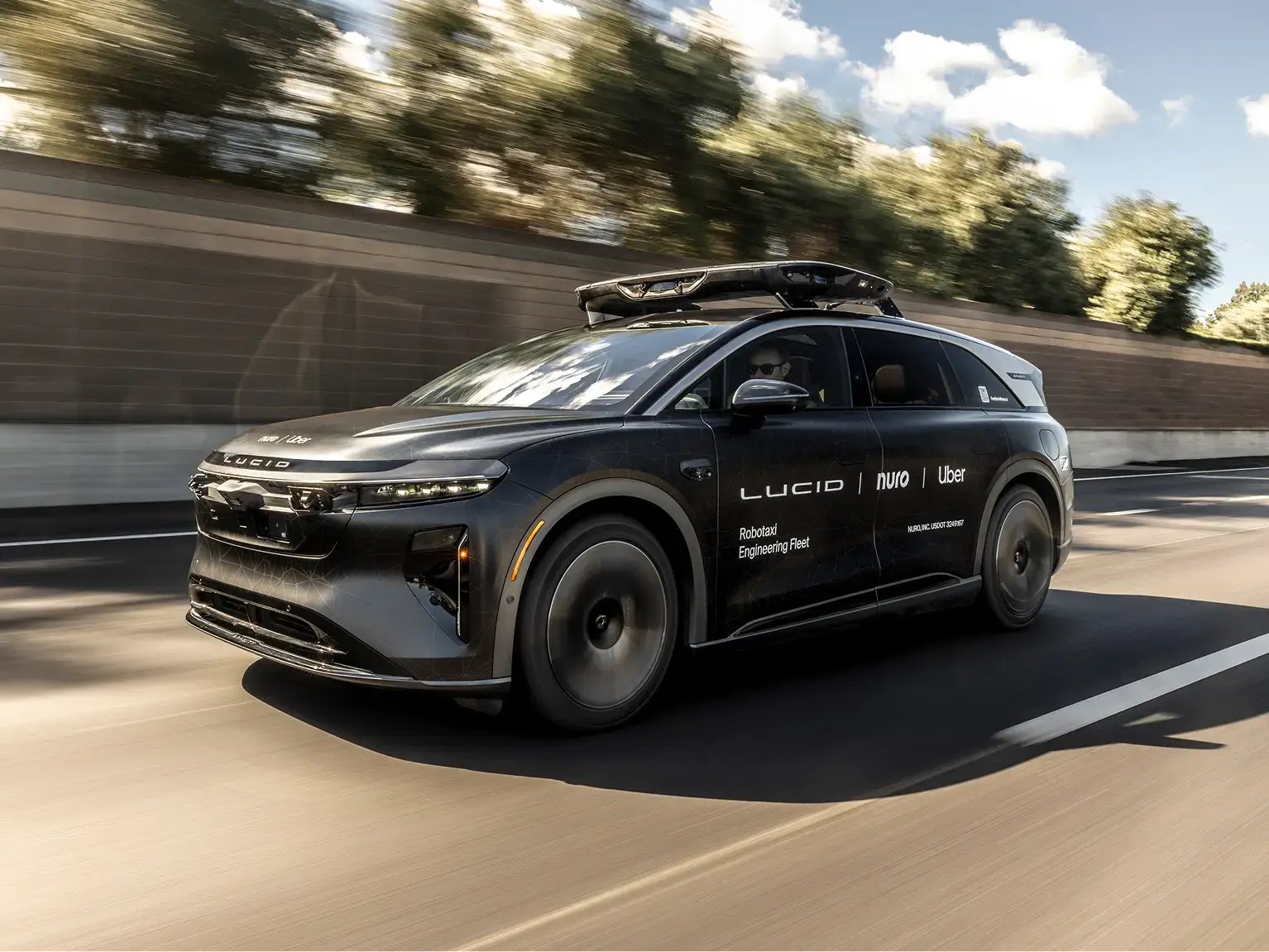
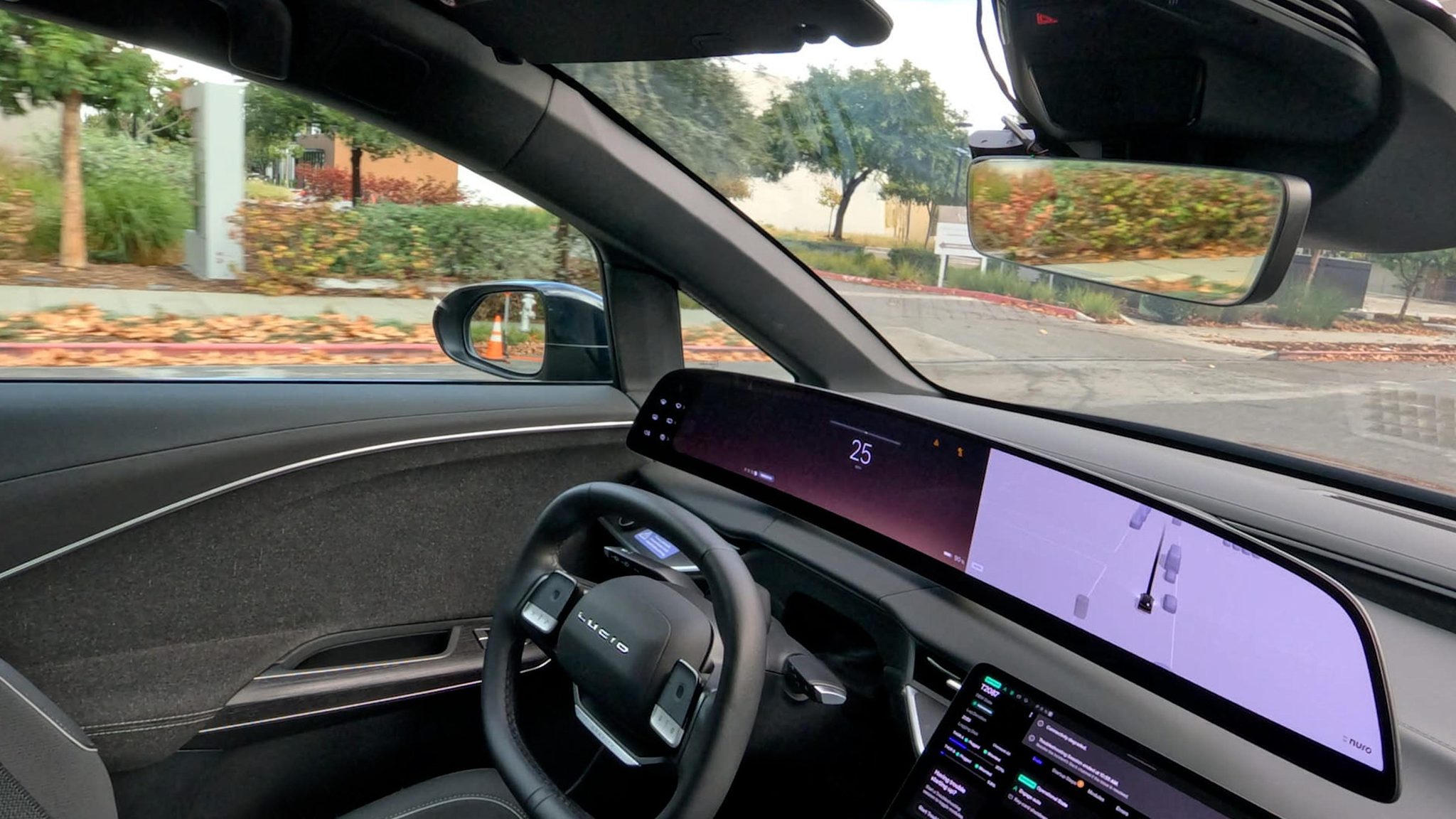
Each SUV runs the Level 4 Nuro Driver system, which combines cameras, solid-state lidar, and radar. An LED "halo" ring on the roof shows the passenger's initial along with the pickup status, making it easy for riders to spot their car.
Removing the safety driver follows nearly a year of supervised, around-the-clock testing in the Bay Area and Houston. Before releasing the cars on their own, Nuro also ran the software through difficult, high-risk edge cases on a closed test track in Las Vegas, aiming to show that the system can handle the unpredictable chaos of real traffic.
Launch schedule and vehicle purchase plan
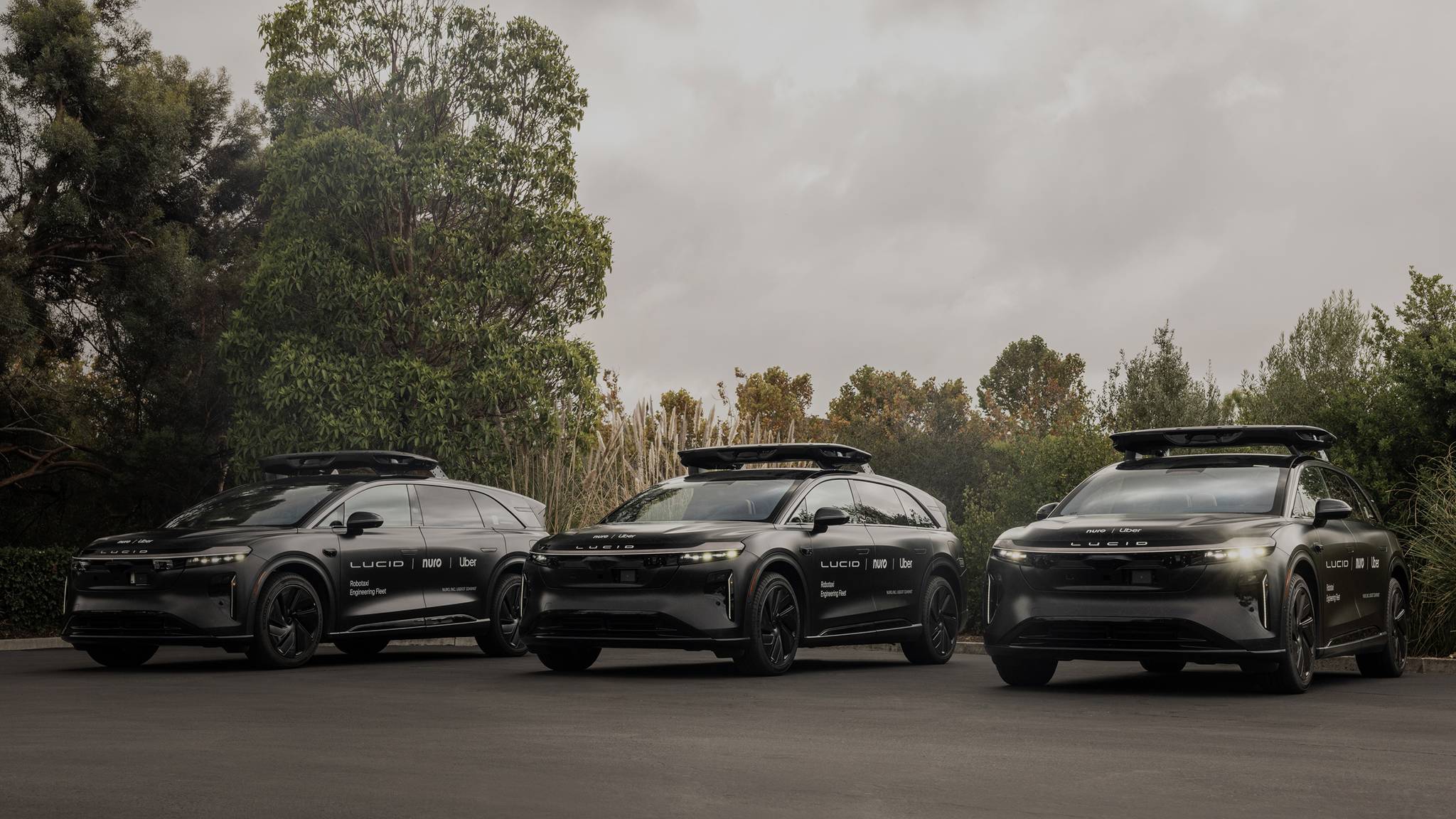
The robotaxi is expected to appear in the Uber app for Bay Area riders in Q1 2027, with Houston following at the end of that year. Over the longer term, Uber has committed to buying at least 35,000 Lucid vehicles in the coming years, including the company's upcoming midsize model, to expand its autonomous fleet worldwide. Compared with the 100-plus vehicles testing today, that commitment is far larger.
Migovi thinks removing the backup driver matters more than a launch date that slipped by a few months, because from this point the system has to take responsibility for every situation on the road. Uber chose to team up with Nuro and Lucid rather than start over on its own, which suggests it wants back in the game through partners that already have the technology, even though it is walking into Waymo and Zoox's home turf. For users in Vietnam, this service is still a long way off, so the things to watch are the results of the employee-only rides and whether the commercial fleet is built on schedule, since those two factors decide whether the Q1 2027 target is achievable.
Source: The Verge
Reviewed by: Hero Association