Anthropic's Claude Ship adds agents that approve code changes automatically under a policy your team writes, but you should run it in observe-only mode before handing over any authority.
- Claude Ship includes Code Review (now generally available) and two agents in beta, PR Steward and Claude Approvals
- Claude Approvals approves changes based on a policy written in natural language and stored as a file in the repository itself
- It is currently available only on Claude Team and Enterprise plans, for repositories hosted on GitHub
- Anthropic recommends a trial in observe-only mode, starting with a single repository and setting a monthly spending cap
- There is no information yet on Claude Ship's specific pricing beyond the cap each team sets for itself
Table of Contents
What Claude Ship does
This guide explains how to bring Claude Ship into a development team's workflow. It applies to teams on a Claude Team or Enterprise plan with their source code hosted on GitHub. Anthropic launched the toolset on Monday, as AI agents write more and more code and the review and approval of changes before they go live becomes a bottleneck. According to the Claude Code team itself, Claude already writes most of its code, so it wants every step after a pull request (PR) is created to move at a matching pace.
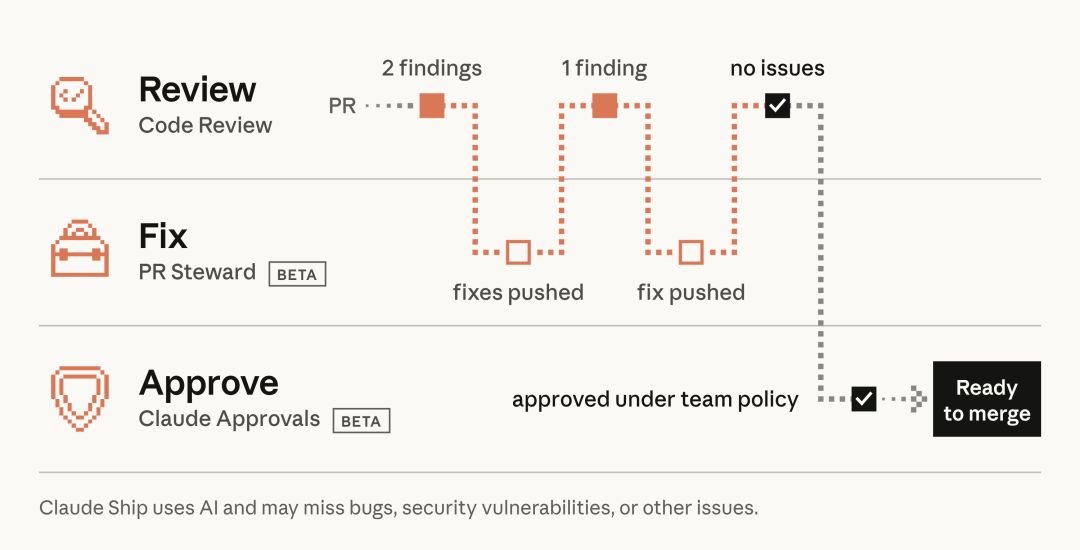
Claude Ship has three parts. Code Review examines proposed PRs and was already generally available, while PR Steward and Claude Approvals are new agents that are in beta. PR Steward handles the things that leave a PR stuck, such as failing CI checks, merge conflicts, or feedback from Code Review. After every push, it leaves a comment explaining what it fixed and how to roll the change back if needed. The most notable piece is Claude Approvals, because it lets AI approve changes on its own based on the team's policy.
Setup steps
Step 1 is to check eligibility. Claude Ship is rolling out to Claude Team and Enterprise plans and works only with GitHub repositories, so teams on other platforms can't try it yet. Anthropic suggests picking a single repository to start with rather than enabling it across every project, so the blast radius stays small if something doesn't work out.
Step 2 is to choose how Code Review works. The team decides where Claude Ship runs and which review level to use: Quick, Standard, or Deep, depending on whether you want a fast look or a close inspection of each change. This is also the point to decide in advance which kinds of changes must always go to a human decision-maker, since Anthropic says teams keep the authority to escalate those changes to people.
Step 3 is to write the approval policy for Claude Approvals. The policy is a file kept in the repository and written in natural language, so there is no special syntax to learn. The approval process can draw on several signals, including results from Code Review or Anthropic's own classifiers. The policy should therefore spell out which types of changes count as routine and which signals are required before a change qualifies for approval.
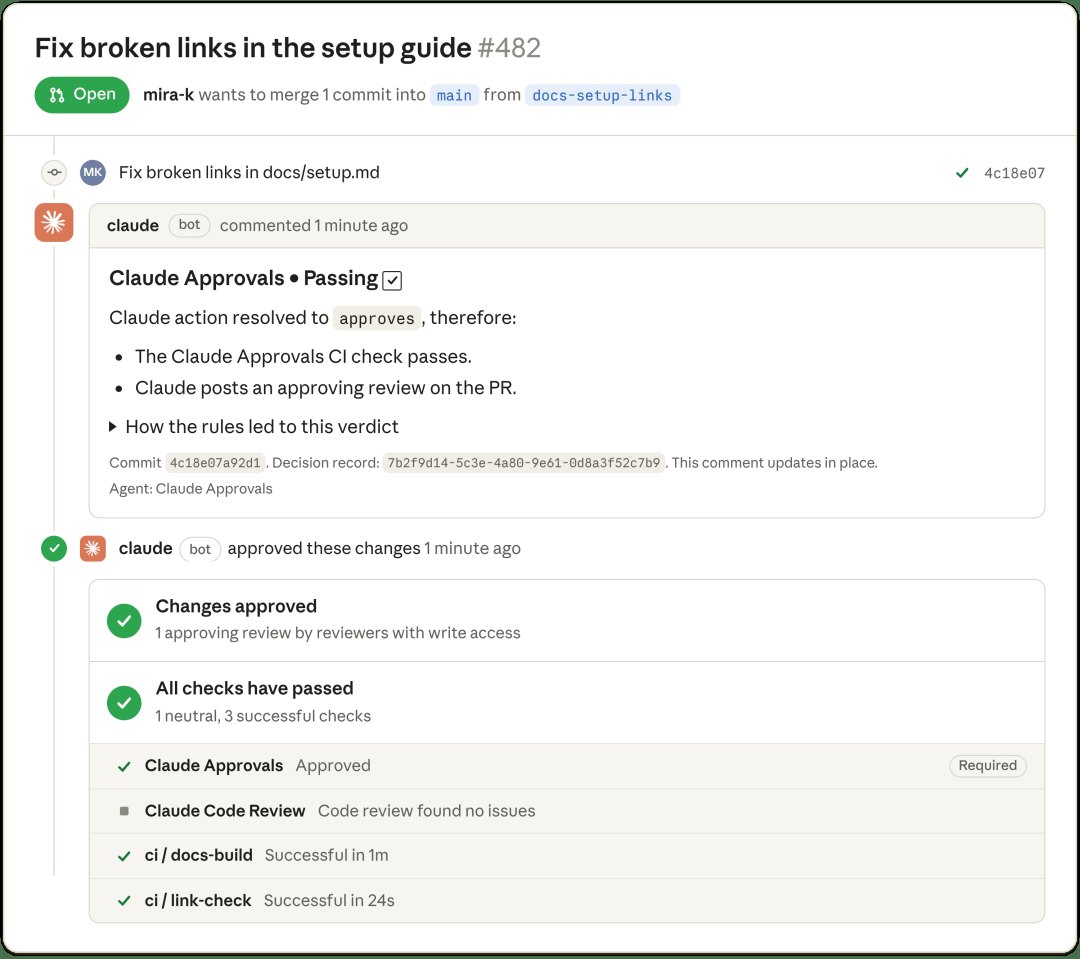
Step 4 is a controlled trial. Because Claude Approvals is still in beta, Anthropic recommends turning on approvals in observe-only mode first. In that mode, the agent only watches and records the decisions it would make, so the team can compare them with its own practice, and it doesn't actually approve anything. Teams should also set a monthly spending cap from the start to keep costs in check. Once the observed results look trustworthy, you can consider expanding to other repositories.
Things to keep in mind
PR Steward and Claude Approvals are both still in beta, so don't hand them important changes right away. The clearer the policy, the more the agent has to base its decisions on, and changes that fall outside the policy are passed to humans, as configured in step 2. For teams not on a Team or Enterprise plan, there is currently no other way to try Claude Ship.
Migovi sees the value of Claude Ship in how it targets code review head-on, the stage where humans become the bottleneck once AI writes code faster. Handing approval authority to an agent is a fairly big step, so Anthropic's advice to run in observe-only mode first makes sense: a team can see how often the agent gets it right before deciding how far to trust it. For development teams in Vietnam that already use a Team or Enterprise plan and keep their code on GitHub, the most economical approach is to try it on a low-risk repository, write a very specific policy, and keep human reviewers on sensitive changes until the observed data is convincing enough. Teams that don't yet qualify needn't rush, since the tool is still in beta and much about its cost remains unclear.
Source: TechCrunch
Reviewed by: Hero Association