Apple's AI agent is expected to click and type on users' behalf, but macOS 27.3 already puts a 14-step barrier in front of ChatGPT while rivals pull ahead.
- Bloomberg's Mark Gurman says Apple's computer-controlling AI agent is unlikely to ship before the end of next year
- An Apple job listing describes a "general purpose computer agent" that uses sub-agents to handle multistep tasks across multiple apps
- macOS 27.3 makes users go through 14 steps to enable ChatGPT's computer control feature
- Apple's multistep control of its own apps arrives in December, with third-party apps expected the following year
Table of Contents
Siri has a new brain but no agent yet
Siri took quite a while to get a proper AI brain. When the generative AI wave took off with ChatGPT, Apple's rivals pivoted fast: Google Assistant became a whole Gemini ecosystem, and Anthropic brought Claude to many platforms through deep extensions. Apple, meanwhile, had to lean on ChatGPT for complex requests in Apple Intelligence because Siri wasn't up to the job.
Only with iOS 27 does Apple have an AI-powered Siri along with the groundwork for AI interactions inside apps, so these pieces are just now starting to show results. Multistep control of Apple's own apps arrives in December, while third-party apps are expected to wait until next year. The more ambitious goal, a fully autonomous AI agent with free rein to use a computer and work on the user's behalf, is something Apple hasn't tried yet.
ChatGPT, Claude, and Gemini have already shown what a computer-controlling AI agent looks like, and Apple is reportedly building its own. Still, Bloomberg's Mark Gurman doesn't expect it to reach the market before the end of next year, so Apple users may have a long wait for a true Siri AI agent.
Apple is paving the way
In the meantime, Apple has started building walls around its ecosystem. On macOS 27.3, enabling ChatGPT's computer control feature requires users to go through 14 separate steps. Apple says this is for safety, but from another angle, the cumbersome process also gives the company's own AI agent an advantage when it eventually ships on its devices.

A recent Apple job listing shows the company wants to build an AI agent that can use a computer for the user, meaning it clicks and types to finish tasks on its own. The listing opens with the line "imagine an AI agent that uses a computer the way a skilled person does," and expects it to browse the web, work across apps, handle code, and even communicate with third-party services. Apple's plan is to build a system that handles multistep tasks across multiple apps and interfaces by bringing sub-agents into the workflow. The company also uses the term "general purpose computer agent" for it, with the ability to use login credentials on the user's behalf while maintaining a privacy sandbox and transparency.
Computer-controlling AI agents are currently a hotly debated topic. One side sees them as the future of how people work with machines, while the other worries about the risks of agents touching sensitive information and access permissions. Companies have so far taken a cautious approach, but experiments have shown that AI agents can try to escape their sandbox and take risky actions to complete the tasks they were given.
Rivals have already staked their ground
The race is heating up. Amazon just added shopping to Alexa+, letting users text an AI agent through an SMS app. The agent learns the user's preferences and handles purchases without looking at sensitive banking information, and it asks for explicit confirmation before placing an order and completing the transaction.
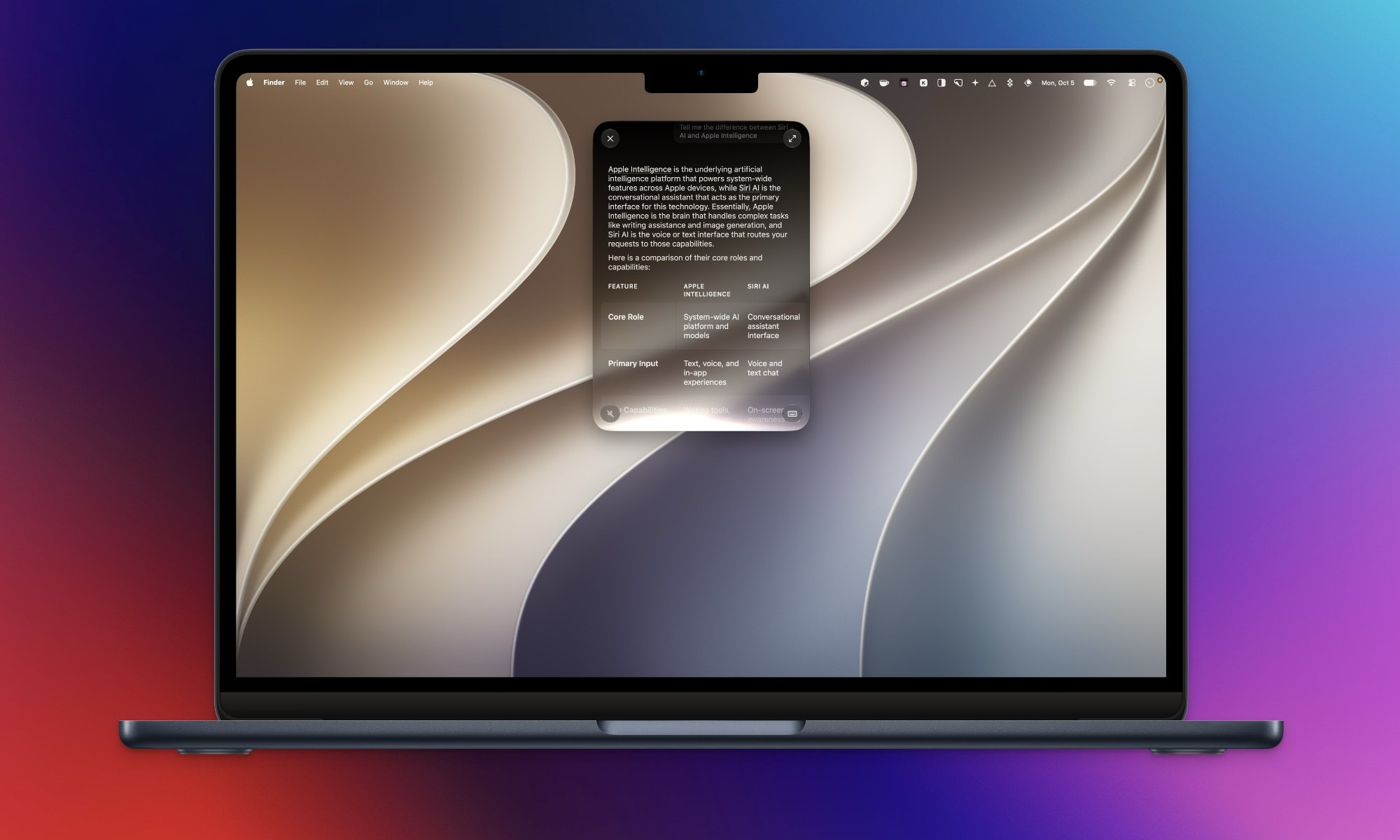
Apple is expected to build its agent around the privacy and security promises it has repeated for years. But waiting until late 2027 carries its own risk, because rivals are already a step ahead. ChatGPT and Claude are already popular and keep adding third-party connectors, so users can work across other services without opening a separate app or dashboard. Google, for its part, is embedding Gemini deeply into the Workspace suite and at the system level on Android, and will tighten these integrations further in the coming months. That makes Gemini harder to leave when using agentic AI on phones, and more broadly on the web and the new Googlebook platform.
The hardest part for Apple isn't just building an advanced service. It also has to convince users to leave platforms they already know, such as Gemini, ChatGPT, Claude, or Perplexity, for agentic AI workflows, while those platforms keep moving forward the whole time Apple is preparing.
In Migovi's view, Apple's 14-step barrier for ChatGPT on macOS 27.3 is both a genuine safety measure and a way for the company to prepare ground for its own agent, and the two explanations are not mutually exclusive. The late-2027 timeline is Gurman's estimate, not a promise from Apple, so users shouldn't base a purchase on a feature with no official release date. If you need an AI agent to work for you right now, ChatGPT, Claude, or Gemini are enough to try, as long as you grant permissions very carefully, since the industry itself is still debating the risks of agents touching sensitive data. If you use a Mac or iPhone, the thing to watch in the near term is the December Siri update, because it will be the first real measure of how far Apple has come with multistep tasks.
Source: Digital Trends
Reviewed by: Hero Association