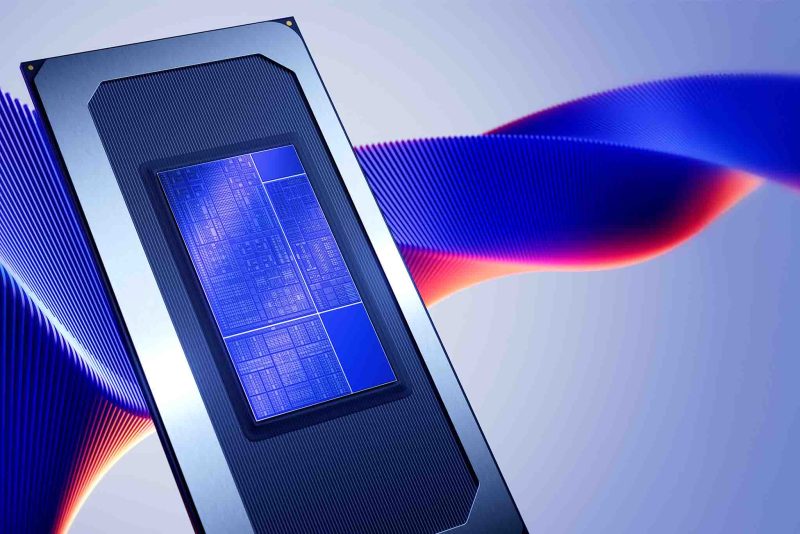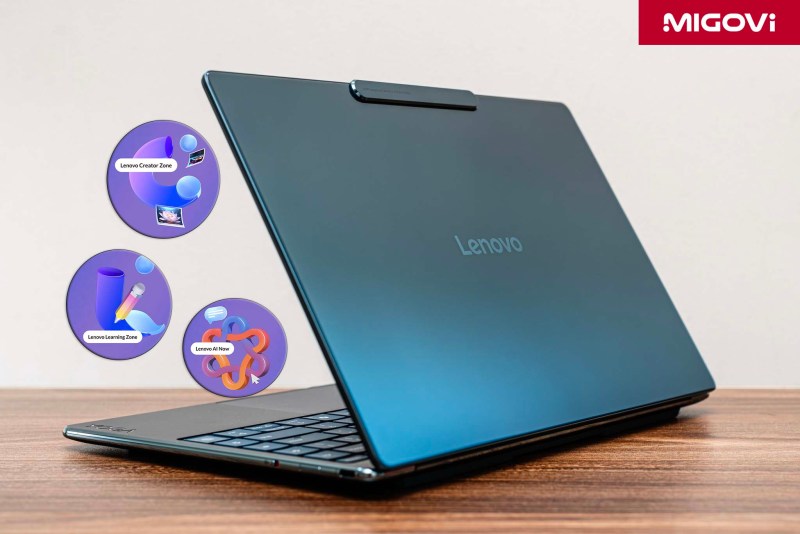

Intel Core Series 3 launch: Mainstreaming the 18A node on Panther Lake platform
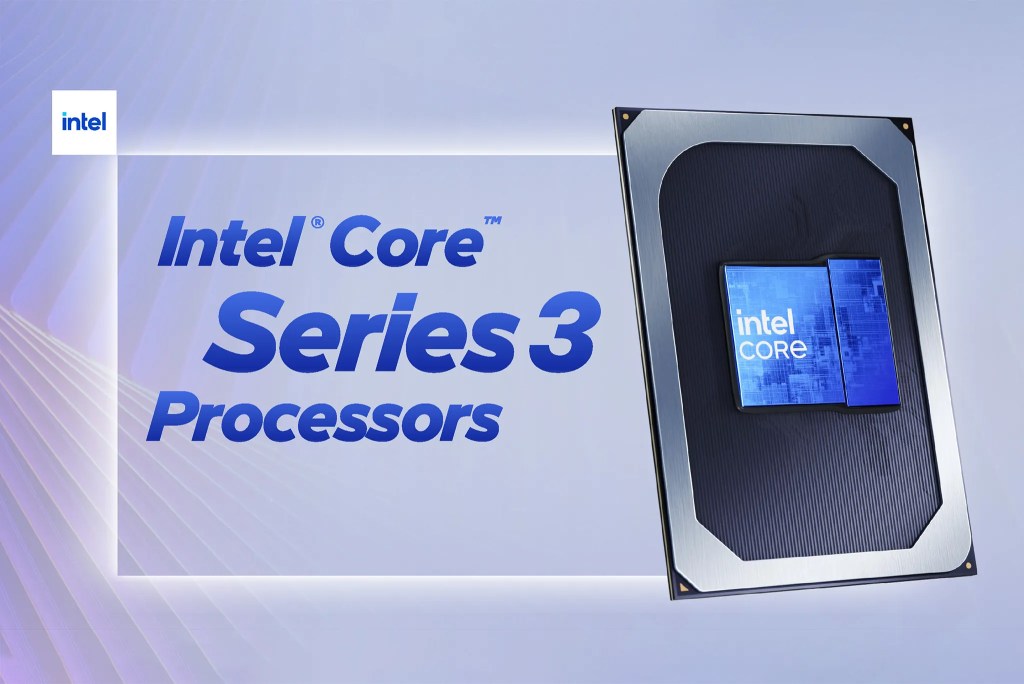
The Intel Core Series 3 processors officially bring the company's most advanced semiconductor technologies down to the mainstream market and IoT edge devices.
- The Core Series 3 inherits the Panther Lake platform, leveraging RibbonFET and PowerVia technologies on the Intel 18A node for heavily optimized power consumption.
- Comprehensive IPC upgrades, featuring up to 2 P-cores (Cougar Cove) and 4 LP E-cores (Darkmont), yielding noticeable improvements in both single- and multi-threaded performance.
- Integrates Xe3 (Battlemage) graphics architecture and a Gen 5 NPU, delivering up to 40 TOPS of total platform AI compute.
- Consumes up to 64% less power than its predecessor, the Core 7 150U, in basic media consumption workloads.
- Dominates the edge segment, outpacing the NVIDIA Jetson Orin Nano in object detection and real-time video analytics benchmarks.
Article content
Hybrid architecture and the power of the Intel 18A node
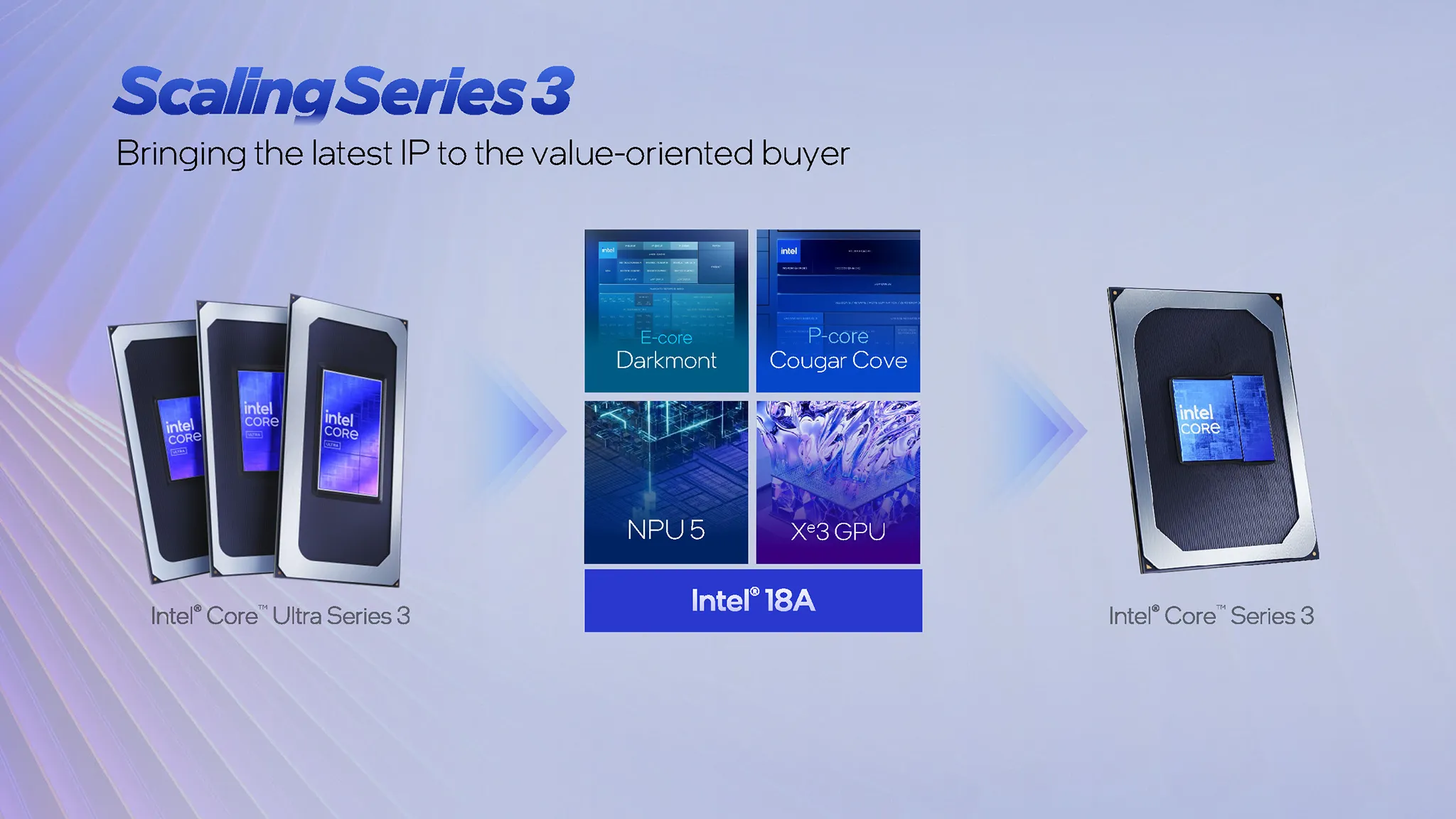
Intel has officially unleashed the Core Series 3 processors (codename Wildcat Lake), squarely targeting mainstream laptops, SMB (small and medium-sized business) clients and edge computing systems. Under the hood, this is essentially a streamlined version of the higher-end Core Ultra Series 3 (Panther Lake) platform, but it crucially retains the advantages of the cutting-edge Intel 18A manufacturing node. The true value of 18A lies in the implementation of two major semiconductor breakthroughs: RibbonFET gate-all-around transistors for superior leakage current control and PowerVia backside power delivery. This combination allows the silicon to hit high clock speeds while sipping power, enabling a new wave of office laptops capable of genuine all-day battery life on a single charge.
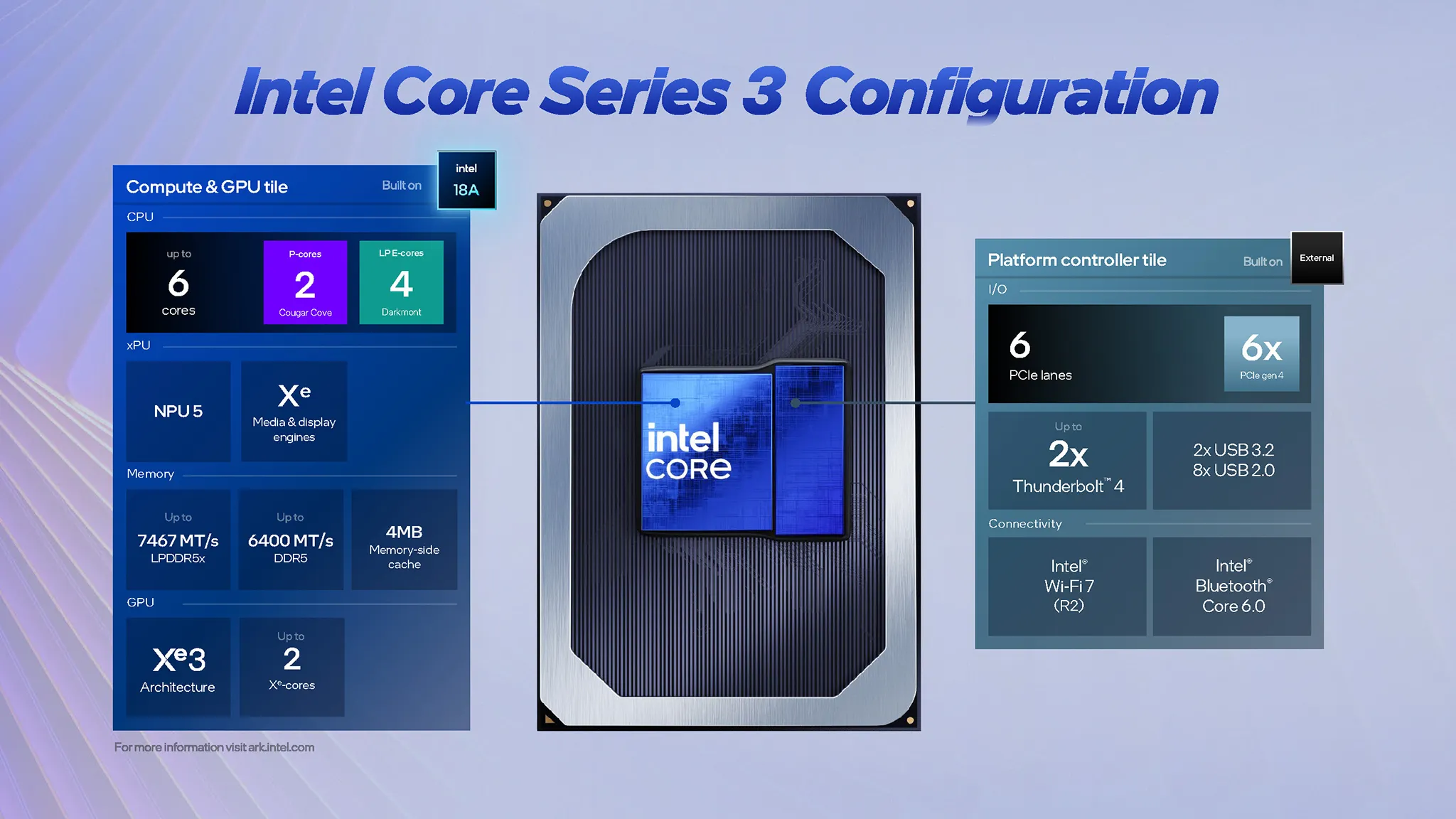
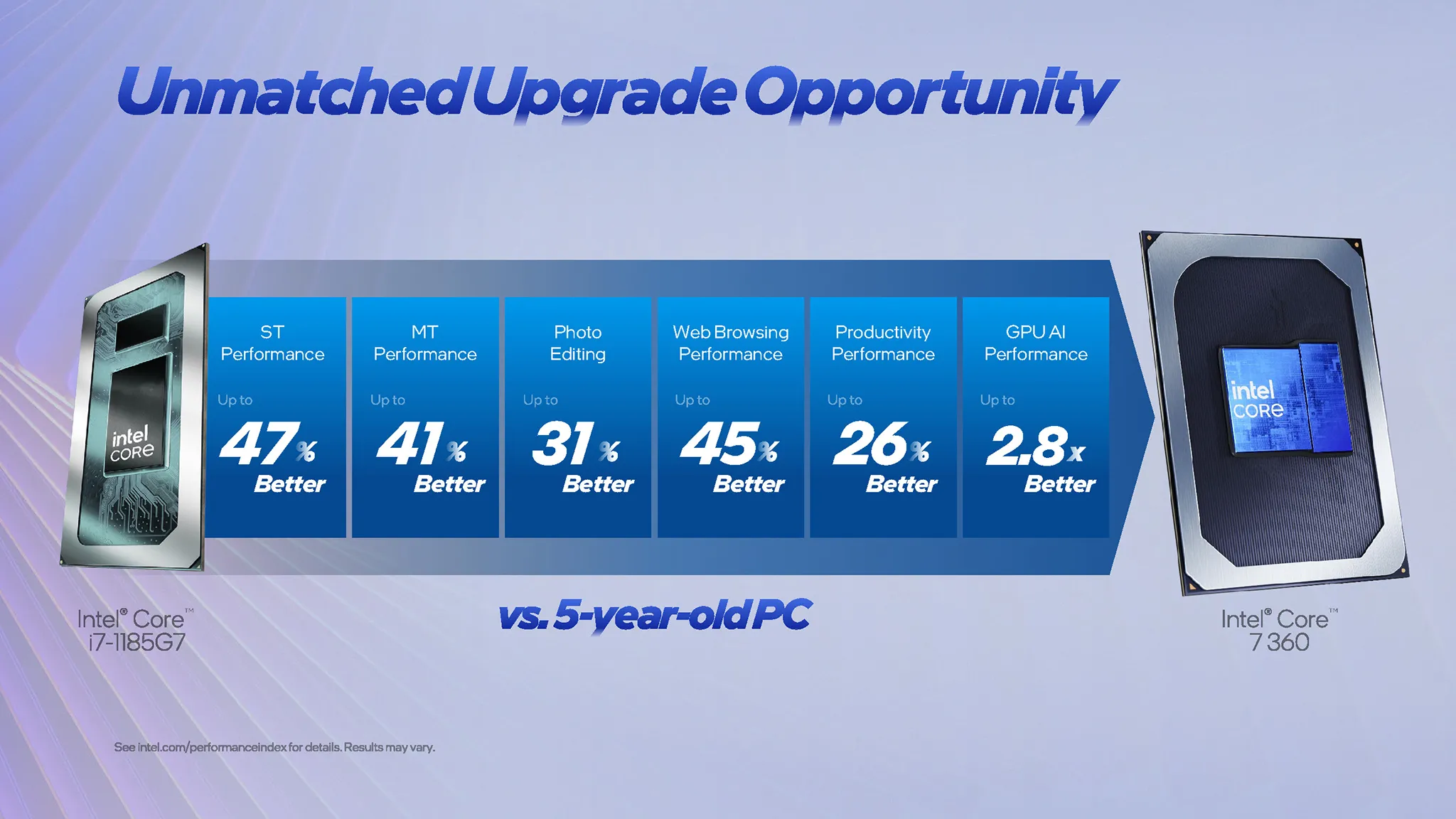
The Core Series 3 utilizes a hybrid architecture combining up to two Performance cores (P-cores) and four Low-Power Efficient cores (LP E-cores). The Performance cores are upgraded to the Cougar Cove microarchitecture, boasting significantly more accurate multi-level branch prediction compared to the previous generation. Meanwhile, the LP E-core cluster utilizes the Darkmont architecture, featuring a wider out-of-order window to enhance processing bandwidth. Thanks to these architectural leaps, a new processor like the Core 7 360 can push single-threaded performance up by 47% and multi-threaded performance by 41% when compared to a five-year-old PC. Intel deliberately capped the P-core count at two to handle sudden bursty workloads, leaving plenty of power headroom for the E-core cluster to smoothly manage background tasks.
Xe3 Battlemage graphics and AI compute

Graphics and AI processing capabilities on the Core Series 3 have also seen a massive overhaul, marking the first time Intel has integrated a Gen 5 NPU into this budget-tier lineup. Alongside it sits an integrated GPU based on the Xe3 (Battlemage) architecture, maxing out at a 2-Xe-core configuration. While the core count is heavily dialed back compared to the premium Ultra tier, the Xe3 architecture combined with the NPU still delivers a robust total platform AI compute of 40 TOPS. This is more than enough headroom to run small language models locally, apply real-time video call effects, or execute filters in creative software without relying on the cloud.
When pitted against its predecessor, the Core 7 150U, the architectural refinements translate into tangible real-world gains. GPU-accelerated AI compute is 2.7x higher, while image export and processing capabilities have surged by 2.1x. Most impressively, SoC power consumption remains remarkably low: when streaming 4K video on YouTube, a Core Series 3-equipped system draws up to 64% less power. Thanks to the relentless power optimization of the x86 architecture, some reference designs can sustain up to 18.5 hours of continuous video playback - an absolutely stellar figure for a budget laptop.
Cost optimization for the Edge
To keep a tight leash on BOM (Bill of Materials) costs for OEM partners, Intel made some strategic trims regarding peripheral hardware support on the Core Series 3. Rather than chasing high-bandwidth configurations, the motherboards will utilize single-channel memory, offering options for LPDDR5x at 7467 MT/s or DDR5 at 6400 MT/s. The platform also supports cost-effective storage standards like UFS 3.0 alongside traditional PCIe Gen 4 SSDs. To offset the memory and storage compromises, connectivity on the Core Series 3 remains top-tier, supporting up to two Thunderbolt 4 ports, Wi-Fi 7 (R2) and Bluetooth 6.0. The SoC also provides 6 lanes of PCIe Gen 4, offering enough flexibility for necessary expansion modules in commercial environments.
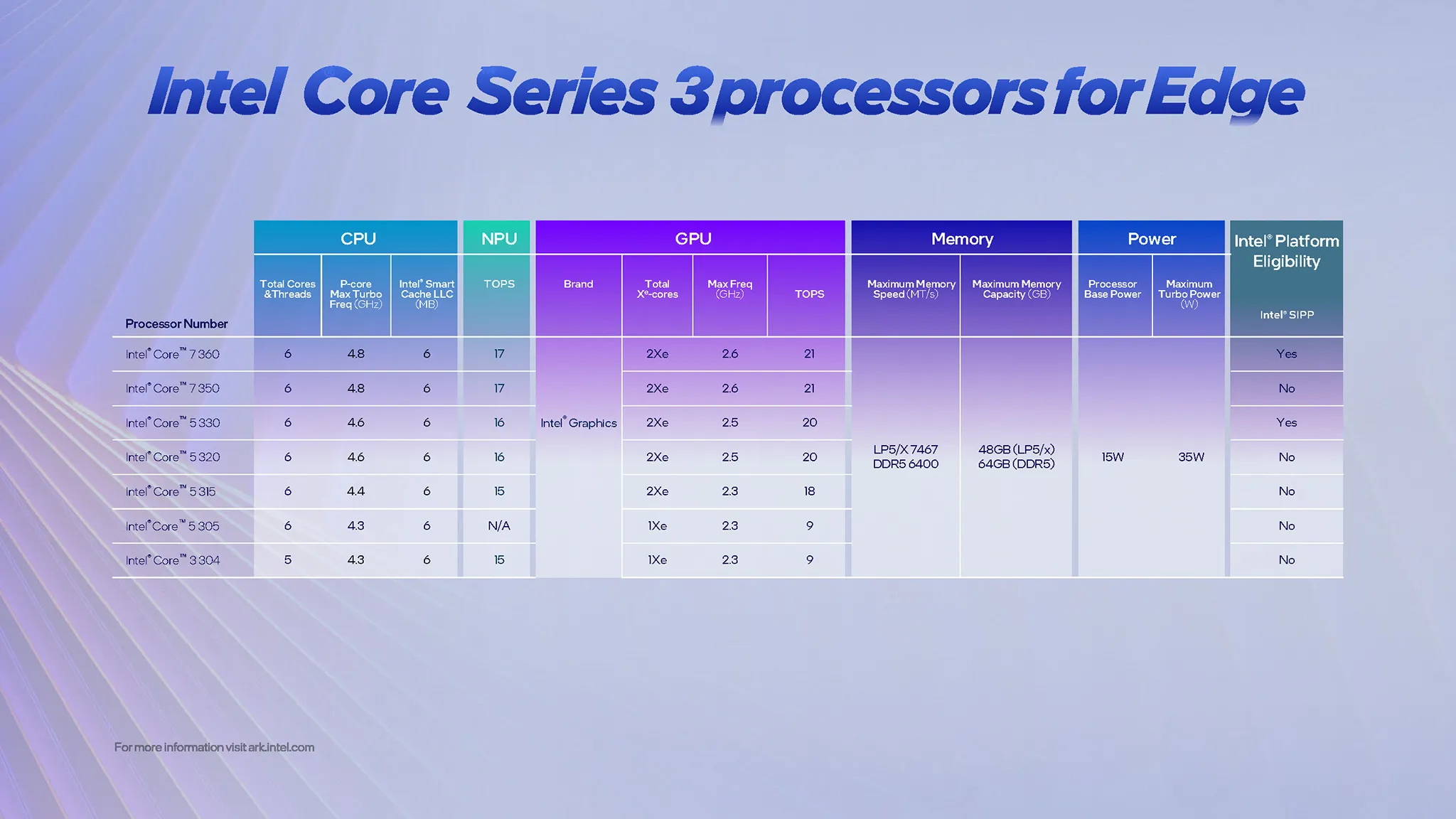
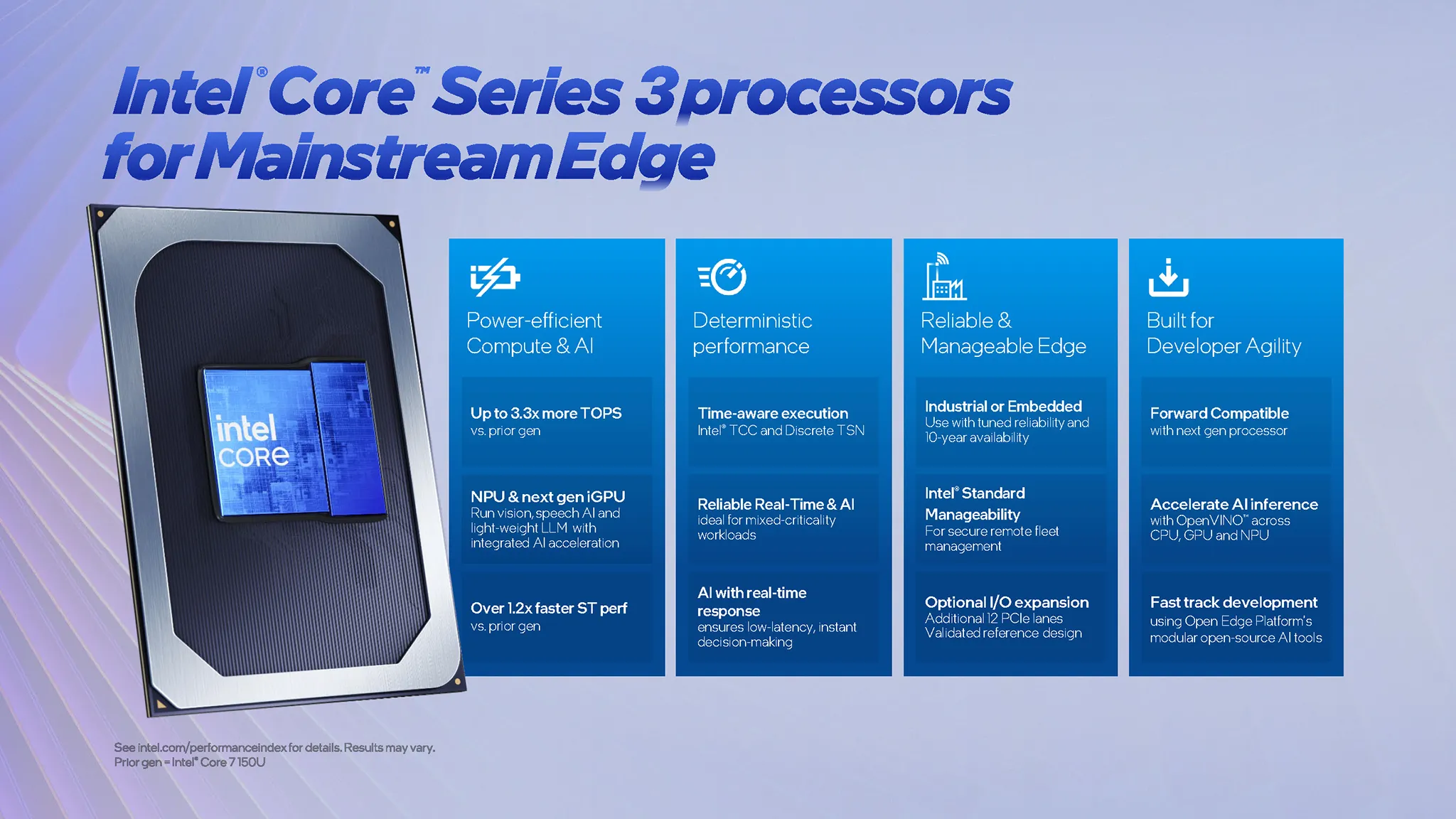
Crucially, the Intel Core Series 3 isn't just for laptops; Intel has engineered specific SKUs (like the Core 7 350 and Core 3 304) strictly for edge devices such as POS terminals, smart toll booths and automated warehouse systems. The stability and real-time compute capabilities of the Core Series 3 shine when benchmarked against competing solutions. Internal data indicates that Intel's silicon performs object detection 1.5x faster and handles video analytics 2.2x better than the NVIDIA Jetson Orin Nano. Backed by a 10-year hardware support lifecycle and the ability to expand by an additional 12 PCIe lanes via reference designs, the Intel Core Series 3 shapes up to be an incredibly viable hardware platform for industrial IoT ecosystems.
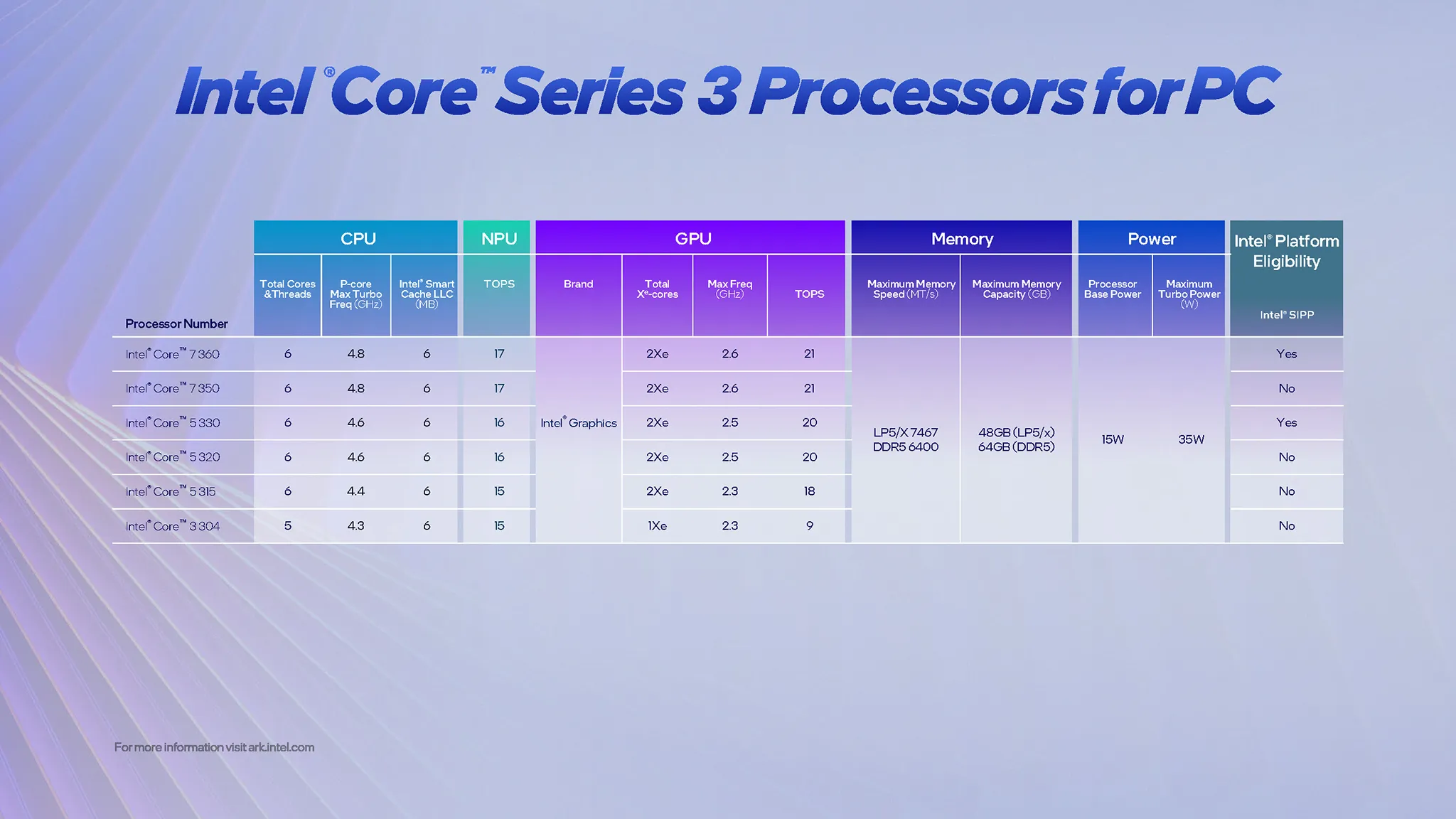
You might look at these budget-oriented Core Series 3 chips and think they seem a bit "tame." However, from a microarchitecture perspective, the fact that Intel managed to cram the highly complex PowerVia technology of the 18A node, along with the Cougar Cove/Darkmont hybrid cores, into a design operating at a mere 15W nominal TDP is a remarkably rigorous optimization feat. For enthusiasts looking to DIY a home enterprise network (homelab), build a custom firewall, or set up a local AI security camera processing station, processors like the Core 7 350 will be incredibly compelling choices. Remember, the Core Series 3 isn't strictly confined to laptops; it has serious edge compute SKUs ready to deploy.