Volkswagen has filed a trademark for ID. UP, likely the name of the small, roughly 20,000 EUR electric car the company plans to launch in 2027.
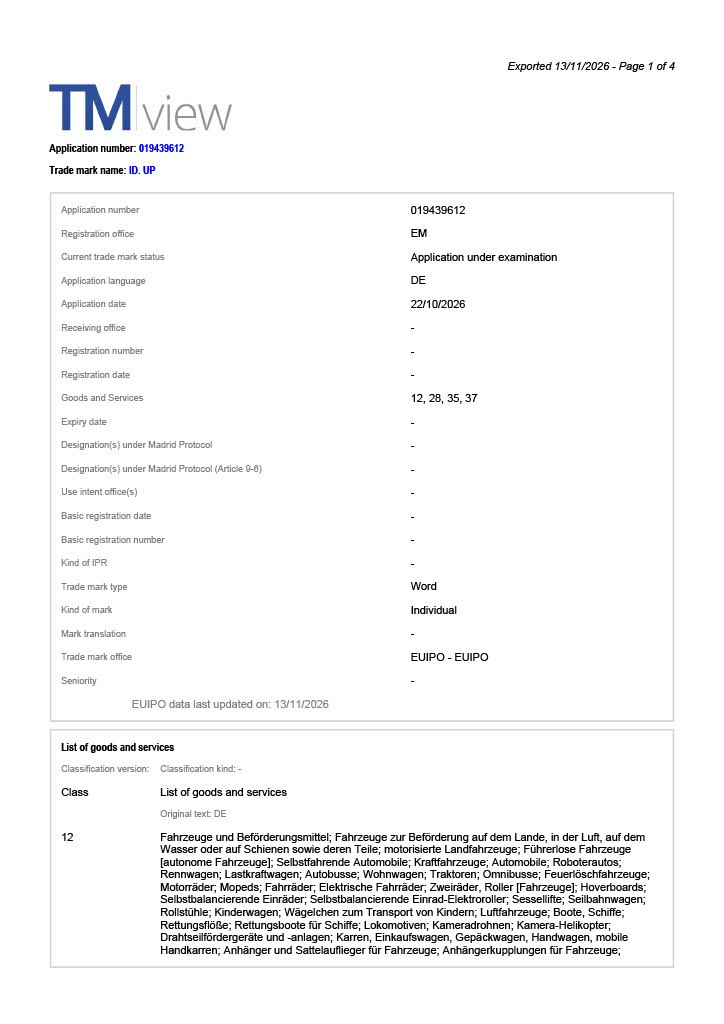
- Volkswagen filed a trademark application for ID. UP with the EUIPO and DPMA on October 22, 2026.
- It is likely the name of the roughly 20,000 EUR (22,000 USD) EV expected to go on sale in 2027.
- The car uses a 37 kWh LFP battery, offers a minimum range of 250 km, and has a 70 kW (94 hp) motor.
- It belongs to the Electric Urban Car Family on the MEB+ platform and uses an SDV architecture developed with Rivian.
Table of Contents
Volkswagen files a trademark for the ID. UP name
Volkswagen is preparing to launch a new electric car in 2027 with a starting price of around 20,000 EUR (22,000 USD). So far, the entry-level model has had no official name. A newly filed trademark application may have revealed the one the company intends to use.
On October 22, 2026, Volkswagen filed a trademark application for ID. UP with the European Union Intellectual Property Office (EUIPO) and the German Patent and Trade Mark Office (DPMA). This suggests ID. UP could be the name of the upcoming EV. The company has not confirmed it.
The filing is consistent with earlier reports that Volkswagen plans to revive the Up! name as it moves away from numeric naming such as ID.3, ID.4, and ID.5. The ID. Polo is the first model in this EV lineup to carry one of the brand's familiar names.
The new car will sit below the ID. Polo in the Electric Urban Car Family, a group of affordable small EVs. The family currently includes the ID. Polo, ID. Cross, Cupra Raval, and Skoda Epiq, all built on the MEB+ platform. The base ID. Polo and ID. Cross recently got starting prices of 24,995 EUR and 27,995 EUR, respectively. In March, Volkswagen brand CEO Thomas Schäfer called the entry-level model the "last piece of the puzzle" when he introduced the ID. EVERY1 concept.
Expected specs of the ID. UP
Volkswagen has not shared many details. Like the ID. Polo, the ID. UP is expected to use a 37 kWh LFP battery to keep costs down. On the ID. Polo, this battery configuration delivers up to 334 km (207 miles) of WLTP range. The ID. UP could therefore match that figure or come in slightly higher.
The company says the car will cover at least 250 km. The new electric motor produces 70 kW (94 hp) and gives a top speed of 130 km/h. The production version of the ID. EVERY1, likely to launch as the ID. UP, is one of nine new models Volkswagen plans to release through 2027.
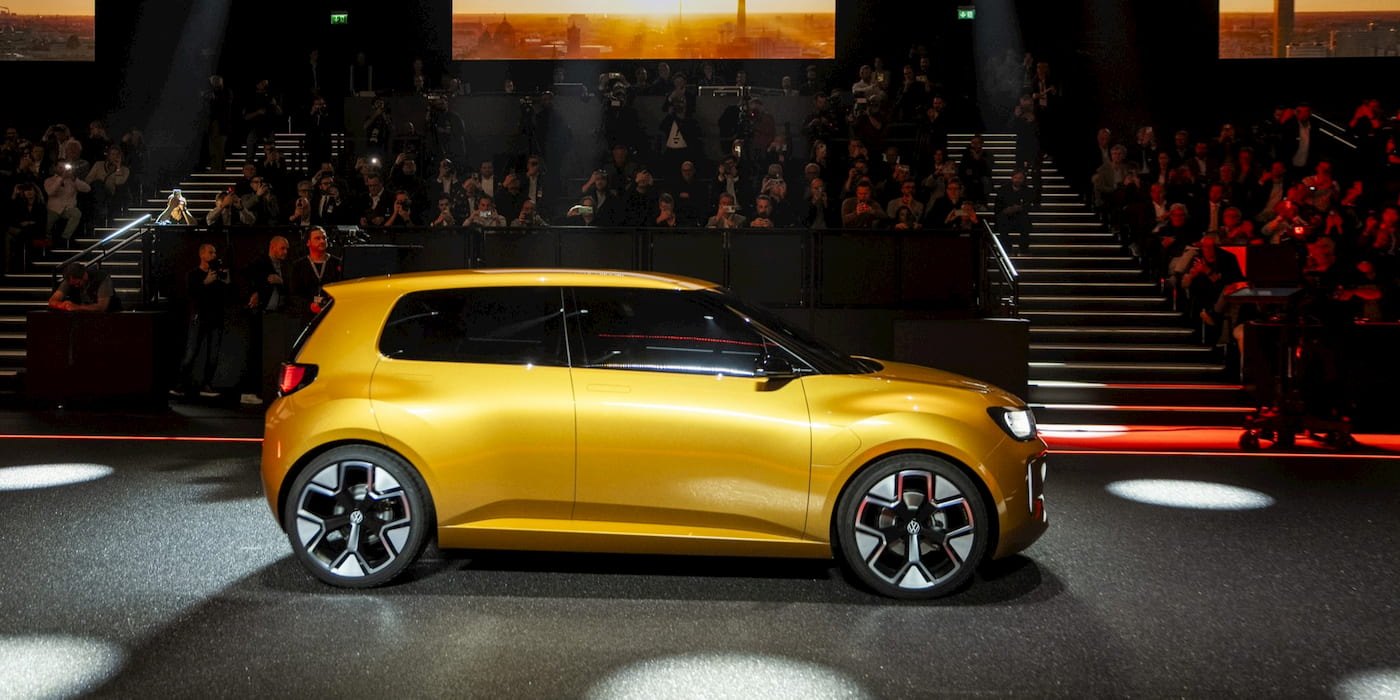
According to earlier announcements, the car is 3,880 mm long. That sits between the old Up! (3,600 mm) and the ID. Polo (4,053 mm). Despite its compact size, the urban EV seats four. The trunk offers 305 liters of cargo space.
Software architecture and markets
The Electric Urban Car Family has made a solid start, with nearly 150,000 orders since mass production began in June. All models in the family use the MEB+ platform with front-wheel drive (FWD). They share more than 80% of their components and technology.
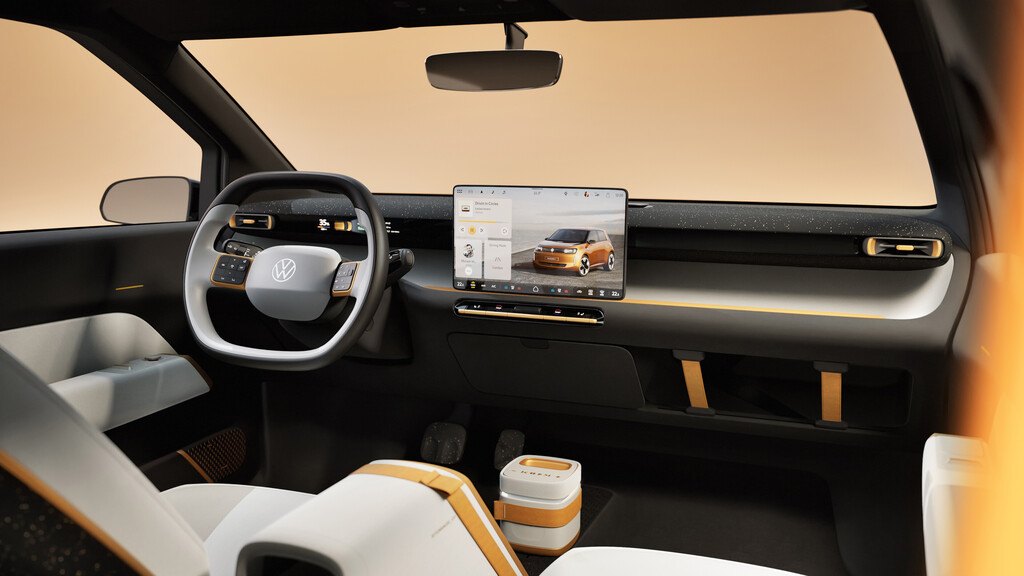
The production ID. EVERY1 will be among the first cars to use a zonal architecture built around the software-defined vehicle (SDV) approach. Volkswagen developed it through a joint venture with Rivian. In March, the joint venture, Rivian and Volkswagen Group Technologies (RV Tech), tested the new architecture on the ID. EVERY1 and on Audi and Scout reference vehicles, confirming over-the-air (OTA) update capability. The architecture will support advanced automated driving features and infotainment, along with continuous OTA updates.
Volkswagen says it will roll out the SDV architecture on EVs in markets across the Western Hemisphere. Even so, the entry-level car is not expected to go on sale in the US. The company is preparing to launch the ID. Tiguan in 2027, the successor to the ID.4 (and the ID.5 in Europe).
A trademark filing only shows an intent to register a name and is not an official confirmation, so the ID. UP name still awaits an announcement from the company. What stands out is the return to a familiar name like Up!, which suggests Volkswagen wants its budget EV to feel more approachable. A price of around 20,000 EUR and a minimum range of 250 km will be the yardsticks for comparison with rivals in the same segment. For readers in Vietnam, this is mainly a signal of where small EVs are heading in Europe, since the company has said nothing about the Vietnamese market.
Source: Electrek (xe điện)
Reviewed by: Hero Association