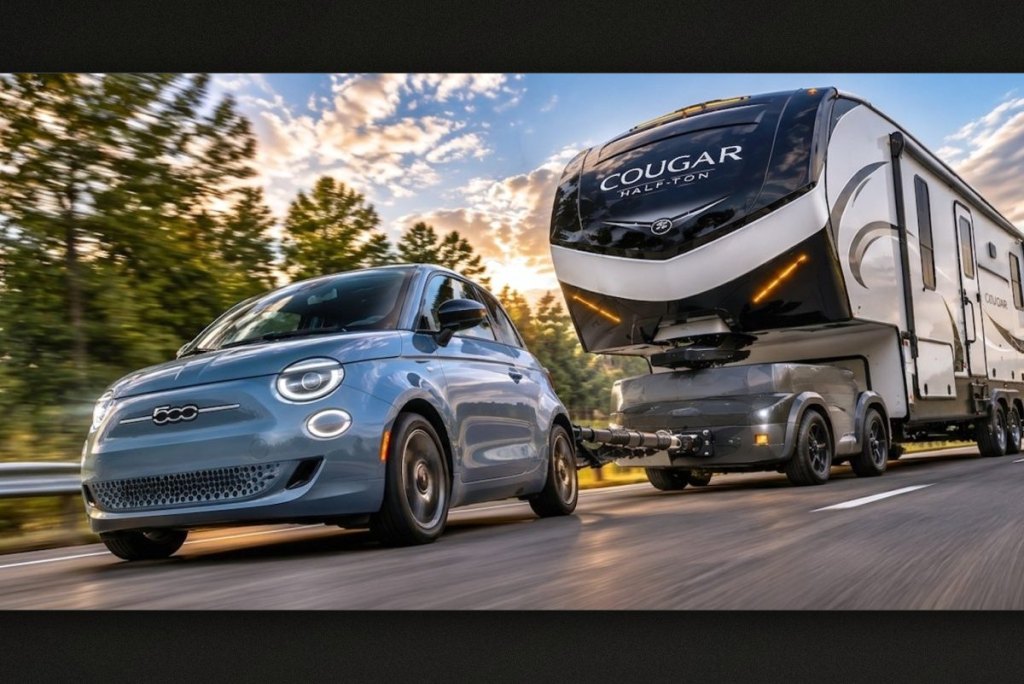
Stellantis has been granted a patent for an AI-assisted electric tow dolly that would let small cars like the Fiat 500e tow a trailer without needing a pickup truck.
- Stellantis was granted US Patent No. 12,779,916 for an electric tow dolly, based on an application filed in 2023.
- The dolly has an electric motor, a battery, regenerative braking, and AI-assisted steering and traction control.
- The lead vehicle does not need a powerful engine or large brakes, even if it is a small car like the Fiat 500e.
- A patent is not a product announcement, and many key specs have not been disclosed.
Table of Contents
Stellantis' electric tow dolly patent
Stellantis has been granted US Patent No. 12,779,916 for an electric tow dolly, with a grant date of November 3, 2026. The original application was filed in 2023. The core idea is to turn almost any car into a vehicle that can tow a trailer.
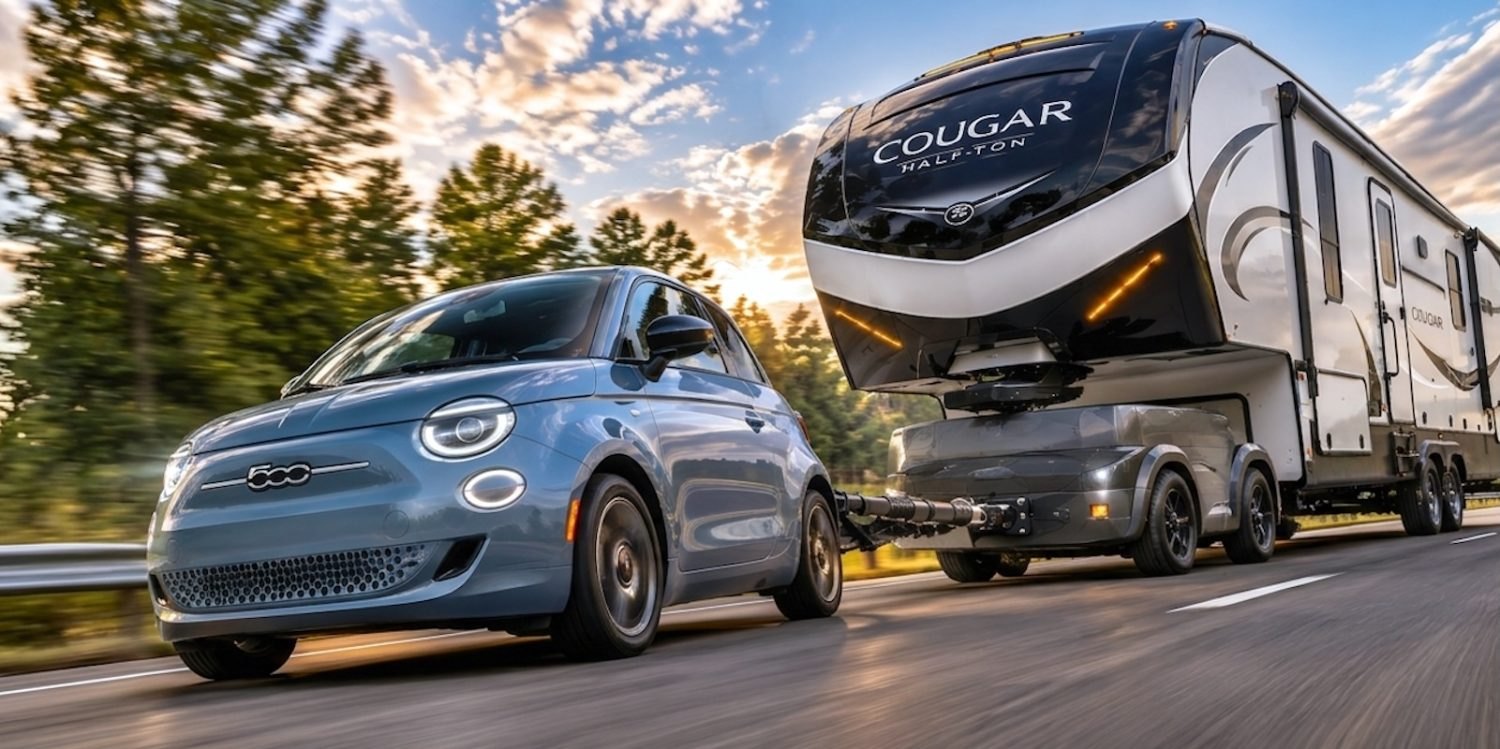
According to the description, the dolly carries the trailer's tongue weight itself using its own ball hitch or fifth-wheel plate. An electric motor and battery on the dolly help move the trailer along. A regenerative braking system and an AI-assisted steering and traction controller keep the whole rig on course.
The dolly takes over the tow vehicle's job
In other words, the dolly handles many tasks that normally fall to a large tow vehicle: generating tractive force, managing trailer weight, and controlling braking and traction. The lead vehicle therefore does not necessarily need a big motor, a heavy-duty suspension, or oversized brakes.
With this approach, the "tow vehicle" becomes more of a "lead vehicle," since the dolly does the actual towing. The compact, affordable Fiat 500e, which is also a Stellantis product, is cited as one example of a car that could go up front.
Details in the patent
The patent describes a dolly with an autonomous control system that uses cameras, sensors, and a controller. The dolly also has a four-wheel steer-by-wire system. Acceleration, braking, steering, and sway control are all powered independently, so users would barely need to own a pickup truck.
The dolly's bed and compact size give users the utility of a pickup when they need it. Day to day, they could drive a smaller, cheaper, and more fuel-efficient car.
Open questions
Many practical questions remain unanswered. The patent does not specify how much battery capacity the dolly needs, what its maximum load is, or how it would behave on a long downhill grade or during an emergency stop.
It bears repeating that a patent is not a product announcement. It also does not prove that Stellantis plans to sell this device. Still, it is a notable idea in the EV space.
Separating the towing function from the main vehicle is an interesting direction, because it reopens the question of what kind of car people really need for daily use. However, the real test lies in the specs that have not been disclosed, such as battery capacity, maximum load, and braking performance on descents. Without a prototype or commercial plan, readers should treat this as a signal of where Stellantis' research is heading rather than a product about to hit the shelves.
Source: Electrek (electric vehicles)
Reviewed by: Hero Association