DDR5 prices in Germany are now more than 6 times higher than in July 2025, and a 96 GB DDR5-6400 kit costs over 9 times more, according to the latest data from 3D Center.
- Germany's DDR5 price index hit 607% in November 2026, or nearly 6.1 times the July 2025 level.
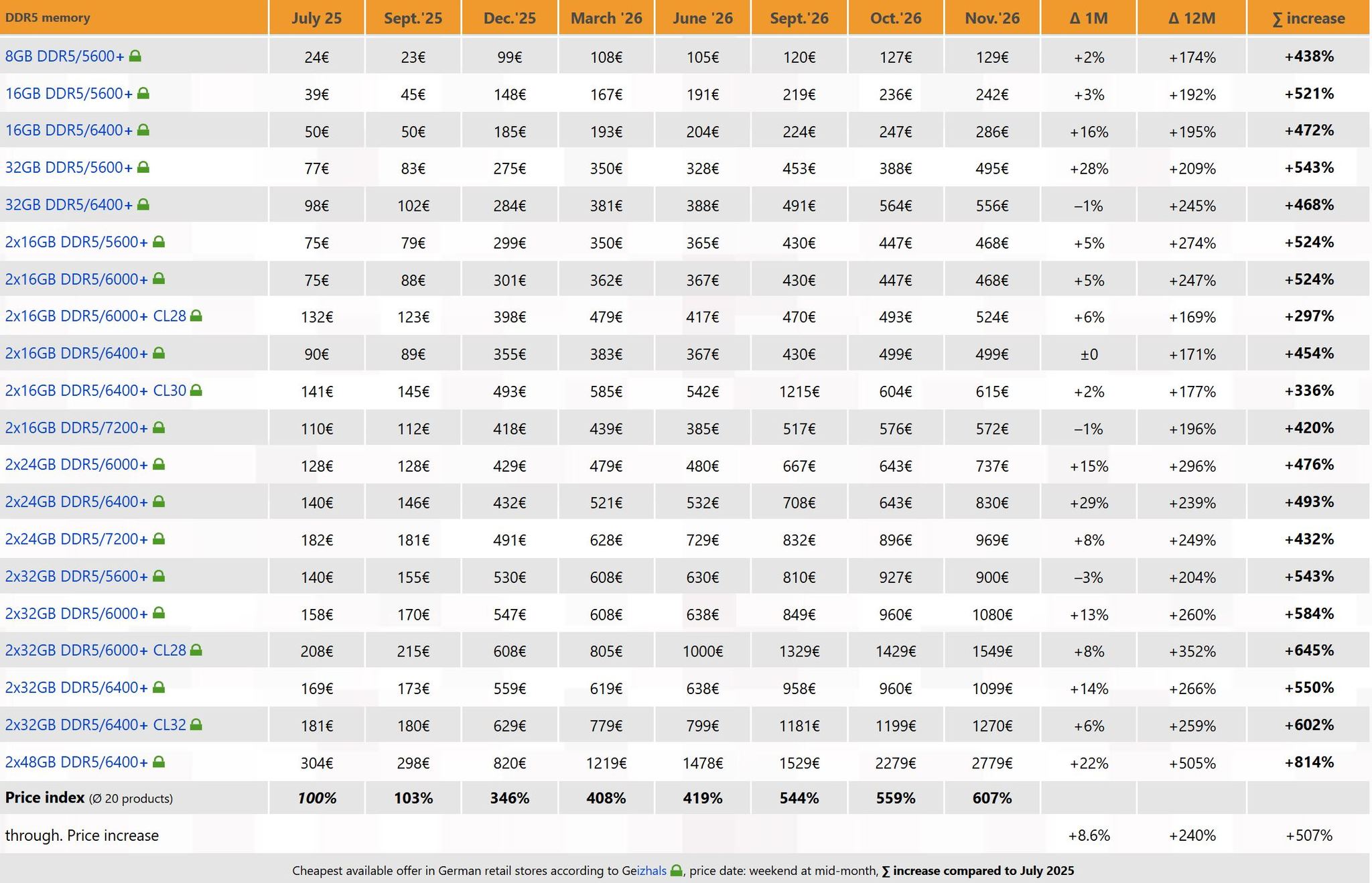
- A 2 x 48 GB DDR5-6400 kit rose from about 304 EUR to 2,779 EUR, an 814% increase.
- A 32 GB DDR5-5600 kit and a 2 x 24 GB DDR5-6400 kit climbed 28% and 29%, respectively, in a single month.
- DDR4 prices have also risen significantly, while Samsung, SK Hynix, and Micron are posting record revenue thanks to AI demand.
Table of Contents
Price index passes 600% for the first time
The German DDR5 market has just seen another sharp price hike. According to data published by 3D Center, November 2026 is among the most expensive moments for DDR5 memory on record. August and September were periods of rapid increases. In October, the average rise slowed to just 3%, making the market look like it had leveled off. That turned out to be only a temporary pause.
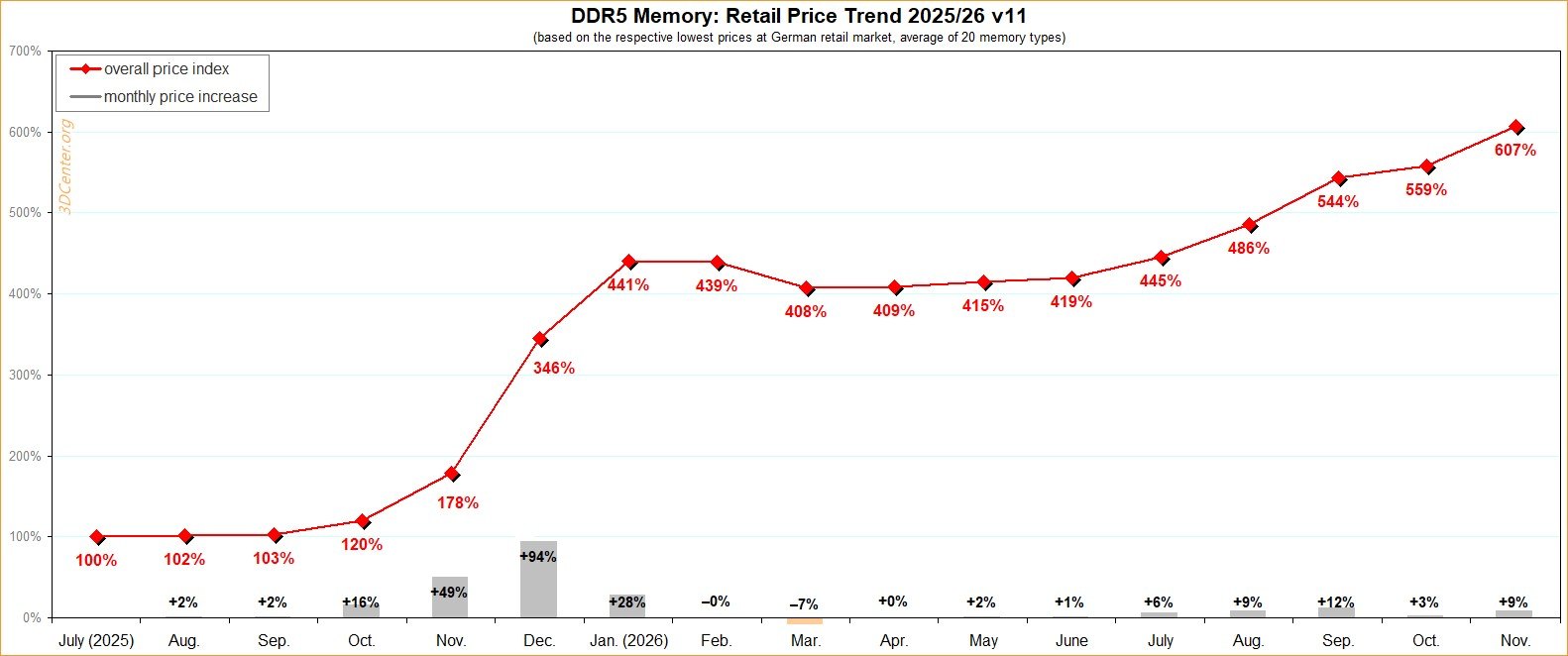
The memory price index first topped 500% in September, then kept creeping up in October. In November, it officially crossed the 600% line at 607%. In other words, the average price is now nearly 6.1 times what it was in July 2025. High-capacity kits did the most to push the index higher.
High-capacity kits see the steepest increases
The 2 x 48 GB DDR5-6400 kit (96 GB total) is the clearest example. Last year, it cost around 304 EUR. It now sells for 2,779 EUR, an increase of 814%, or 9.1 times the original price.
Still, that is not the biggest month-over-month jump. In November alone, the 32 GB DDR5-5600 kit rose 28%, while the 2 x 24 GB DDR5-6400 kit rose 29%. A few kits held their October prices, but most moved up noticeably. DDR4 memory also saw a significant increase.
Weaker demand, chipmakers cash in
At these prices, DDR5 sales will likely keep falling. Mainstream users are hit first. Memory distributors serving the mass-market PC segment are also feeling the impact. By contrast, Samsung, SK Hynix, and Micron are reporting record revenue and fat margins by catering to demand from the AI industry.
These figures come from the German market, so actual prices in Vietnam may differ. Even so, the trend suggests the AI industry is soaking up a large share of memory supply. Anyone planning a RAM upgrade should size it to their real needs and avoid overbuying capacity at peak prices. In the short term, it is hard to expect prices to cool as long as memory makers keep prioritizing AI orders.
Source: Wccftech
Reviewed by: Hero Association