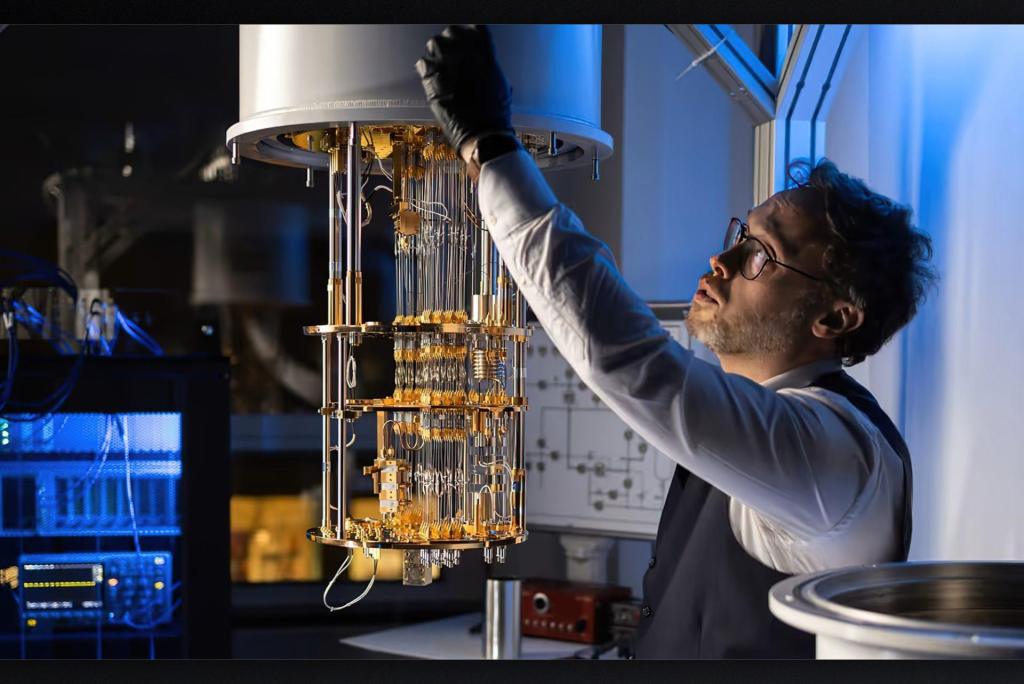
FeMoco was once chosen as a benchmark for quantum computers, but a classical supercomputer solved it in 105 minutes, beating the 8.5 hours projected for a quantum machine.
- A Chinese research team calculated the ground-state energy of FeMoco on an exascale supercomputer, with the results reported at SC26 in Chicago
- The problem was solved on 1280 nodes of LineShine in 105 minutes
- The code was run on 20,480 nodes, reaching 1.456 EFLOP/s in double precision and 5.626 EFLOP/s in mixed precision
- FeMoco has been a quantum computing benchmark since 2019, and earlier this year other teams managed to compute it using classical techniques
Table of Contents
A problem used as a quantum yardstick
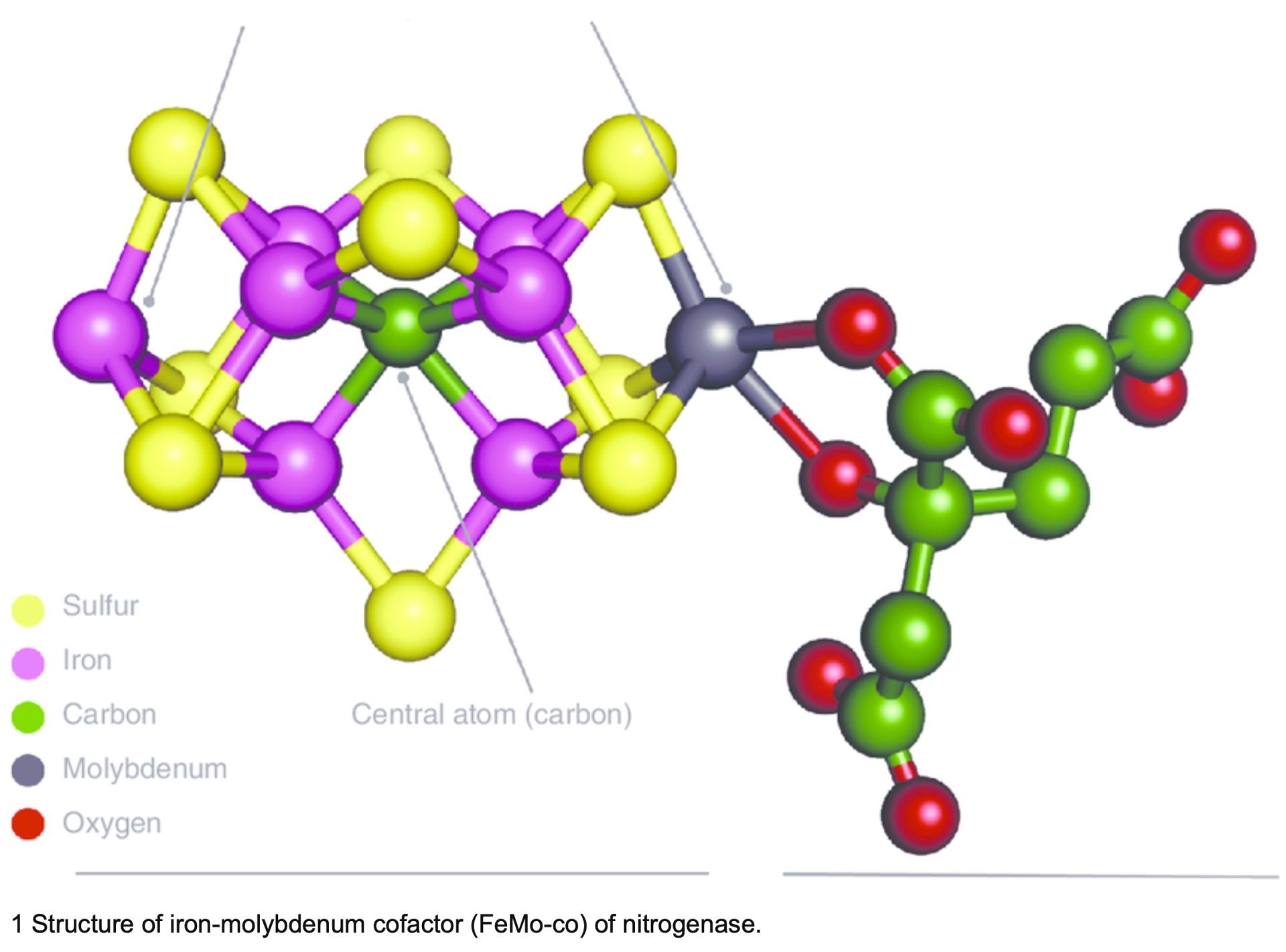
A research team in China has just shown that an exascale supercomputer can solve a problem long thought to be within reach only of quantum computers. The results were presented at the SC26 high-performance computing conference in Chicago, with researchers from seven universities, laboratories, and research centers taking part. The problem they chose was finding the lowest energy level and the quantum states of a metal core containing iron and sulfur, found at the center of the enzyme that converts atmospheric nitrogen into ammonia.
This chemical core is called FeMoco (iron-molybdenum cofactor), and it has 113 electrons distributed across 76 orbitals. The number of ways the electrons can be arranged across those orbitals is far too large to solve by brute force, while approximation algorithms produce results that lack accuracy. That is why calculating the ground-state energy of FeMoco has been regarded as a yardstick for the future performance of quantum computers. This model of 113 electrons and 76 orbitals was established as a benchmark in 2019.
How the team solved the problem
To do so, the team ran the problem's code on 20,480 nodes of the LineShine exascale supercomputer, together with the new-generation supercomputer CNIS (China's New-generation Intelligent Supercomputer). The measured throughput reached 1.456 EFLOP/s in double precision and 5.626 EFLOP/s in mixed precision, showing that the system was being exploited at very large scale.
Although the code ran on thousands of nodes, the team ultimately needed only 1280 nodes of LineShine to solve the problem in 105 minutes. That time matters as much as the result itself. The FeMoco benchmark assumes a fault-tolerant quantum computer would need about 8.5 hours to solve the same problem, which means the classical approach here is considerably faster than that mark.
Earlier research
Doubts about FeMoco's standing actually surfaced earlier. At the start of this year, several other research groups showed that classical computing techniques can be used to calculate the ground-state energy of FeMoco, prompting people to ask whether classical computers are truly ruled out of this benchmark. The new result from China adds a concrete figure, 105 minutes on 1280 nodes, that can be set directly against the 8.5-hour mark the benchmark assumes for quantum machines.
This result shows that a problem once seen as the exclusive domain of quantum computers can still be solved by a classical supercomputer when the algorithms and hardware are strong enough, so FeMoco can hardly serve as the proof of quantum advantage that many once hoped for. That does not mean quantum computers have lost their value: the 8.5-hour figure is only an estimate based on assumptions about a fault-tolerant quantum machine, while the 105-minute figure is a result that was actually run. For readers in Vietnam, whenever you see a headline like "quantum computer beats supercomputer," it is worth asking how far classical techniques have been pushed on that problem, because the race between the two approaches is closer than many people think.
Source: Wccftech
Reviewed by: Hero Association