Microsoft isn't just ordering EMIB-T packaging for its custom silicon. It is also sticking with Intel Xeon for Azure, from Diamond Rapids to CXL, QAT, and TDX.
- Microsoft's next-generation custom chips for Azure will be packaged at Intel Foundry using EMIB-T
- EMIB-T includes through-silicon vias (TSVs), enabling vertical power delivery through multiple stacked dies
- Azure will keep using Xeon, including the upcoming Xeon 7 "Diamond Rapids," along with CXL, QAT, and TDX
- Microsoft measured up to 2.5x gains on some workloads, such as SQL backup, thanks to CXL and other optimizations
- No word yet on when the new chips will launch or how the services will be priced
Table of Contents
Azure chips will be packaged at Intel Foundry
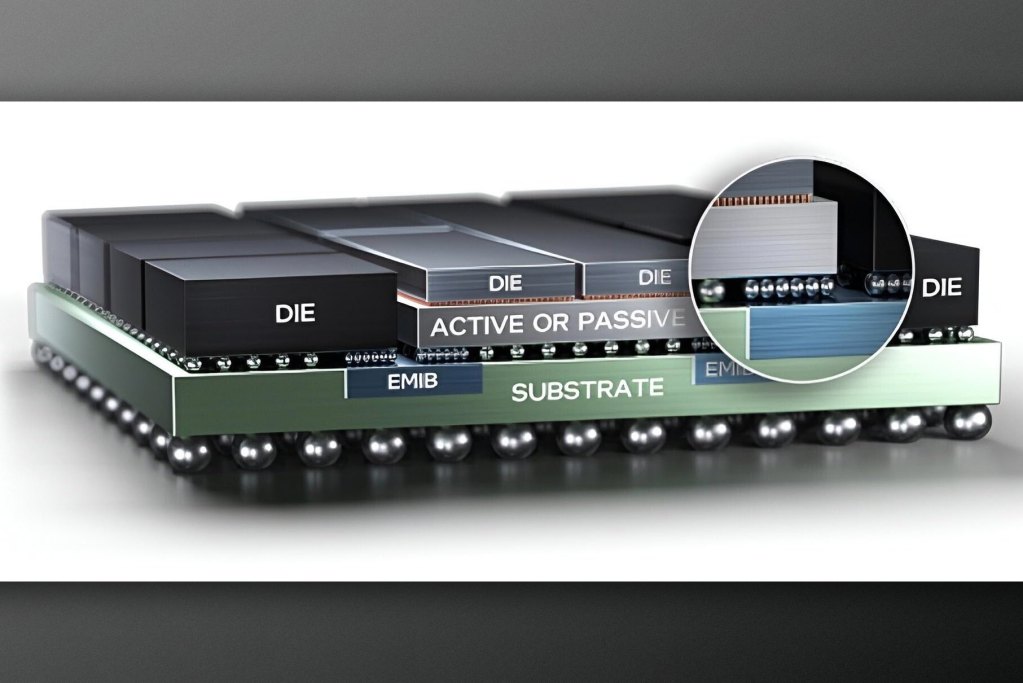
Microsoft has announced it will use Intel Foundry's advanced Embedded Multi-die Interconnect Bridge (EMIB) packaging technology for the custom chips that run in Azure. Specifically, it chose EMIB-T, the variant that adds through-silicon vias (TSVs) to route power vertically through multiple stacked dies. The move is notable because packaging is becoming just as decisive for AI chip performance as silicon fabrication itself.
Microsoft's two current custom chips show why it needs this technology. Maia 200 is an accelerator built for AI inference workloads such as large-scale reasoning, while Cobalt 200 is a CPU designed in-house for agentic workloads. The next versions of both projects will be packaged at Intel Foundry, based on EMIB and variants such as EMIB-T.
EMIB-T and the push toward stacked chips
What sets EMIB-T apart is that it supports vertical power delivery for 3D silicon modules at the package level. When chips are stacked, getting power to each layer is a problem of its own. Microsoft's choice of the TSV variant suggests it is aiming for multi-layer designs rather than simply placing dies side by side. Microsoft hasn't said what configuration the new chips will use, so those details will have to wait.
Xeon remains the foundation of Azure
Alongside the packaging deal, Microsoft confirmed it will keep using Intel Xeon processors across Azure infrastructure, including the upcoming Xeon 7 "Diamond Rapids." The two companies will work together to integrate Xeon with Compute Express Link (CXL), giving Azure more efficient memory use and finer system-level control in its data centers. Microsoft will also use Intel QuickAssist (QAT) and the confidential computing features of Intel Trust Domain Extensions (TDX).
On real-world results, Microsoft says it has measured performance and flexibility gains of roughly 2.5x on some workloads, notably SQL backup, thanks to CXL and other optimizations. That figure applies only to specific workloads, so it shouldn't be read as an across-the-board gain for Azure.
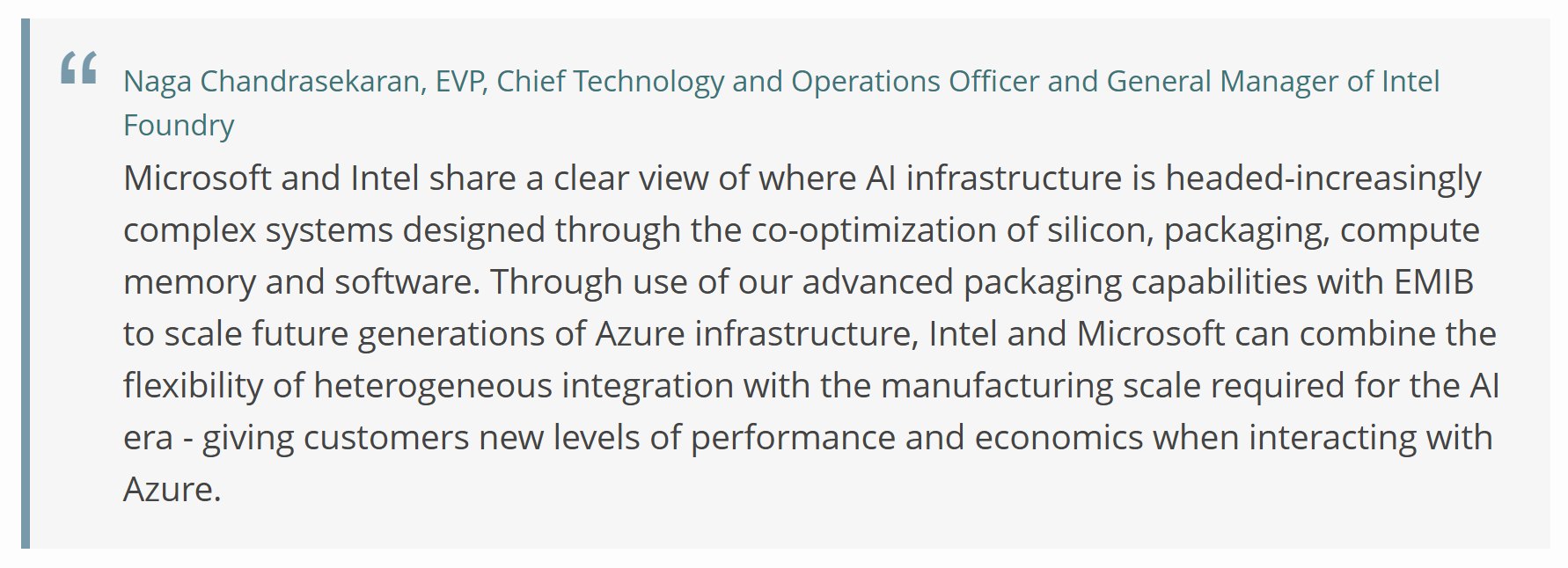
Naga Chandrasekaran, chief technology and operations officer and general manager of Intel Foundry, said the two companies share a view of AI infrastructure: systems are growing more complex and are designed by co-optimizing silicon, packaging, memory, and software. In his words, EMIB's packaging capabilities let Intel and Microsoft combine the flexibility of heterogeneous integration with the manufacturing scale the AI era demands, delivering better performance and cost to Azure customers.
Migovi sees this as a positive signal for Intel Foundry. A major customer like Microsoft has said plainly that it will hand packaging for both next-generation Maia and Cobalt to Intel, which goes beyond vague talk of collaboration. For users in Vietnam, there is no direct impact, since these are data center chips that you only touch indirectly through cloud services. What's worth watching is whether Diamond Rapids launches on schedule and whether Microsoft publishes concrete specs for the next Maia and Cobalt generations, since those will show how EMIB-T performs in real deployments. The 2.5x figure should also be understood as a result on certain workloads such as SQL backup, not a general improvement for every workload.
Source: TechPowerUp
Reviewed by: Hero Association