When you are sleep-deprived, the hippocampus still fires normally but no longer replays memories, so what you learned during the day is easily lost or distorted.
- During sleep, the hippocampus replays the day's memories to move them into long-term storage.
- Sleep loss doesn't eliminate sharp-wave ripples, but it leaves them "empty," so memories tend to fade or become inaccurate.
- Teens and young adults are hit harder because their brains are still developing.
- A regular sleep schedule, less screen time in the evening, and 10-30 minute naps can help make up for some of the damage.
Table of Contents
The hippocampus works the night shift
Many people think of sleep as downtime for the brain, but a 2026 review in IBRO Neuroscience Reports shows that some of the hippocampus's most important work happens just as you lie down. During sleep, especially non-REM sleep, this region keeps processing what you experienced during the day. A night of lost sleep therefore does far more damage than the grogginess and brain fog you feel the next morning.
The mechanism relies on brief, high-frequency bursts of activity called sharp-wave ripples, each lasting around 100 ms. In each burst, the hippocampus replays recent experiences in compressed form. This strengthens synapses, the junctions between brain cells that encode memories, and passes the information on to other regions for long-term storage. Think of it as the brain's nightly backup system: the day's events are reviewed, the important ones are flagged, and then they are filed away.

Sleep loss breaks the replay step
When you don't get enough sleep, that backup system starts to malfunction. A 2024 study in Cell Reports found that during sleep deprivation, sharp-wave ripples still occur at a normal rate, but the memory replay inside them drops sharply or disappears entirely. In other words, the bursts still fire, but they are hollow. The 2026 review confirms this result and adds that sleep loss reduces both the frequency and the strength of the ripples, making the neurons that encode spatial information less stable. The transfer of memories from short-term to long-term storage is disrupted as well.
At the cellular level, synapses need repeated reinforcement over time to become durable, so frequent fragmented sleep weakens this process in three ways. The molecular signaling pathways that let brain cells communicate efficiently are disrupted. Dendritic spines, the tiny structures on brain cells where synapses form, physically shrink under sleep loss, weakening the connections between cells. The activity of proteins that nourish brain cells also declines, which reduces the brain's plasticity, and without that foundation durable memories are hard to form.
The effect on everyday learning
According to the review, sleep loss affects memory at every stage. When you take in new information, the hippocampus performs worse, so what you learn while sleep-deprived tends to be fragile and poorly consolidated. Afterward, because replay and synaptic strengthening are missing, new knowledge doesn't integrate into long-term storage and fades quickly or becomes distorted. Sleep also helps the brain tell similar memories apart, so when you are sleep-deprived you are more likely to confuse details, misattribute sources, and even "remember" things that never happened.
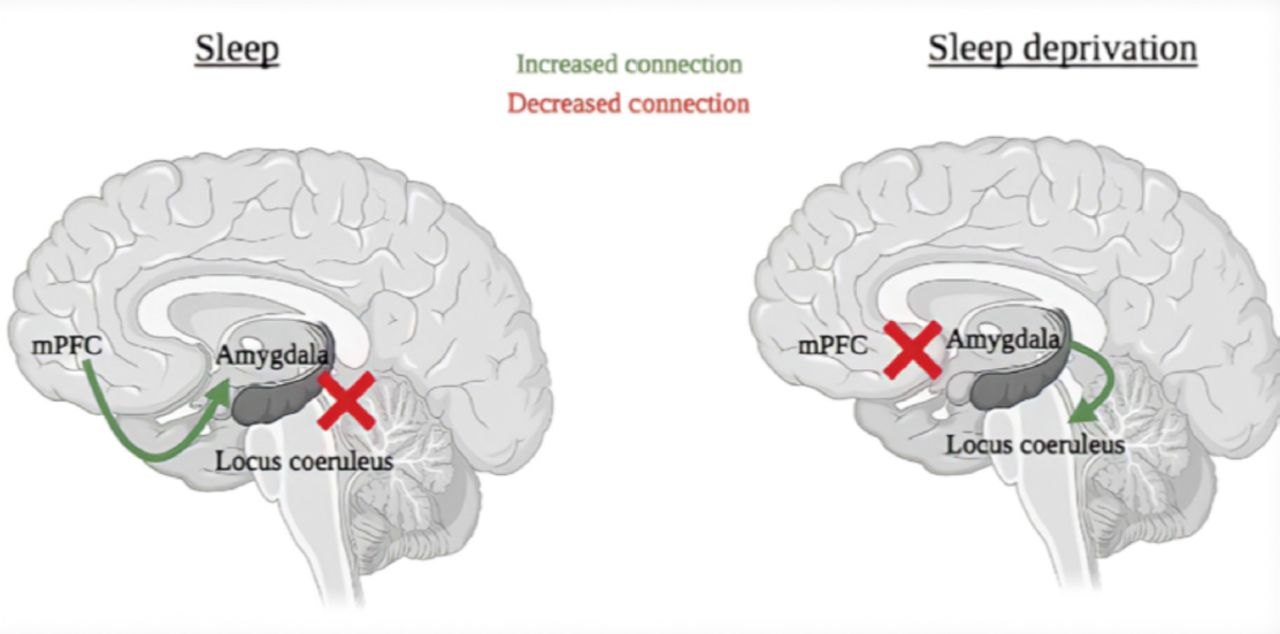
The prefrontal cortex is affected too, which degrades executive function. This shows up as poor focus, slower processing, and less flexible thinking. Teens and young adults are especially vulnerable because their brains are still developing. Chronic sleep shortfalls at this age are linked to stronger emotional reactions, a higher risk of mood disorders, and poorer memory and attention.
How to protect your memory
The good news is that the brain can recover to some extent. The first thing the research suggests is keeping a regular sleep schedule, since a stable routine reinforces the circadian rhythm and makes it easier to fall asleep and reach deep sleep. The review recommends 7-9 hours for adults and 8-10 hours for teens. In the evening, it helps to limit blue light from screens, which suppresses melatonin, the hormone that signals the body to prepare for sleep, so cutting back on your phone or computer before bed can improve sleep quality.
When you can't get a full night's sleep, a 10 to 30 minute nap can improve working memory, mood, and alertness without leaving you groggy afterward. After a stretch of sleep loss, the brain also prioritizes deep sleep in the following nights so the body can recover faster. This doesn't fully reverse the damage of long-term sleep deprivation, but it still helps preserve cognitive function. If insomnia has become chronic, cognitive behavioral therapy for insomnia (CBT-I) is a well-supported intervention that targets the psychological and behavioral factors behind sleep problems, without the risk of drug dependence.
The most important takeaway from this research is that sleep loss doesn't just make you tired: it also keeps what you just learned from being stored. Pulling an all-nighter to cram or work, then planning to "catch up" the next day, is largely wasted effort. In Vietnam, scrolling on the phone late into the night is common, so putting the device away earlier and keeping a regular bedtime are the easiest changes to make, and they address the heart of the problem. Keep in mind that this is a review article, not an official medical recommendation, and that napping is a stopgap, not a substitute for a full night's sleep. If you have long-term insomnia, or if the person in question is a minor, has an underlying condition, or is taking medication, talk to a doctor before changing anything on your own.
Source: mindbodygreen
Reviewed by: Hero Association