
A Windows Server bug that went undetected since July left more than 80% of Microsoft 365 gateway servers unresponsive and caused an outage lasting nearly 24 hours, according to Microsoft's preliminary report.
- The Microsoft 365 outage lasted nearly 24 hours, from 4:20 PM UTC on November 12 to 4:10 PM UTC on November 13.
- The cause was a bug in a Windows update rolled out to networking gateway servers in July 2026, compounded by a surge in Teams traffic and reduced infrastructure capacity.
- More than 80% of gateway servers stopped responding within 2 hours, with Exchange Online hit hardest.
- Microsoft says the bug is limited to Microsoft 365 gateway infrastructure and does not affect Windows deployments in general.
- The final post-incident report is expected before November 20, 2026.
Table of Contents
How the nearly 24-hour outage unfolded
Microsoft has finished resolving a major Microsoft 365 outage that disrupted Outlook, Teams, Copilot, and many other cloud services worldwide on November 12 and 13. According to the preliminary Post-Incident Report (PIR) dated November 15, the root cause was a Windows Server bug that had been present for months. Combined with a spike in traffic and reduced infrastructure capacity, it escalated into a widespread outage.
Per the PIR, the incident began at 4:20 PM UTC on November 12 and ended at 4:10 PM UTC on November 13, lasting nearly 24 hours. Exchange Online was the hardest-hit service, with many users unable to access their mailboxes or send and receive email normally. Teams, Copilot, SharePoint, and OneDrive also had problems with features that depend on Exchange Online.

Three factors combined into a cascading failure
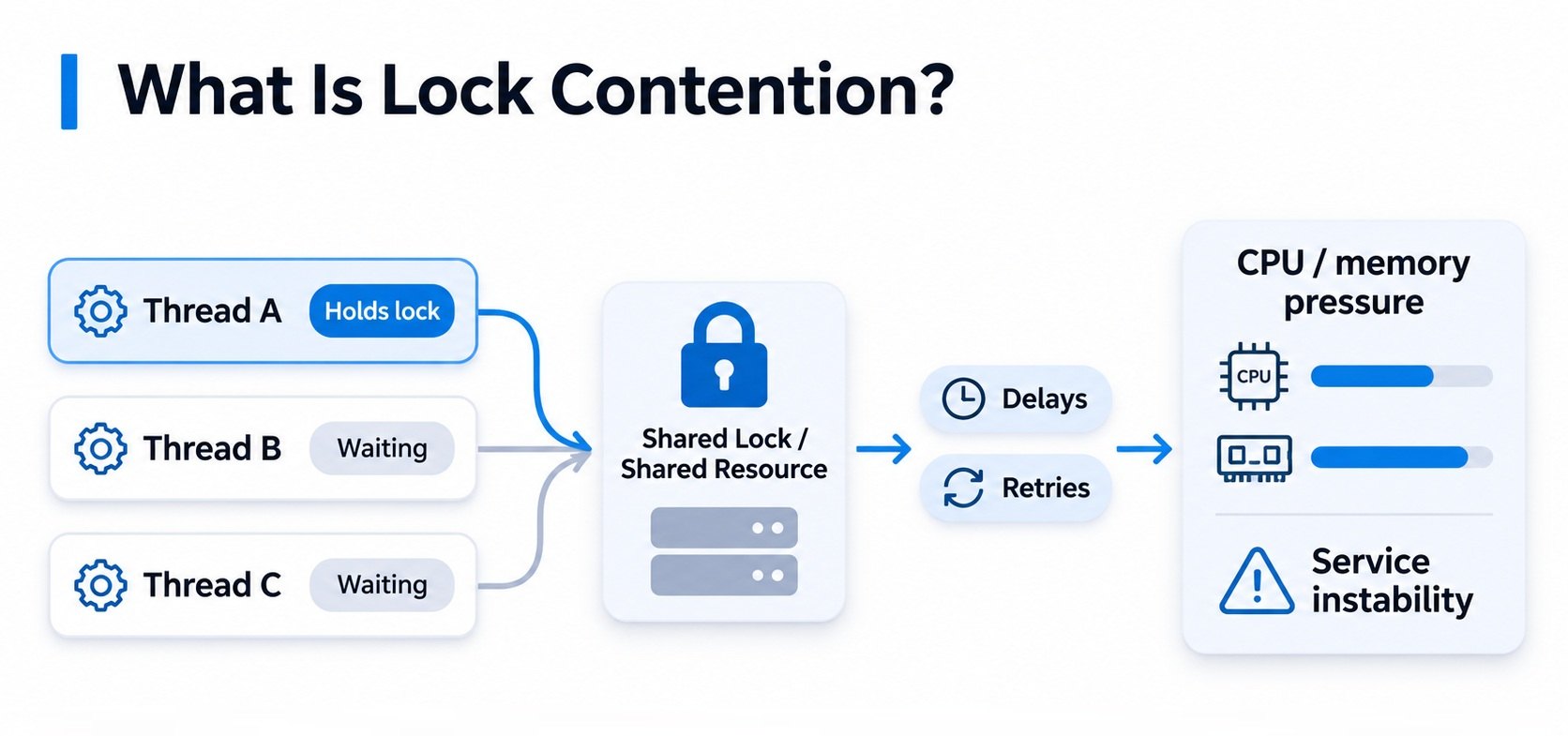
According to Microsoft's investigation, the first factor was a previously undetected bug introduced through a Windows update rolled out to Microsoft 365's networking gateway servers in July 2026. Under certain workloads, an internal Windows process suffered lock contention. That exhausted CPU and memory, and the server stopped responding. The bug stayed dormant for more than 3 months because the company's lab mostly used weaker hardware with fewer CPU cores, where the problem is harder to trigger.
The second factor involved Teams. About 15 hours before the outage began, Teams traffic was automatically shifted from a backup gateway to the primary one, which is shared with Exchange Online. This kind of failover is routine, but it increased the load on the affected infrastructure. On top of that, roughly 14% of the gateway's server capacity had been unavailable since the previous day because of an unrelated incident.
Together, the three factors had severe consequences. As servers stopped responding, Microsoft's automatic traffic management system redirected requests to the machines still running, which then became overloaded one after another. Within just 2 hours, more than 80% of gateway servers had stopped responding. The mechanism meant to contain failures within individual regions did not stop the problem from spreading globally. Microsoft stressed that the Windows bug is tied only to Microsoft 365's gateway infrastructure and does not affect broader Windows deployments.
Recovery and additional measures
Recovery was difficult because servers often kept hanging after a restart and were hit by a backlog of queued traffic. The usual rollback mechanism was also ineffective, since the faulty change had been deployed months earlier. In the end, engineers developed and rolled out a patch that returned the connection-handling code to its previous stable state. From November 13, Microsoft brought the infrastructure back into service in stages, and webmail returned to normal levels globally at 2:17 PM UTC. The company confirmed the incident was resolved via the Microsoft 365 Status account on X, with final service health notices issued on November 14.
Microsoft has added traffic distribution mechanisms, expanded infrastructure monitoring, and increased capacity. During the outage, the company extended email delivery timeouts to protect queued messages, and later confirmed that the entire backlog had been processed.
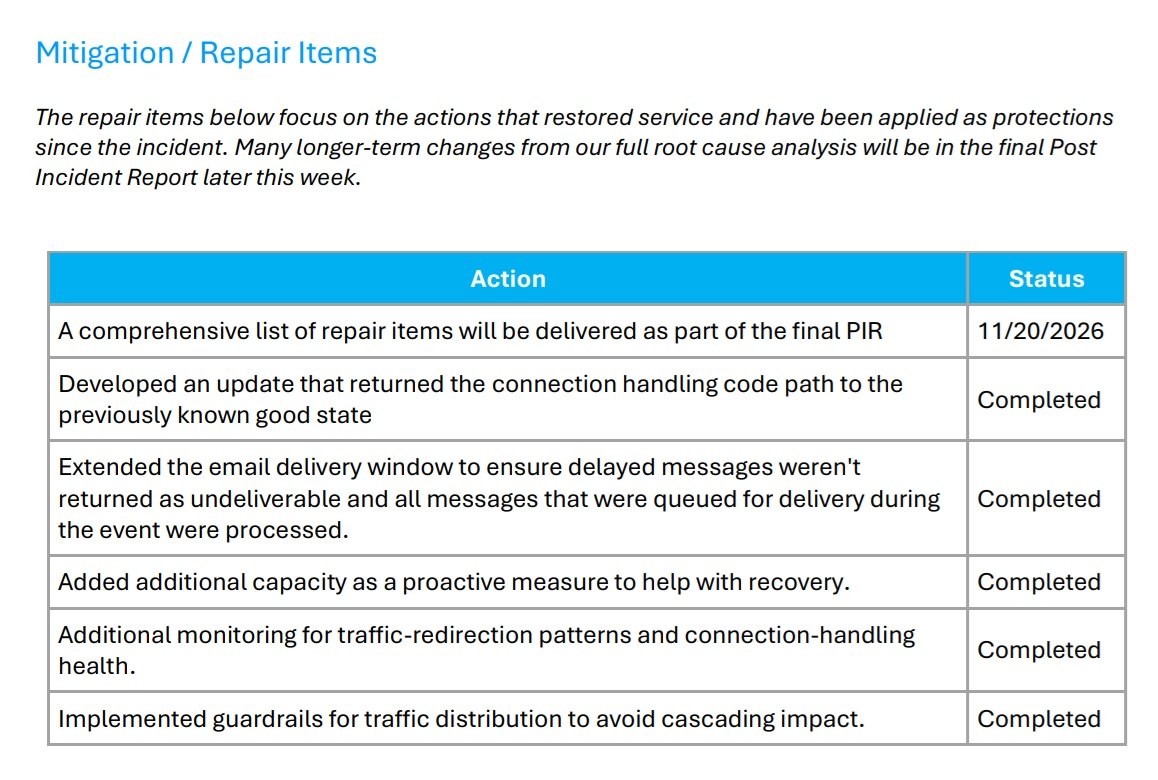
Microsoft says this was a technical fault, with no sign of a malicious attack or involvement of AI agents. However, the investigation is not entirely closed. The company expects to publish the final PIR before November 20, 2026, with additional remediation steps aimed at preventing similar widespread disruptions.
The most notable detail is that the bug sat dormant for more than 3 months because the test environment did not reflect real server configurations with many CPU cores. For cloud providers, the lesson is to test on hardware that closely matches production. Businesses using Microsoft 365 should review their backup plans for email and collaboration, especially since services like Teams and Copilot share a dependency on Exchange Online. The final report will be needed to fully assess the preventive measures Microsoft has promised.
Source: Wccftech
Reviewed by: Hero Association