SpaceX develops Kessel system powered by 72 NVIDIA Rubin GPUs
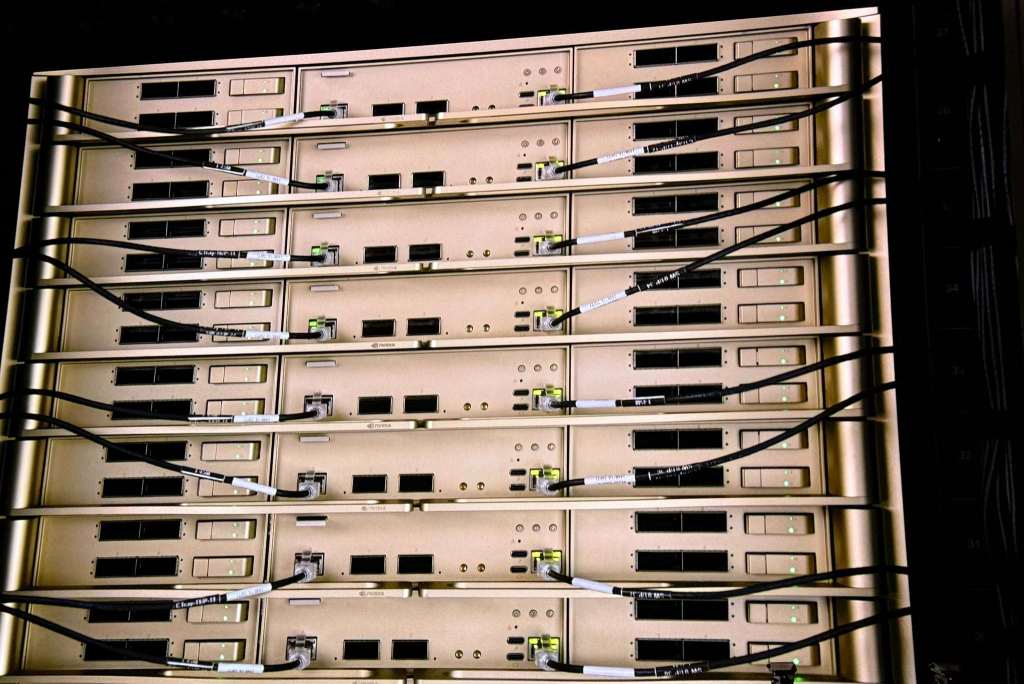
Kessel is a rack-scale system developed by SpaceX and xAI based on the Vera Rubin NVL72, featuring an 84-layer board instead of NVLink cables for orbital data centers.
- According to SemiAnalysis, SpaceX and xAI are developing a rack-scale system codenamed Kessel, based on NVIDIA's Vera Rubin NVL72.
- Kessel retains the configuration of 36 Vera CPUs, 72 Rubin GPUs, and 9 NVLink switch trays, but replaces NVLink cables with an 84-layer midplane PCB.
- The board uses ultra-low-loss M10 CCL material, with fewer layers than the Kyber architecture (156 layers) but likely higher material costs.
- SpaceX will still purchase chips directly from NVIDIA while independently sourcing other components.
Table of Contents
Kessel is a customized version of Vera Rubin NVL72
According to a report by SemiAnalysis, SpaceX and xAI are developing their own version of NVIDIA's Vera Rubin NVL72 rack-scale AI system. Codenamed Kessel, the system is targeted at both terrestrial deployments and orbital data centers.
In terms of configuration, Kessel retains the original foundation of 36 Vera CPUs and 72 Rubin GPUs spread across 18 compute trays and 9 NVLink switch trays. The key difference lies in the interconnect architecture: instead of internal NVLink cable cartridges, SpaceX places the compute trays and switch trays back-to-back around a passive midplane PCB.
This design closely resembles a scaled-down version of NVIDIA's Kyber architecture, which packs 576 AI GPUs (across 144 packages) and also relies on PCB-based interconnects instead of cabling.
84-layer PCB and the cost equation
According to SemiAnalysis, the most striking feature of Kessel is its 84-layer midplane PCB utilizing ultra-low-loss M10 copper-clad laminate (CCL) material. For comparison, Kyber's backplane uses a 156-layer PCB with M9 CCL material. Cutting the layer count by nearly half could improve manufacturability and yields, but the higher-grade laminate will likely drive up raw material costs.
Eliminating high-speed cabling could simplify system assembly, but it does not necessarily guarantee lower manufacturing costs. An 84-layer board using M10 laminate is an exceptionally expensive component, demanding intricate fabrication processes and stringent quality control. High-end server motherboards today typically feature 15 to 20 layers, while development boards for servers use over 20 layers.
Production yields could also pose a significant hurdle, as a defect in any inner layer could force the entire board to be scrapped. Consequently, Kessel's economic viability hinges on whether savings from shedding cables and self-sourcing components can offset the midplane's steep cost.
A shift in sourcing from NVIDIA
Kessel also marks a departure from NVIDIA's turnkey system procurement model. Rather than purchasing pre-assembled L6 compute boards or L10 trays that NVIDIA plans to sell alongside the Vera Rubin generation, SpaceX will reportedly buy AI accelerators, CPUs, switches, and networking silicon directly from NVIDIA. The remaining components will be procured from third-party suppliers.
This approach allows SpaceX to select its own PCB fabricators, component vendors, and manufacturing partners. The company can also tailor hardware specifically for its own infrastructure - a crucial factor for orbital deployments - while potentially trimming intermediary margins. In exchange, SpaceX must shoulder full responsibility for system design, qualification, manufacturing quality, and supply chain management, much like several hyperscalers have done in recent years. Securing sufficient memory amidst ongoing shortages, however, could prove challenging.
For NVIDIA, the implications remain nuanced. Selling standalone CPUs and GPUs could trim revenue compared to shipping complete compute boards. Conversely, the model could encourage other major clients to build proprietary systems around NVIDIA silicon, driving broader adoption of its chips as hyperscalers accelerate their in-house silicon efforts. That outcome depends on whether Kessel succeeds and demonstrates tangible advantages over NVIDIA's reference designs.
Kessel currently remains an unconfirmed report from SemiAnalysis, with no official comment from either SpaceX or NVIDIA. The trend worth watching is the broader shift: major players increasingly want control over design and supply chains rather than buying turnkey racks. Whether the 84-layer PCB gamble pays off will reveal if the concept is cost-effective and scalable enough for wide adoption.
Source: Tom's Hardware
Reviewed by: Hero Association