GL.iNet has confirmed it patched a vulnerability in its GoodCloud service, but infected devices still carry the malware and may have been compromised for months.
- GL.iNet confirmed that hackers abused a flaw in its GoodCloud remote management service to plant malware on routers and KVM devices
- The cloud-side flaw has been patched, but already infected devices keep the malware until users clean them up
- The company has not said how the attack worked, how many users are affected, or whether any data was stolen
- A stable firmware release with additional security fixes is expected on November 22, 2026
- KVM users should also check the computers controlled through the device
Table of Contents
What GL.iNet has confirmed
GL.iNet makes networking hardware, including home routers, travel routers, and KVM devices that let users control computers remotely. The company's GoodCloud platform lets customers manage these devices over the internet, including accessing and controlling computers or servers connected to a KVM. In a security notice posted on November 20, the company said an unauthorized party exploited a flaw in the remote management service to access devices and install malicious software. Some users, meanwhile, reported finding backdoors and reverse shells on their units that let attackers control them remotely.
GL.iNet says it has patched the cloud vulnerability and blocked the access path used in this incident, so clean devices should not be newly infected this way. However, those measures do not remove malware from devices that are already infected. The company has also not disclosed how the attacker exploited the flaw, how many customers are affected, or whether any information was stolen. It is still investigating whether computers connected to infected KVMs were compromised, and plans to notify identified customers by email.

How to check and clean your device
GL.iNet advises customers to check for signs of infection and install the latest security firmware, even if no malware is found. The company's initial guidance is to look for a process running as crond -i /tmp/.log, which indicates a compromise. A stable firmware release with additional security fixes for both routers and KVMs is scheduled for November 22, 2026. For KVMs, the company recommends version 1.10.3 or later for the RM10, RM1, RM1V2, RM1PE, and RM4PE, version 1.10.3 beta or later for the RM10RC, and version 1.8.7 or later for the RMQ1. Router owners should install the security firmware for their specific model as soon as it is available.
Users on the GL.iNet forum, however, warn that the company's check can miss devices with other backdoors or running reverse shells. For that reason, the company pointed to a community-built scan and cleanup tool that checks for known malware files, suspicious processes, modified system utilities, and configuration files altered to maintain access. The tool also collects forensic evidence and can remove known malicious components if the user chooses.
Its developers also stress that it cannot detect every case, and that a compromised device may need a firmware reinstall without keeping existing settings, because malicious files stored in the configuration directory can survive a normal firmware upgrade. Anyone who suspects an infection should preserve evidence before resetting, avoid restoring a configuration that may be infected, and change any credentials and access keys that may have been exposed. For KVMs, since the malware may have allowed access to the controlled computers, those machines should be checked too. The developers also ask users who run the scanner to upload an anonymous report when prompted, so they can learn how many and what types of devices are affected.
Malware found on devices
After the company's disclosure, customers and security researchers shared evidence of malware written specifically for GL.iNet devices, along with root-level reverse shells connecting infected routers to the IP address 170.39.226[.]219. These reverse shells use the Linux nc utility to create an outbound connection, which lets a remote attacker run commands on the infected device. The RemoteToHome Consulting team also found a potential command injection flaw in the GoodCloud client, in the component that handles the AstroWarp/SD-WAN feature: according to the team, it passes values sent from the cloud directly into shell commands running as root without proper validation. GL.iNet has not confirmed that this flaw was used in the attacks.
RemoteToHome analyzed 183 routers it owns or manages and found suspicious activity on 152 of them. Of those, 24 had root reverse shells, 47 had older persistent backdoors, and 81 showed that attacker-supplied commands had been executed. The team noted that its results may not match those of other customers, and that the older backdoor infections are not necessarily tied to the November attacks. In another forum report, the owner of an infected GL-RM1 shared network logs showing the device downloaded a malicious script, ni.sh, along with other executables from 66.245.219[.]252 on November 19. It then contacted roughly 1,800 residential IP addresses every day and repeatedly called TRON blockchain APIs, behavior resembling a peer-to-peer network. The purpose of these connections is unclear, and there is no confirmation that the device was used as a residential proxy or belonged to a larger botnet.
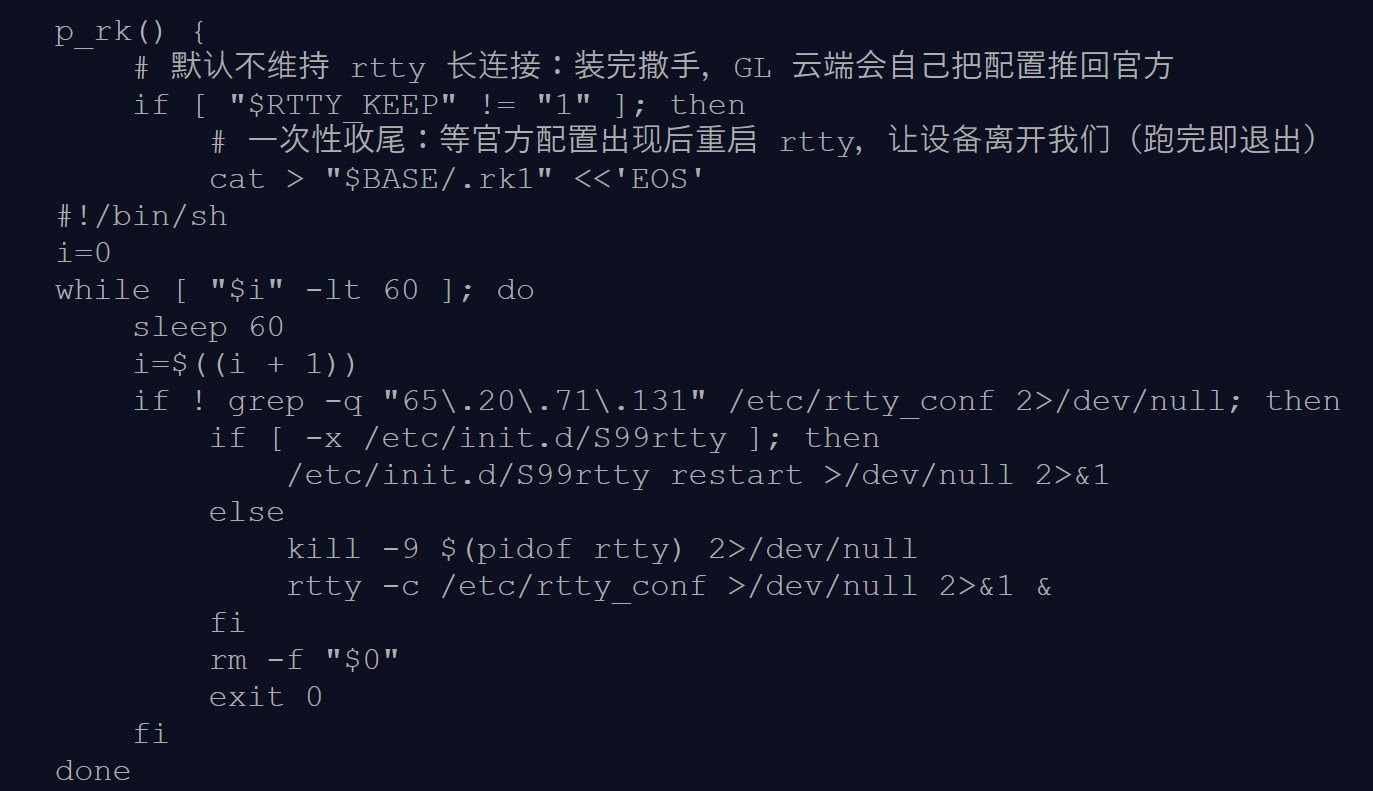
BleepingComputer reviewed a copy of the ni.sh script and found it contains code written specifically for GL.iNet routers and KVMs. The script identifies multiple models from the company, downloads malicious executables named gl-helper and gb from servers hardcoded in the script, and sets up persistence through startup scripts and scheduled tasks so the malware relaunches after a reboot or if the process is killed. It disguises the malicious process as crond -i /tmp/.log, matching the indicator the company published, and replaces the real netstat utility with a modified script that filters out connections to 66.245.219[.]252, which could hide the malware's traffic from administrators. The script also installs an SSH public key for remote access, alters file timestamps, and periodically contacts a server to receive and run commands.
The attacker's infrastructure includes two addresses, 66.245.219[.]252 and 65.20.71[.]131, which match those in the logs from the KVM owner mentioned above. The script also contains developer comments in Chinese describing the persistence mechanism, reporting function, and how it interacts with GL.iNet's cloud management software, suggesting the author may be a Chinese speaker.
Signs of infection before November
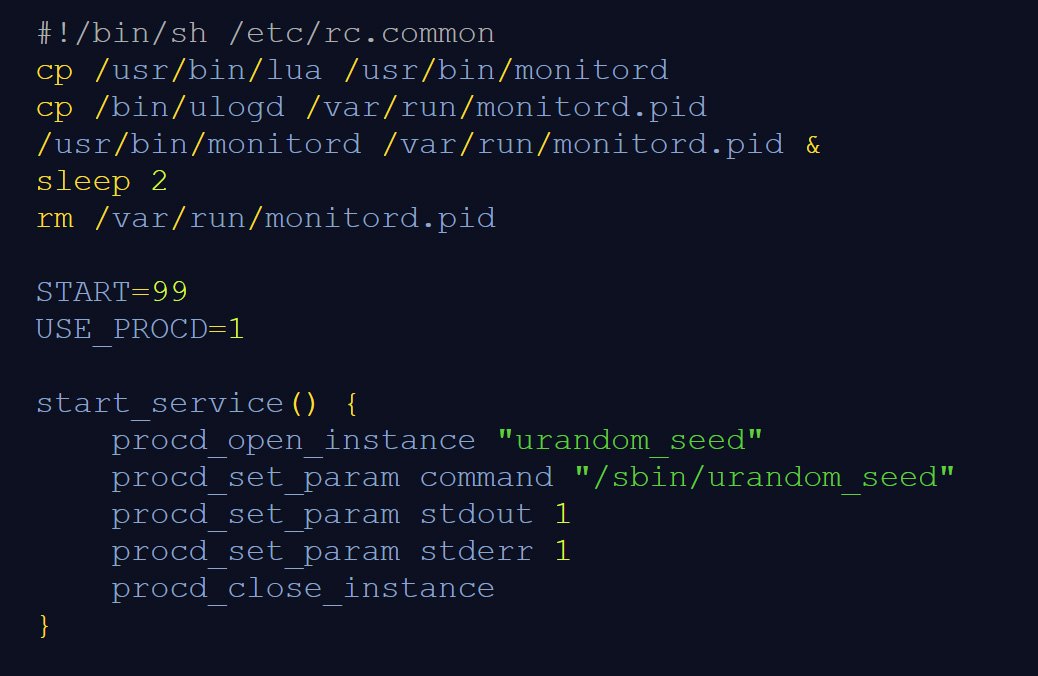
BleepingComputer also reviewed a malicious Lua payload taken from a GL-MT2500 router, launched through a modified urandom_seed startup script. The payload collects device information, contacts a remote server, and then downloads and runs additional programs. Some malicious files taken from GL.iNet devices carry timestamps from December 2025, so some units may have been compromised for months, although it is unclear whether these infections were caused by the same attackers or are related to the November 20 incident.
GL.iNet says it is continuing its investigation and will notify identified affected customers through the email address tied to their cloud account.
The most worrying part of this incident is that the cloud-side patch does nothing for devices that are already infected: the malware can survive a normal firmware upgrade, and the December 2025 timestamps suggest some units were compromised long before the announcement. So if you use a GL.iNet router or KVM with GoodCloud enabled, don't relax just because the company says the flaw has been blocked. Check your device using both the company's guidance and the community tool, and if you suspect an infection, reinstall the firmware without keeping the old configuration, then change your passwords and access keys. KVM owners have more to worry about, because the device connects directly to your computer, so those machines should be treated as potentially viewed and need to be reviewed. Until the company explains the root cause, turning off remote management when you don't really need it is the prudent choice, and waiting for the stable firmware with further fixes should be an extra step, not a substitute for checking.
Source: BleepingComputer
Reviewed by: Hero Association