EchoMotion turns the Galaxy Watch into a full-body tracking system
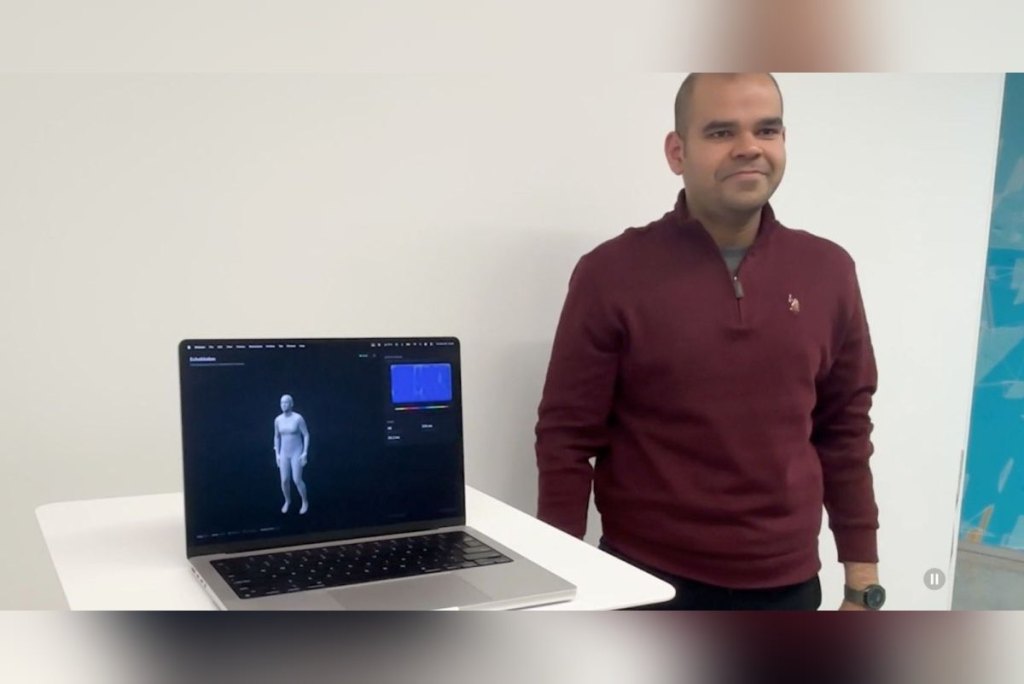
Cornell's EchoMotion uses the built-in speaker and microphone on Wear OS smartwatches to track full-body motion via ultrasound, requiring no extra hardware.
- Developed by the SciFi Lab team at Cornell University, EchoMotion uses ultrasound emitted and captured by existing smartwatch speakers and microphones to reconstruct full-body posture.
- On an uncalibrated Galaxy Watch 6, the average error per joint is under 4 inches. After 12 minutes of calibration, that drops to roughly 2.4 inches.
- The model also runs on the Galaxy Watch 7 and Pixel Watch 3 without retraining, suffering only a slight drop in accuracy.
- A workout-tracking demo recognized 20 gym exercises with 95.4% accuracy, consuming around 5 to 6% battery for a 30-minute session.
Table of Contents
How EchoMotion works
Today's smartwatches rely primarily on accelerometers and gyroscopes to record movement. That data is sufficient for step counting or sleep tracking. However, it cannot reveal how the rest of the body is moving, whether the user is sitting, walking, or exercising. To correct exercise form, users typically need to hire a trainer or rely on camera-based tracking services.
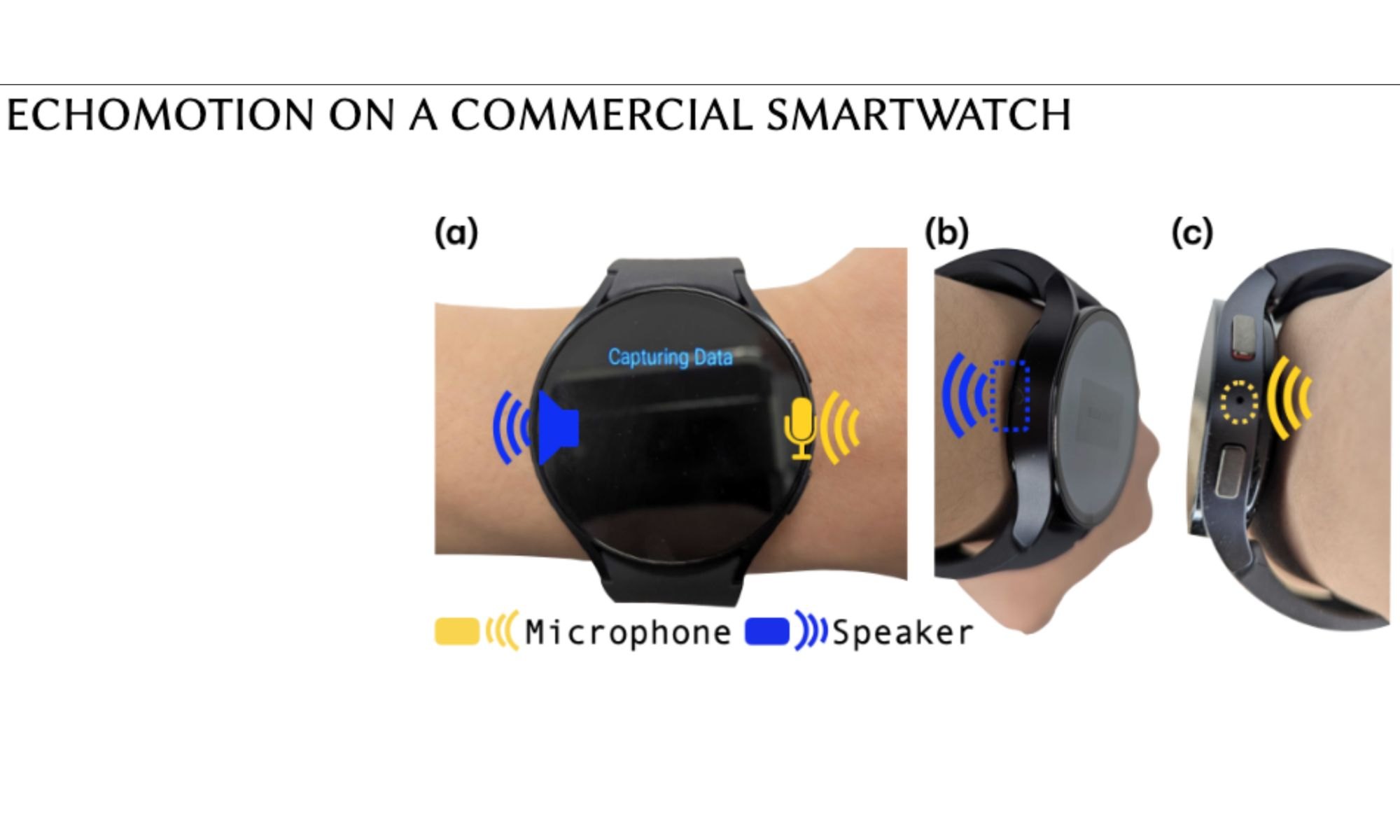
The SciFi Lab team at Cornell University developed EchoMotion to bridge this gap. The system works much like sonar: the watch's speaker emits ultrasound waves around the wearer's body, while the microphone picks up echoes bouncing back from the arms, legs, and torso. These echo patterns are then fed through an AI model to reconstruct full-body posture.
The entire solution is purely software-based and takes up under 30 MB of storage. According to the researchers, the system is lightweight and can be deployed easily on Wear OS smartwatches.
Accuracy and compatibility
In the initial trial, 10 participants wore a prototype watch while performing 18 different movements. Using the gathered data, the AI model predicted the positions of 12 key joints, from the ankles up to the head.
The team then loaded the model onto an off-the-shelf Galaxy Watch 6 and tested it with 15 new participants. For users the system had never seen before, the average error per joint stayed under 4 inches without calibration. When users recorded 12 minutes of movement for calibration, the error dropped to about 2.4 inches.
The researchers also ran the same model on the Galaxy Watch 7 and Google Pixel Watch 3 without retraining. EchoMotion still worked, showing only a slight decrease in accuracy. This indicates a viable roadmap for bringing the technology to commercial smartwatches.
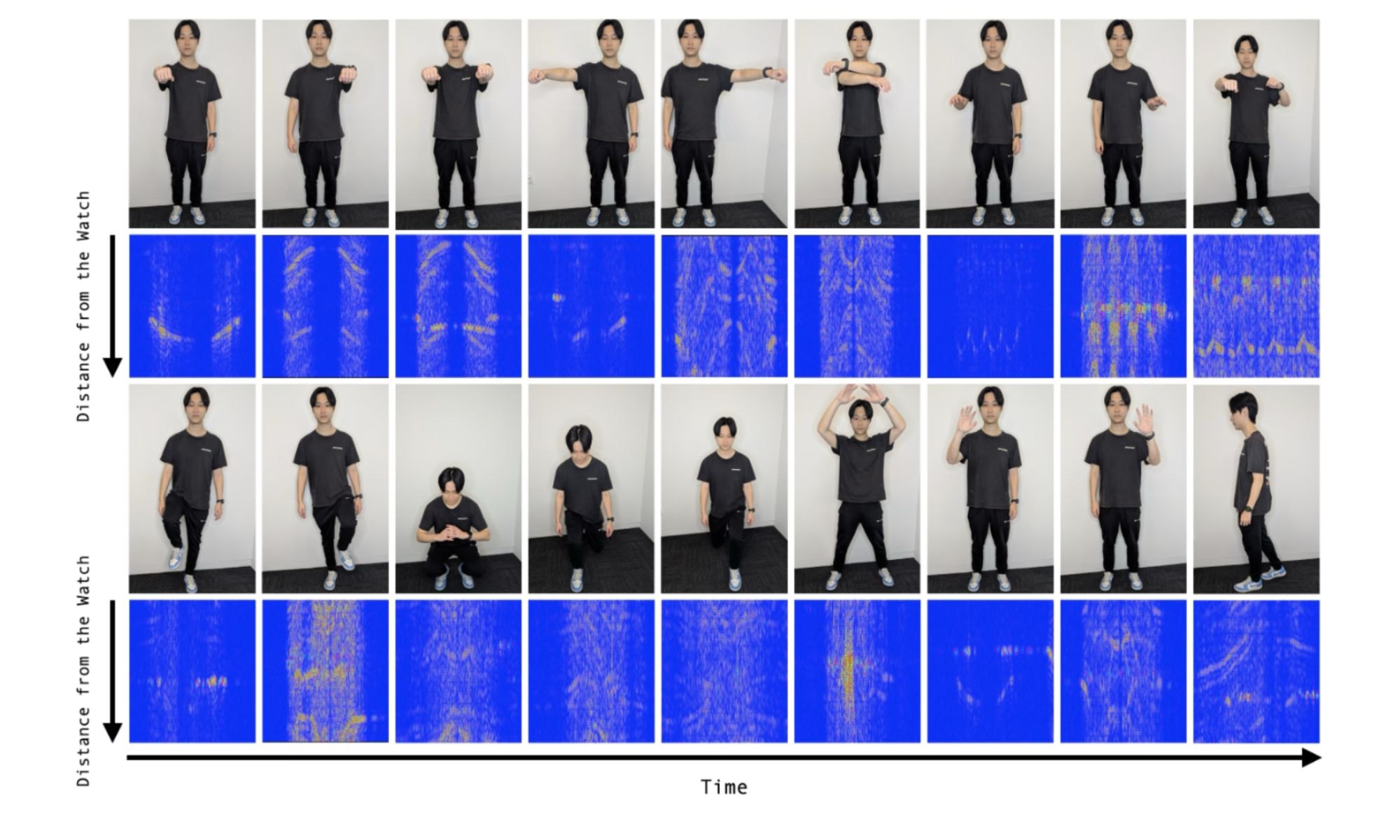
The only notable limitation is crowded environments. In busy building hallways, accuracy dipped due to acoustic interference from nearby pedestrians. Cluttered furniture or street noise, however, had virtually no impact.
Power efficiency and practical applications
The acoustic sensing on the prototype consumed just around 12 mW, roughly 40 times less than wearable camera systems. Tested on the Galaxy Watch 6, EchoMotion used about 5 to 6% battery during a 30-minute tracking session. The system also requires no specialized hardware like ultra-wideband chips, mmWave, or cameras, keeping bill-of-materials costs from rising.
The team built a workout-tracking demo on the Galaxy Watch 6 that recognized 20 gym exercises (such as dumbbell lateral raises, leg presses, chest presses, and squats) with 95.4% accuracy. The demo worked reliably even in a real gym environment with background music playing at around 76 dB.
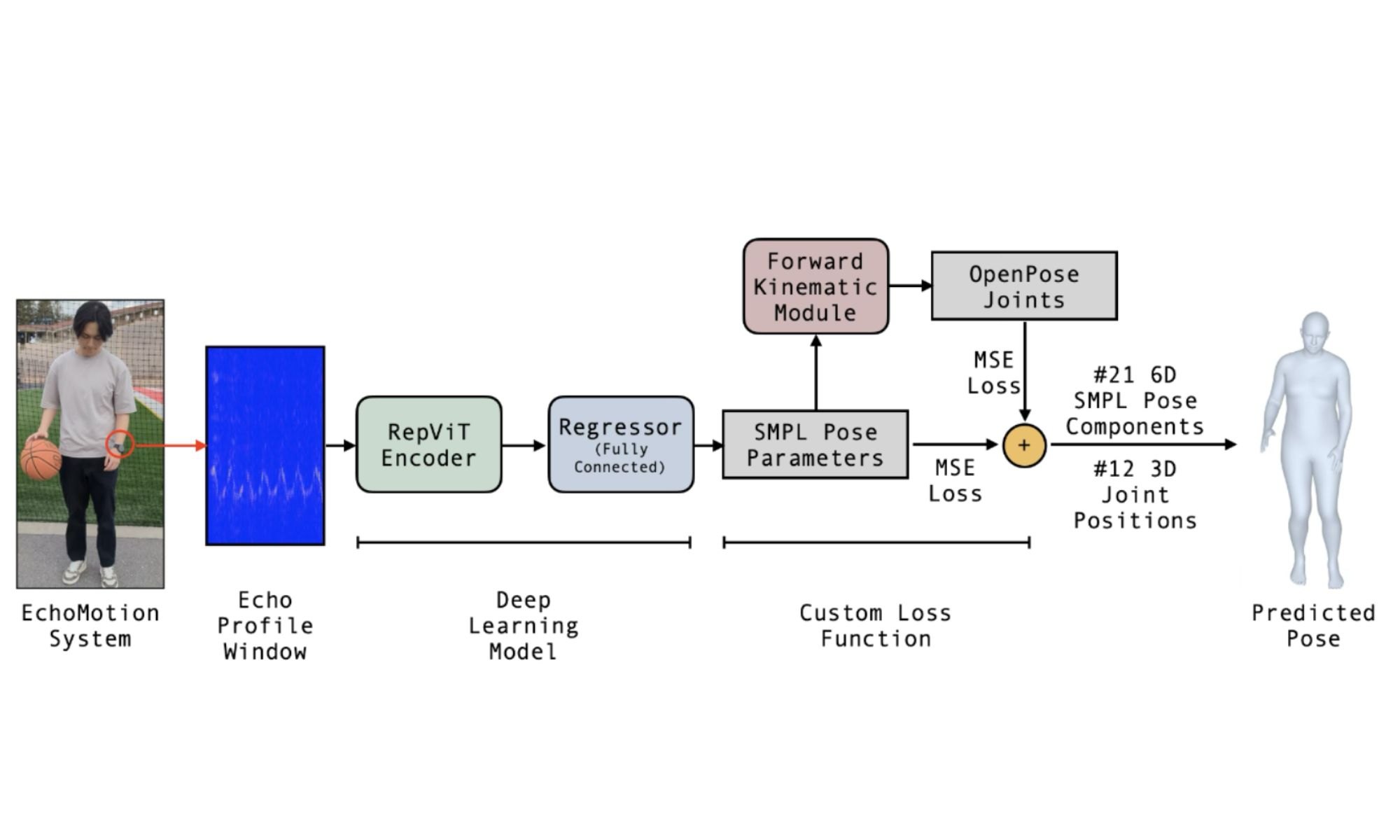
Because it tracks joint positions and angles across the entire body rather than just the wrist, EchoMotion could support activities that require detailed form feedback, such as Pilates, tai chi, and yoga. This data is also valuable for home physical rehabilitation, potentially helping healthcare providers offer timely interventions and guidance down the road.
The team is also experimenting with pairing EchoMotion with smart glasses. If successful, the approach could solve the body-tracking puzzle for XR devices, which currently rely on bulky, costly sensor arrays. Saif Mahmud, lead author of the study and a doctoral student at Cornell, noted that the team worked hard to ensure EchoMotion runs on commercial devices to make adoption as straightforward as possible.
EchoMotion remains a research project rather than a feature currently available on consumer smartwatches. Its standout strength is a software-only approach running on commodity hardware, which could reach users far faster than solutions requiring new sensors. Still, its performance drop in crowded spaces suggests the technology needs further refinement before widespread rollout.
Source: Digital Trends
Reviewed by: Hero Association