The Xiaomi 18 Fold packs the largest battery of any phone in this form factor, plus a periscope telephoto camera that beats both the iPhone Duo and the Galaxy Z Fold 8. But its China-only ROM drags down the score.
- Passport-style foldable weighing 219 grams, with a 6,000 mAh battery, 67 W charging, and a 3.5x periscope telephoto camera that neither the iPhone Duo nor the Galaxy Z Fold 8 has
- Starts at 10,999 CNY (about 1,640 USD) in China, and the company has no plans for an international release
- The China-only ROM means no Android Auto, no eSIM support, Find Hub can't locate the phone, and Google's two-step verification prompts never appear
- If you want one, you'll have to accept a grey-market import along with the software limitations above
Table of Contents
The hardware is the strong suit
Xiaomi has been making foldables since 2021, trying both clamshell and book-style designs, and the Xiaomi 18 Fold is the result of that experience, built around a wide passport-style display. It launched just days after Apple announced a foldable with a similar aspect ratio, so comparisons with the iPhone Duo and the Galaxy Z Fold 8 are unavoidable. Notably, both rivals sacrificed battery capacity or camera hardware to keep their bodies slim, while Xiaomi refused to compromise on exactly those two points.
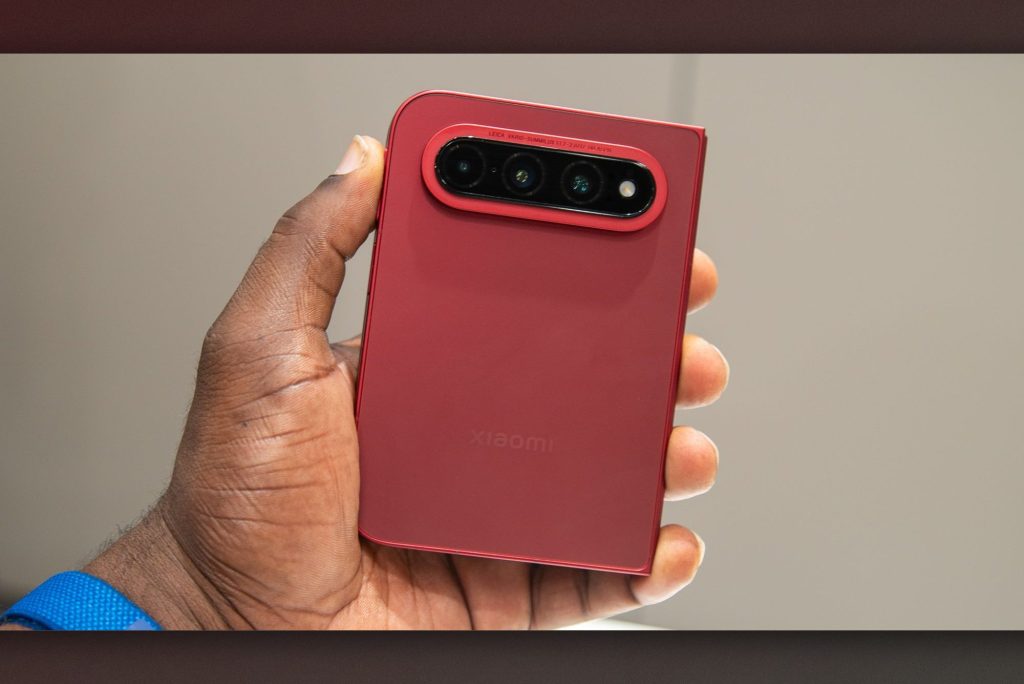
The difference in weight is obvious the moment you pick it up: 219 grams, 35 grams lighter than the iPhone Duo and only about 18 grams heavier than the Galaxy Z Fold 8, despite the huge battery and telephoto camera module inside. Folded, the phone occupies 105.37 cm³, roughly 6% less than the iPhone Duo (111.95 cm³), so it feels more pocketable than its thickness figure suggests. The frosted glass back in Nishino Red and the dark metal frame give it the look of a true flagship, and the horizontal camera bar doubles as a resting spot for your index finger when you hold the unfolded phone upright.
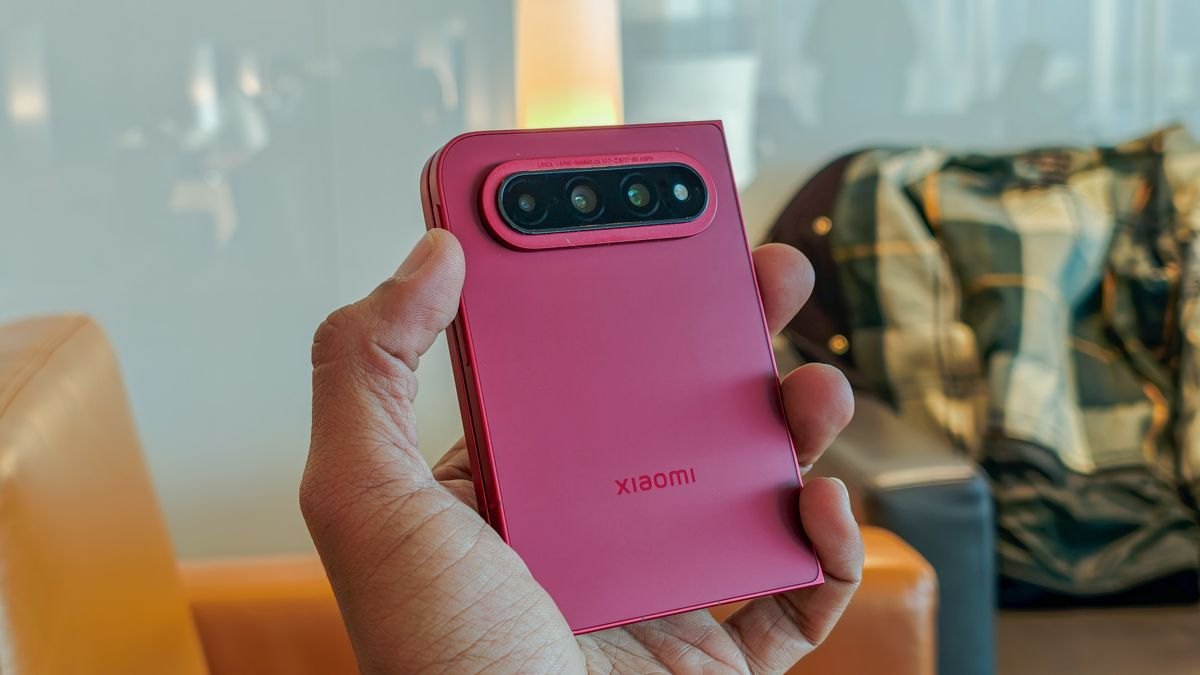
On the display front, the 5.38-inch outer screen is wide enough for comfortable two-thumb typing, while the 7.58-inch inner LTPO OLED panel runs at 120 Hz and reaches more than 3,700 nits in HDR, so it stays legible outdoors. The crease nearly disappears when viewed head-on but remains visible at an angle, and sensitive eyes may notice PWM flicker at low brightness at night. Performance comes from the in-house 3 nm XRing O3 chip paired with 16 GB of LPDDR6 RAM. It runs smoothly in split-screen and during photo processing, and only warms up in the upper half of the body during 3D gaming or sustained video recording.
The battery is what sets the phone apart in this group: the 6,000 mAh silicon-carbon cell comfortably lasts a full day of heavy use, helped in part by two displays that are smaller than the competition's and so draw less power. When you do need to charge, the 67 W charger in the box takes the phone to 50% in 19 minutes and to full in 50 minutes, and 50 W wireless charging is also supported. The phone has IP58 water resistance, but no full dust protection like the iPhone Duo, no stylus support, and its stereo speakers, while loud, skew toward the highs and lack warmth in the bass.
The telephoto camera is the clearest advantage
While Apple and Samsung both dropped the optical telephoto lens on their passport-style foldables, Xiaomi still fits a 200 MP main camera, a 50 MP ultrawide, and a 50 MP periscope telephoto with 3.5x optical zoom, all tuned to Leica's Vibrant color profile. In side-by-side shots against the iPhone Duo and the Galaxy Z Fold 8, Xiaomi's zoom range from 3x to over 30x retained real detail, while the two rivals dissolved into blocks of pixels from digital zoom. Thanks to consistent metering even in low light, this is the most reliable camera system of the three passport-style foldables.
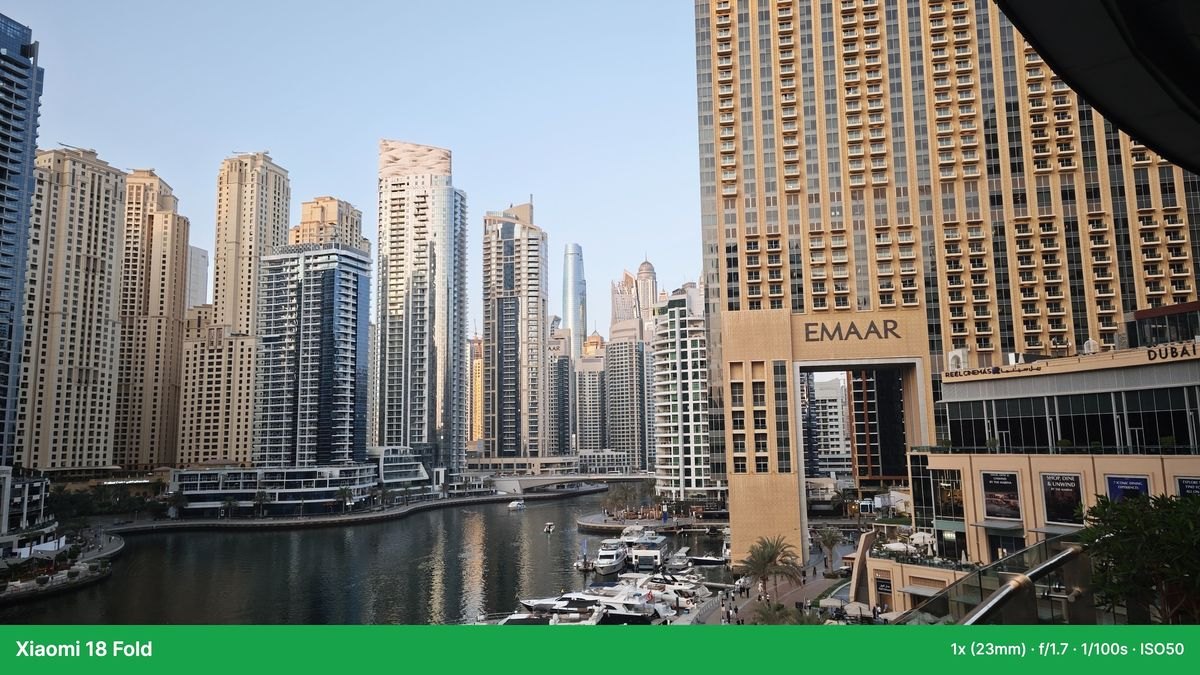
There are still two minor camera drawbacks: the 17 mm ultrawide lens crops tighter than rivals', and the outer selfie camera is prone to glare in harsh backlighting. Aside from those, this is the closest any short, wide foldable has come to the camera system of a premium slab phone.
Software is limited by the domestic ROM
HyperOS 4 on top of Android 17 is a pleasure to use, with smooth animations and a fast, responsive interface. The horizontal multitasking bar lets you stack three full-height panes at once and swipe through six open apps, matching the OPPO Find N6 for foldable multitasking. Installing Google services and the Play Store is also easy because the framework is already in place, so Gemini runs reliably. But because the phone was built specifically for the Chinese market, a number of deeply integrated Android features are broken.
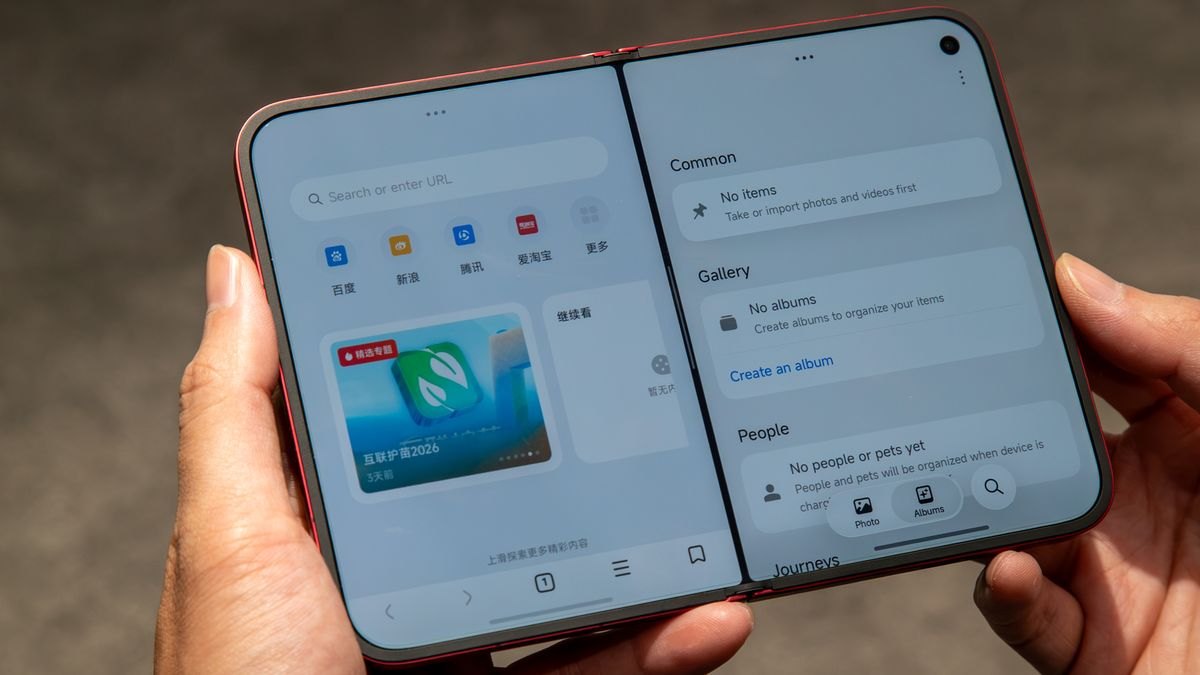
Specifically, you can't switch the default system assistant to Gemini or set Chrome as the system-wide default browser. Find Hub shows the device name but never finds its location, even after every background permission is enabled, and Google's two-step verification prompts never appear when you sign in from another device. Android Auto doesn't work, the phone doesn't support eSIM, and while it can output video over USB-C, there is no desktop mode. On top of that, some third-party apps show ugly letterboxing on the 4.24:3 display, and the phone doesn't support the 6 GHz band.
The frustrating part is that the fix isn't hard: if Xiaomi simply put the global HyperOS build used on the Xiaomi 18 Pro and 18 Pro Max onto this phone, nearly all of these problems would disappear. The company just held a global launch event for those two Pro models but left the 18 Fold behind, and there is currently no sign it will leave China. The starting price of 10,999 CNY (about 1,640 USD) undercuts both the Galaxy Z Fold 8 (1,899 USD) and the iPhone Duo (1,999 USD) on paper, but that gap can vanish once you add the markup on a grey-market import.
The Xiaomi 18 Fold shows that a passport-style foldable can be light, have a large battery, and carry a real telephoto camera, something neither Apple nor Samsung has managed, which makes it the most impressive model of the group on hardware. Still, problems like Find Hub, two-step verification, and Android Auto are things users in Vietnam rely on every day, and because they live in the ROM, no amount of tweaking in Settings will fix them. You should only buy this version if you're already used to imported China-market phones and accept living with those limitations. If you want peace of mind, wait to see whether Xiaomi brings global HyperOS to the phone, because that is what will decide whether this foldable is worth the money outside China.
Source: Android Central
Reviewed by: Hero Association