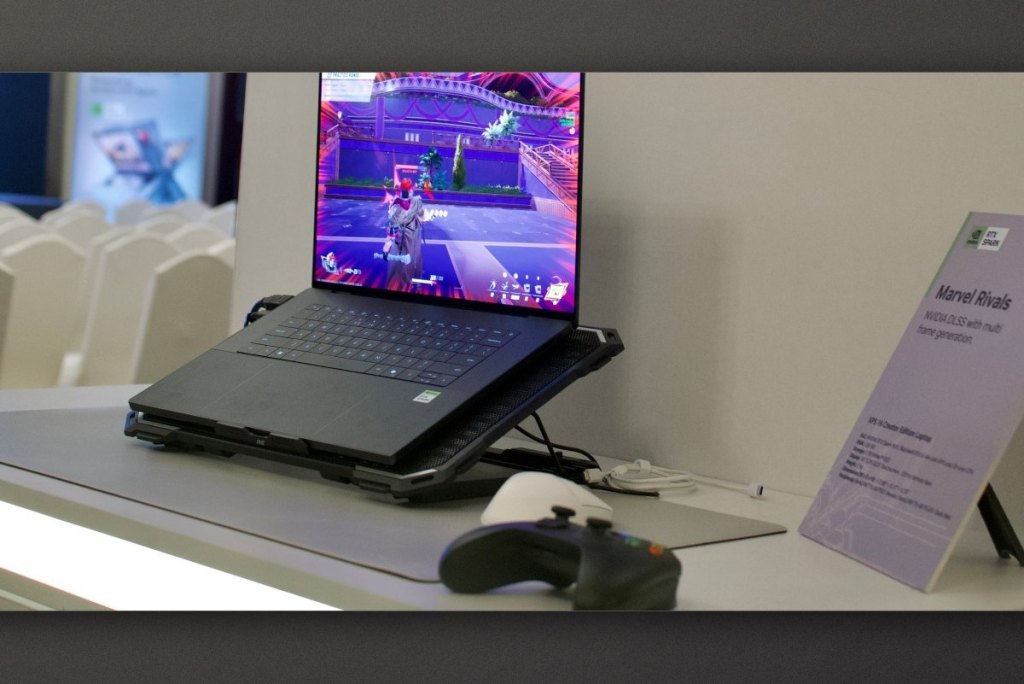
The 180 fps figure on RTX Spark sounds great, but it requires DLSS 6x Multi Frame Generation and the lowest graphics settings. Without those, the chip manages only 55-65 fps.
- The Dell XPS 16 Creator Edition with RTX Spark runs Marvel Rivals at over 180 fps, but only with DLSS Quality, 6x Multi Frame Generation, and graphics set to the lowest preset
- With RTX features turned off and the same settings, the laptop reaches just 55-65 fps, and the frame rate fluctuates constantly
- Marvel Rivals runs on Arm thanks to compatibility with the NetEase Game Security anti-cheat software, and NVIDIA has also announced support for Fortnite, Counter-Strike 2, and ARC Raiders
- The platform's real value is up to 128 GB of unified memory, especially for local AI agents and content creation
Table of Contents
The Marvel Rivals demo
NVIDIA built RTX Spark around three main goals: local AI development and deployment for agents, content creation, and gaming. For gaming, the company chose Marvel Rivals as its showcase, since the game is already compatible with the NetEase Game Security anti-cheat software, and ran it live on a Dell XPS 16 Creator Edition laptop. This configuration has 128 GB of unified memory, a 20-core NVIDIA Grace CPU developed by NVIDIA in partnership with MediaTek, and a Blackwell RTX GPU with 6,144 cores.

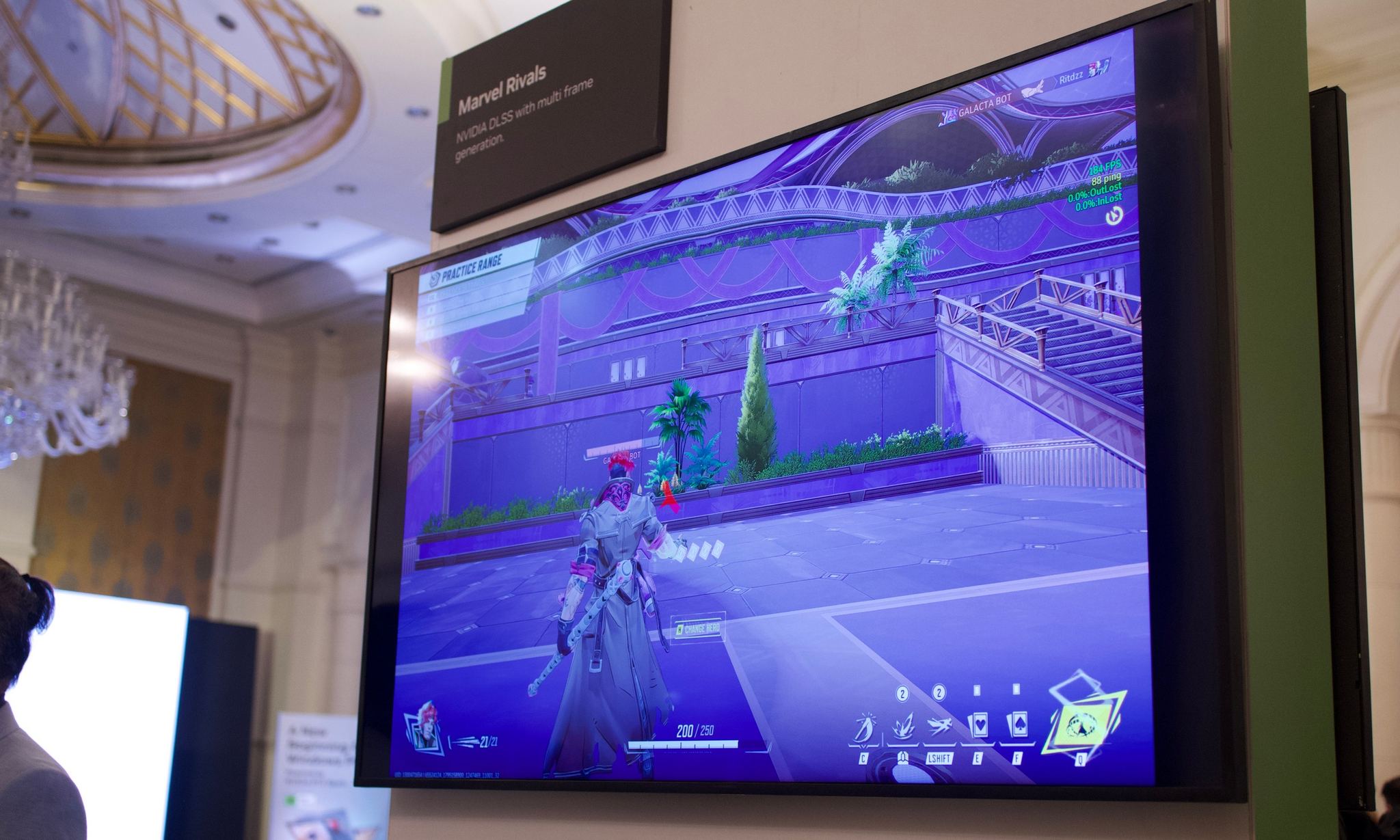
At first glance, the result is impressive: the laptop plays the game at more than 180 fps. But the in-game graphics menu tells a different story. Marvel Rivals was running with DLSS set to Quality and 6x Multi Frame Generation enabled, and every visual setting was turned down to its lowest. With the RTX features disabled and the same settings, the laptop managed only about 55-65 fps, which means most of the 180 fps figure comes from AI-generated frames.
For a live-service esports title, the best-looking graphics aren't necessarily essential. But with these laptops priced far from low, buyers can hardly be blamed for expecting more, especially when the frame rate kept fluctuating during the demo. If a display doesn't support variable refresh rate, uneven frame times will make the image stutter during play.
Multi Frame Generation also only makes a game look smoother. It doesn't make the game respond as quickly as it would if the machine rendered every frame itself. In competitive shooters like Marvel Rivals, input latency and consistent frame pacing can make a big difference.
Gaming on Arm
Even so, Marvel Rivals running well on RTX Spark is a notable step forward. This is a Windows platform on Arm chips, where compatibility with individual games and anti-cheat systems has always been a headache. NVIDIA is working with publishers and anti-cheat developers to resolve this, and it has announced support for Fortnite, Counter-Strike 2, ARC Raiders, and Marvel Rivals, with more games to follow.
Because Arm is still in its early days for gaming, it's too soon to judge based on one short demo. Moreover, after seeing what NVIDIA showed at the event, gaming is probably the least convincing reason to spend this kind of money on the machine.
Local AI agents
The platform's real strength is that the Blackwell architecture and the Grace CPU share a single pool of unified memory, up to 128 GB in supported configurations. Because the CPU and GPU access the same pool, users can run larger AI models without being limited by the relatively small VRAM of a typical discrete GPU. At the event, NVIDIA showed AI agents performing tasks that normally require someone sitting at the keyboard, such as an agent working with DaVinci Resolve to edit footage, while NVIDIA Broadcast illustrated AI-assisted media processing. The company's tools can also work together with applications like RTX Remix and Omniverse.
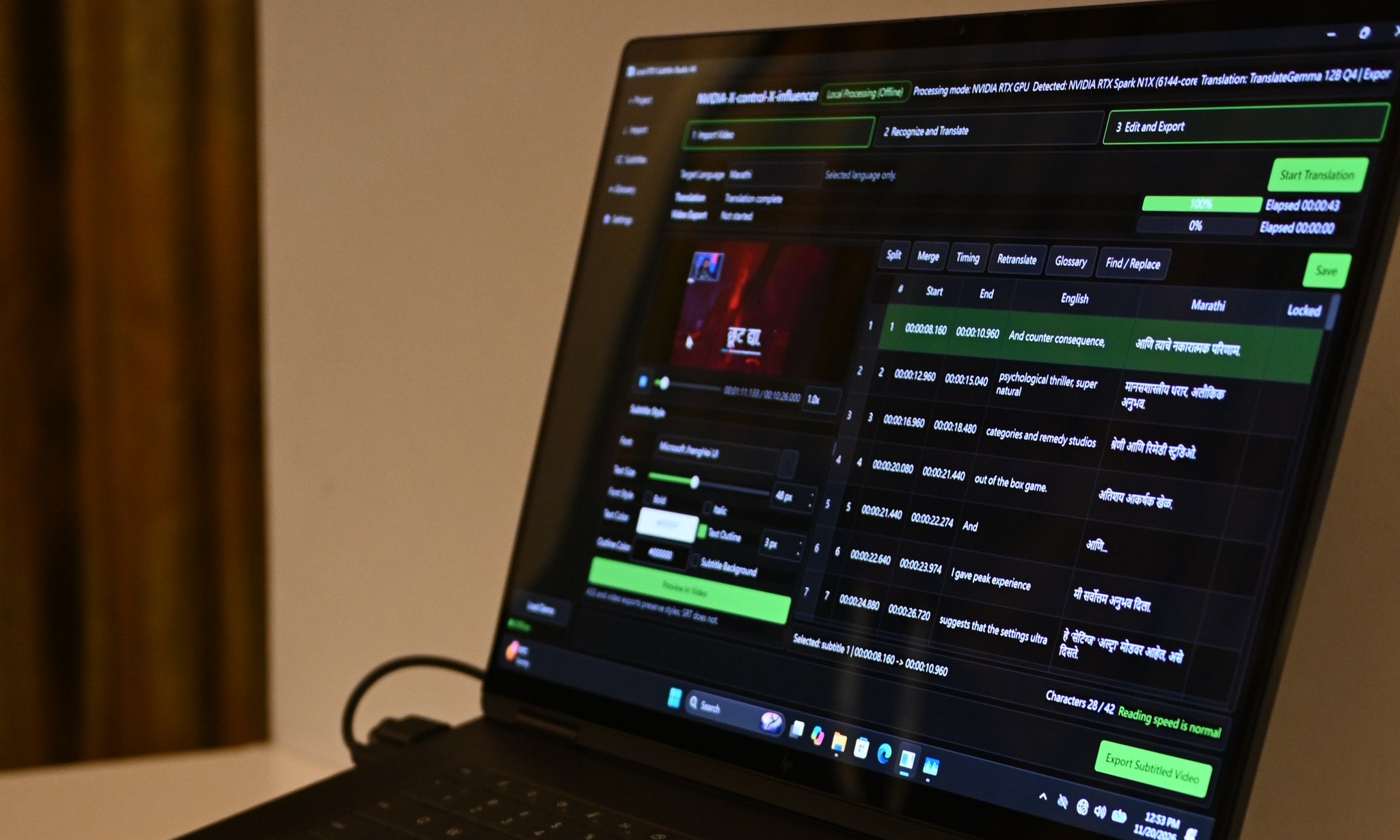
NVIDIA also wants to make setup less cumbersome. Developers can install and try agents such as Hermes, OpenClaw, or Perplexity through a guided installer, without necessarily having to work in a command-line interface. Running a powerful AI environment locally gives developers better control over their data and reduces dependence on cloud inference costs.
Content creation
The third pillar is content creation, and it's another place where a large pool of unified memory pays off. NVIDIA says RTX Spark can handle 8K 4:2:2 video editing and render 3D scenes of up to 90 GB. The amount of RAM alone isn't the point; what stands out is that this configuration fits into thin-and-light laptops.
Premiere has been improved for heavy post-production workloads, while Photoshop's AI-powered editing tools take advantage of RTX acceleration. Creators have plenty to try, from generative video to running AI agents alongside traditional editing tools. The potential is clear, but it will take more hands-on time with these applications to see how much they actually improve productivity.
Migovi believes the 180 fps figure should be read as an illustration of DLSS rather than a measure of RTX Spark's raw gaming power: with the RTX features off, the laptop drops to 55-65 fps and the frame pacing still fluctuates. A competitive game with strict anti-cheat running on Arm is still a good sign, but that alone isn't enough to justify the high price of this laptop line for someone who just wants to game. The more valuable part is the 128 GB of unified memory, which lets a thin laptop run large AI models and heavy content workloads. If you're in Vietnam and considering one, treat RTX Spark as a machine for local AI and creative work first, with gaming as a bonus, and wait for full reviews and official pricing before deciding.
Source: Digital Trends
Reviewed by: Hero Association