
OWC ThunderBlade X12 - 192 TB storage array with Thunderbolt 5
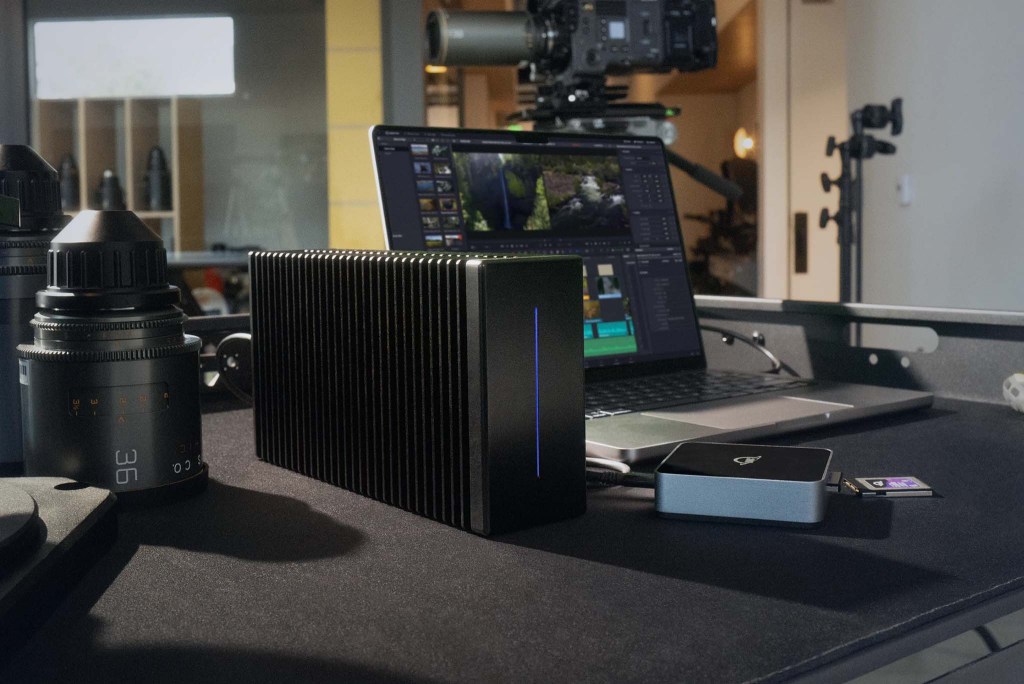
OWC’s new ThunderBlade X12 debuts with 12 NVMe M.2 SSD bays, up to 192 TB of total capacity, and a Thunderbolt 5 interface.
- Record-breaking capacity: The latest ThunderBlade X12 bumps total capacity to 192 TB via twelve NVMe M.2 SSDs, redefining what “portable storage” means for production crews hauling entire shoots on the road.
- Thunderbolt 5 performance: Tapping into the bandwidth of the new standard, the ThunderBlade X12 delivers a sustained write speed of 5,990 MBps, comfortably keeping up with 8K and 12K RAW video workflows.
- Purpose-built design: A fanless, passively cooled aluminum enclosure keeps operation dead silent, while daisy-chain support extends connectivity for DIT (Digital Imaging Technician) carts and on-set workstations.
Article content
High capacity, high speed

This is the largest capacity jump so far for OWC’s shuttle-style ThunderBlade X12 line. The unit targets increasingly heavy digital production workloads, supporting up to twelve 16 TB NVMe M.2 SSDs. That makes it the first portable Thunderbolt 5 RAID solution on the market to hit this level of storage density. The 192 TB ThunderBlade X12 is designed to tackle the problem of moving massive volumes of footage from set to post-production without juggling multiple separate drives.
Peak read/write speeds top out at 6,600 MBps. More critical for imaging technicians, though, is sustained write performance: the ThunderBlade X12 is rated at 5,990 MBps across the entire volume. That consistency is key for handling multi-camera RAW video streams at 4K, 8K, or 12K, as well as 360-degree VR content, without dropped frames.
Design and expandability
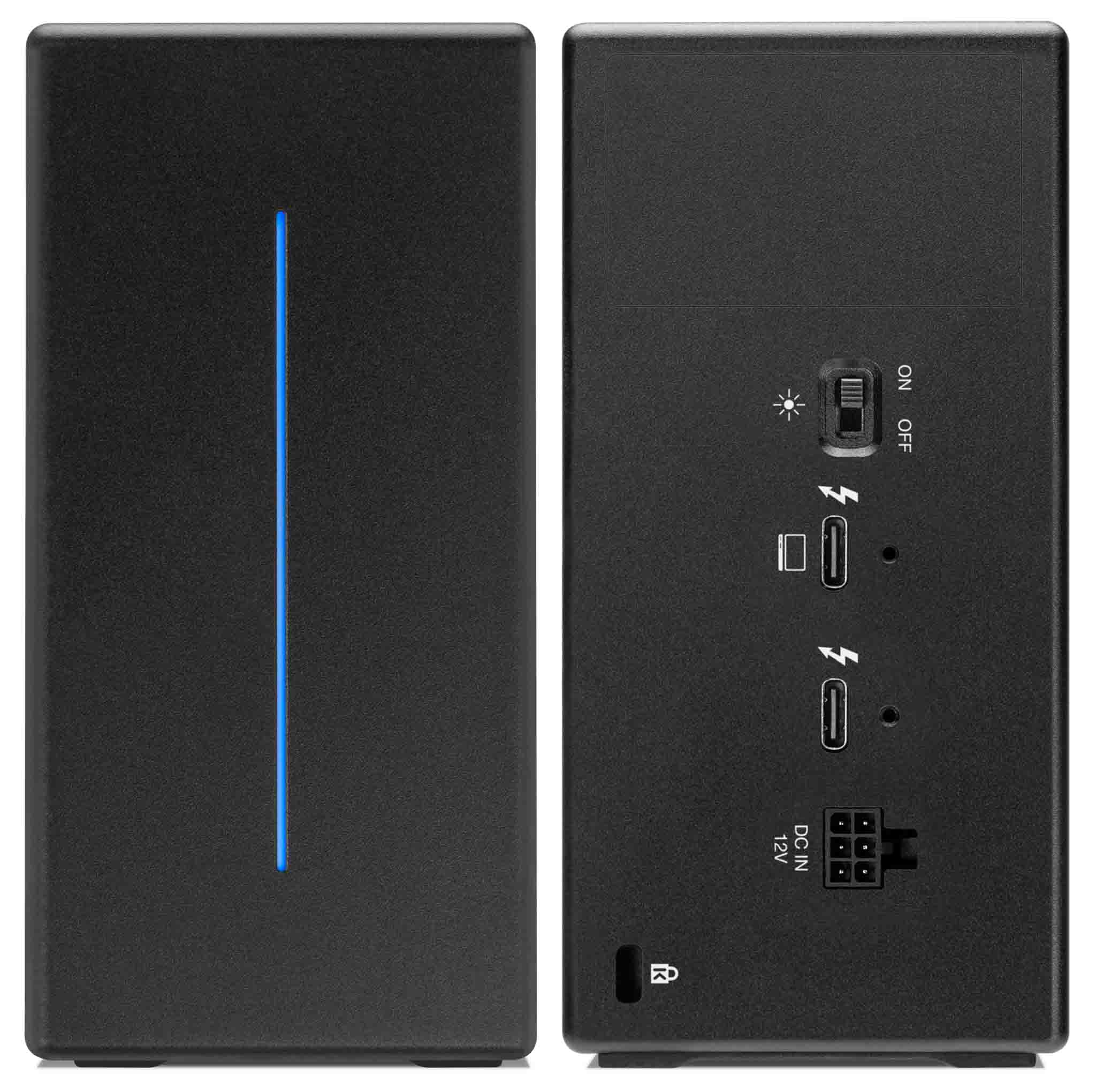
Unlike many high-capacity storage systems that rely on active cooling, OWC sticks with passive cooling for the ThunderBlade X12. The unibody aluminum chassis doubles as a large heatsink, allowing the device to run completely silent—essential when it’s parked on a quiet set during live audio recording. Daisy-chaining lets users connect up to five additional Thunderbolt devices in series, or repurpose the second Thunderbolt port for USB-C peripherals, a useful workaround for the limited I/O on many mobile workstations.
The array is managed via OWC’s SoftRAID Premium software, which offers SSD health monitoring and flexible RAID configuration depending on whether you prioritize data protection or raw speed. For physical safety, the ThunderBlade X12 includes non-slip rubber feet and a locking power connector to reduce the risk of accidental disconnects in demanding production environments. The 192 TB model is expected to ship broadly in 2026, targeting film studios and professional content houses.
The ThunderBlade X12’s 5,990 MBps (roughly 6 GBps) throughput is a clear showcase for Thunderbolt 5’s capabilities (80 Gbps theoretical bandwidth, with bursts up to 120 Gbps). However, you’ll only see those numbers if your host system supports Thunderbolt 5 natively. Plug it into a Thunderbolt 4 or Thunderbolt 3 port and you’re limited by the older spec—around 2,800–3,000 MBps in practice.
There’s also the thermal reality of cramming twelve 16 TB NVMe M.2 SSDs into a fanless aluminum block. Even with good passive dissipation, the enclosure surface is likely to get very hot under continuous full-load transfers. Users should place the ThunderBlade X12 in a well-ventilated spot and avoid stacking it on top of other heat-generating gear to help preserve the lifespan of the NAND flash inside.