
Intel: What does the future hold for a tech giant?
It seems like there's no such thing as "too big to fail" in the tech world.
“I think the world has changed. We (Intel) are no longer in the top 10 semiconductor companies .” If it were 10 years ago or more, anyone who said this could be considered an Intel anti-fan. Although 2015 was not the year the company made the most money, it was a time when almost no one “dared” to challenge the giant’s dominance of the microprocessor market.
And more importantly, Intel's total annual revenue from 2011-2016 is actually no more than the recent 2023-2024 (average 55 billion USD). But at that time, no one saw this company losing money! Back to the present, although Intel earns over 12 billion USD in almost every quarter , losses pile up on losses. Most notably, in Q3 2024, this corporation lost nearly 17 billion USD , an unprecedented record! During the same period 10 years ago, Intel shareholders were happily raking in 3.1 billion, right?!
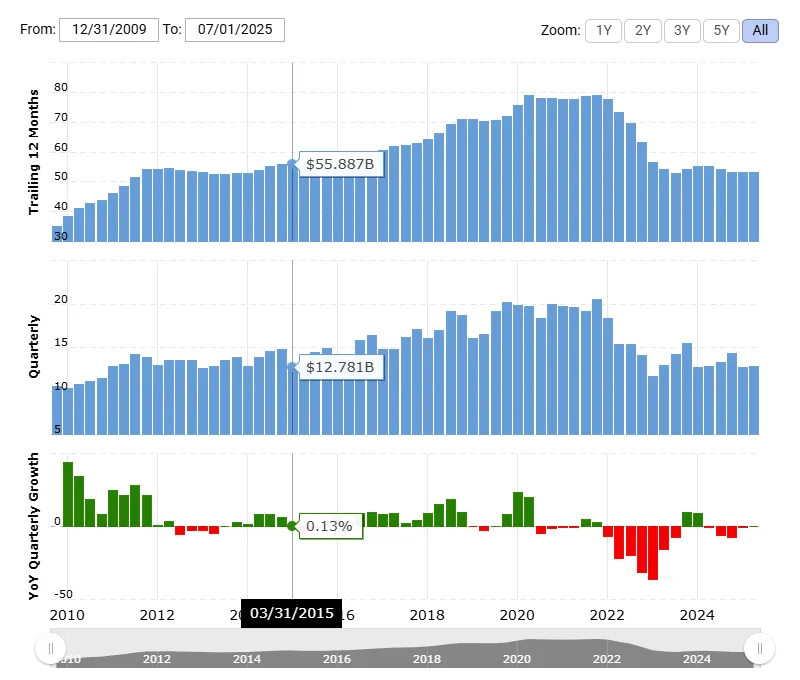
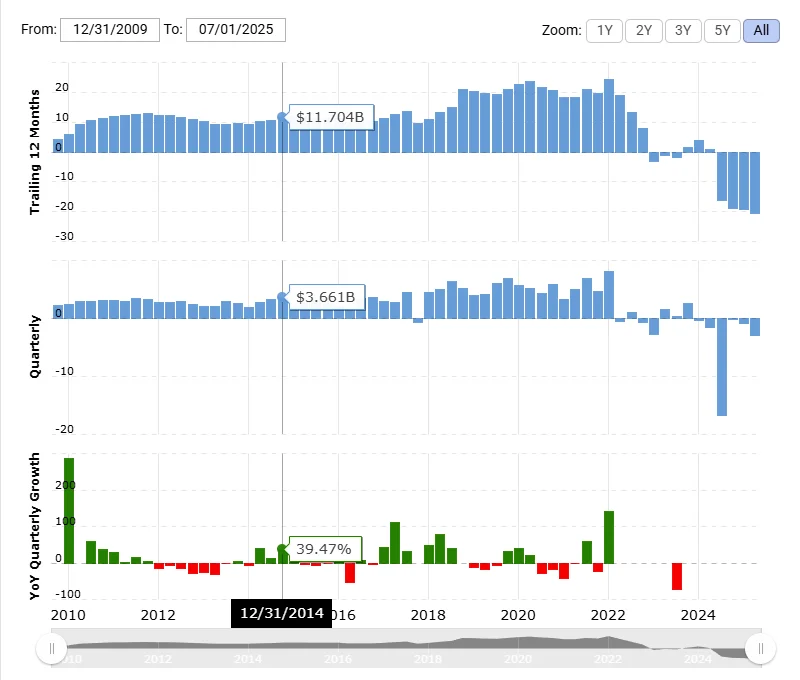
Intel's Q1 2015 revenue was less than $12.8 billion but still made a profit of nearly $3.7 billion
Article content
Financial numbers speak for themselves
Objectively speaking, it is not that this company has never made a loss in the past. However, these losses mainly come from acquisitions, acquisitions of other companies, or investments in new factories. And they only lost one quarter and then immediately returned to making profits for many consecutive quarters. But since 2022, the wind has changed direction. From several quarters of loss then profit, from 2024 until now, Intel has not made a profit in any quarter, only small or large losses...

Intel Revenue Overview Q2 2024 to Present
What happened?
Looking back at Intel’s history over the years, we can see that they are like a giant tree. That tree was once small, once tried to grow big, spread its branches and roots to overcome many storms, becoming one of the largest trees in the forest. However, it was gradually eaten away by worms from the inside… Now, its branches and roots have rotted and if appropriate measures are not taken in time, it may not survive…
And speaking of “branches”, the financial report is where it shows the most clearly. In previous quarters, you can see that Intel has quite a few “branches” (or business segments). In addition to the familiar PC (CCG) and datacenter servers (DCG), we also have Mobileye, IoT, NEX, AXG (graphics cards)… And don’t forget the “money-burning machine” Intel Foundry.
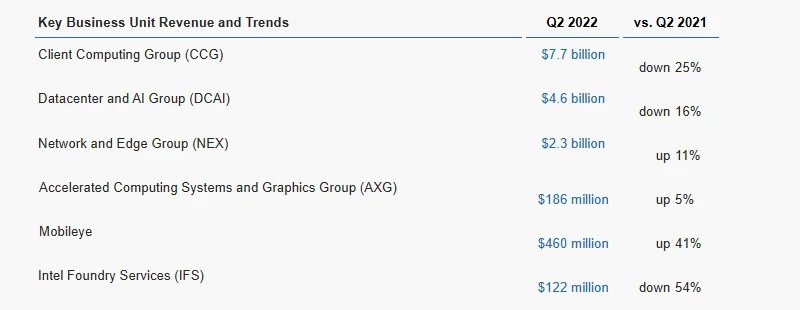

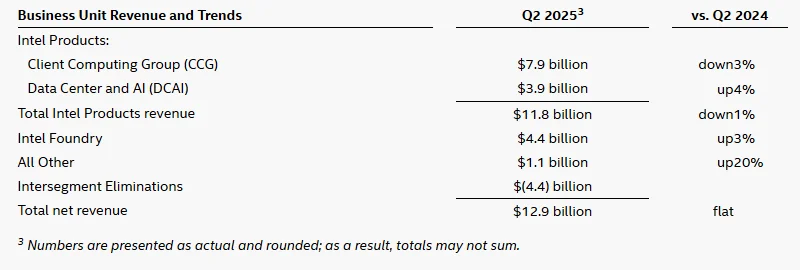
Intel's Q2 2025 business portfolio is very "simple"
But in the latest Q2 report, everything has been “pruned” to only PC, datacenter and… Foundry. The non-core “branches” are collectively called Other. This move shows that this giant tree is entering a period of extremely strong restructuring, similar to IBM years ago. One of the most obvious “pruning” moves is the divestment of 51% of Altera shares that took place in April. Ironically, 10 years ago, Intel spent a lot of money to buy Altera for an amount equivalent to the record loss in Q3 last year.
Why?
Why is it that a company with an annual revenue of about 55 billion USD still makes a profit of 2-3 billion USD every quarter, but now earns the same amount but is continuously losing money and its market value is decreasing day by day? The only explanation is that about 10 years ago, Intel's operating costs were not as high and spread out as they are now. The fact that it earns 12-13 billion USD every quarter but still loses money proves that the operating costs are too high, higher than the revenue. It's like a family with only 2 husband and wife working together, still having surplus, but when having the first child, then the next, then the next, the living expenses become more and more burdensome...
In fact, I analyzed in the previous article , since Brian Krzanich took over as CEO, Intel has gradually drifted away from its original orbit (x86 and semiconductors). This American engineer has started a series of acquisitions of smaller technology companies to "enrich" the intellectual property of the corporation. To be fair, there is nothing wrong with this approach, especially in a country where anything can be sued like the US. The problem is that while "learning" new things, Intel "neglects" the old. The progress of this company's semiconductor development has begun to regress.
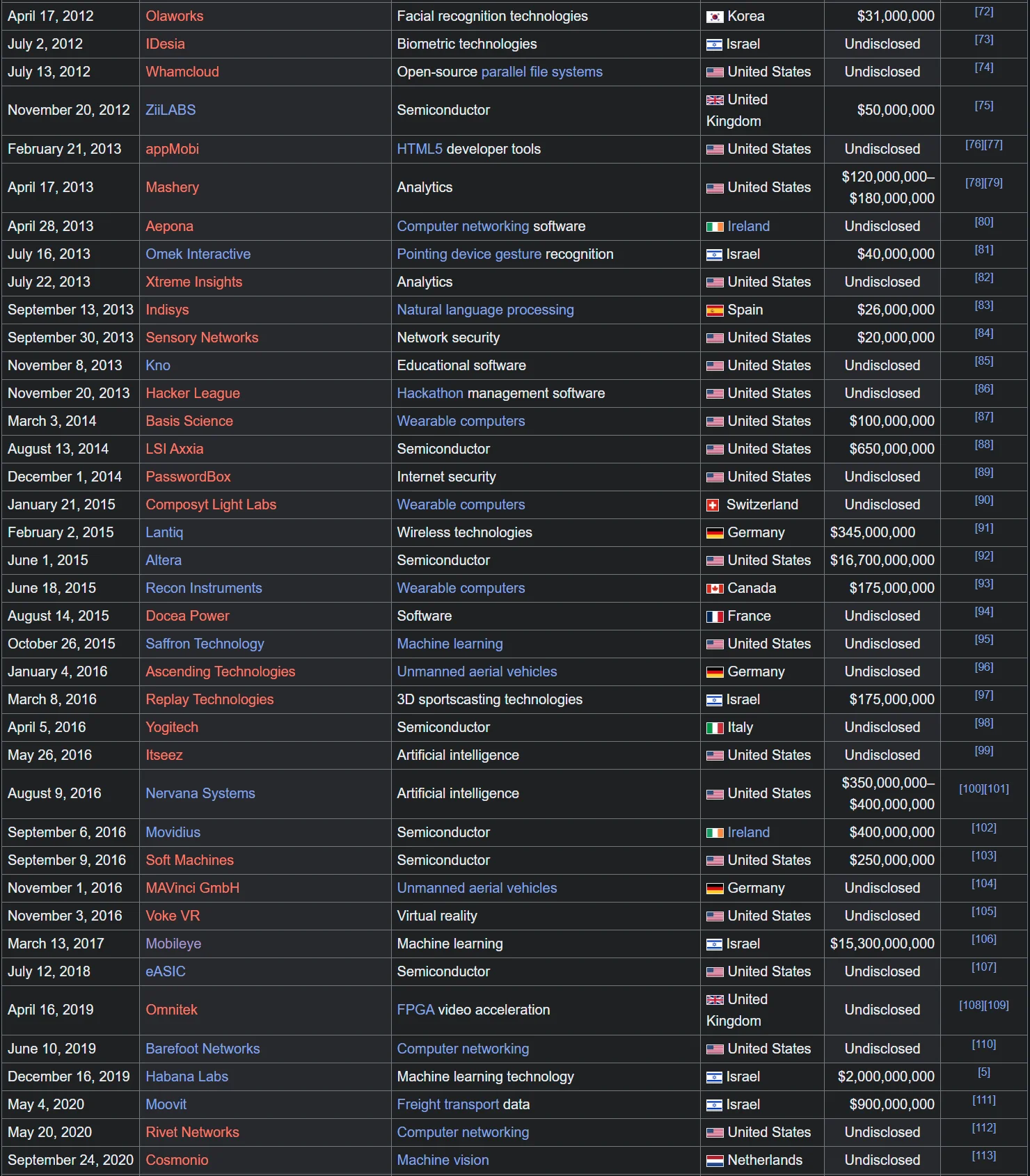
List of Intel acquisitions from 2012-2020, with Brian Krzanich as CEO from 2013-2018
While you may be thinking of the 10nm process (later renamed Intel 7), the slowdown actually started at 14nm (the legendary 14+++nm). It started with the Broadwell line of chips, a “tick” (die shrink) from the Haswell (22nm) “tock”.
Intel’s initial “tick-tock” would be a new process (tick) every year and a new architecture (tock) every year, meaning a process would be used for 2 years with 2 product generations. At first, everything was fine and Intel just kept moving forward like that. AMD at that time was not strong enough to keep up with the tick-tock and gradually lost strength. By 2009, AMD “surrendered” and was forced to separate its manufacturing division into GlobalFoundries. Intel gradually became a one-man show and “unrivaled”. However, the first cracks began to appear…
Initially, Broadwell (14 nm) was announced by Brian to be available somewhere in late 2013. But in fact, it was delayed until late 2014. Around this time, Intel released Haswell Refresh (also 22 nm) as a temporary patch for the delay of Broadwell. What's more, this delay made the life cycle of Broadwell extremely short, to the point that almost no one remembered its existence (5th generation Core i). And the next "tock" version of Skylake (14 nm) was supposed to be released in 2016...

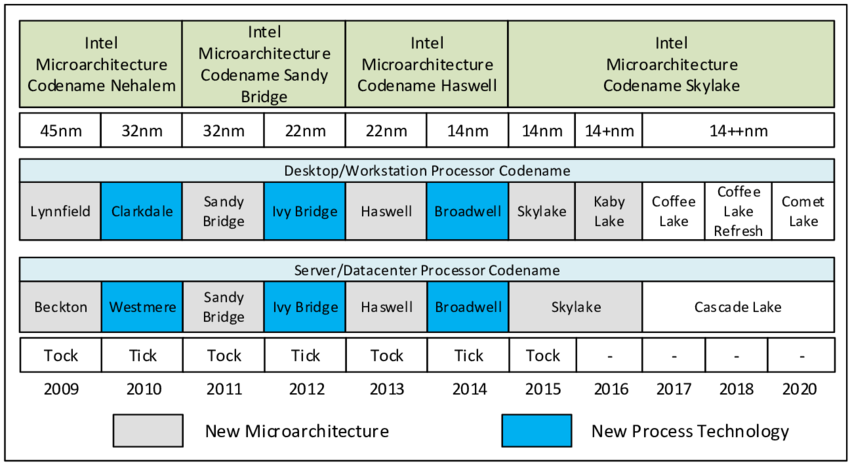
If on schedule, Intel's 10nm node should be available in 2016, not 2018 with limited production.
However, Intel’s leadership (still led by Brian) made a bold decision to end the Broadwell life cycle early and focus all their efforts on Skylake (6th generation Core i). They decided to change the entire 14nm production plan from Broadwell to Skylake in late 2014 to launch the new product line in mid-2015 to “keep up with the schedule”. 14nm became one of Intel’s most successful processes later on, despite a somewhat “stiff” start.
To be fair, developing a new semiconductor process is not easy. Not only Intel, but Samsung, TSMC, UMC, GlobalFoundries have also encountered many problems. Some companies even "surrendered" and accepted to "stop playing" because everything was too expensive. And if CEO Brian had not been involved in a sex scandal, he would probably have continued to steer Intel in a better direction.

Although Samsung announced reaching the 10nm node first, the transistor parameters are larger than Intel and TSMC.
In fact, not only Intel but TSMC also encountered many difficulties at the 10nm process. Only Apple is the only customer that hires TSMC to manufacture 10nm chips. Only Samsung can be considered the "most" successful in this generation. But it must be said that although they have the same name 10nm, Samsung's transistor parameters are larger than TSMC's and Intel's (Intel's is the smallest). In fact, Samsung's 10nm indexes are closer to the ITRS 16/14nm standard.
When leadership is incompetent
If Intel (led by Brian) had not been so strict about the 10nm transistor size (the smallest of the three); or if Brian had not resigned due to a sex scandal; or both; the company’s situation might have been different. But what happened has happened. Brian’s billion-dollar purchases have caused the corporation’s structure to swell rapidly, with a sudden increase in personnel and many areas not related to the company’s “core”. However, if Brian were still in charge, he might have adjusted things to be more reasonable.

Mobileye acquisition is one of Intel's most expensive deals
In fact, an acquisition that is no less large than Altera is Mobileye, worth $15.3 billion in 2017. Mobileye is an AI company, especially in the field of self-driving cars with advanced driver assistance technologies (ADAS). If “planned correctly”, Mobileye’s potential can completely help Intel gain a firm foothold in the car and AI front, instead of letting NVIDIA dominate like it is now.
But by 2018, Brian was forced to leave and was replaced by Bob Swan, the CFO. The rapid and sudden change in the top leadership position made Intel almost "headless". Each department was free to "dance", the most notable of which was the Architecture, Graphics and Software department, which Raja Koduri, a former AMD employee, "defected" to. The projects that Raja drew up were all called "billions" and this was also the time when Intel, from making its own chips, had to "knock on the door" of TSMC for outsourcing. Of course, we can "defend" Raja by saying that Intel was stagnating in semiconductors (10 nm in 2018 was behind TSMC N7 and Samsung 7 nm) so without outsourcing, it would not be possible to have the best products, but it is clear that this company is continuously burning money more and more.
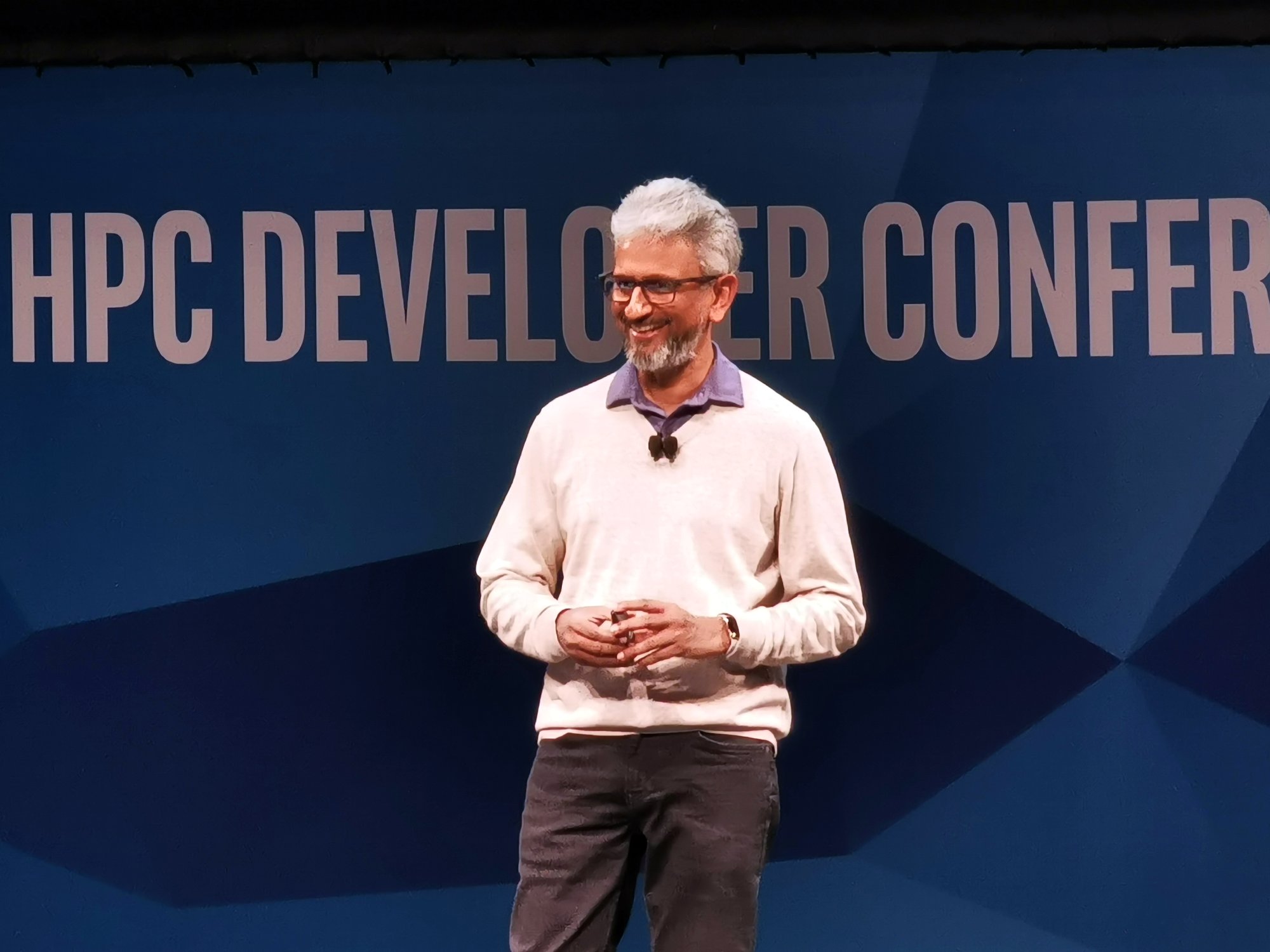
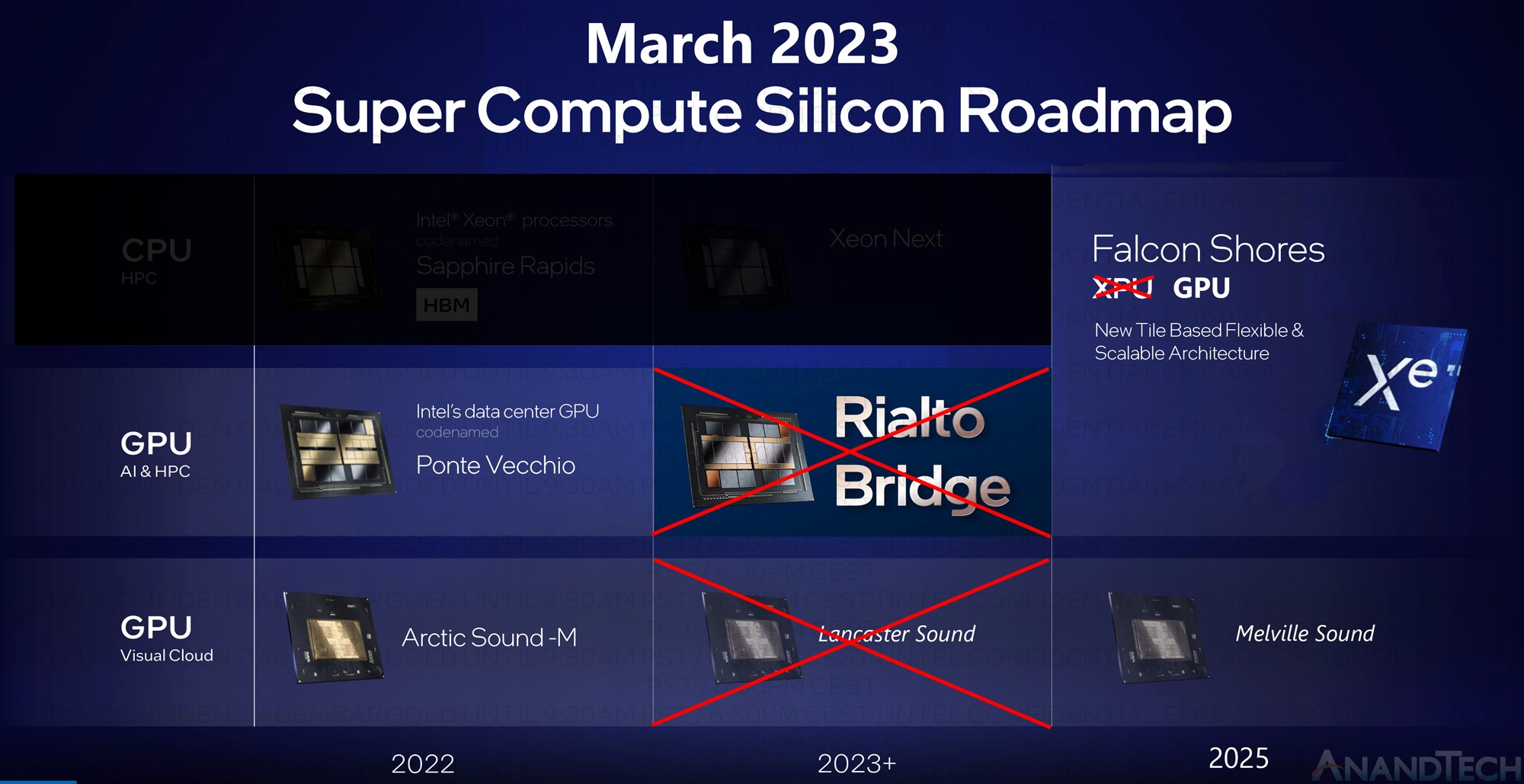
Raja Koduri's series of "billion-dollar" projects were successively eliminated by Pat Gelsinger.
But as I mentioned above, Intel became “negligent” in the old things, most notably semiconductors. This negligence started from Brian’s time and it goes without saying that Bob, a financial and numbers expert, knows nothing to “show off his skills” and push the production engineers to work harder. Bob could only urge increased production at the process Intel was doing best at at that time, which was… 14/14+/14++ nm. Anyway, in business, after the initial break-even point is when you can take profits, Bob simply did what he was good at. But that expertise did not help Intel catch up with its competitors.
Too much effort becomes too much effort
Bob’s replacement is a character that many of you already know – Pat Gelsinger, a veteran with a passion for the corporation. Pat clearly saw what Intel had “gone astray” – semiconductor capacity. So he set out the “4 years 5 nodes” (5Y4N) strategy so that the company could quickly return to its old position, without having to “shamelessly” outsource to TSMC (of course, during the period when it couldn’t do it, it still had to outsource). Pat also stopped the continuous acquisitions that Brian had been conducting. Because “eating a lot” also takes time to “digest”, not every company that is bought will make money right away, especially for startups. In addition, Pat still needs to “burn money”…

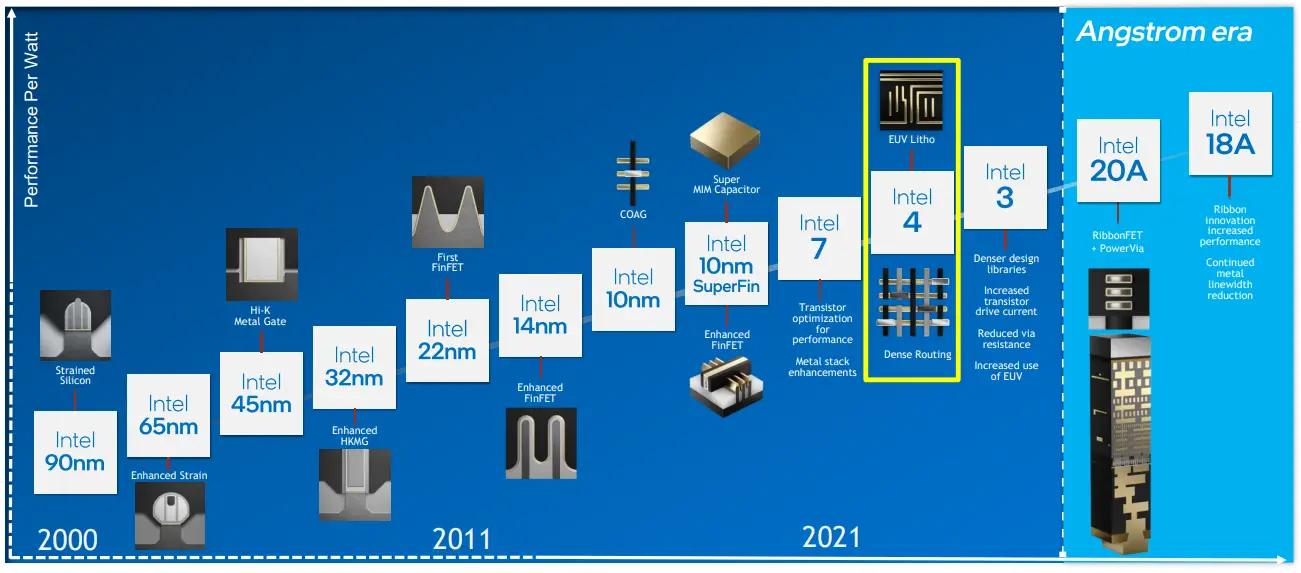
Pat Gelsinger aims to "rush game" to make up for the years of waiting for the tortoise
The reality is that investing in semiconductors is extremely expensive, the number of countries that can make advanced chips (14nm or less) is less than a handful. Many semiconductor companies even “surrender” and do not spend any more on research. AMD had to “sell itself” in 2009 despite the famous statement by its former founder, Jerry Sanders, “Real men have fabs” which shows the harshness of the industry – the higher the process, the more expensive the cost. And the reason why many manufacturers even “stop playing” is basically because when weighing the cost vs. long-term benefits, they feel that it will take a long time to recover the investment (maybe up to a decade). And when it comes to technology, that is a very long time, which means a lot of risks (the market can be lost, there can be competitors, political risks, natural disasters, wars, etc.).
These factors show you that Pat’s 5Y4N strategy, although correct in concept, is extremely wasteful in terms of money. With the above “rush game” style, the actual time to make a profit for nodes that are researched and put into production like Intel 4, Intel 3 is almost non-existent. Simply put, it’s like you go to university to study a certain major and then when you graduate, you realize that the recruitment demand is saturated and you need to learn something else to make a living. And this is the situation of Intel from the time Pat took office until now.
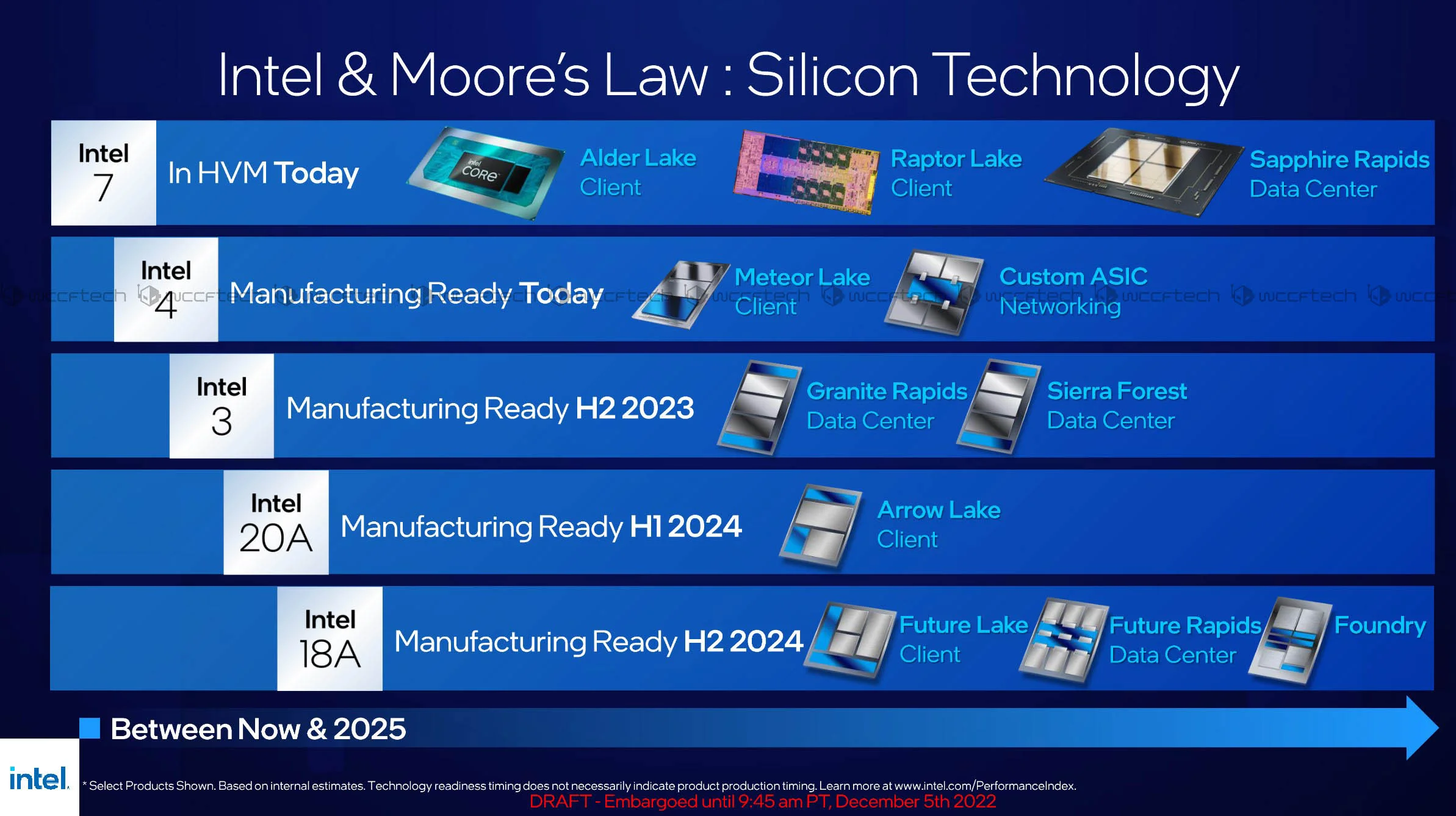
The sour point for Intel is that Intel 3, 4 nodes hardly last long enough to be profitable.
But saying that doesn't mean I'm blaming Pat. Because clearly the pillar that helped Intel beat its competitors in the past was its semiconductor manufacturing capacity. Without it, the company could not have captured a large part of the market, even "pushing" giants like IBM and Sun Microsystems into a corner. The problem is that Brian and Bob were too "negligent", slept on their laurels for too long and did not properly assess the ambitions of TSMC and Samsung. The massive spending on semiconductors under Pat should have been implemented by Brian/Bob, then the company would have had time to break even on new nodes instead of losing after losing like today.
Restructuring – A Late Step
To be fair, Pat only spent heavily on semiconductors, not on the shopping spree of his predecessor. Acquisitions still occurred under his reign, but much less so. Pat also saw Intel's "bloating" and agreed that the company needed to restructure strongly. Any "extra branches" had to be "pruned", most clearly seen in the endless money-burning projects like XPU and Raja's oneAPI. In 2024, Pat did what he considered "the most difficult job of his career" : laying off 15,000 Intel employees, in order to cut operating costs as much as possible.
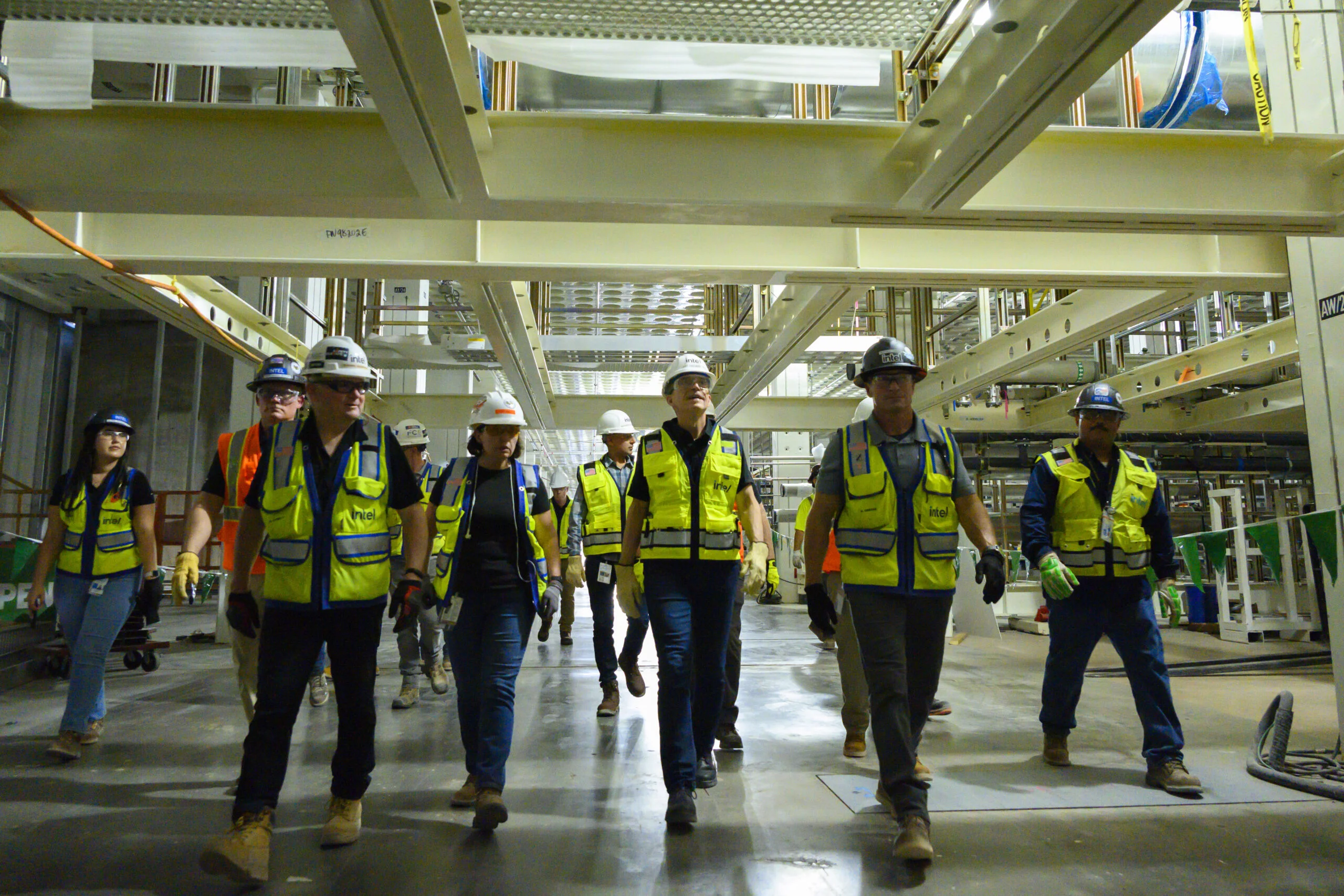
Who stays and who goes is a big issue when restructuring a business.
But even that wasn’t enough to stop the company from losing money. Intel continued to spend more than it earned. And shareholders were not happy, especially since they had been used to “eating well” for a decade.
At the end of Q1 this year, Intel has a new captain – Lip-Bu Tan. The Chinese businessman with the goal of achieving 50% profit margin for all products seems to have satisfied the shareholders. Simply put, it is like your child studies in any major, the important thing is to earn money after graduation, not to have a degree hanging all over the house but still beg for gas money! Sounds reasonable, right?
But that’s easier said than done and after all, Lip-Bu has only been in power for a quarter, so we don’t have anything clear to “judge.” For now, we can only rely on his recent letter “Steps in the Right Direction ” to all Intel employees. Of course, any leader thinks his way is right, right?
If the decision to cut 15,000 people was the “most difficult” of Pat’s life, then Lip-Bu’s next target of 24,000 was even more shocking. In Lip-Bu’s vision, Intel is overstaffed and in fact this is the result of dozens of mergers and acquisitions that have occurred since Brian/Bob’s time. At its peak in 2022, Intel had nearly 132,000 employees and after the “most difficult” decision, this “fat” corporation still has nearly 109,000 people. This huge number of employees also leads to extremely high operating costs and Lip-Bu sets a goal that by the end of 2025, Intel will be forced to “lose weight” to 75,000 people – a reduction of nearly half compared to 3 years ago!

Firing half of a corporation is hard enough even to say. It’s like cutting a tree in half and expecting the rest to be “fine.” So how does Lip-Bu plan to “prune”?
The root of the hole
Many years ago, I wondered why AMD and many other companies were out of breath in the semiconductor technology race, but Intel could still follow Moore's Law as a matter of course? What secret did Intel have that other companies didn't? The answer was to build a very large manufacturing fab network. In fact, when Intel (or TSMC or Samsung) deployed a new semiconductor node, they did not apply it to all fabs but only to a few fabs, the remaining fabs still manufactured on the old node.
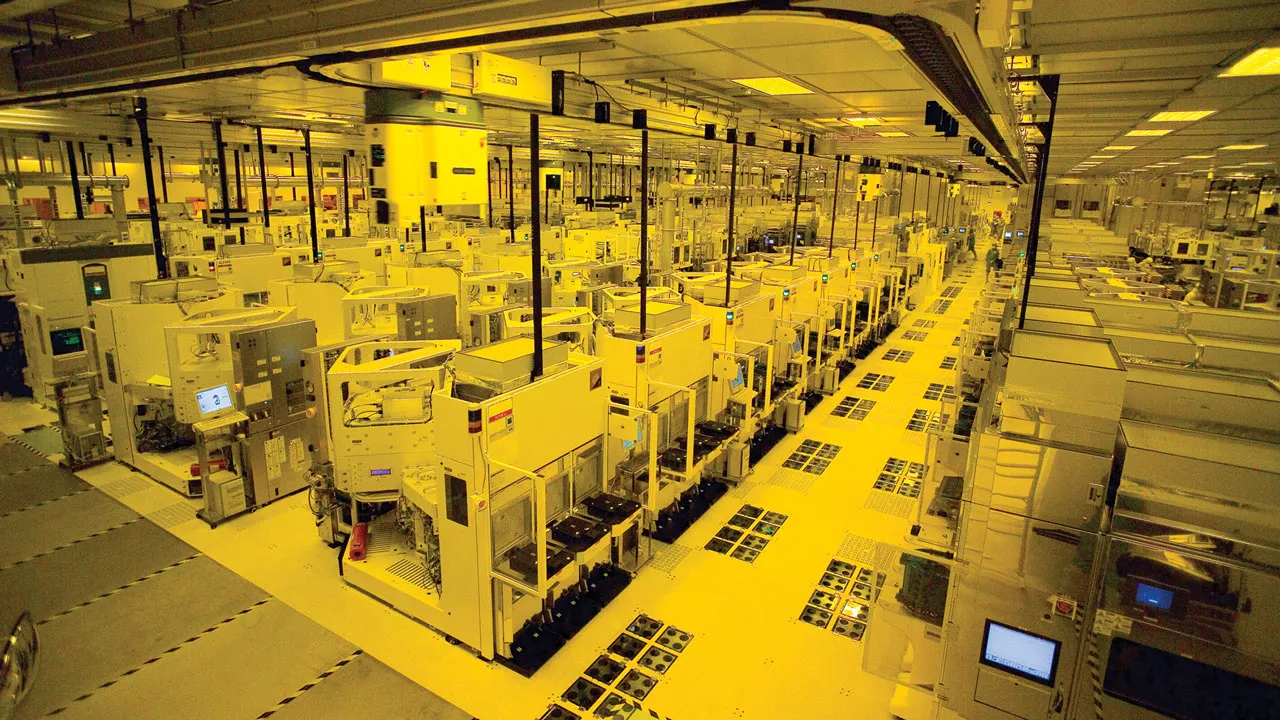
Not just litho printers, every chip manufacturing equipment is expensive
The basic reason is that not all customers can afford to buy the latest generation chips right away, the old product lines still have a market and therefore, they still need to be made to “cover” the distribution channels. The next reason is also very obvious – the equipment used for the new node also needs to be ordered from Nikon, Canon, ASML, TEL, AppliedMicro… If they do not provide enough materials, the remaining fabs cannot “upgrade”. The last reason is the nature of business law – everyone wants to quickly recover the initial costs to make a profit. If you “upgrade” too quickly, there will not be much time to make a profit.
This is the reason why AMD finally gave up in the semiconductor race – before separating from GlobalFoundries, AMD only had one manufacturing fab in Dresden (Germany). In addition to the objective factor of new node research that can encounter unexpected problems, AMD is in a “stuck” position every time it wants to “upgrade” a new technology. If it “upgrades quickly”, old products will have to stop production and the capital turnover time is not enough. If it “upgrades slowly”, new products will not have enough output to fill the distribution channels. In general, the longer it lasts, the weaker AMD becomes and the outcome is as we know.
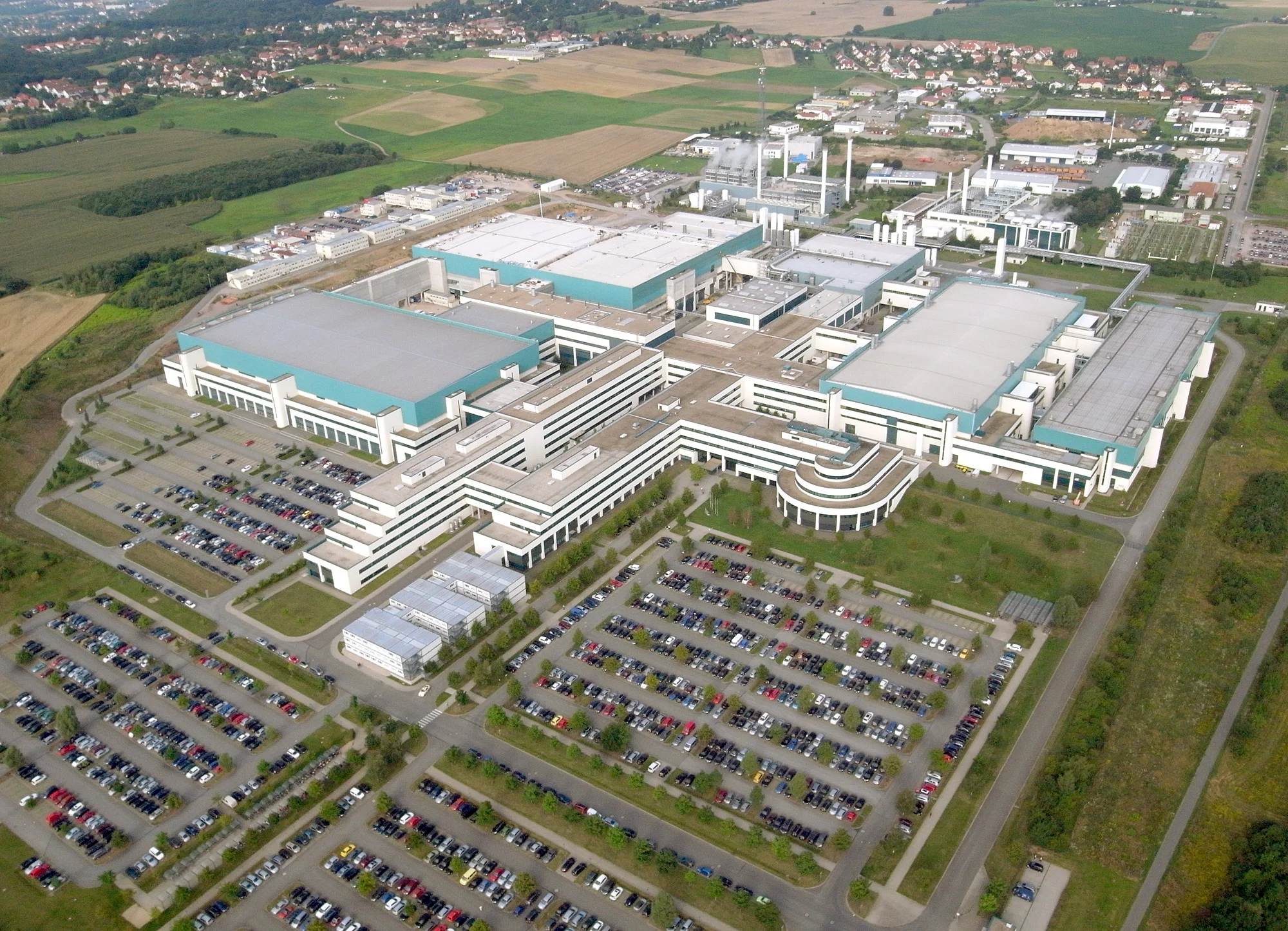
AMD's sole chip fab complex before handing over to GlobalFoundries
But that doesn’t mean Intel is completely immune to fab rollovers. There’s a very specific economic problem: when you put too much resources into one product line/fab equipment, in the long run it becomes a form of “inertia” that makes it difficult to change to another. Intel encountered this problem when it moved to 14 nm.
The root of the hole in the hole (continued)
As mentioned above, the transition to 14 nm was problematic, causing Broadwell to be "short-lived". Intel's leadership rushed to "upgrade" 14 nm for many fabs at the same time to quickly make up for the production shortage (which should have been there before). As a result, the number of 14 nm lines was higher than originally planned. An unexpected objective factor was the Covid pandemic leading to a global lockdown, the need to work via the Internet increased sharply. Combined with the company's 10 nm node being delayed, some products had to "stay" on the old node.
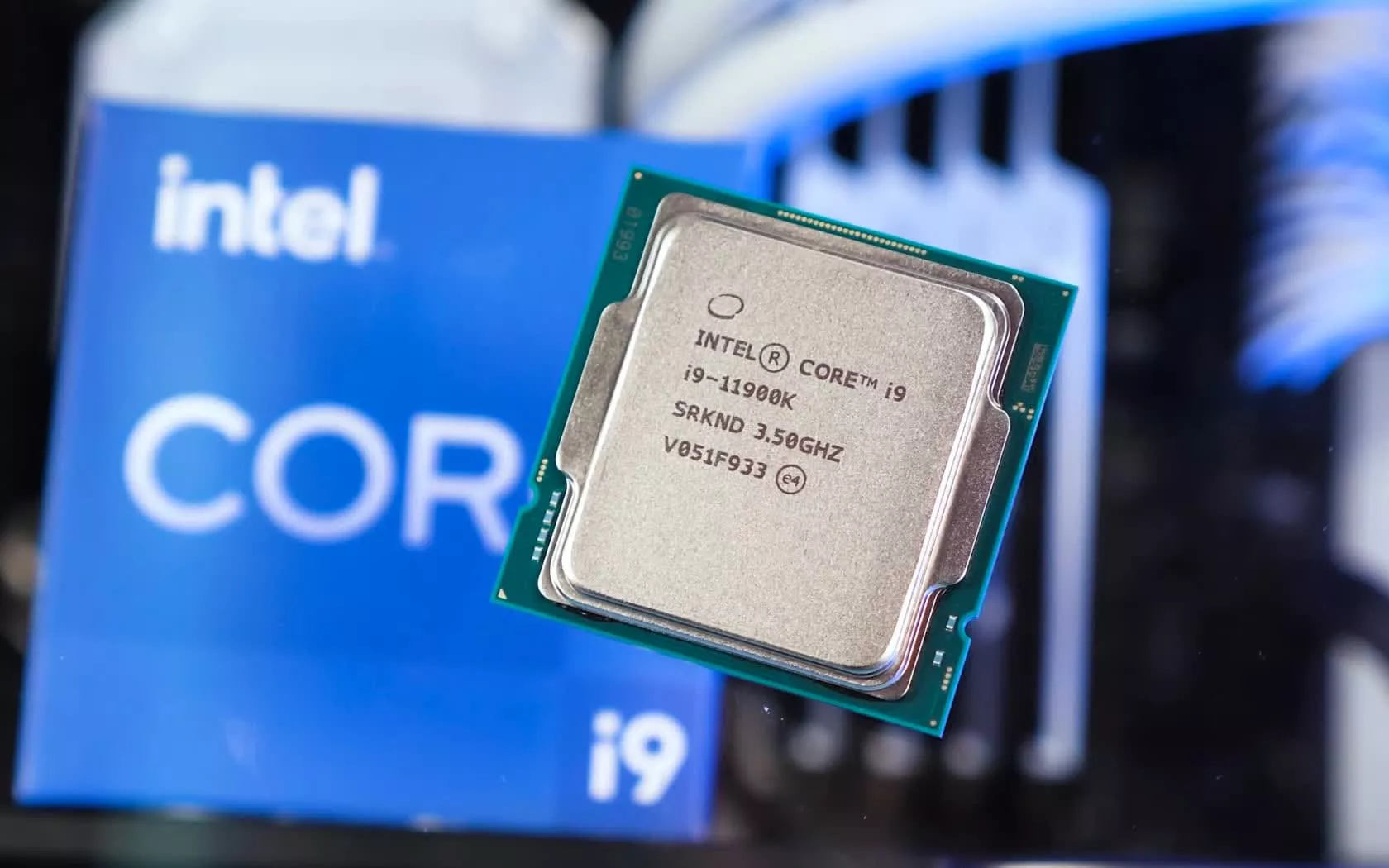
From Broadwell (5th generation) to Rocket Lake (11th generation), 14 nm is Intel's "longest" process in the past 2 decades
Another “laughable” story is that the Meltdown and Spectre security incidents , when patched by Intel, caused chip performance to decline. This decline occurred in the context of a sharp increase in datacenter demand due to Covid, leading to the “awkward” solution that companies needed to buy more Intel chips to compensate for the lost performance! Therefore, the demand for 14nm chip production continues to exist even though they have been paying for themselves for quite a while.
However, the success of 14 nm led to the same "slow rise" trap as AMD. Pat saw this and proposed the 5Y4N strategy to quickly regain the lost position. However, Pat fell into the "fast rise" trap mentioned above - Intel 7 (10 nm), Intel 4, Intel 3 were all "rushed" in progress so the payback period was almost non-existent. Besides, semiconductor development has a very important factor: time to "master the technology". Not every node put into production has achieved optimal performance (yield) . You need to do it over and over again to understand each stage, which stage often has errors and which stage "can be rushed". Only then can you improve performance. High performance means lower production costs because with the same amount of input materials, you can achieve higher output than with low performance. Lower costs will help shorten the payback period.

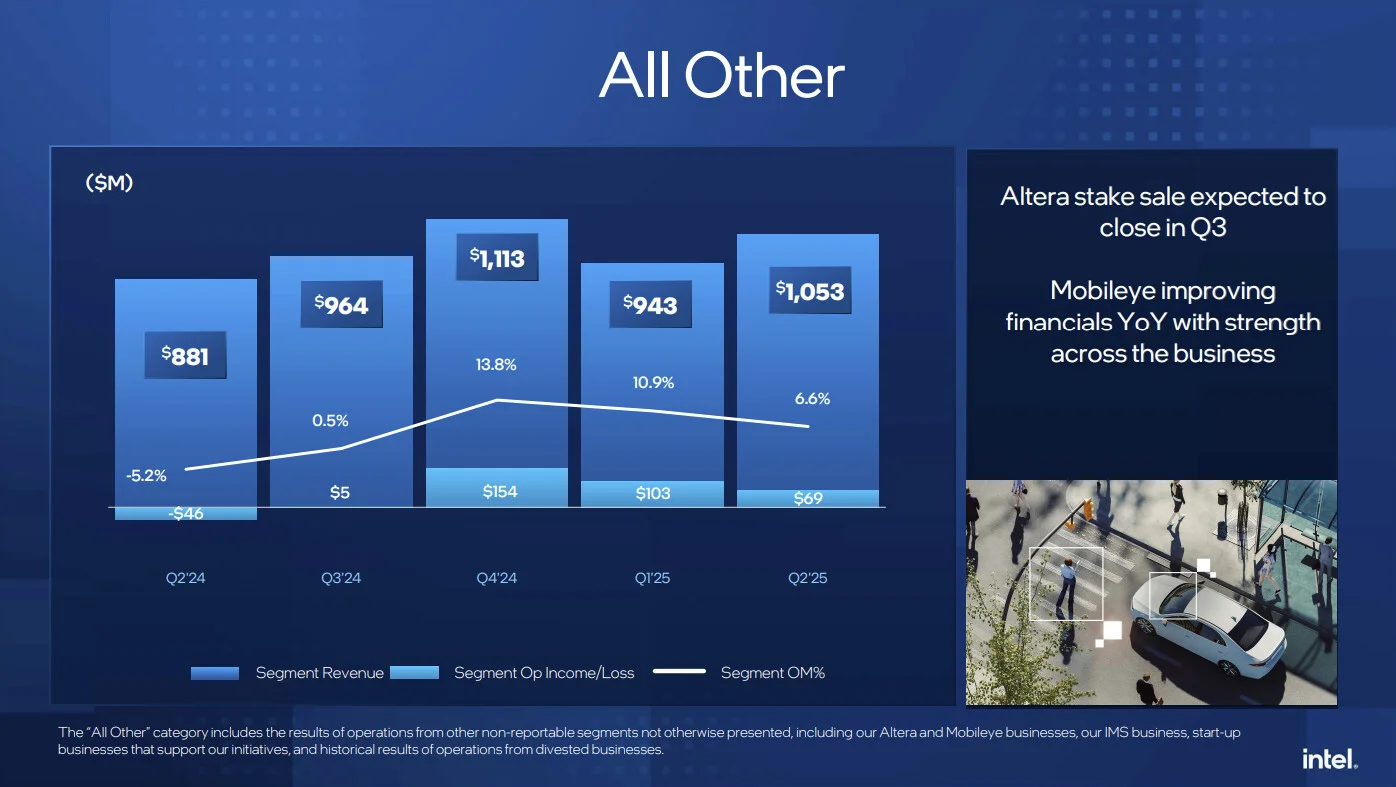
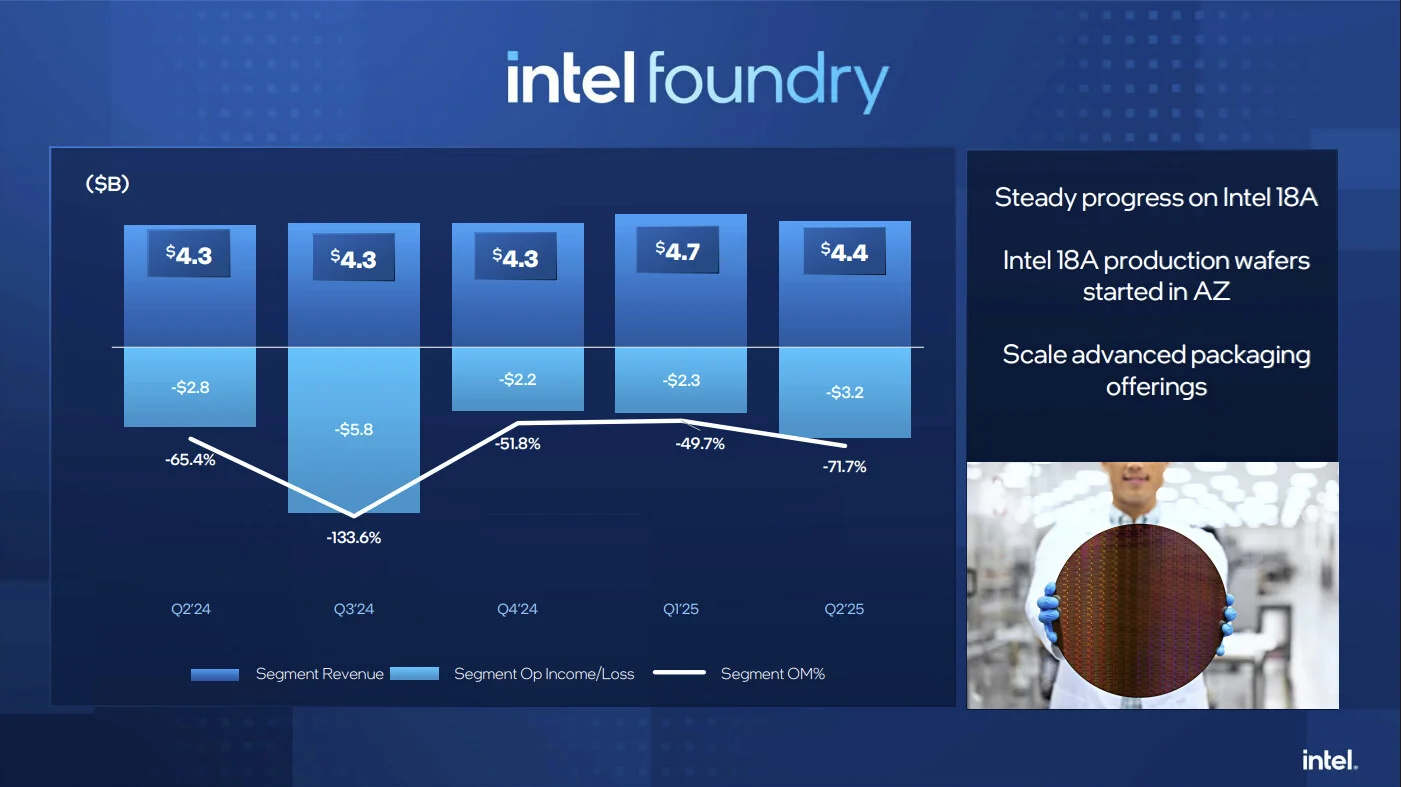
Intel's overall revenue remains stable, but Foundry's loss evens things out
But 5Y4N could not do that and Pat fell into the “fast-growth” trap. Intel Foundry became a cash-burning machine rather than a money-maker and was the main reason for the recent series of consecutive quarterly losses. Lip-Bu wanted to fix this situation: “We are going to take a fundamentally different approach to building the foundry business. In the past few years, the company has invested too fast, too urgently – without corresponding demand. In the process, our factory floor has become fragmented and unnecessarily under-capacity. ”
Do processing but do not understand processing
Remember when Pat was in charge, he set a goal for Intel Foundry to become the world's second largest semiconductor foundry after TSMC, meaning more than Samsung Foundry, UMC, SMIC, GlobalFoundries... Theoretically speaking, Intel could achieve this, because they have the experience, human resources and capital needed to purchase the latest equipment (such as ASML's first High-NA EUV machine). But in reality, Intel Foundry fell into the trap of "self-delusion" when entering the foundry market without... understanding the foundry!
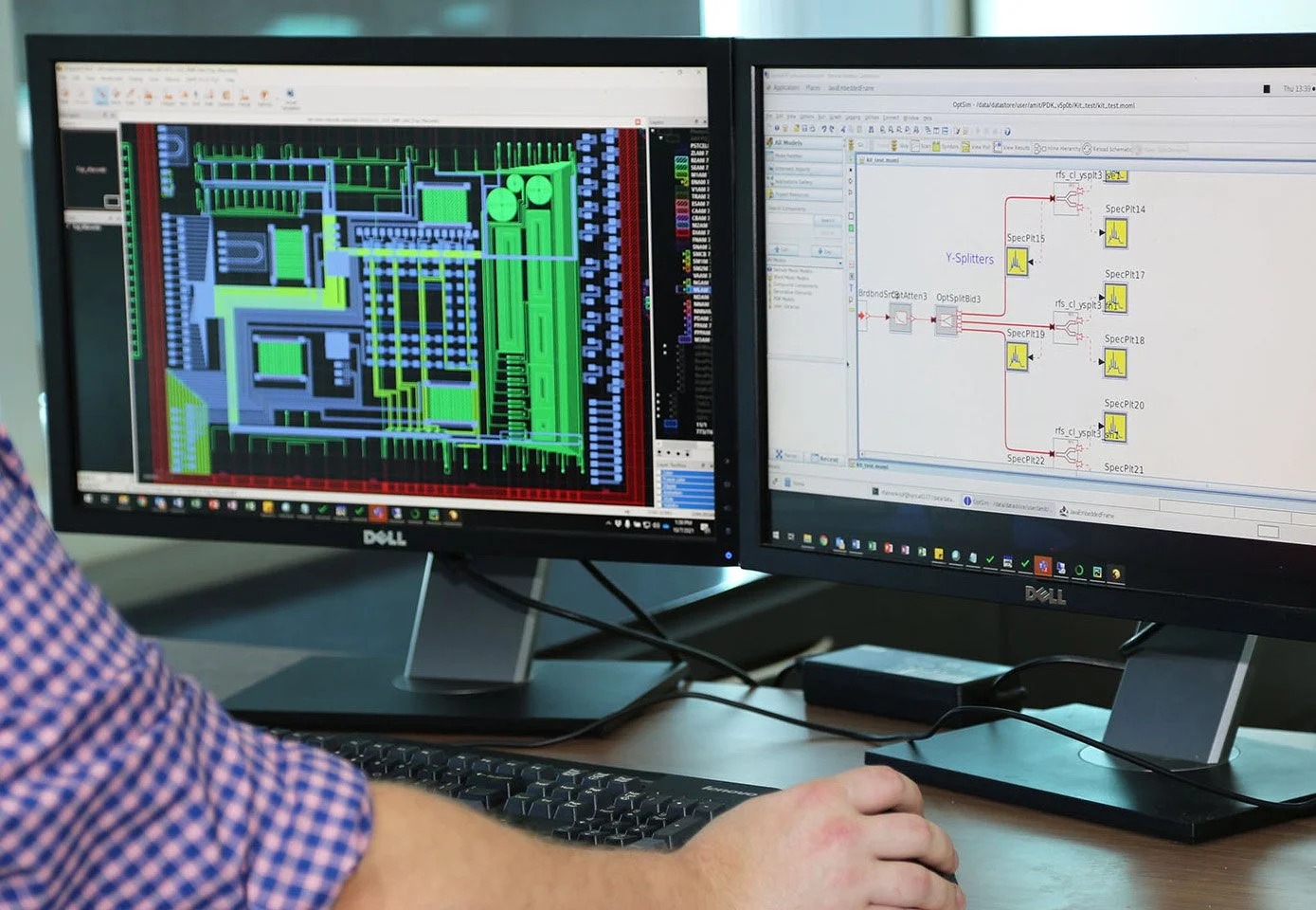
Without PDK, engineers cannot convert logical drawings into physical designs.
In terms of manufacturing, when a customer (a chip design company) comes to you, the first thing you need to provide is a design kit for each process PDK (process design kit). Each different semiconductor node will need its own PDK, even each variant of that node. Therefore, the PDK of the same generation node but different manufacturers is not the same. You cannot use the design for TSMC N7 and just hire Samsung Foundry to do it. Different transistor architectures, different number of metal layers, different additive elements, allowable voltage and current, completely different cell structure. And Intel… lacked this when entering the Foundry segment ! Without PDK, customers cannot know how to “draw” their chip to use it.
Another thing that is needed in processing is that when developing a node, the processing unit must consult with customers (or at least customers who have a need for that node) to understand what they need and want. Of course, not everything the customer wants can be done, but knowing the "taste" in advance makes it easier for the chef to create a menu. Pat's Intel Foundry is not like that (in fact, in the past, Intel also processed for a number of companies, but that period has passed). The Intel 7, 4, 3 nodes, even Intel 20A, 18A, are all developed based on... Intel chips. And the needs of many customers are not exactly the same as Intel Products. Simply put, it's like you abstain from sugar but the chef only cooks Western-style, or you want to eat vegetarian but the restaurant only serves meat dishes (or vice versa). In general, Intel Foundry's services are only suitable for "family members" but not for "the majority", which is what TSMC, Samsung Foundry and GlobalFoundries have been doing for a long time.
To do business, first of all, you need to understand what customers need.
So Intel factories are “underutilized” because they have no orders other than Intel Products. In terms of production and business, operating “underutilized” means that the company’s operating costs are wasted because the equipment costs capital to buy but is “covered in blankets” and lying idle. Even human resources are wasted because if they are only trained to operate lines A, C, E but these lines have no orders, the human resources do not create value for the company (not because they are “lazy” but because they have no work to do).
What is the new way?
Lip-Bu proposes a solution: “Looking ahead, we will follow a systematic path in which the construction of factories will be fully aligned with customer needs. We will have to be rational and disciplined in allocating expenses – because that is what large manufacturers do .” Specifically, the new CEO will immediately stop new factory expansion projects in Germany and Poland. On the contrary, chip packaging and testing facilities in Vietnam and Malaysia will be consolidated. In the US, the construction of the Ohio factory will be adjusted according to actual customer needs.
For the Chinese CEO, only the semiconductor node that is making money needs to be kept and those that are not or have an uncertain future need to be considered. Specifically, the Intel 18A node will be focused on to quickly enter mass production. The Intel 18A-P node is also prioritized because Intel Products needs it. The Intel 14A node in particular will follow the “right manufacturing direction” – it will be designed according to the needs of customers (other than Intel Products). It can also be understood that if “there are no customers, there will be no funding”. “Looking ahead, our investment in Intel 14A must be based on authentic customer commitments. There will be no more blank checks. Every investment must make economic sense. We will make what customers need, when they need it and maintain their trust by executing consistently” .
Production must be based on market demand.
As an aside, even though contract manufacturers like UMC and GlobalFoundries are not pursuing the most advanced nodes, why do they still have customers? Simply because their services still ensure what customers need, stable in quality as well as output. Not every chip needs the latest transistor structure if the existing design is still more than enough to meet the needs of the product. Your washing machine still has only that many functions, the refrigerator is still the same, the air conditioner is still the same, if there is nothing that needs to be more powerful, there is no need to add a trunk to the elephant.
Will it work?
In fact, in addition to tightening the purse strings to the maximum, Lip-Bu also mentioned bringing SMT back to x86 chip models, specifically the server product line. But I mentioned it before , so I won't repeat it here. Moreover, from a personal point of view, I don't think SMT is a decisive technology that can change the situation - if Intel's chips are not good enough or the semiconductor process is not advanced enough, then having or not having SMT will not help this company's products to be superior. Basically, Lip-Bu's request is but a temporary solution, not a long-term one.
For a technology company like Intel, what makes people look up to is a product roadmap that may not be long-term, but at least shows that they are still alive and continue to pursue new technology. Lip-Bu's letter does not have this. He only mentioned Panther Lake - the only thing that almost everyone knows will appear later this year. Of course, it is difficult to blame Lip-Bu when he has been at the helm of Intel for just over 3 months. In such a short period of time, almost no CEO can propose a new product "properly".

Not to mention, Lip-Bu’s strategy is fundamentally different from Pat’s. The Chinese businessman wants to “cut” all the “extra” branches, especially 50% of the group’s middle management – a component that he considers “bureaucratic and inefficient”. With the number of employees reduced by almost half compared to 3 years ago, it is clear that many product projects will also “die young”. Therefore, any project that “survives” will have to wait for Lip-Bu’s “love”. He stated: “In addition, I have just established a policy where every important chip design will be evaluated and approved by me before being tape-out (the final step in the design)” .
Here, I do not “judge” whether Lip-Bu’s path is right or wrong, just whether it is suitable for the situation or not. From a financial perspective, this is a logical way to cut losses. But the downside will be the brain drain. Of course, not all of Intel’s employees are talented, but with nearly half of the corporation, there will certainly be many talented people who have to leave. For example, the Clear Linux project , although it does not generate direct profits, the engineers behind it must be very knowledgeable about chip architecture to be able to optimize the kernel and performance profile. They will also be the ones working with major Linux distros to provide long-term support. Their resignation is equivalent to Intel’s long-term influence being reduced.
Political variables
Finally, there is a problem that I would not normally mention, but cannot help but mention here. That is the “Trump factor”. There is a classic saying like this: “You can ignore politics, but that does not mean it will ignore you”. And the “Trump factor” affects not only Intel but also Lip-Bu, AMD or NVIDIA or every major technology company in the US is affected. However, Intel’s situation is more serious because this ship is currently drifting very uncertainly. Although Lip-Bu’s way of doing things is quite rough, it is the roughness that is necessary to keep Intel from sinking. If the captain wants to throw away a certain package to save the whole ship but is not allowed, then clearly, his hands are “tied”. Similarly, if he wants to turn left but is forced to go straight, it is really… difficult.
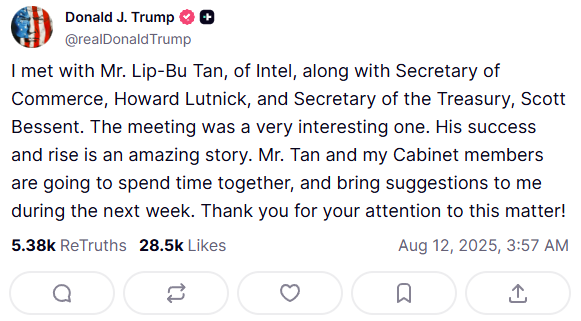
Trump changes tone after meeting with Lip-Bu Tan
Most recently, it was reported that Trump changed his tune after tweeting that Lip-Bu should immediately resign. The meeting between the Chinese businessman and the 47th US president led to a 180-degree change in the White House's stance. Although the Trump administration has continued to attack Biden's CHIPS Act, preliminary information suggests that the US government may move to hold a 10% stake in the company as a way to ensure their "always exist" (a form of nationalization). Why?
According to technology analysts, the Trump administration may not care about Intel's next Core or Xeon chip. The only thing they want, practically no different from the previous Biden administration, is America's semiconductor self-sufficiency. Remember, shortly before Lip-Bu was appointed CEO by Intel's Board of Directors, the company decided to temporarily suspend construction of the Silicon Heartland factory complex in Ohio until the next president. Initially, the Silicon Heartland complex was planned to produce chips on Intel 14A or 14A-E nodes. But according to Lip-Bu's letter, until the "order is finalized", the company will not invest more money to leave it "undercapacity" like Pat did. And that would be the opposite of Trump's wishes...
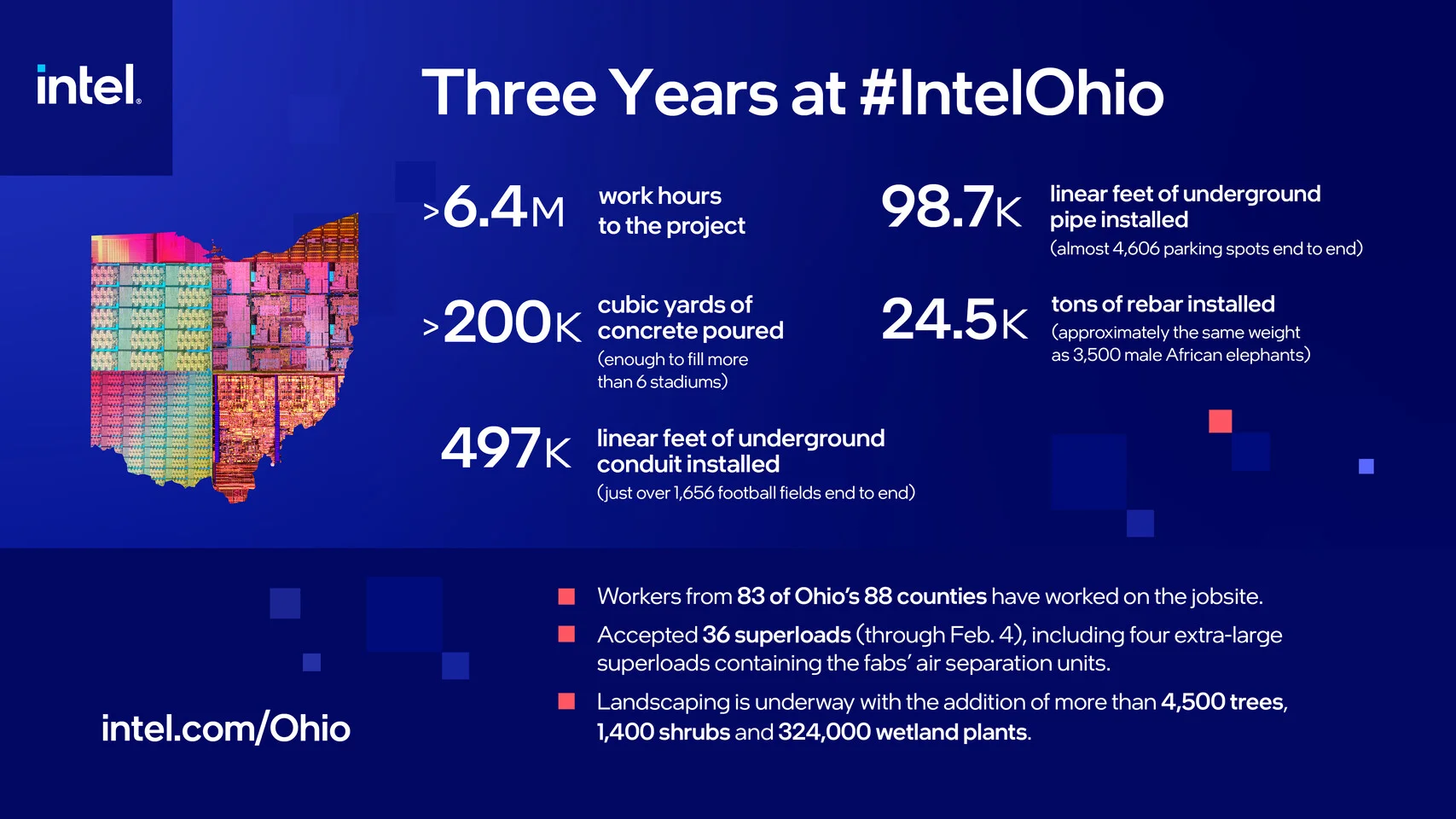
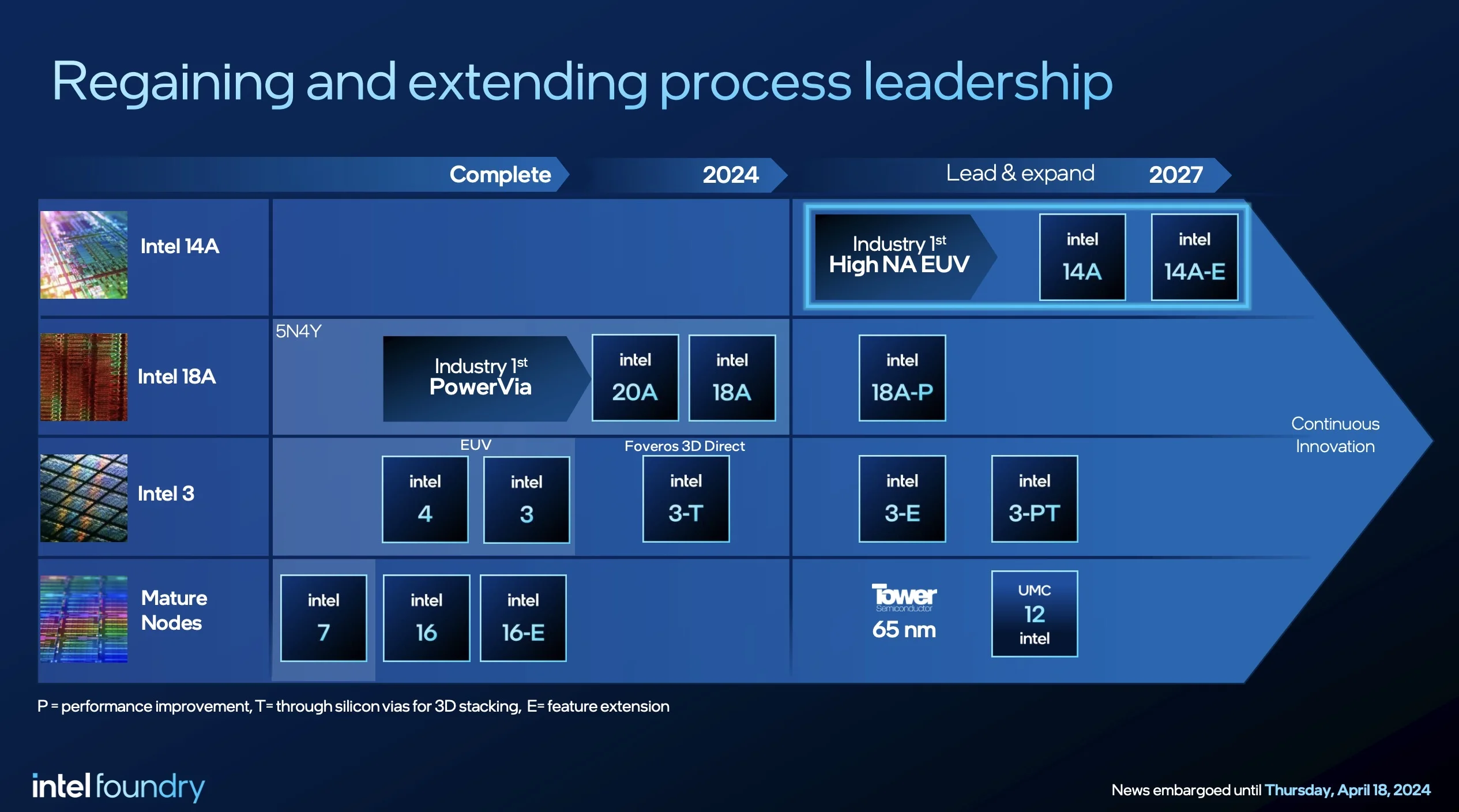
Ohio Silicon Heartland, which is expected to be Intel's largest and most advanced chip manufacturing complex in the US
So how Intel’s future will drift depends not only on the leadership and the Board of Directors, but also on the national political will. Looking at it from a positive perspective, it is also possible that Lip-Bu will “take advantage of the sympathy” of the White House to pressure competitors such as AMD and NVIDIA to sign chip manufacturing contracts with Intel Foundry. That way, Intel will not have to split up like AMD did in the past. Kill two birds with one stone, right?
But that's another story…