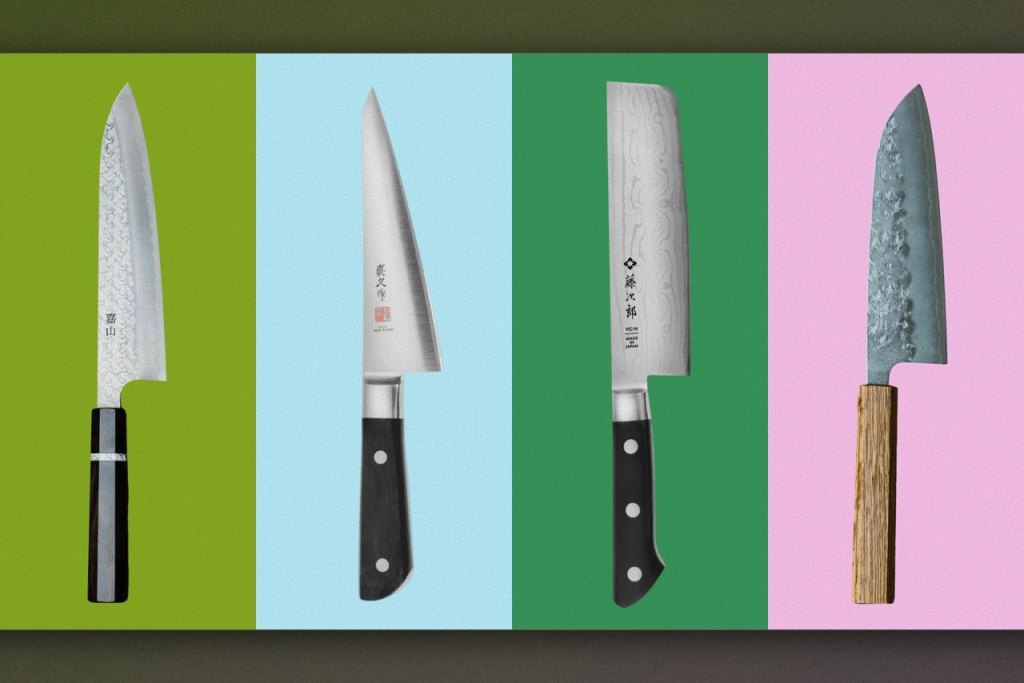
Japanese knives favor precise cutting, with hard steel blades and narrow edge angles. This guide breaks down gyuto, santoku, nakiri, petty, and other common kitchen knives.
- Japanese knives usually have straighter blades, harder steel, and narrower edge angles than Western knives, so they cut more finely, but hard steel also chips more easily on bone or stone.
- Gyuto and santoku are the two versatile picks for a main kitchen knife. Nakiri is built for vegetables.
- A petty can replace a paring knife. Funayuki and kiritsuke are alternatives for anyone who wants a different tip shape.
- Deba and honesuki are more specialized, so buy them only if you regularly break down whole fish or whole chickens.
Table of Contents
How Japanese knives differ from Western knives
Japanese knives have clearly gained popularity with home cooks and professional kitchens alike in recent years. In Bon Appétit's tests, many models cut better than Western-style knives. Western knives tend to be heavy, thick, and built to handle every job. Many chefs once used the heavy bolster near the heel of the blade to crack open a can of tomatoes during service. Japanese knives (including Japanese-style knives made by brands in other countries) are designed for precise cuts instead. Each type usually has its own purpose, which leaves buyers unsure which one they need.
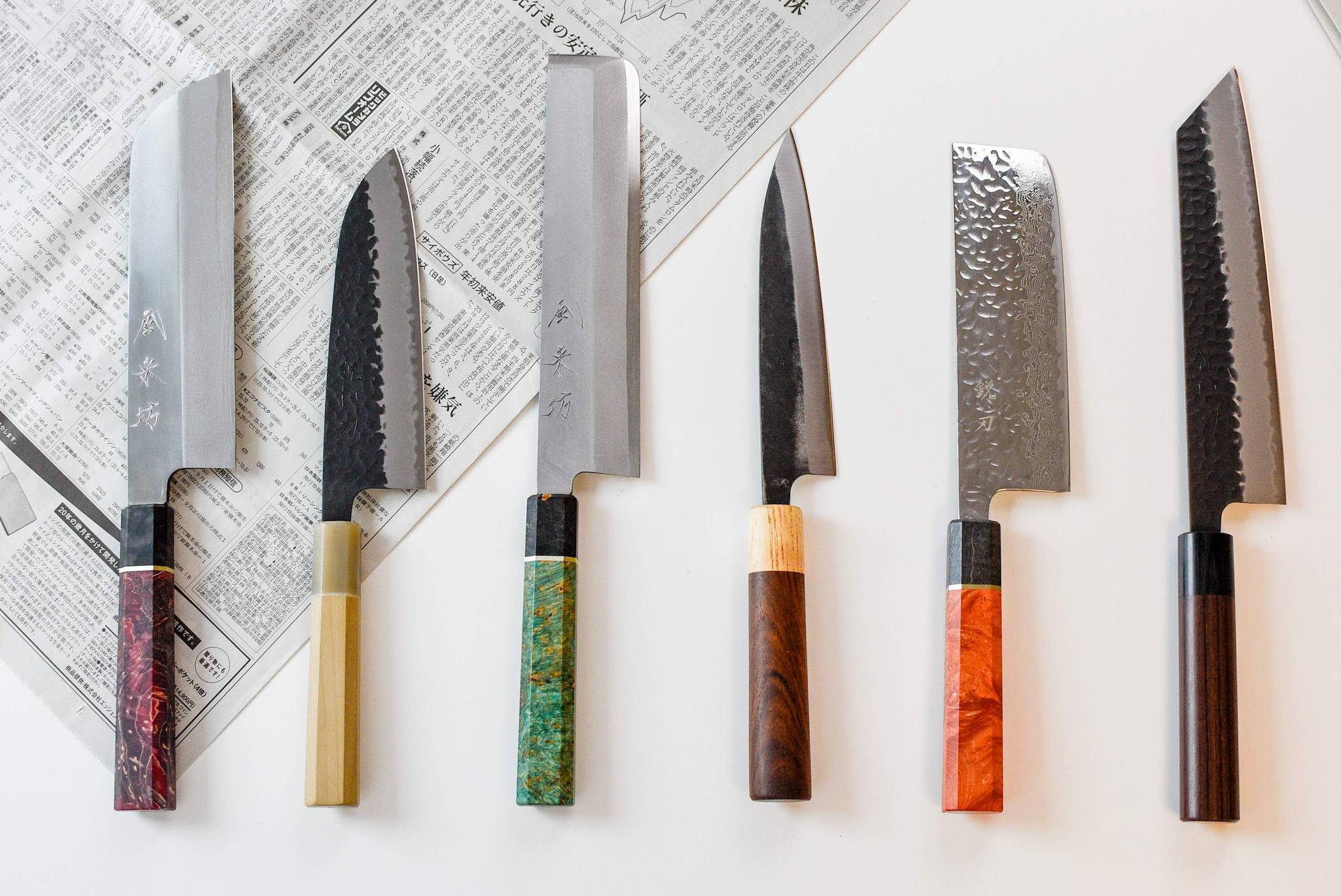
As for blade shape, many Japanese knives are made for push cuts or pull cuts rather than the rocking motion of a Western chef's knife. The straighter blade makes mincing herbs a bit slower, but the cuts come out cleaner. Most also have a sheep's-foot tip that curves down toward the point, which gives better control for detailed work. Steel is another difference: Japanese knives often use harder steel that holds an edge longer and allows a narrower grind angle for a thinner blade. The trade-off is that hard steel chips more easily if it hits stone or bone.
Traditional Japanese knives are ground on one side only, which produces a much thinner edge than the 50/50 double bevel of Western knives. Some modern brands have moved to a 50/50 bevel to make sharpening easier. In stores, you will find many knives with a 70/30 bevel, where the inner face (the left side for right-handed users) is ground at a steeper angle. This style is easier to maintain than a single-bevel knife and still sharper than a 50/50. The traditional wa handle is an octagonal wooden handle that wraps around a hidden tang (the metal section that extends into the handle), which keeps the knife light and nimble. Many brands now pair full-tang handles with Japanese blade profiles to get a durable knife that still cuts thin.
Gyuto, santoku, and nakiri: three everyday knives
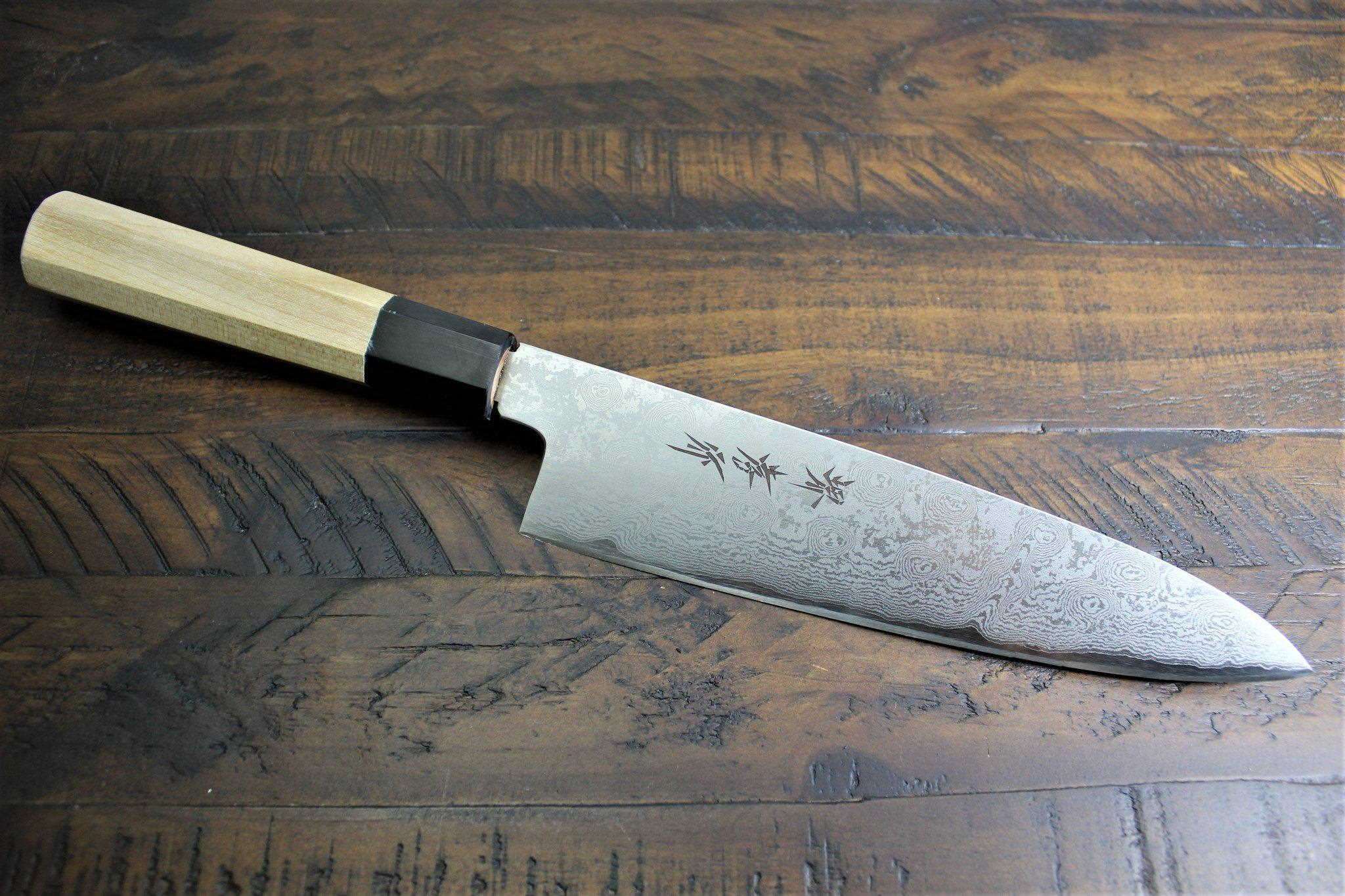
The gyuto is the Japanese chef's knife. It appeared in the early 1900s, when French cuisine was spreading through a rapidly modernizing Japan. It borrows from the French chef's knife and blends in elements of traditional Japanese blacksmithing. The gyuto is mainly for slicing meat, but its slightly curved blade still makes chopping herbs easy. Compared with a Western chef's knife, a gyuto has a straighter blade, a drop-point tip, and a lower profile, so you can plant the tip on the board and pull the blade through food. Bon Appétit has ranked the MAC Professional Hollow Ground Chef's Knife at the top of its chef's knife list for years. For a traditional, extremely sharp option, it picks Shibata's Kazan Arare.
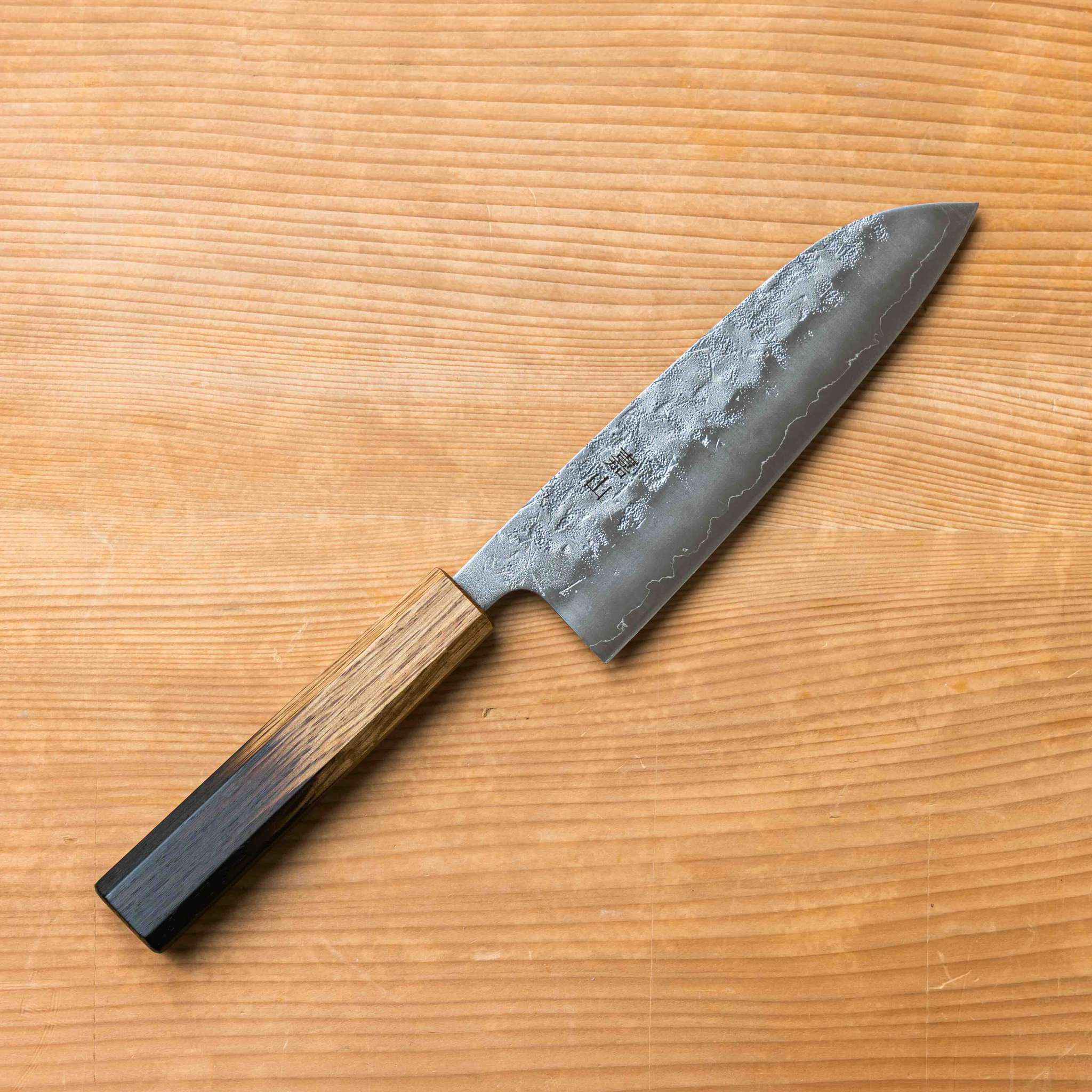
The santoku is a relatively new design, dating to around the 1940s. The name means "three virtues," because the knife combines the gyuto, nakiri, and deba to handle meat, fish, and vegetables. It typically has a fairly steep sheep's-foot tip for detail work, a tall heel for push cuts, and just enough curve for pulling and rocking. Kitchen chores like slicing cheese, peeling an apple, cutting roast chicken for sandwiches, or chopping onions for curry are all fine. Bon Appétit prefers santoku in the 15-18 cm (6-7 inch) range, to set them apart from the longer gyuto. Its top pick is the MAC Professional Santoku, and for a wa-handle version there is the Kazan Ginsan Nashiji Santoku.
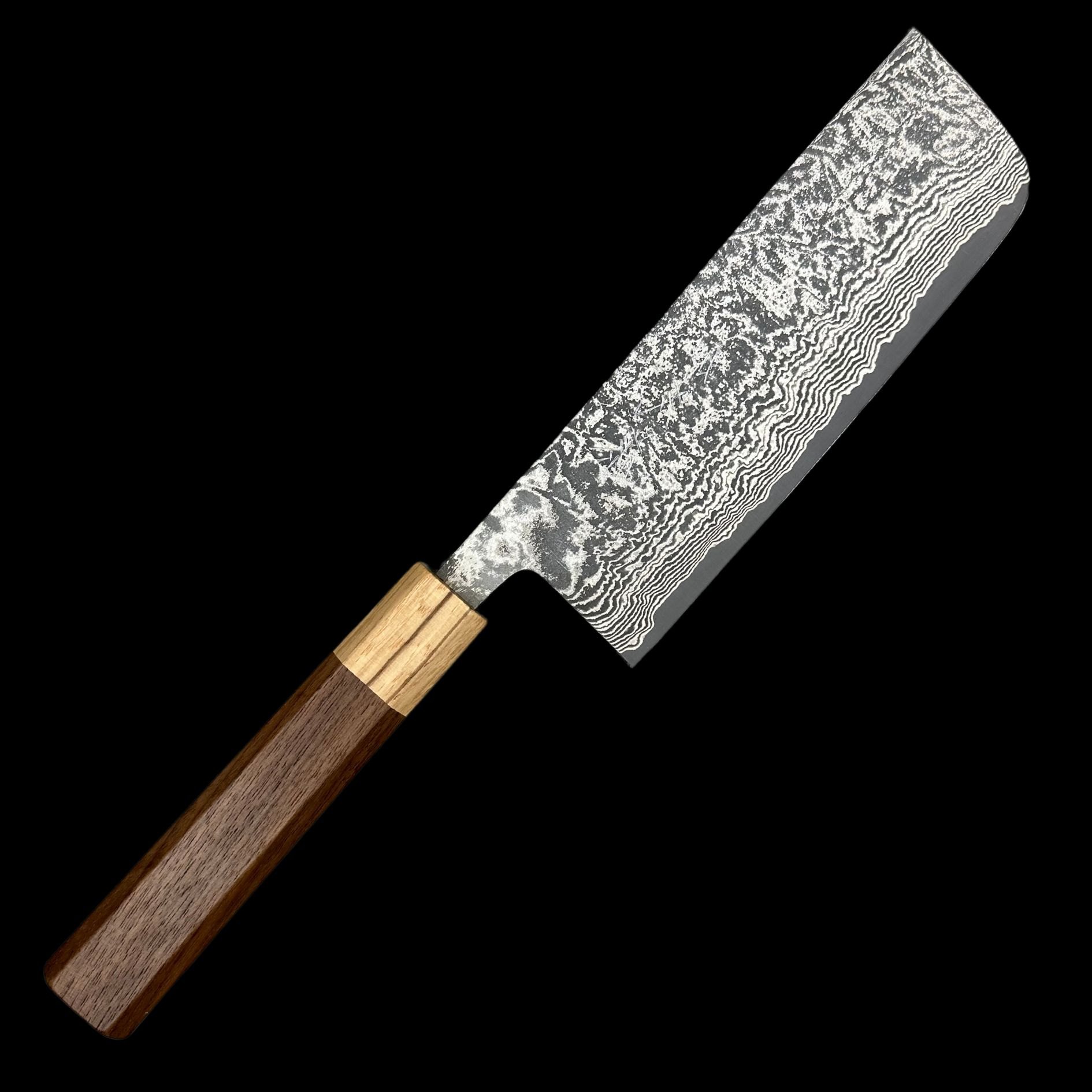
The nakiri has a straight blade and a sturdy spine. It was made to handle vegetables and is sometimes called a vegetable cleaver. It excels at push cuts, so julienning carrots or breaking down hard-skinned squash goes cleanly. Because most gyuto have thin blades, the nakiri serves as a thicker, heavier knife for tougher jobs. The traditional nakiri tip is blunt and rounded, and the knife rolls on the board to produce a smooth chopping motion. Of the models it tested, Bon Appétit liked the Tojiro DP Damascus Nakiri most for its very sharp edge and good balance, though it is fairly expensive. The Tojiro Classic Nakiri also earned praise, although it is sometimes out of stock because it is so popular.
More specialized knives
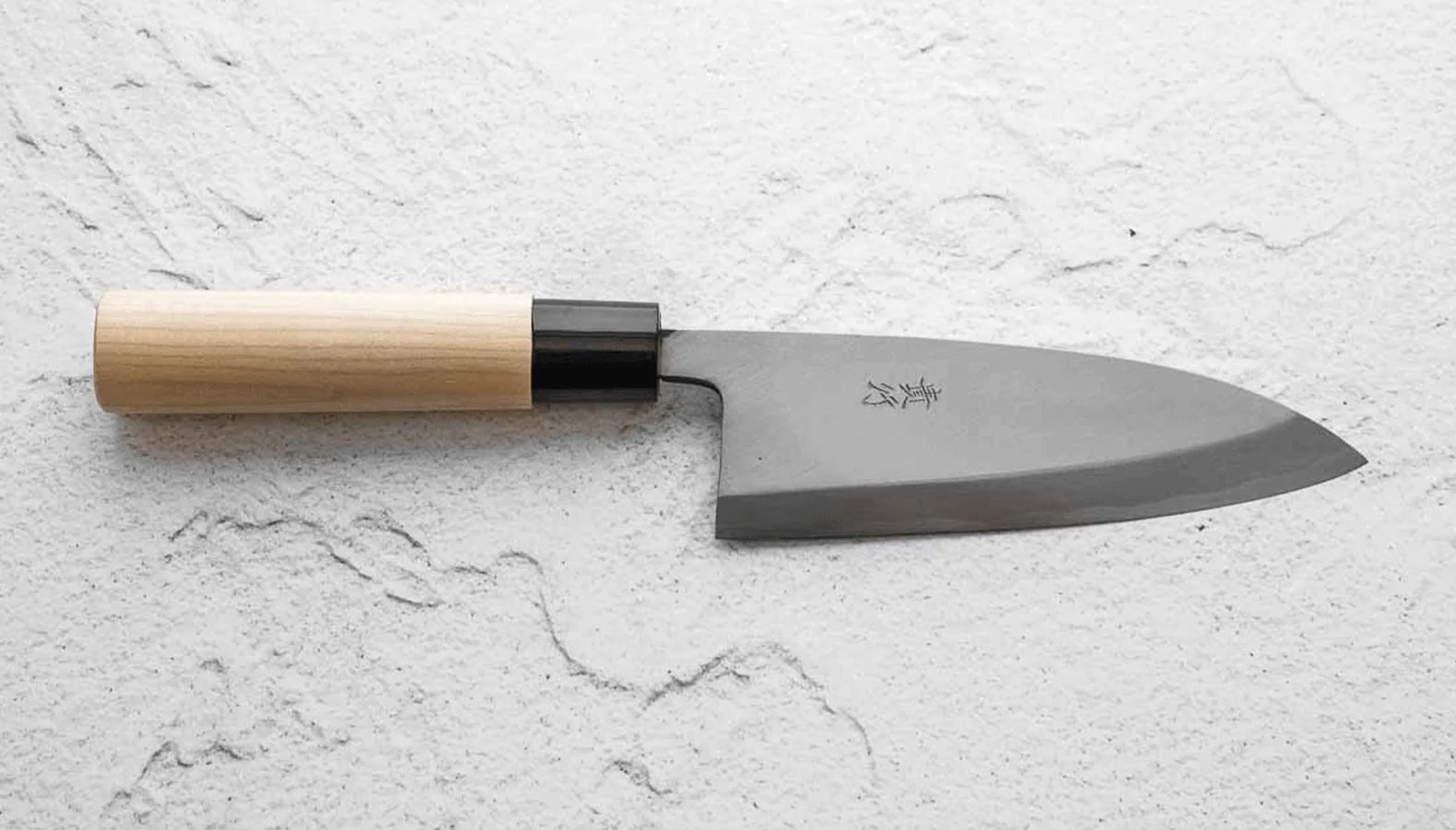
The deba is the traditional knife for processing fish. Unlike a flexible, nimble Western fillet knife, a deba is heavy with a thick spine, so the heel of the blade feels like a cleaver. It can still make fine cuts. It is usually single-bevel, so the tip is thinner than on a double-bevel knife, and the sheep's-foot tip helps separate delicate fish fillets. Bon Appétit has not tested the deba, since breaking down whole fish takes knowledge and skill. For a cleaver-like profile, it suggests Kai's Seki Magoroku Deba. For everyone else, most people should look at a nakiri or santoku instead.
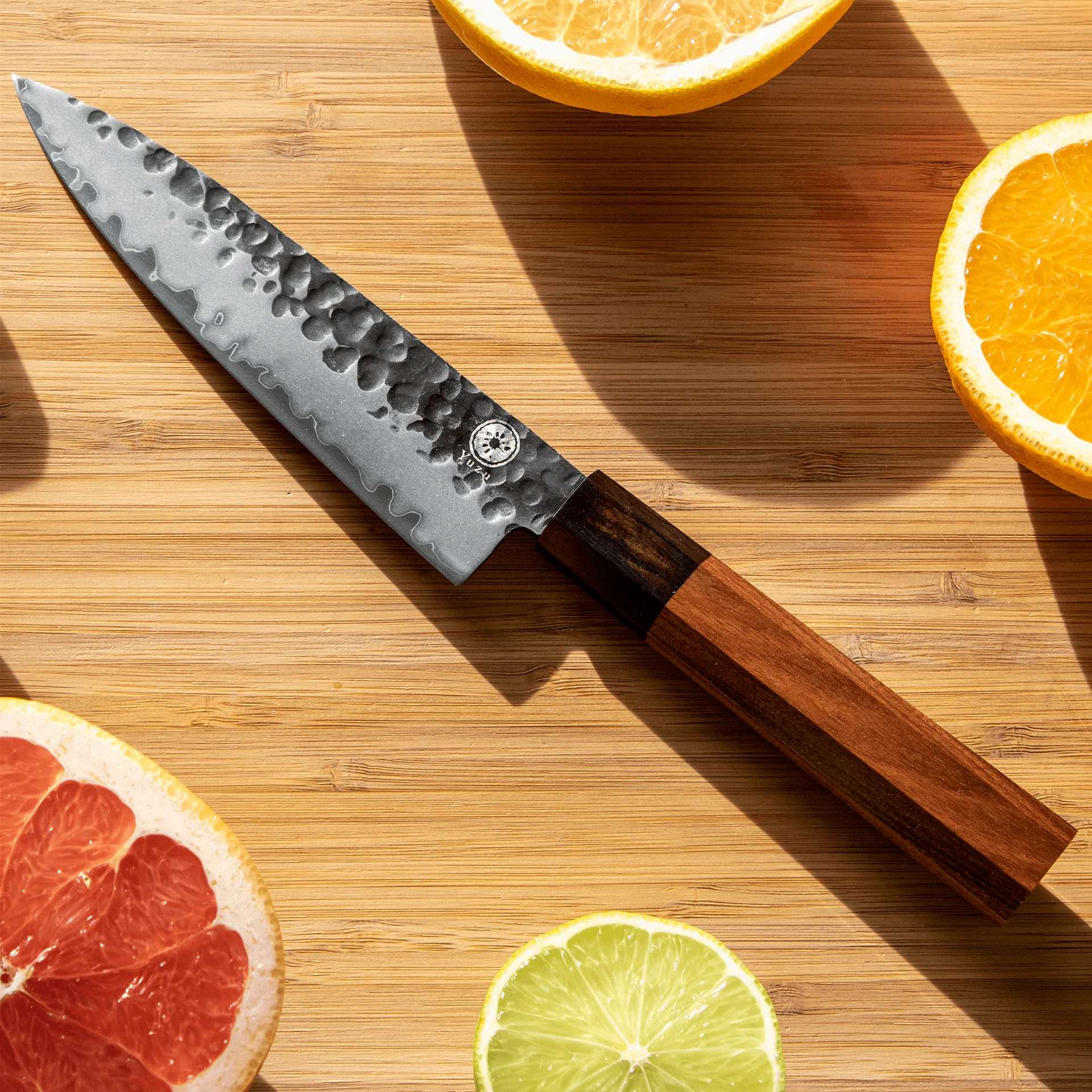
The petty takes its name from the French word "petite," meaning small. It is usually a scaled-down gyuto, about 13 cm (5 inches) long, with a thin, slightly curved blade, a drop-point tip, and a heel just tall enough to keep your fingers off the board. A petty suits small jobs like slicing shallots, slivering garlic, or cutting herbs, and it is long enough to slice. If you don't often peel fruit in your hand, a petty works very well as a paring knife. In testing, the MAC Professional Petty Knife and Tojiro Classic Petty Knife were both sharp enough to cut steak, yet small enough to slice strawberries for a bowl of morning yogurt.
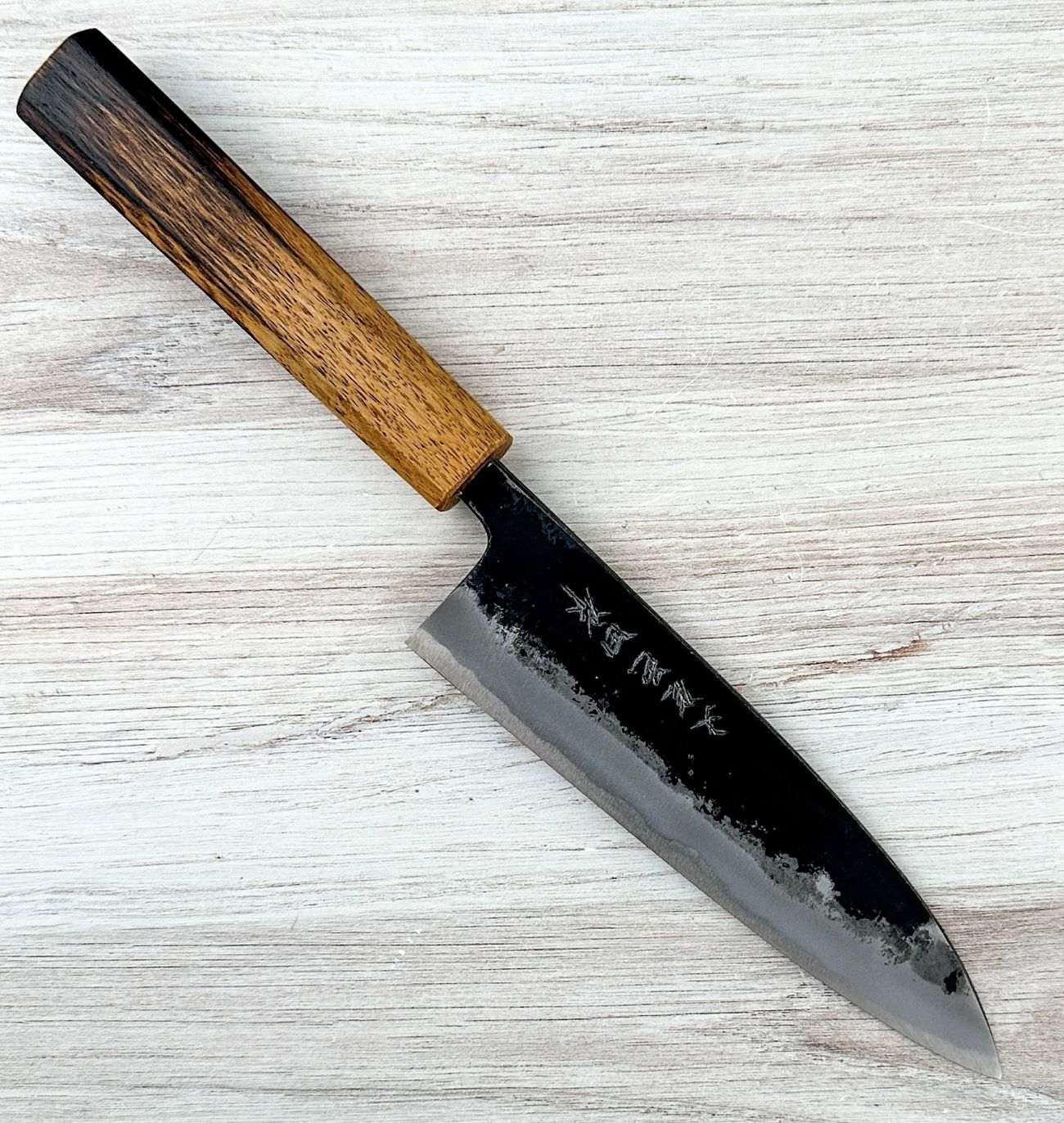
The funayuki was originally a fisherman's knife, used for all kinds of tasks on the boat. It predates the gyuto and santoku and likely inspired both. It is about 18 cm (7 inches) long, with a narrow pointed tip and a tall heel: the size of a santoku with the profile of a gyuto. Unlike the heavy, single-bevel deba, the funayuki is light, so fishermen could fillet lunch right out at sea. Today, many people use it as a short gyuto, or pick it over a santoku for its narrower tip. Bon Appétit's favorite is the Akiru-Saku Funayuki Gyuto, which is close to a traditional funayuki in shape but sold as a gyuto because the two profiles are so similar.
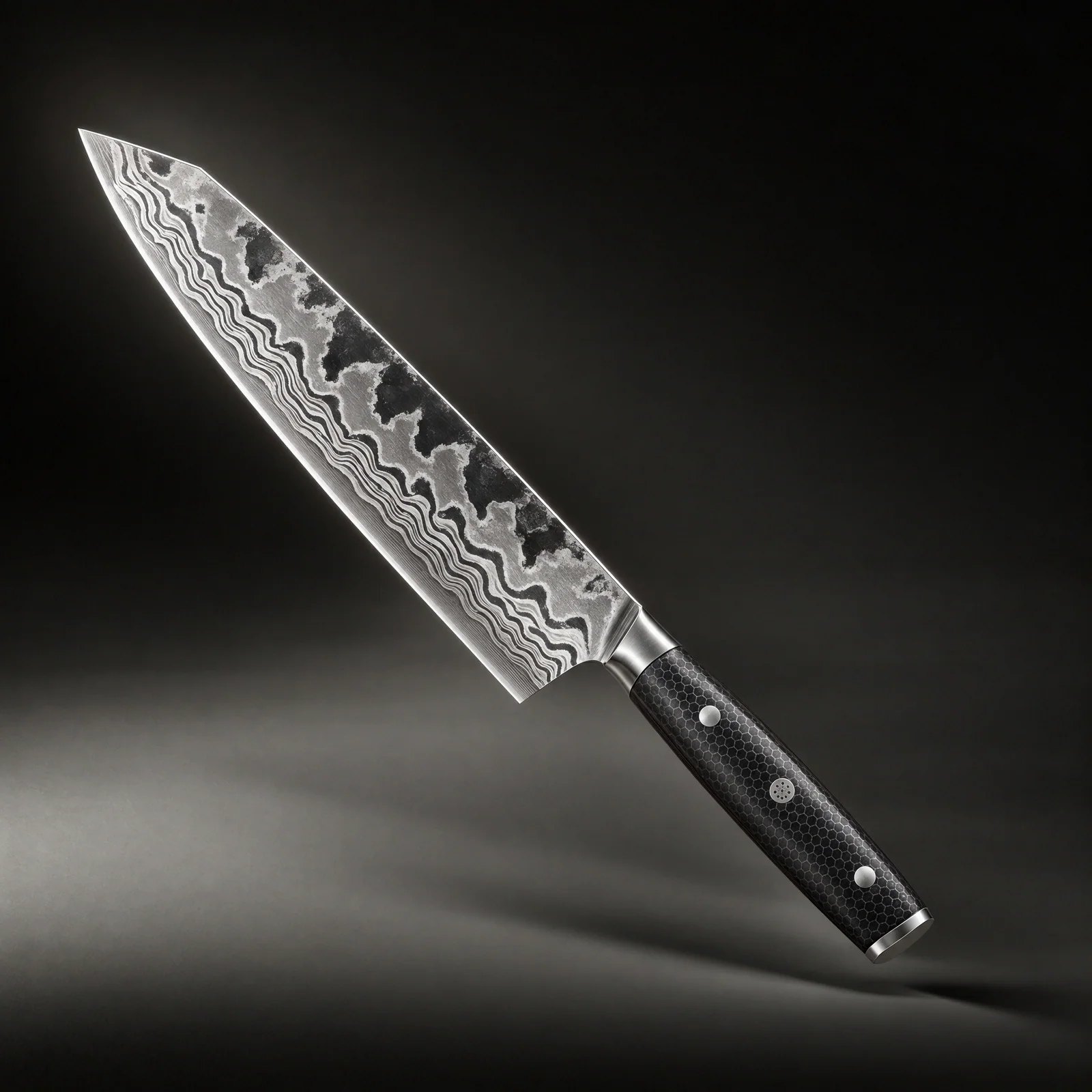
The kiritsuke is a slicing knife with an angled, sword-like tip for precise cuts. The original design combines a long blade for slicing with a tall heel, which makes it a hybrid close to the santoku. For most people, a kiritsuke is a versatile chef's knife that can replace the gyuto as a main knife, and the big difference is the tip. Bon Appétit found the Shun Classic Kiritsuke to be a good all-purpose knife, with a tip that curves upward like a Western chef's knife and allows more rocking. Among boning knives, the honesuki is even more specialized: a steep wedge shape, a very sharp tip, and a tall heel, made for working with poultry. It is thin enough to slip into a chicken's joints and sturdy enough to cut through cartilage. Bon Appétit likes the MAC Professional Honesuki because it handles most boning tasks and is sharp and nimble enough to stand in for a petty on small cutting jobs.
For a Vietnamese home kitchen, one gyuto or santoku plus one petty is enough for most daily tasks. The easiest mistake is treating a Japanese knife like a cleaver: hard steel holds an edge longer but chips when it hits bone or stone. Vietnamese cooking often involves chopping pork and chicken bones, so keep a separate cleaver for that job and don't reach for a Japanese knife. If you are left-handed, check the bevel direction before buying, since single-bevel and 70/30 knives may be made for right-handed users.
Source: Bon Appétit
Reviewed by: Hero Association