
TeamGroup P250Q-M80 - When physical data destruction becomes a feature

As an industrial storage device, TeamGroup P250Q-M80 integrates physical data destruction, making it unrecoverable to ensure security.
Designed for environments that require the highest level of security, the P250Q-M80 combines PCIe Gen4 performance with absolute physical security features. The dual data destruction mechanism available on the TeamGroup P250Q-M80 will correspond to specific situations and security requirements, including physical destruction of the memory chip, preventing any recovery method.
Article content
TeamGroup P250Q-M80 components
The P250Q-M80 is equipped with a PCIe Gen4 x4 interface controller and complies with the NVMe 1.4 protocol. There is no specific information about the controller yet, but the image above is provided by InnoGrit. Choosing a Gen4 controller provides high bandwidth, which is a key factor for target applications such as real-time sensor data collection in defense, financial monitoring, or processing AI models at the edge.
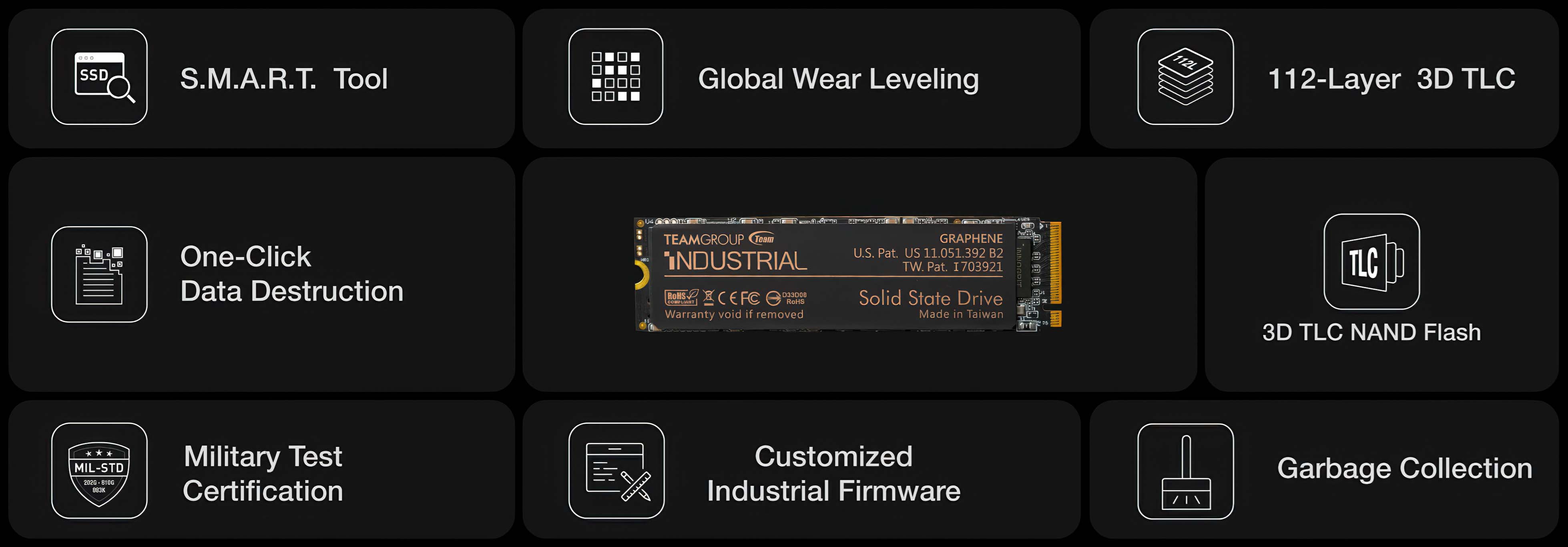
For memory chips, TeamGroup announced the P250Q-M80 model using 112-layer 3D TLC NAND memory chips, 5th generation BiCS - technology developed by Kioxia (formerly Toshiba Memory) and Western Digital. Using 3D TLC with 3000 P/E cycle durability is a reasonable balance between cost, storage density and durability. These memory chips are suitable for industrial products that do not require the most severe durability like SLC but still need high reliability over the operating life.
One of the most notable design decisions is that the P250Q-M80 does not have a DRAM cache. For consumer SSDs, this is often a cost-cutting measure. However, in the context of a high-security device, this choice makes strategic sense. Eliminating DRAM and auxiliary components such as thermal sensors simplifies the PCB design, reducing the number of components that can cause errors. Most importantly, this design frees up space for the “Secure Independent Destruction Circuit.” Cost and complexity are shifted from optimizing performance to maximizing the reliability of the data destruction function. This shows that TeamGroup has placed absolute priority on the integrity of the security mechanism, accepting trade-offs in random write performance and temperature monitoring capabilities.

With the popular M.2 2280 standard, the P250Q-M80 can be easily installed in a variety of systems. Furthermore, it complies with strict military standards for shock (MIL-STD-202G) and vibration (MIL-STD-810G), showing that it is built to withstand harsh operating conditions. These certifications ensure stable operation on moving vehicles, drones, or in industrial production lines where vibration and shock are constant factors.
Smart data destruction mechanism
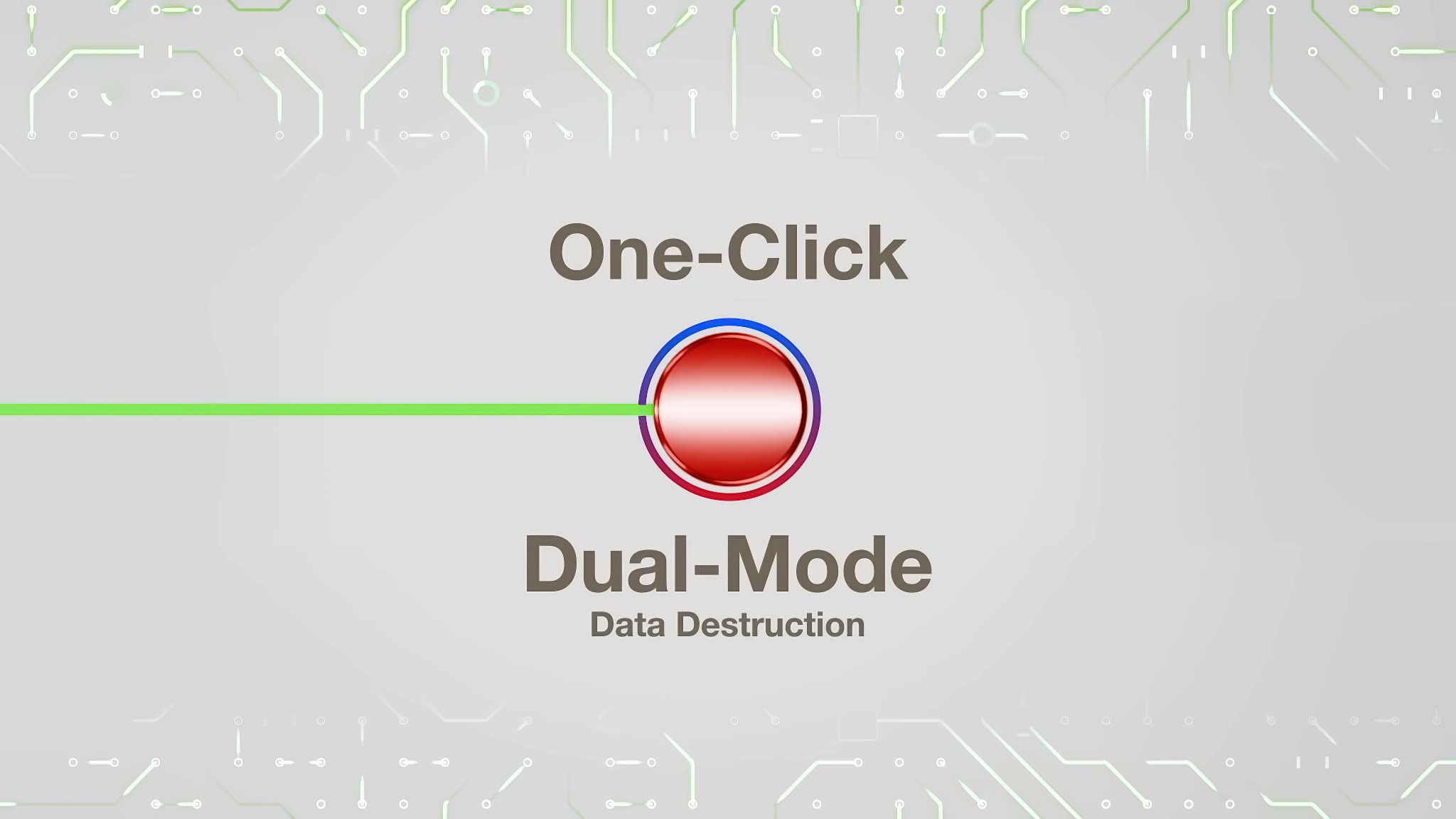
The “Intelligent Dual-Mode Data Destruction” feature is at the heart of the P250Q-M80, transforming it from a simple storage device into an active security tool. The mechanism is activated via a single physical button, with different pressing times determining the destruction mode that is executed. This design simplifies the operating process in emergency situations, minimizing the risk of human error. The integrated LED system provides an intuitive view of the status, allowing the user to confirm that the destruction command is in progress.
S/W Quick Erase Mode

S/W Quick Erase is activated by holding the button down for about 5 to 10 seconds and is a firmware-based data erasure method. S/W Quick Erase will erase all user data while preserving the drive's functionality, allowing it to be reused later. TeamGroup does not disclose the specific algorithm, but common methods include clearing the mapping table or executing the ATA Secure Erase command. Because of its "fast" nature, it is possible that raw data may still exist on the NAND memory cells and can be recovered using specialized digital tools.

This mode is ideal for situations where secure device redeployment is required. For example, when moving a computer from one project to another, S/W Quick Erase ensures that all sensitive data from the old project is wiped clean before loading the new one, eliminating the need to replace hardware.
H/W Quick Erase Mode
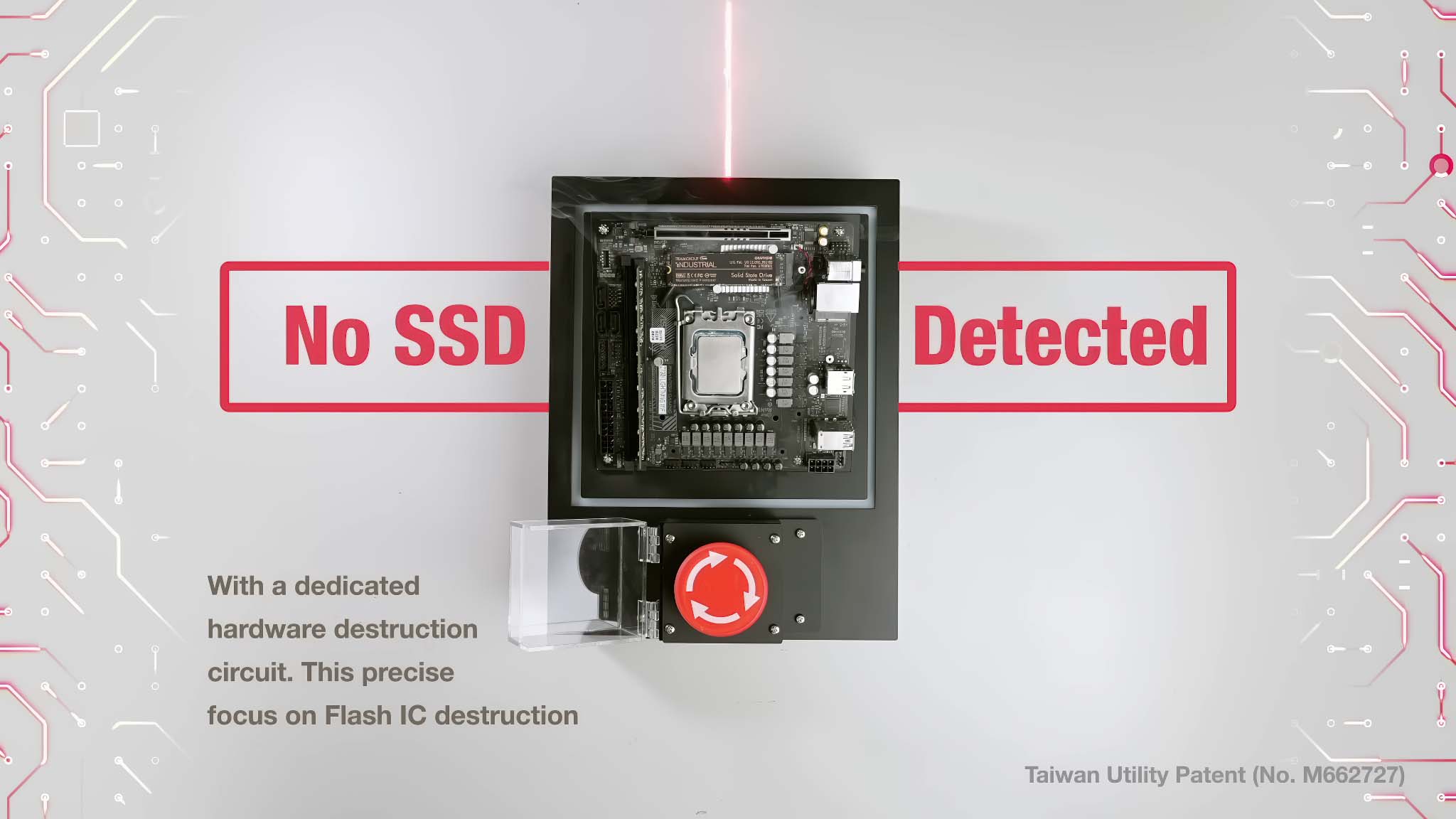
When the button is held down for 10 seconds or more, physical erase mode is activated. The term H/W Quick Erase is perhaps a euphemism for what it actually is, as it does not erase but destroys. This mechanism uses high voltage destruction technology to physically destroy the NAND Flash. Unlike other solutions that require an external high voltage source, the P250Q-M80 integrates a boost converter right on the PCB. This circuit takes the standard 3.3V power from the M.2 slot and raises it to a voltage high enough to burn the circuits. The independent destruction circuit ensures that this function works even if the SSD's main controller fails. This high voltage current is transmitted sequentially to each NAND chip, performing an irreversible physical destruction, which can be easily seen in the demo video with smoke rising from the drive. This mode ensures that data cannot be recovered by any means.
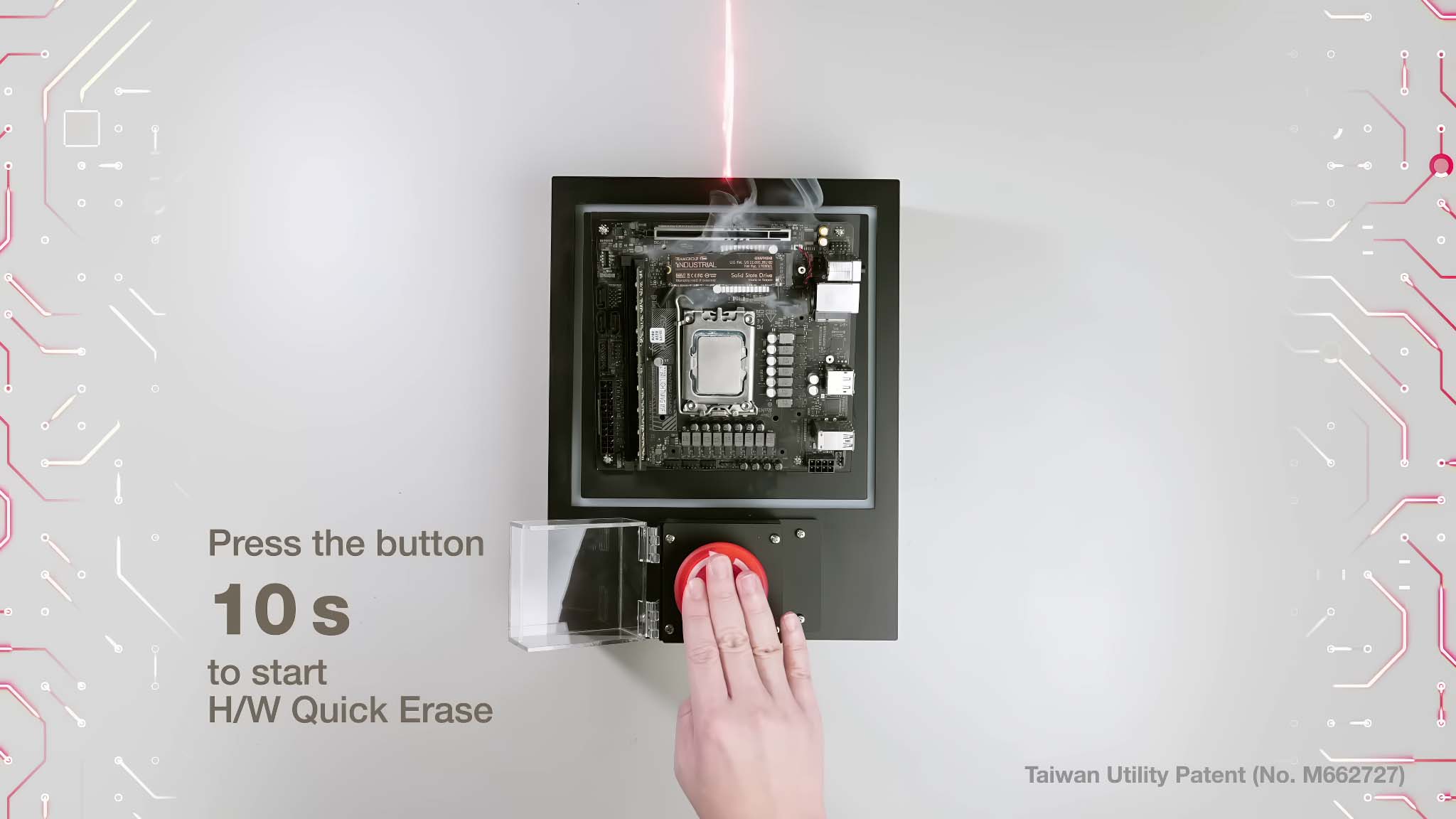
This feature is protected by Taiwan's Utility Model Patent No. M662727, which is valid for 10 years and focuses on innovation in the shape, structure or combination of an object, rather than a completely new invention. This shows that TeamGroup's innovation is not in inventing the high-voltage destruction method, but in implementing it efficiently, compactly and safely on a standard M.2 2280 board.
Smart continuous execution mechanism
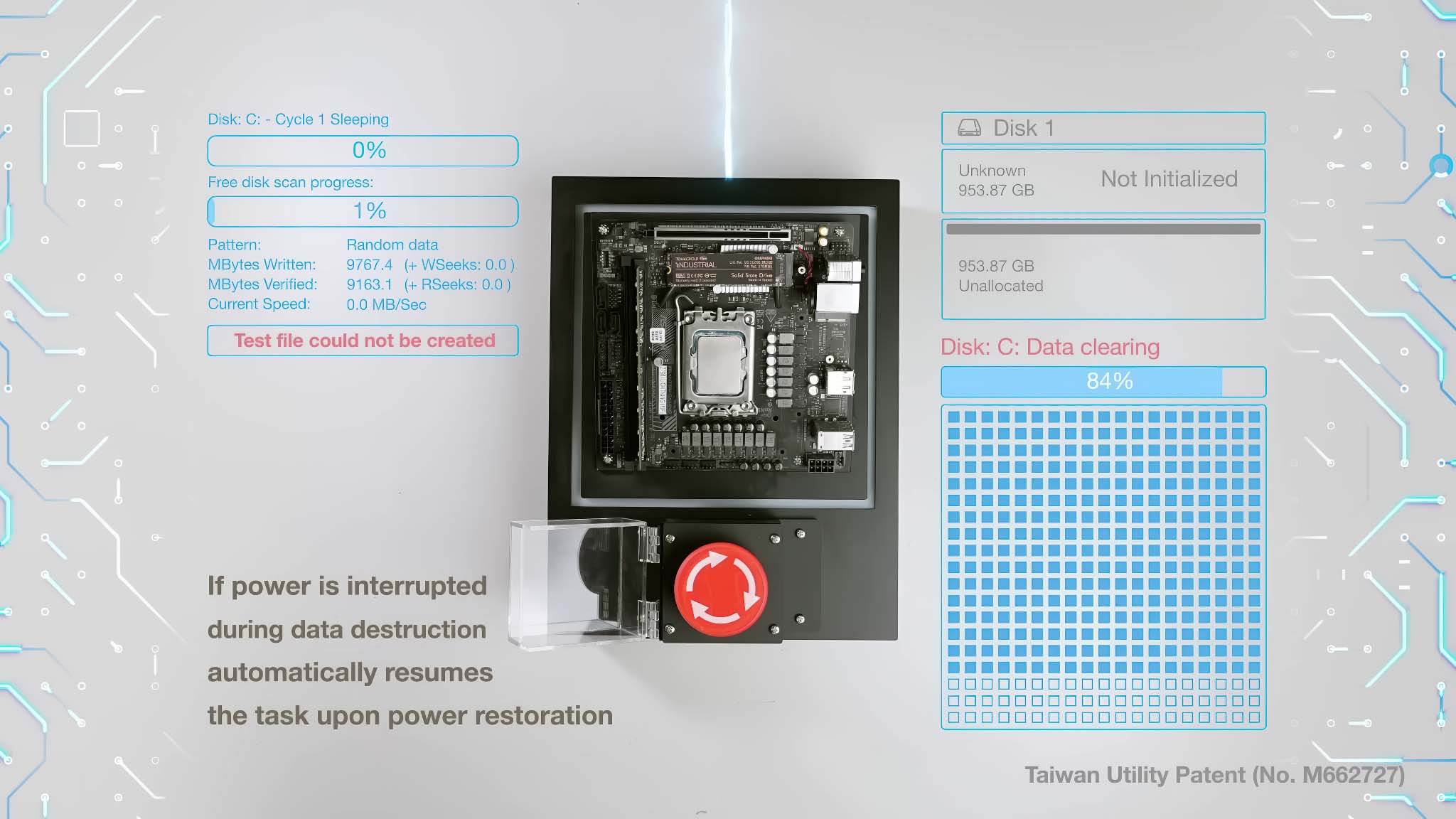
Neither of these modes would be complete without the P250Q-M80’s most sophisticated feature: “Intelligent Continuous Execution Mechanism.” This feature ensures that the data destruction process will automatically continue even after a sudden power loss. This is an innovative application of Power Loss Protection (PLP) technology. While traditional PLP uses capacitors to save user data to NAND when power is lost, this mechanism reverses that purpose. When the destroy command is triggered, a “destroying” status flag is written to a non-volatile memory area. If power is lost and then restored, the firmware checks this flag and automatically continues the destruction process without any intervention. Intelligent Continuous Execution Mechanism ensures the integrity of the destroy command, ensuring that even if you unplug the power cord, the process cannot be stopped.
Alternative activation method
In addition to the physical button, TeamGroup said that data destruction can be activated by “physical or event-based triggers”. For example, to activate physical remote activation, users only need a pin on the mainboard connected to a remote switch, allowing data destruction to be activated without direct access to the device. As for the need for event-based activation, it can be combined with an acceleration sensor (free-falling UAVs will trigger the destruction command), sending remote commands over the network (configured to receive the destruction command via a secure communication channel such as a mobile network, allowing destruction from anywhere) or system security (sending the destruction command when detecting a network attack or unauthorized access).
Practical application
The P250Q-M80 is not a storage product for the consumer market. It is designed for very specific fields and use cases where data security is a top priority.
Field of application
- Defense and Aerospace : This is the most obvious application area. Mission data, intelligence, control systems on unmanned aerial vehicles (UAVs), military vehicles, or battlefield computers are extremely sensitive assets. The ability to physically destroy the data when the equipment is at risk of falling into enemy hands is almost mandatory.
- Industrial Automation and Edge AI : Modern factories use proprietary control systems and AI models to optimize production. Protecting this intellectual property from industrial espionage is critical. The P250Q-M80 provides a solution to securely disable devices when they are stolen or when the manufacturing facility is down.
- Finance and Healthcare : Mobile servers, transaction processing workstations, or medical diagnostic devices contain large amounts of sensitive personal data. In the event of a physical attack or theft, the ability to instantly destroy data is the final layer of protection, helping organizations comply with strict data protection regulations.
Typical situation
- Defense : A reconnaissance UAV operating over enemy territory lost contact. The UAV's automated system, equipped with an acceleration sensor, detected that it was in free fall. It immediately activated the H/W Quick Erase mode on the P250Q-M80. Before the UAV hit the ground, all intelligence data, maps and system firmware were physically destroyed, turning the UAV into a pile of worthless metal to the enemy.
- Industry : A multinational corporation decides to close an overseas factory that operates an automated production line with proprietary technology. Instead of risking shipping servers filled with trade secrets back home, the on-site engineer simply performs a simple procedure: activate H/W Quick Erase on the P250Q-M80 SSDs. All intellectual property is securely disabled and cannot be recovered.
- Corporate Security : A lawyer is working on extremely sensitive documents for a major lawsuit. When faced with the threat of having his laptop illegally seized, he can quickly activate S/W Quick Erase to wipe the data, allowing him to request the device back at a later date and continue using it. If the situation escalates and there is a risk of being forced to reveal passwords, H/W Quick Erase will be the last resort to protect client information at all costs.
Compare with competing solutions
The self-destructing SSD market is a niche one, with specialized competitors like Flexxon and Foremay. Comparing the P250Q-M80 to these products shows TeamGroup’s clear market positioning strategy. Traditional competitors often focus on durability and offer a variety of security options (including hardware encryption) on older interfaces like SATA III. Meanwhile, modern applications like AI, real-time signal processing and high-resolution monitoring require massive bandwidth that only the NVMe PCIe Gen4 interface can provide.
| TeamGroup P250Q-M80 | Flexxon GALAXY Series | Foremay SC199 Series (NVMe) | |
|---|---|---|---|
| Interface | PCIe Gen4x4 | SATA III | PCIe (Gen3 or older) |
| Performance (Read/Write) | ~7000/5500 MBps | ~550/450 MBps | Change, lower than Gen4 |
| Physical destruction method | High voltage (built-in) | High voltage (battery activated) | Yes (S3 Erase, self-destruct) |
| Hardware encryption | Do not have | AES-256 | AES-256, TCG Opal options |
| Target market | High Performance Industrial/Defense | Military, traditional industry | Military, aerospace |
The P250Q-M80 is the first product on the market that combines the high performance of PCIe Gen4 with a powerful and easy-to-use physical destruction mechanism. This shows that TeamGroup is not only competing in the existing market but is also creating a new segment: “High-Performance, High-Destruction”, targeting customers who not only need security but also need speed.
Of course, the TeamGroup P250Q-M80 still has its shortcomings. First, this SSD does not support popular hardware encryption standards such as TCG Opal or AES-256. Other industrial products from TeamGroup such as the N640-M80 and P845P-M80 do. This means that when the drive is in a data-at-rest state, data is not protected by the drive's own hardware-level encryption layer. Users will have to rely entirely on software-level encryption solutions (such as BitLocker) which can consume system resources.
TeamGroup does not disclose details about the S/W Quick Erase mode, which makes customers wonder how secure it really is, especially when compared to government data erasure standards such as DoD 5220.22-M. In addition, the P250Q-M80 also removes the temperature sensor to make room for a high-voltage destruction circuit, which is also a shortcoming when the usage context is an industrial environment.
Conclusion

The P250Q-M80 is not designed to be a complete security solution. A multi-layered data security strategy includes data protection in transit, at rest, access control and finally secure destruction. While competitors and other products focus on the “data-at-rest” encryption layer with TCG Opal or AES-256, the P250Q-M80 skips this layer. Instead, TeamGroup puts all of its engineering resources into the final layer: secure destruction, taking it to the absolute level. The P250Q-M80 is designed on the assumption that data will be protected by other methods (OS-level encryption, network security, physical security). With a physical kill button, it is an irreversible last resort when all other layers of protection have been penetrated.
TeamGroup P250Q-M80 is a bold and impressive piece of engineering. It doesn't try to please everyone, but solves a very narrow but extremely important problem in the most radical way. Combining the performance of modern Gen4 SSDs with reliable physical self-destruction, the P250Q-M80 meets the needs of customers with the most stringent security requirements. If customers consider data destruction as the last and unfailing line of defense, the TeamGroup P250Q-M80 is always ready.
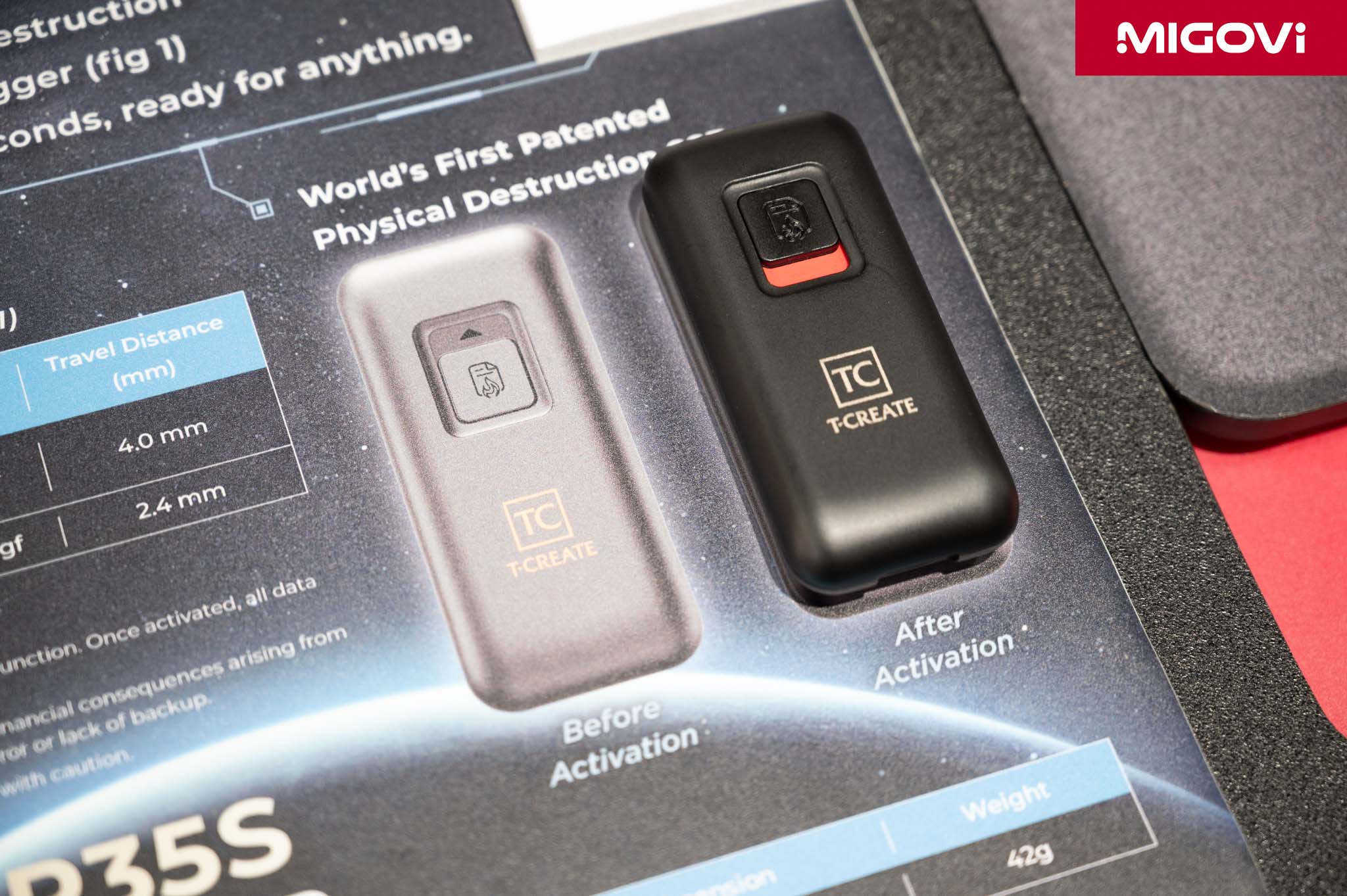
At the recent COMPUTEX 2025 exhibition, Migovi also encountered a portable SSD model with the function of self-destructing documents and files stored inside - TeamGroup EXPERT P35S .